• Skip to primary navigation
  • Skip to main content
  • Skip to primary sidebar
  • Texas A&M Forest Service
  • Texas A&M Veterinary Medical Diagnostics Laboratory
  • Texas A&M AgriLife Extension Service
  • Texas A&M AgriLife Research
  • Texas A&M College of Agrculture and Life Sciences
West Texas Rangelands
West Texas RangelandsWe hope to provide a variety of science-based rangeland information and current research on prescribed fire, wildfires, brush management, and grazing management!
  • Menu
  • Home
  • About & Contact
  • Publications
    • Extension Publications
    • Refereed Journal Articles
    • Program Summaries
  • Events
  • Lunch N’ Learn
  • Infographics
    • Drought
    • Grazing
    • Herbicide
    • Prescribed Fire
    • Rangeland Plants
    • Wildfire
  • Range Resources
    • Published to Pasture
    • Range Concepts
  • Fire Resources
  • Sponsors
  • AgriLife Learn Online Courses

Adaptability Is Key as Drought Persists Across Texas Rangelands

May 20, 2026 by kara.matheney

Across much of Texas, drought remains a defining challenge for rangeland managers. A recent AgriLife Today article highlights an important reality for producers: while some areas have seen timely rainfall, much of the state is still managing through ongoing drought conditions, and adaptability remains critical for long-term rangeland resilience.

👉 Read the full AgriLife Today article: https://agrilifetoday.tamu.edu/2026/05/19/adaptability-and-managing-for-rangeland-resilience-remain-key-as-drought-covers-much-of-the-state/

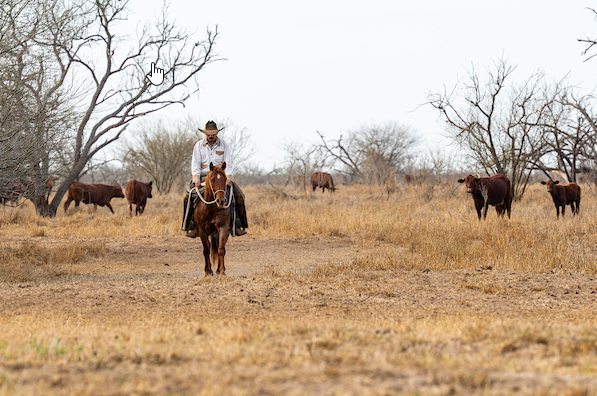
A cowboy on horseback rides through a dry, grassy field with cattle grazing in the background under a pale sky.A Mixed Picture Across the State
Texas rangelands are experiencing a wide range of conditions this year. Some regions, including parts of the Cross Timbers, Concho Valley, and Hill Country, are seeing improved forage production due to spring rainfall. These areas present an opportunity for producers to allow pastures time to recover after extended drought conditions.

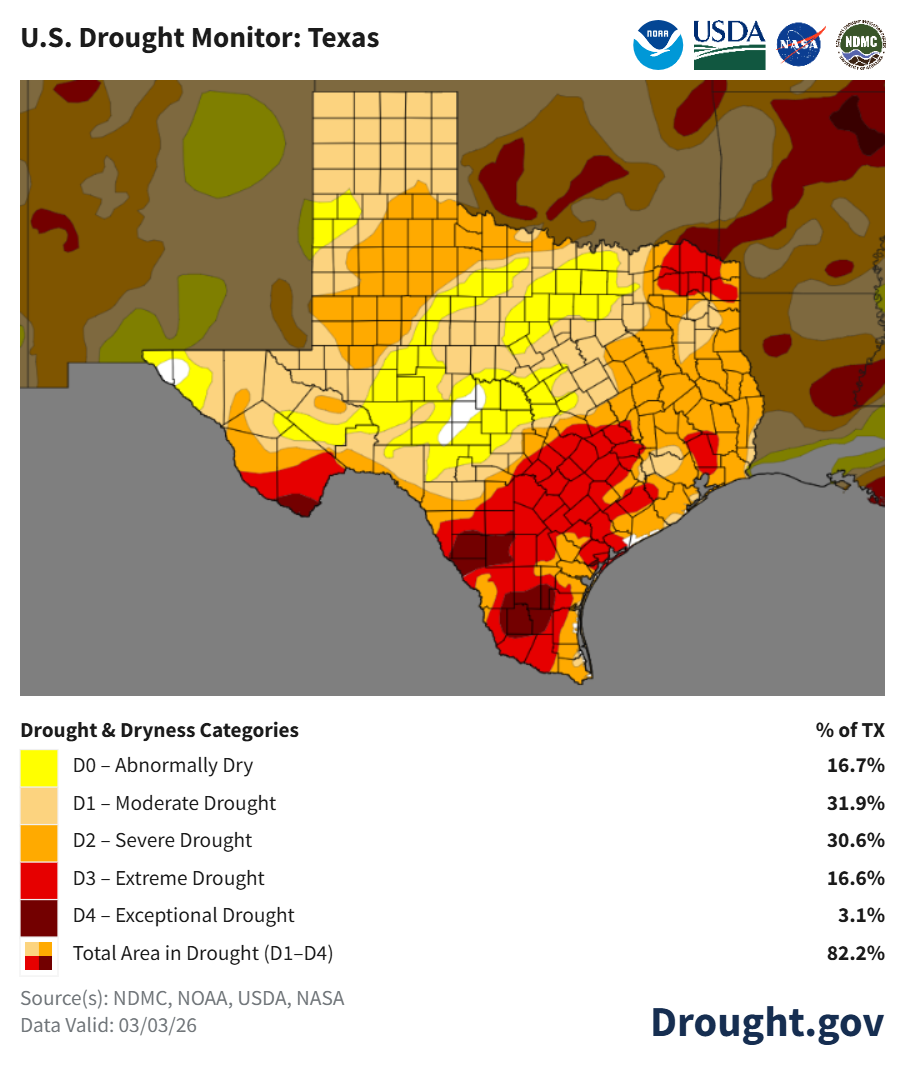
At the same time, much of the state remains in drought. According to the U.S. Drought Monitor cited in the article, 81 percent of Texas is experiencing some level of drought. While fewer areas are in the most extreme categories compared to last year, drought is still widespread and continues to impact forage availability and management decisions.

For producers in the Panhandle, South Texas, and other regions facing more severe conditions, the message is clear: careful evaluation and planning are still essential.

Recovery Starts with Rest
One of the most important takeaways from the article is the value of rest during periods of active plant growth. When moisture is available, and grasses begin to respond, reducing grazing pressure allows plants to rebuild energy reserves.
This recovery period helps promote:

  • Root development
  • Leaf growth
  • Improved plant vigor

Allowing plants time to recover can have long-term benefits for both forage production and overall rangeland health. Resilient rangelands depend on maintaining this balance between use and recovery.

Managing for Resilience, Not Just Production
Producers are not just managing livestock. They are managing ecosystems. The article emphasizes that stewardship of rangeland resources includes maintaining ground cover and building organic matter in the soil.

These practices support essential ecosystem services, including:

  • Forage production for livestock
  • Habitat for wildlife, especially during critical periods
  • Soil health and water infiltration

A focus on resilience helps ensure that rangelands can continue to function through both wet and dry periods.

Drought Planning Still Matters
Even in areas that have received rain, it is important not to assume the drought is over. Conditions can change quickly, and the forage available now may need to carry operations through the remainder of the growing season.

Producers are encouraged to continually evaluate forage availability and compare it to expected needs. This is a key part of any drought contingency plan and helps guide decisions about stocking rates and grazing pressure.

In areas still experiencing severe drought, proactive steps such as adjusting stocking rates or reassessing grazing strategies may be necessary to avoid long-term damage to the land.

A Practical Takeaway for West Texas
For West Texas producers, where variability is the norm and drought cycles are familiar, this message reinforces what many already know. Flexibility is not optional. It is essential.
Whether your operation has received recent rain or is still waiting for relief, the same principles apply:

  • Take advantage of good conditions to build recovery
  • Protect plant health through strategic grazing decisions
  • Monitor forage conditions closely
  • Be prepared to adjust as conditions change

Looking Ahead
Drought will continue to be part of managing rangelands in Texas. While rainfall patterns and seasonal conditions are beyond our control, management decisions are not.

By focusing on adaptability and resilience, landowners and managers can position their operations to better withstand drought and recover more quickly when conditions improve.

Resilient rangelands are built over time with careful management, timely decisions, and a long-term perspective.

Filed Under: Conservation, Drought Management, Grazing Management, Range Concepts, Weather Tagged With: #AgriLifeExtension, #RangelandManagement, #WestTexasRangelands, Conservation, Conservation Practices, Drought Management, grazing management

2025 Region 3 Texas Land Value Trends: What Stability Means for West Texas Producers

May 6, 2026 by kara.matheney

West Texas Rangelands sourced this information from the Texas Agriculture Law Blog authored by Tiffany Dowell Lashmet, Professor & Extension Ag Law Specialist with Texas A&M AgriLife Extension Service.  To view the full report, please visit: https://agrilife.org/texasaglaw/2026/04/13/2025-rural-land-value-trends-report-released/.   

Land values influence nearly every management decision on a West Texas ranch, from leasing and grazing strategies to succession planning and long‑term investment. The 2025 Texas Land Value Trends for Region 3 offer an important takeaway for producers across North, Central, and South Central Texas: stability remains the dominant theme.

While individual properties differ, overall rangeland values and rental rates across Region 3 have remained steady going into 2025. For producers, this consistency provides a clearer planning window during a time when many costs and inputs remain unpredictable.

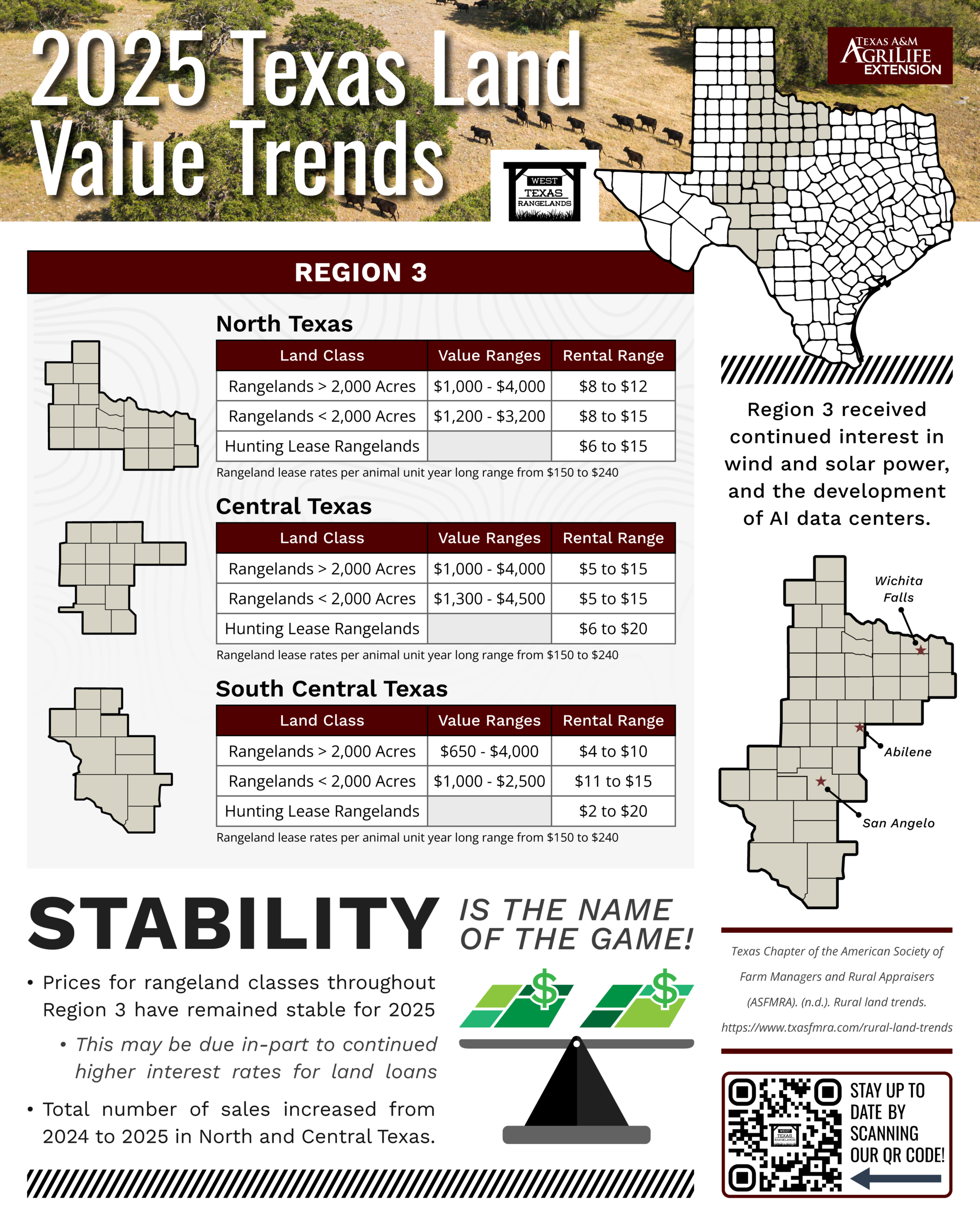
Infographic detailing 2025 Texas Land Value Trends for Region 3, presenting data for North, Central, and South Central Texas, including land classes, value ranges, and rental ranges. The infographic highlights regional stability and increased sales, with a map illustrating key cities and areas within Region 3.

A Stable Market Across Region 3
According to the Texas Chapter of the American Society of Farm Managers and Rural Appraisers, rangeland prices throughout Region 3 have largely held steady from 2024 to 2025. This includes large tracts greater than 2,000 acres as well as smaller ranches under 2,000 acres.

In North and Central Texas, total land sales increased from 2024 to 2025, even as interest rates for land loans remained higher than many producers have been accustomed to in recent years. This suggests that demand for rangeland remains strong, particularly for properties that support livestock production, hunting leases, or long‑term land investments.

For South Central Texas, values have remained stable as well, though rental ranges and entry prices continue to vary based on acreage size, location, and land condition.

What the Numbers Say About Rangeland Values
Across Region 3, rangelands larger than 2,000 acres generally continue to carry lower per‑acre values than smaller properties, reflecting typical economies of scale. Smaller tracts often command higher per‑acre prices due to accessibility, limited supply, or diversification opportunities.

Rental rates for rangeland grazing remain within consistent ranges across the region. Long‑term rangeland lease rates per animal unit year continue to fall within established norms, giving producers some predictability when budgeting for leased ground or negotiating renewals.

Hunting leases remain an important supplemental income source for many ranches. Although rates vary widely depending on habitat, access, and wildlife management, the continued presence of hunting lease value reinforces the importance of multispecies land stewardship in West Texas.

Development Pressure and Emerging Interests
There continues to be interest in wind and solar development, as well as AI data centers, within Region 3. While these developments are not evenly distributed, they are increasingly part of landowner conversations across nearly every region of Texas.

For producers, this does not necessarily mean a shift away from agriculture. Instead, it reinforces the need to understand how surface use agreements, water access, and infrastructure placement may affect long‑term ranch operations. Evaluating these opportunities through the lens of working lands remains critical.

What Stability Means for Ranch Management Decisions
Stable land values can be both reassuring and strategic for producers. When markets are not rapidly escalating or declining, decisions can be made with greater confidence and less pressure to react quickly.
For some operations, this may be an opportunity to:

  • Re-evaluate grazing or hunting lease terms
  • Invest in land improvements such as water infrastructure or brush management
  • Plan transitions within family operations
  • Reassess insurance, taxes, and long‑term budgets

Stable markets do not remove risk, but they do reduce uncertainty when compared to periods of rapid appreciation or correction.

Keeping Land Productive in a Stable Market
While land values matter, long‑term ranch success still depends on land conditions. Soil health, forage productivity, water availability, and flexibility during drought remain foundational to property value over time.

Markets reflect what land can produce. Producers who focus on sustainable grazing management, adaptive stocking strategies, and thoughtful use of tools such as prescribed fire are better positioned regardless of short‑term market shifts.

Staying Informed
Land value trends are one piece of the broader picture producers must consider. Staying informed through credible sources allows landowners to separate short‑term headlines from long‑term patterns.

The West Texas Rangelands program will continue sharing producer‑focused information that supports informed decision-making across working landscapes.

Filed Under: Conservation, Land Tagged With: #AgEconomics, #AgriLifeExtension, #LandValues, #RangelandManagement, #RuralLand, #TexasRanching, #WestTexasRangelands, #WorkingLands

The Hidden Cost of Overgrazing: How It Drains Your Watershed, Your Rainfall, and Your Bottom Line

April 22, 2026 by kara.matheney

The Hidden Cost of Overgrazing: How It Drains Your Watershed, Your Rainfall, and Your Bottom Line

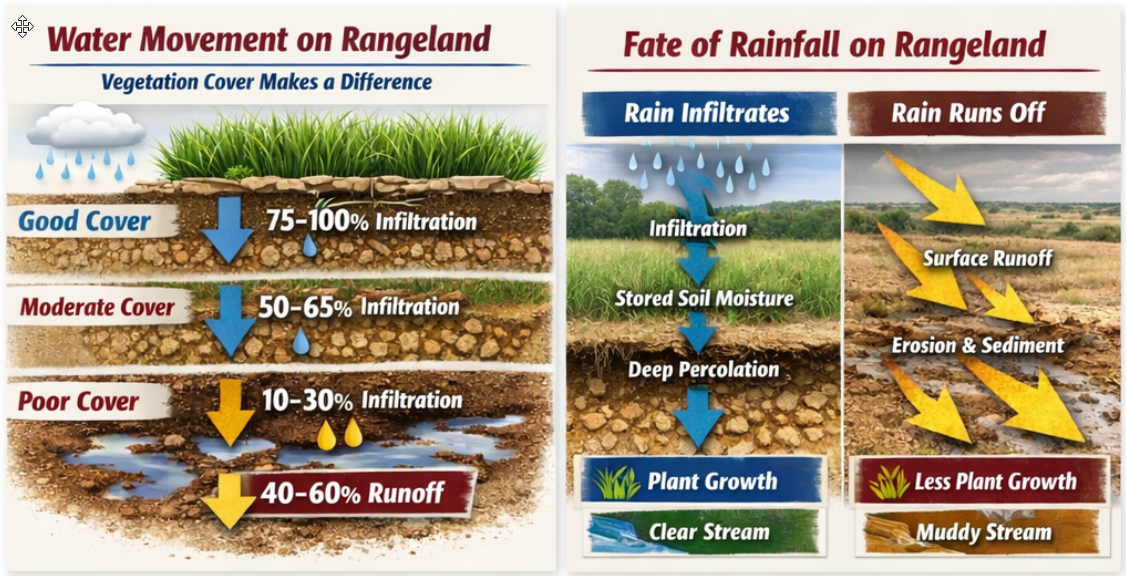
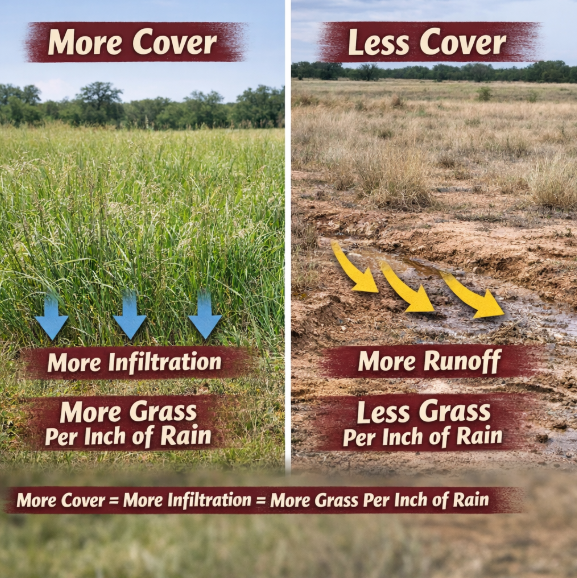
Across Texas, every drop of rain is precious. On healthy rangeland, most of that rainfall enters the soil (infiltration), is stored in the profile, and then drives forage production. Under prolonged overgrazing, however, plant vigor declines, roots shrink, litter disappears, and soils compact, reducing infiltration, increasing runoff and erosion, and shrinking the water available for grass growth. Over time, that damages both watershed function and ranch profitability. 

What overgrazing does to water

  • Less plant cover → less infiltration. Texas A&M Extension work shows that rangeland sites with robust bunchgrass or oak-understory cover retain more rainfall and lose less to runoff than sites dominated by sodgrasses or bare ground. Heavily grazed watersheds at the Sonora Station have shown runoff approaching 10% of annual precipitation, water that could have been growing grass. 
  • More bare ground and compaction → more runoff and sediment. Vegetation and ground cover are the two attributes managers can influence most to control raindrop impact, maintain soil structure, and limit concentrated flow erosion; when cover is lost, rills and sheet flow move soil, nutrients, and carbon off the pasture and downstream. 
  • Hydrologic decline scales from paddock to watershed. AgriLife Research modeling in northwest Texas found heavy continuous grazing increased bare ground and reduced infiltration, elevating surface runoff, soil erosion, and carbon export to streams, while adaptive multi-paddock (AMP) grazing reduced those losses at both ranch and watershed scales. 
  • Stream water quality takes a hit. Edge-of-field monitoring in Northeast Texas showed continuously grazed sites produced >24% more runoff than pastures under prescribed grazing and had significantly higher loads of nitrate/nitrite and total suspended solids, reflecting the combined effects of reduced infiltration and increased overland flow. Diagram illustrating how vegetation cover on rangeland affects water movement, showing infiltration rates and runoff under good, moderate, and poor cover, and the subsequent impact on soil moisture, plant growth, and stream clarity.

[Read more…] about The Hidden Cost of Overgrazing: How It Drains Your Watershed, Your Rainfall, and Your Bottom Line

Filed Under: Conservation, Grazing Management, Range Concepts Tagged With: #AgriLifeExtension, #WestTexasRangelands, grass production, grazing management, range management

Building Knowledge and Confidence with the Updated Online Prescribed Burn School

April 8, 2026 by kara.matheney

Building Knowledge and Confidence with the Updated Online Prescribed Burn School

Prescribed fire has long been a foundational tool for managing Texas rangelands, yet many landowners and land managers lack access to formal training that builds confidence to use fire safely and effectively. Texas A&M AgriLife Extension has addressed this need with the launch of a redesigned Online Prescribed Burn School for 2026, offering science‑based instruction in a flexible, self‑paced format.

The updated course reflects decades of research and applied experience across Texas landscapes. It is designed for landowners, ranchers, and land management professionals who want to better understand fire behavior and planning, improve decision-making, and reduce risk when applying prescribed fire as a land management tool.

Why Prescribed Fire Matters on Texas Rangelands

Fire is not new to Texas rangelands. Historically, fire occurred frequently and shaped plant communities, wildlife habitat, and forage productivity. When fire is removed from the system, woody plants often increase, fuel structure changes, and grasslands can lose productivity and diversity.

Prescribed fire can help manage brush, improve forage distribution, recycle nutrients, and restore ecological processes that benefit both livestock and wildlife. However, fire is also a tool that requires planning, preparation, and a clear understanding of weather, fuels, and safety considerations. Education is essential to ensure prescribed fire is applied appropriately and responsibly.

What the Updated Online Prescribed Burn School Offers

The Online Prescribed Burn School is a self‑guided course delivered through AgriLife Learn. The program consists of 12 modules and provides participants with the background and practical knowledge needed to confidently apply prescribed fire.

Topics covered in the course include the ecology and history of fire, basic fire behavior principles, fuels and weather considerations, topography, firing techniques, equipment, smoke management, and burn planning. The course also addresses laws and regulations related to prescribed burning in Texas, helping participants understand their responsibilities as burners.

Participants can complete the course at their own pace, which makes it accessible to working landowners and professionals balancing multiple demands. The total instructional time is approximately 24 hours, and a certificate of completion is provided upon finishing the course.

Connecting Education to Certification

One important feature of the Online Prescribed Burn School is its connection to the Texas Department of Agriculture Certified and Insured Prescribed Burn Manager program. Individuals who complete the course become eligible to pursue the official exam and field component required for certification, provided they meet TDA experience requirements.

This pathway helps expand the number of trained and qualified prescribed fire practitioners across the state. Increasing this capacity is especially important in regions like West Texas, where large properties, variable weather, and fuel conditions present unique management challenges.

Learning from Experienced Prescribed Fire Professionals

The course is instructed by AgriLife Extension prescribed fire experts, including Dr. Morgan Treadwell, Professor and Extension Range Specialist, and David Brooke, AgriLife Extension Statewide Prescribed Fire Program Coordinator. Their applied experience ensures the content is grounded in real‑world conditions and practical decision-making.

“Fire is a critical component of a healthy, well-managed rangeland,” Treadwell said. “Through this course, you will learn directly from prescribed burn experts with an emphasis on fire behavior, employing the correct firing technique, equipment, safety and much more.”

Rather than focusing solely on theory, the course emphasizes planning and evaluation. Participants learn how to assess burn units, align fire behavior with management objectives, and anticipate challenges before lighting a match. This approach supports safer burns and better outcomes on the ground.

Supporting Informed Fire Use Across Texas

The updated Prescribed Burn School is part of a broader effort by AgriLife Extension and partners to promote informed, science‑based fire use on private lands. As interest in prescribed fire continues to grow, education remains one of the most effective ways to reduce risk and increase successful application.

For landowners considering prescribed fire for brush management, wildlife habitat improvement, or rangeland restoration, this course provides a strong foundation. For professionals supporting land management decisions, it serves as a valuable reference and training resource.

Learn More and Register

Registration information and additional details about the Online Prescribed Burn School are available through AgriLife Today and AgriLife Learn. Landowners and professionals interested in prescribed fire training are encouraged to explore the course and determine whether it fits their management goals.

The course comprises 12 modules and provides participants with the background, knowledge and skills needed to safely and confidently apply prescribed fire as a land management tool.  The course cost is $300, and participants can register at tx.ag/PrescribedBurnSchool2026. Discounted registration is available for members of prescribed burn associations following verification. Participants can anticipate the self-paced course taking roughly 24 hours to complete.

Prescribed fire is a powerful tool when applied thoughtfully and safely. Continued education helps ensure fire remains part of a resilient future for Texas rangelands.


Filed Under: Conservation, Conservation Practices, Prescribed Burn Associations, Prescribed Burning, Uncategorized Tagged With: #AgriLifeExtension, #AgriLifeLearn, #FireEcology, #PrescribedFire, #RangelandManagement, #RangeManagement, #WestTexasRangelands

The Cost of Prolonged Overgrazing: Ripple Effects on Watershed Health, Rainfall Infiltration, and Ranch Production

April 1, 2026 by morgan.treadwell

Producers often face tough choices when managing rangeland, especially during drought or market fluctuations. While maximizing livestock numbers might bring short-term profit, prolonged overgrazing can deal lasting damage to the overall health and productivity of the land. One of the most critical, but sometimes overlooked, impacts is how overgrazing disrupts the watershed and reduces rainfall infiltration, setting off a chain reaction that threatens both present and future production.

What Is Overgrazing?

Overgrazing happens when livestock remove more plant material than the land can regenerate, reducing vegetative cover. Without sufficient rest and recovery for grasses and forbs, root systems shrink, soil structure declines, and bare ground increases.

Watershed Function and Why It Matters

A healthy watershed collects, stores, and distributes water efficiently across the landscape. Vegetation intercepts rainfall, slows surface runoff, and helps water infiltrate into the soil, replenishing aquifers and supporting plant growth during dry periods. When this function is degraded, so is the life of a ranch.

The Impact of Overgrazing on Rainfall Infiltration

Intact vegetation and litter (dead plant material) act as a sponge, allowing more rainfall to soak in rather than run off. Texas A&M research consistently shows that overgrazed pastures lose this critical function (Briske et al., 2011).   The results:

  • Increased Bare Soil – without enough cover, droplets hit bare soil directly, compacting it and reducing pore spaces.
  • More Runoff – compacted, crusted soils shed water, sending it downhill rather than storing it for plant growth.
  • Erosion – runoff carries away topsoil, further reducing the land’s ability to support vegetation.

Effects on Production and Range Health

  • Lower Forage Yields – less water stored means less forage growth through the season. Productivity drops, resulting in further pressure to overstock in a vicious cycle.
  • Reliance on Supplemental Feed – with reduced native forage, producers must purchase feed or de-stock, both of which cut into profits.
  • Increased Weed Invasion – bare patches and disturbed soil invite invasive species, which further outcompete desirable native plants.
  • Reduced Drought Resilience – healthy rangeland can buffer drought impacts; degraded rangeland cannot.

Economic and Environmental Tradeoff

“A pound of prevention is worth a ton of cure,” says Dr. Larry Redmon, Professor & Extension Forage Specialist at Texas A&M. Repairing watershed function, restoring infiltration, and rebuilding soil health can take years and significant expense.

Key findings from Texas A&M’s “Rangeland Watershed Management” (B-6136) highlight how managed grazing increases infiltration by 12–60% compared to overgrazed sites.   

Steps for Ranchers

  1. Monitor Utilization – Leave adequate stubble height and ground cover after grazing.
  2. Rest Pastures – Allow for seasonal or rotational rest to restore plant and root health.
  3. Observe Hydrology – Monitor for runoff, erosion, and infiltration after rains.
  4. Consult Local Extension – Texas A&M AgriLife can provide technical assistance and region-specific recommendations.

Conclusion

The hidden cost of overgrazing is the undermining of the ranch’s very foundation which starts and ends with the soil and water resources. By prioritizing range health and managing for watershed function, producers secure not only the current year’s paycheck but the resilience and productivity of their land for years to come.

References

  1. Briske, D.D., et al. (2011). [Rangeland Watershed Management – B-6136] (https://agrilife.org/texasrangelands/files/2011/02/B-6136.pdf), Texas A&M AgriLife Extension.
  2. What Is a Watershed? (https://wrri.tamu.edu/watersheds/what-is-a-watershed/), Texas Water Resources Institute.

For more infographics and resources, visit AgriLife Extension’s West Texas Rangelands https://agrilife.org/westtexasrangelands/extension-publications/

Are you seeing signs of overgrazing, runoff, or diminished production on your ranch? Contact your county’s AgriLife Extension Office for a site assessment and recommendations today.

Filed Under: Conservation, Conservation Practices, Grazing Management, Range Concepts Tagged With: #AgriLifeExtension, #RanchManagement, #WestTexasRangelands, Conservation, Conservation Practices, soil, water

Spring Weather Outlook By Luke Drosche – Texas A&M AgriLife Extension DAR Specialist

March 18, 2026 by kara.matheney

West Texas Rangelands would like to extend our gratitude to Mr. Luke Drosche for collaborating with us and providing this weather update for our readers.  We thank him for sharing his time, talents, and knowledge with us as a guest contributor.  Luke serves with Texas A&M AgriLife Extension Service as a Disaster Assessment and Recovery Specialist.     

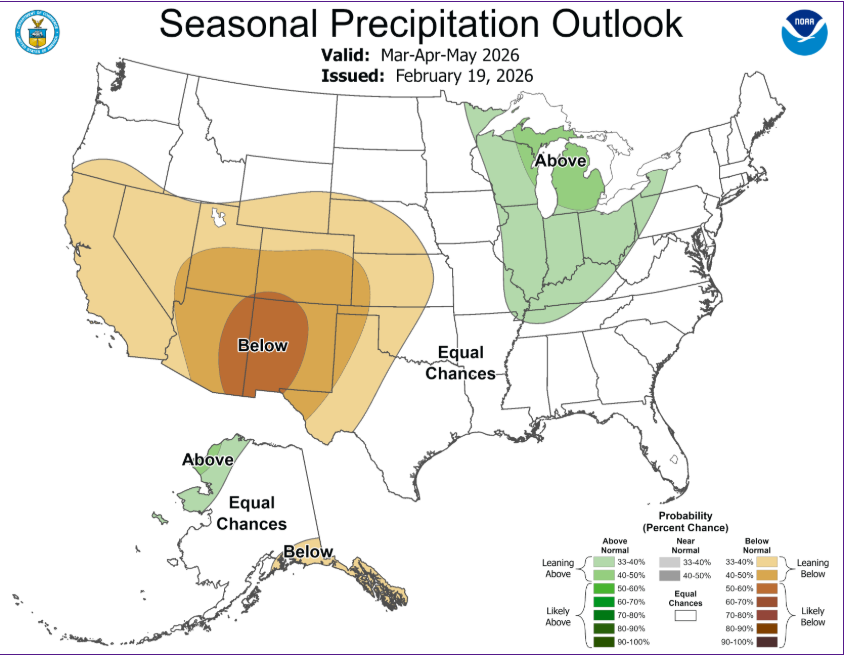
3-Month Precipitation Outlook:
The first few days of March have brought areas of rain and severe storms to a large portion of the State. Those across the Coastal Plains have enjoyed some much-needed precipitation, while our areas in the Panhandle and out west have continue to be mostly dry with the exception of a few supercell thunderstorms. The month of March should continue to bolster higher rain chances before tapering back off closer to May. The 3-month outlook has shown that a majority of the state is in an “Equal Chances” Category for rain. Meaning that we are most likely to mark near normal on our rain gauges.  NOAA has predicated the month of March to be potentially wetter than average for the Northeastern part of the State before marking close to normal through April and May. While the far western and Northwestern areas are forecasted to be drier. This is the time of year we need to make sure we always have a way to receive weather warnings. Severe Weather in Texas is year-round but increases dramatically in the springtime. For anywhere you are in the State of Texas, all modes of Severe weather are possible. It is important to have a plan for you, your family, and your property should severe weather impact you. Know how to communicate, plan to live a few days without power or water, and who to contact if you are affected by severe weather.  Keep an eye to the sky.

3-Month Temperature Outlook:
Rinse and Repeat from our winter months is predicted as we remain warmer than average. March has a high likelihood of marking above normal temperature with higher-than-normal temperatures likely through at least May, areas out west have higher potential to be warmer than average.  The entire state is under this prediction due to our current La Nina Conditions. These bring warmer temperatures to our area. However, we are seeing a transition out of La Nina into ENSO Neutral Conditions. This transition will happen over the next few months. Later in the year we look to potentially move into an El Nino weather pattern closer to next Fall. We will take this as a hope for more beneficial rain as 19.2 million of us in the State of Texas are in a Drought Designation.


Drought Update:
Extreme Drought Conditions persist in Central and South Texas with nearly the entire state in some dryness/drought category.  Panhandle regions remain in Moderate Drought and areas slightly south of there creep into the Severe Drought Designation. Early March’s rain will provide some relief to the Coastal Plains and parts of Central Texas when the next Drought updates come in roughly a month from now. More rainy days are predicted through March and will hopefully continue to improve conditions.  The next few months, March, April, and May typically bring weather systems across much of the state.  These systems pack a punch with severe storms and high rainfall rates.  We always prefer longer, drawn out rainfall events that allow the rainfall to soak into the soil, rather than run off the dry, packed ground. However, once the soil is primed with some moisture from whatever form of rain we get, we benefit more.  With the transition predicted us of La Nina and into ENSO Neutral conditions, we are hopeful for some improvement in overall drought conditions across the State.  Over many months in recent history, we have been in a La Nina designation, which is what has continued to push our drought conditions.  As we transition into Neutral Conditions in the short term, we will see more weather patterns indicative of repeated rainfall come into play.  No doubt we will still see long periods of dry weather, but let’s keep a hopeful eye on next fall as we should move into El Nino Conditions.


References and Resources: https://www.cpc.ncep.noaa.gov/, https://www.drought.gov/states/texas

Filed Under: Conservation, El Niùo, La Niña, Uncategorized, Water, Weather Tagged With: #AgrliLifeExtension, #ClimateVariability, #ConservationConversations, #Weather, #WestTexasRangelands, drought

Using Birds to Read Rangeland Health

March 11, 2026 by kara.matheney

Birds are more than just a welcome sight on Texas rangelands. They can also tell us a great deal about the condition of our land. Because birds respond quickly to changes in vegetation, water availability, and management practices, they are valuable indicators of overall land health.

Texas A&M AgriLife Extension Service recently released A Texas Landowner’s Guide to Conducting a Bird Survey, a research-based publication designed to help landowners better understand the bird species using their property and what those observations can reveal about habitat conditions.

Why Conduct a Bird Survey?

Bird surveys give landowners a practical way to “check the pulse” of their property. The presence or absence of certain bird species can reflect changes in plant diversity, forage structure, and wildlife habitat. Rather than focusing on a single species, a general bird survey looks at the broader bird community and how it relates to current land management.

Over time, repeated observations can help landowners track trends, document stewardship efforts, and evaluate whether management goals are being met.

Designed with Landowners in Mind

This AgriLife Extension guide is written specifically for Texas landowners, not professional bird biologists. It introduces bird surveys in a practical, approachable way that fits working ranches and rural properties.

The publication explains the basics of conducting a general bird survey, why bird data are useful for land management, and where to find birding resources and equipment. It is especially helpful for landowners who are new to bird surveys or looking to incorporate wildlife monitoring into an existing management plan.

Turning Observations into Action

Collecting information is only useful if it can inform decisions. Bird survey data can help landowners evaluate habitat conditions, identify areas for improvement, and better understand how wildlife responds to management practices.

While bird surveys are not regulatory requirements, they offer a voluntary, science-based tool that complements broader rangeland and wildlife management strategies. They can also help landowners better communicate their stewardship efforts with partners, agencies, or the community.

Building Skills Over Time

The guide recognizes that bird identification can feel intimidating at first. However, bird surveying is a skill that improves with practice. By using available resources and learning over time, landowners can gain confidence and make bird surveys a meaningful part of their land management toolbox.

Learn More

A Texas Landowner’s Guide to Conducting a Bird Survey is available through Texas A&M AgriLife Extension Service. For more information or assistance, contact your local AgriLife Extension office and explore additional wildlife and rangeland management resources.

Filed Under: Conservation, Conservation Practices, Land, Publications Tagged With: #AgriLifeExtension, #BirdSurvey, #RangelandHealth, #RangelandManagement, #TexasLandowners, #WestTexasRangelands, #WildlifeStewardship

Fire Field Day – Mason, Tx: A Hands-On Learning Experience for Landowners

March 4, 2026 by morgan.treadwell

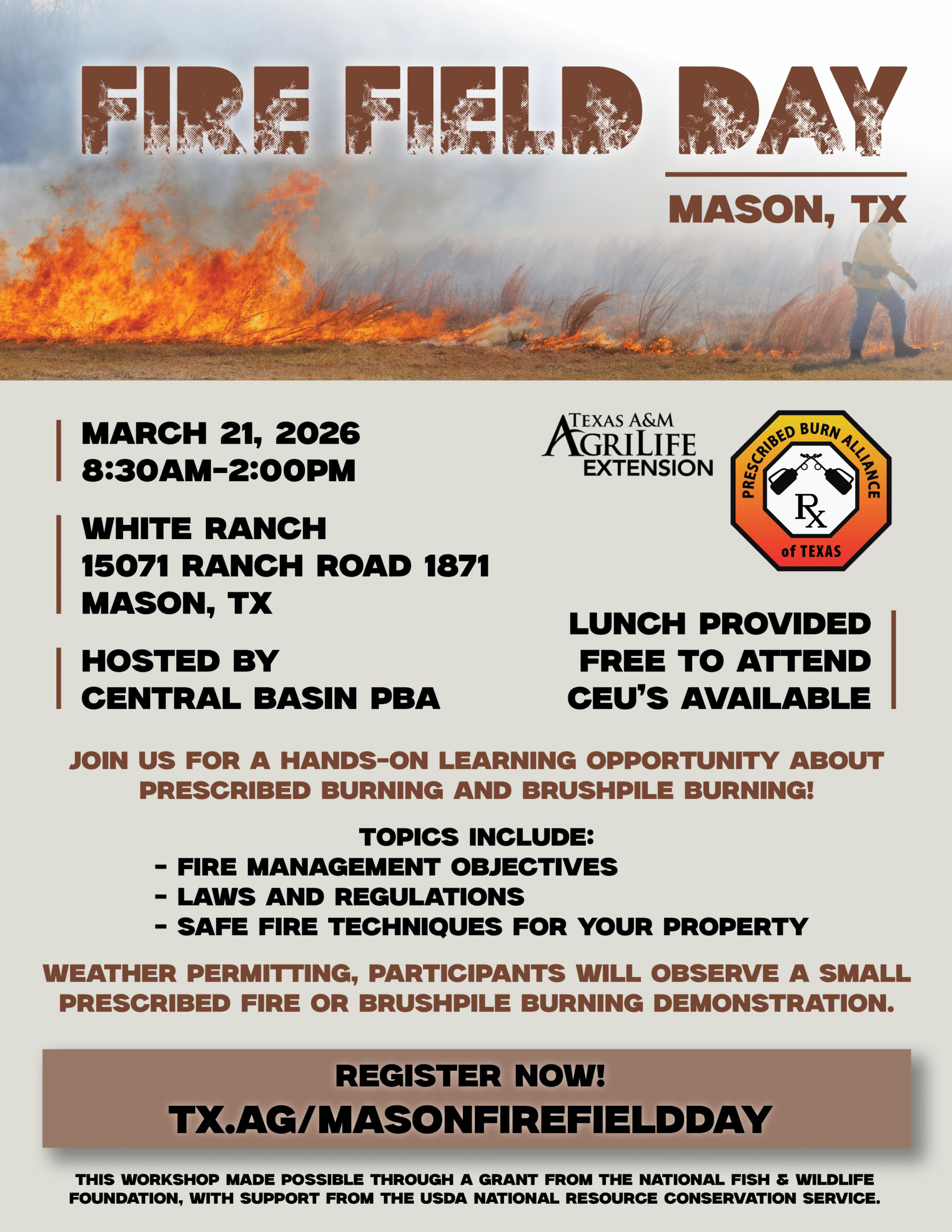
Landowners, ranchers, and natural resource managers across the region are invited to take part in an exciting and educational Fire Field Day.  The event is slated for March 21, 2026, at the scenic White Ranch in Mason, Texas. This in-person workshop offers a unique opportunity to learn directly from prescribed fire experts and the Central Basin Prescribed Burn Association (PBA).

With growiA promotional flyer for a “Fire Field Day” event in Mason, Texas, featuring a background photo of an active grass fire with flames and smoke. Event details include date, time, location at White Ranch, and host information. The flyer highlights topics such as prescribed burning, brushpile burning, fire management objectives, regulations, and safe techniques. It notes lunch is provided, the event is free, CEUs are available, and participants may observe a live demonstration. A registration link is included at the bottom.ng interest in safe and effective rangeland management practices, prescribed fire has become an essential tool for improving rangeland health, reducing wildfire risk, and managing brush and tree encroachment. This event is designed to equip participants with both foundational knowledge and practical, hands-on experience.

What to Expect at Fire Field Day
The workshop runs from 8:30am to 2:00pm, and lunch will be provided at no cost to attendees. The day includes expert-led discussions and demonstrations focusing on:

⭐ Fire Management Objectives
Learn why fire is such an effective ecological tool, how it benefits rangelands, and what outcomes you can expect when applying prescribed burning on your property.

⭐ Laws and Regulations
Prescribed fire is a powerful tool that comes with responsibilities. Attendees will gain clarity on Texas laws governing burn plans, permitting, liability, and proper safety protocols.

⭐ Safe Fire Techniques for Your Property
From ignition methods to firebreak preparation, participants will walk away with practical strategies they can apply at home.

Weather permitting, the event will also feature a live prescribed fire or brushpile burn demonstration, giving attendees a chance to observe fire behavior and management techniques in real time.

This Fire Field Day is proudly hosted by the Central Basin Prescribed Burn Association, with support from Texas A&M AgriLife Extension and the Prescribed Burn Alliance of Texas. These organizations are committed to helping landowners apply safe, science-based fire practices to improve their rangeland and encourage healthier ecosystems across the region.

Why Prescribed Fire Matters
Prescribed burning is one of the most cost-effective and natural methods for managing unwanted brush and trees, improving wildlife habitat, stimulating new plant growth, and reducing the intensity of future wildfires. For many Texas landowners, gaining confidence and practical knowledge is the key first step toward implementing burns on their own property.

This workshop is an ideal starting point, whether you are brand new to prescribed fire or looking to expand your experience with support from certified professionals.

We hope you will mark your calendar and JOIN US!
📍 Location: White Ranch – 15071 Ranch Road 1871, Mason, TX
📅 Date: March 21, 2026
⏰ Time: 8:30 AM–2:00 PM
💲 Cost: FREE
🍽️ Lunch Included
📜 CEU’s Available

For more information and to register please visit: TX.AG/MASONFIREFIELDDAY
Spaces often fill quickly for hands-on burn workshops so don’t miss this chance to learn from experts and connect with landowners across the region.

Stay Connected with Us!
Follow along for more land management events, educational workshops, and updates across the region.

Filed Under: Brush Management, Conservation, Conservation Practices, Prescribed Burn Associations, Prescribed Burning, Range Concepts, Wildfire Tagged With: #BrushManagement, #CentralBasinPBA, #FireEcology, #FireFieldDay, #PrescribedBurn, #RanchManagement, #SustainableLandManagement, #TexasAgriLifeExtension, #TexasLandowners, #TexasRangeManagement, #WildfirePrevention

The Long-Term Cost of Overgrazing—and How to Avoid It

February 25, 2026 by morgan.treadwell

Rangeland health is shaped by cumulative management decisions rather than single events. Grazing practices that consider timing, recovery, and monitoring support long-term productivity and resilience.

Avoiding overgrazing requires consistency, observation, and flexibility. Just as our environmental conditions change (whiplash drought), so must our grazing strategies.

Connecting the Pieces

Understanding overgrazing, reading rangeland condition, and applying recovery-based grazing strategies work together. Each piece informs the next, creating a management approach that responds to what rangeland needs.

When these elements are aligned, rangelands are better equipped to handle drought, variable weather, fires, woody plant encroachment, and changing conditions.

Long-Term Benefits of Intentional Grazing

Over time, well-managed grazing supports stronger plant communities, improved soil cover, and greater forage stability. These benefits accumulate gradually, reinforcing the importance of patience and long-term thinking.

Stewardship Over Short-Term Gains

Successful rangeland management prioritizes sustainability over short-term use. Grazing decisions made with long-term outcomes in mind help ensure rangelands remain productive and functional for future generations. These strategies also create more flexibility across the operation because pastures are kept productive, healthy, and ready for the next grazing rotation despite challenging environmental conditions.

What Long-Term Success Looks Like on Rangeland

Long-term rangeland success is not defined by a single good year, but by consistent patterns over time. Healthy rangelands tend to show stable plant communities, adequate ground cover, and the ability to recover after grazing or environmental stress.

Successful grazing systems remain flexible. Stocking rates, timing, and pasture use are adjusted based on current conditions rather than fixed plans or continuous use. Monitoring becomes a regular habit, allowing managers to respond early instead of reacting after damage has occurred.

Over time, this approach supports more reliable forage production, improved soil protection, and greater resilience during drought and variable weather. Long-term success is built through intentional decisions made season after season, with the rangeland guiding every single management choice.

Filed Under: Brush Management, Conservation, Conservation Practices, Grazing Management Tagged With: #grazing #ranchmanagement #brush #grasslands, brush management, Conservation Practices, Grazing, grazing management, range management

Grazing Isn’t the Problem. Unmanaged Pressure Is.

February 18, 2026 by morgan.treadwell

Grazing is often viewed as a disturbance or impediment to rangeland health, but it is just the opposite! When applied intentionally, it can support plant diversity and ecosystem function. The key is managing pressure, timing, and recovery rather than applying constant use in a continuous grazing system.  Even if managers are conservatively or low-stocked, continuous grazing is a recipe for poor rangeland condition.  

Grazing strategies that prioritize rest allow plants to recover and strengthen root systems. 

Rest and Recovery Matter 

Plants need time after grazing to regrow leaves and rebuild energy reserves that sustains populations during drought and dormancy. Without sufficient recovery, repeated grazing weakens native perennial grasses and reduces long-term productivity and diversity. 

Planned grazing systems incorporate rest periods that match plant growth patterns and environmental conditions. 

Managing Pressure, Not Just Numbers 

Stocking rate alone does not determine grazing success. Duration and distribution of grazing pressure often have a greater impact on plant health than animal numbers. 

Adjusting pasture size, rotation timing, and water placement can help distribute grazing pressure more evenly across the landscape. 

Grazing as a Management Tool 

When managed properly, grazing can reduce excess vegetation, promote plant diversity, and support soil health. Used intentionally, livestock become a win-win synergistic balance that contributes to rangeland resilience rather than degradation. 

Filed Under: Brush Management, Conservation, Grazing Management, Range Concepts Tagged With: #grazing #ranchmanagement #brush #grasslands, Grazing, grazing management, rangelands

  • Page 1
  • Page 2
  • Page 3
  • Interim pages omitted …
  • Page 5
  • Go to Next Page »

Recent Posts

  • Does Prescribed Fire Ever Cross Your Mind? Join the Prescribed Burn School in Gatesville Next Month!
  • Adaptability Is Key as Drought Persists Across Texas Rangelands
  • What the National CPBM Report Means for Producers Using Prescribed Fire
  • 2025 Region 3 Texas Land Value Trends: What Stability Means for West Texas Producers
  • A Tale of Two Texas Landscapes: Drought Conditions and the Road Ahead

Categories

  • 4-H Range Contests
  • Beef Cattle
  • Brush Management
  • Carbon Credits
  • Carbon Markets
  • Conservation
  • Conservation Practices
  • Drought Management
  • El NiĂąo
  • Events
  • Goats
  • Grazing Management
  • La Niña
  • Land
  • Lessons Learned
  • Meet A County Extension Agent
  • Plant ID
  • Podcast
  • Prescribed Burn Associations
  • Prescribed Burning
  • Publications
  • Range Concepts
  • RAP
  • Sheep
  • Society for Range Management
  • Soil
  • Staff
  • Targeted Grazing
  • Uncategorized
  • Water
  • Weather
  • Why I Ranch
  • Wild Pigs
  • Wildfire
  • Wildfires
  • Wind
  • Woody Encroachment
  • Youth Range Workshop

Archives

Texas A&M AgriLife Extension Service
Texas A&M University System Member
  • Compact with Texans
  • Privacy and Security
  • Accessibility Policy
  • State Link Policy
  • Statewide Search
  • Veterans Benefits
  • Military Families
  • Risk, Fraud & Misconduct Hotline
  • Texas Homeland Security
  • Texas Veteran's Portal
  • Equal Opportunity
  • Open Records/Public Information