• Skip to primary navigation
  • Skip to main content
  • Skip to primary sidebar
  • Texas A&M Forest Service
  • Texas A&M Veterinary Medical Diagnostics Laboratory
  • Texas A&M AgriLife Extension Service
  • Texas A&M AgriLife Research
  • Texas A&M College of Agrculture and Life Sciences
West Texas Rangelands
West Texas RangelandsWe hope to provide a variety of science-based rangeland information and current research on prescribed fire, wildfires, brush management, and grazing management!
  • Menu
  • Home
  • About & Contact
  • Publications
    • Extension Publications
    • Refereed Journal Articles
    • Program Summaries
  • Events
  • Lunch N’ Learn
  • Infographics
    • Drought
    • Grazing
    • Herbicide
    • Prescribed Fire
    • Rangeland Plants
    • Wildfire
  • Range Resources
    • Published to Pasture
    • Range Concepts
  • Fire Resources
  • Sponsors
  • AgriLife Learn Online Courses

Using Birds to Read Rangeland Health

March 11, 2026 by kara.matheney

Birds are more than just a welcome sight on Texas rangelands. They can also tell us a great deal about the condition of our land. Because birds respond quickly to changes in vegetation, water availability, and management practices, they are valuable indicators of overall land health.

Texas A&M AgriLife Extension Service recently released A Texas Landowner’s Guide to Conducting a Bird Survey, a research-based publication designed to help landowners better understand the bird species using their property and what those observations can reveal about habitat conditions.

Why Conduct a Bird Survey?

Bird surveys give landowners a practical way to “check the pulse” of their property. The presence or absence of certain bird species can reflect changes in plant diversity, forage structure, and wildlife habitat. Rather than focusing on a single species, a general bird survey looks at the broader bird community and how it relates to current land management.

Over time, repeated observations can help landowners track trends, document stewardship efforts, and evaluate whether management goals are being met.

Designed with Landowners in Mind

This AgriLife Extension guide is written specifically for Texas landowners, not professional bird biologists. It introduces bird surveys in a practical, approachable way that fits working ranches and rural properties.

The publication explains the basics of conducting a general bird survey, why bird data are useful for land management, and where to find birding resources and equipment. It is especially helpful for landowners who are new to bird surveys or looking to incorporate wildlife monitoring into an existing management plan.

Turning Observations into Action

Collecting information is only useful if it can inform decisions. Bird survey data can help landowners evaluate habitat conditions, identify areas for improvement, and better understand how wildlife responds to management practices.

While bird surveys are not regulatory requirements, they offer a voluntary, science-based tool that complements broader rangeland and wildlife management strategies. They can also help landowners better communicate their stewardship efforts with partners, agencies, or the community.

Building Skills Over Time

The guide recognizes that bird identification can feel intimidating at first. However, bird surveying is a skill that improves with practice. By using available resources and learning over time, landowners can gain confidence and make bird surveys a meaningful part of their land management toolbox.

Learn More

A Texas Landowner’s Guide to Conducting a Bird Survey is available through Texas A&M AgriLife Extension Service. For more information or assistance, contact your local AgriLife Extension office and explore additional wildlife and rangeland management resources.

Filed Under: Conservation, Conservation Practices, Land, Publications Tagged With: #AgriLifeExtension, #BirdSurvey, #RangelandHealth, #RangelandManagement, #TexasLandowners, #WestTexasRangelands, #WildlifeStewardship

Fire and Follow-through!

July 9, 2025 by jaime.sanford

We are so grateful to showcase the amazing work of our department’s graduate students in RWFM 621!  We worked with a devoted team of M.Sc. and Ph.D. students on developing a Communications Strategies and Extension Publication final project.  This team took on an exciting task of making new science readily available to ranchers, landowners, and prescribed fire practitioners.  Well done ya’ll and THANK YOU!!

For thousands of years, fire has played a vital role in shaping healthy grasslands across the Great Plains. From Indigenous communities using fire to manage hunting grounds to today’s producer striving for resiliency in rangeland pastures, prescribed fire continues to be a powerful process for rangeland stewardship. But as NEW research shows, it’s not just about the initial fire—it’s about timing, consistency, and PROCESS. 

[Read more…] about Fire and Follow-through!

Filed Under: Prescribed Burn Associations, Prescribed Burning, Publications

Moving to the Country

May 7, 2025 by jaime.sanford

A recent study from Dr. David Matarrita-Cascante, Texas A&M University Department of Rangeland, Wildlife and Fisheries, explores why people are migrating towards rural communities, their previous rangeland management experience, and their goals and expectations for their newly owned private property. 

[Read more…] about Moving to the Country

Filed Under: Publications, Staff

A New Landowner’s Guide for Texas Rangelands

April 2, 2025 by jaime.sanford

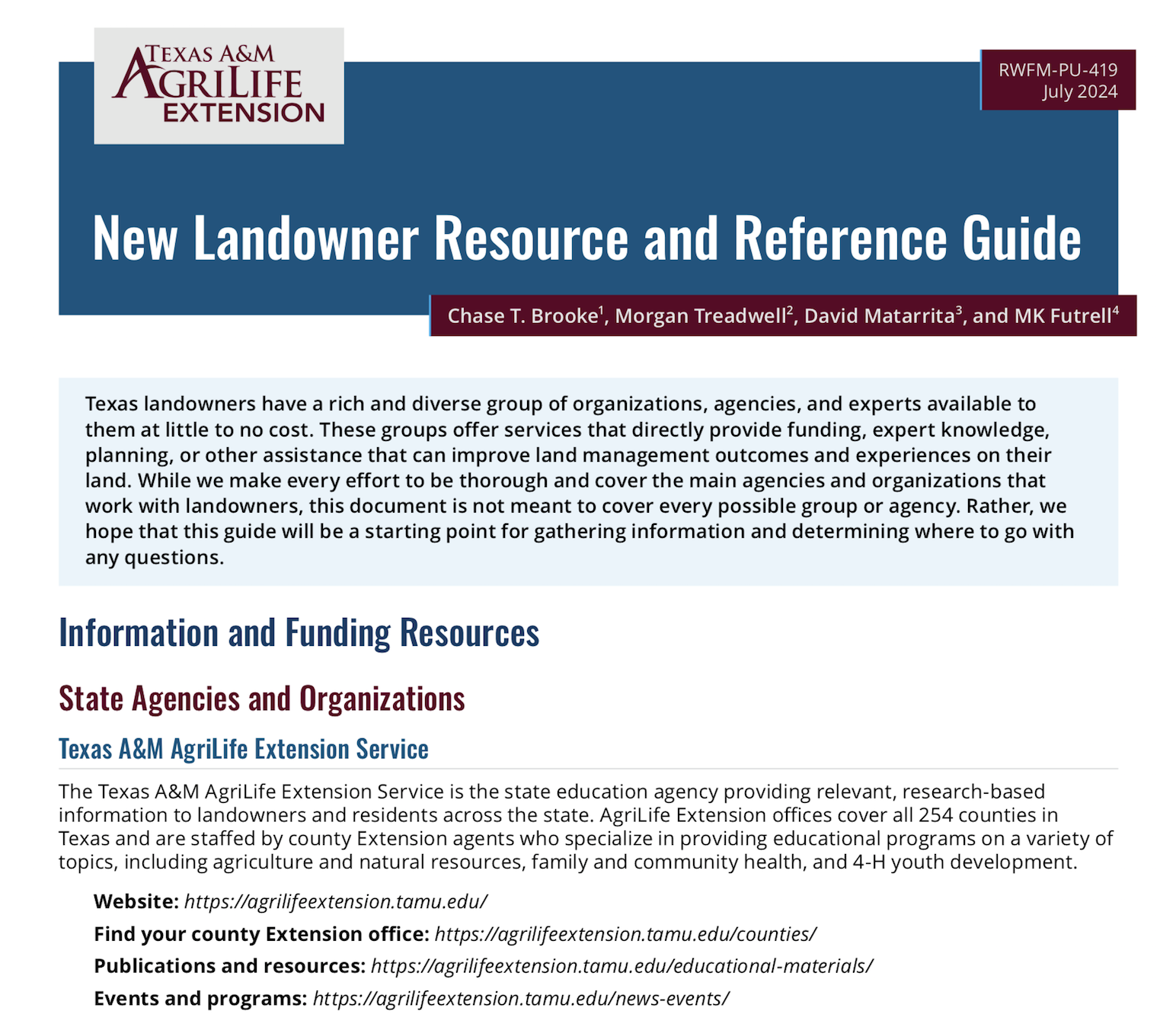
New landowner ResourcesIf you’re a new landowner in Texas, you’re in a great position to take advantage of the many resources available to you!!! Texas has a rich and diverse group of natural resource organizations, agencies, and experts ready to assist you, often at little to no cost. There is a new publication written by Chase Brooke, Dr. Morgan Treadwell, Dr. David Matarrita-Cascante, and MK Futrell from the Department of Rangeland, Wildlife and Fisheries Management that highlights a variety of services, including cost-share opportunities, expert knowledge, planning assistance, and other support aimed at improving rangeland management practices and conservation. 

[Read more…] about A New Landowner’s Guide for Texas Rangelands

Filed Under: Publications

Exotic Herbivores and Fire Energy Drive Standing Herbaceous Biomass but do not Alter Compositional Patterns in a Semiarid Savanna Ecosystem

February 14, 2024 by jaime.sanford

Did you know that fire regime alterations are pushing open ecosystems worldwide past tipping points where alternative steady states characterized by woody dominance prevail. The intensity and frequency of surface fires are reduced, limiting their effectiveness for controlling cover of woody plants. Grazing pressure can also reinforce woody encroachment by potentially reducing fine-fuel loads. 

[Read more…] about Exotic Herbivores and Fire Energy Drive Standing Herbaceous Biomass but do not Alter Compositional Patterns in a Semiarid Savanna Ecosystem

Filed Under: Prescribed Burn Associations, Prescribed Burning, Publications

Integrated Pest Management for Woody Encroachment

September 20, 2023 by jaime.sanford

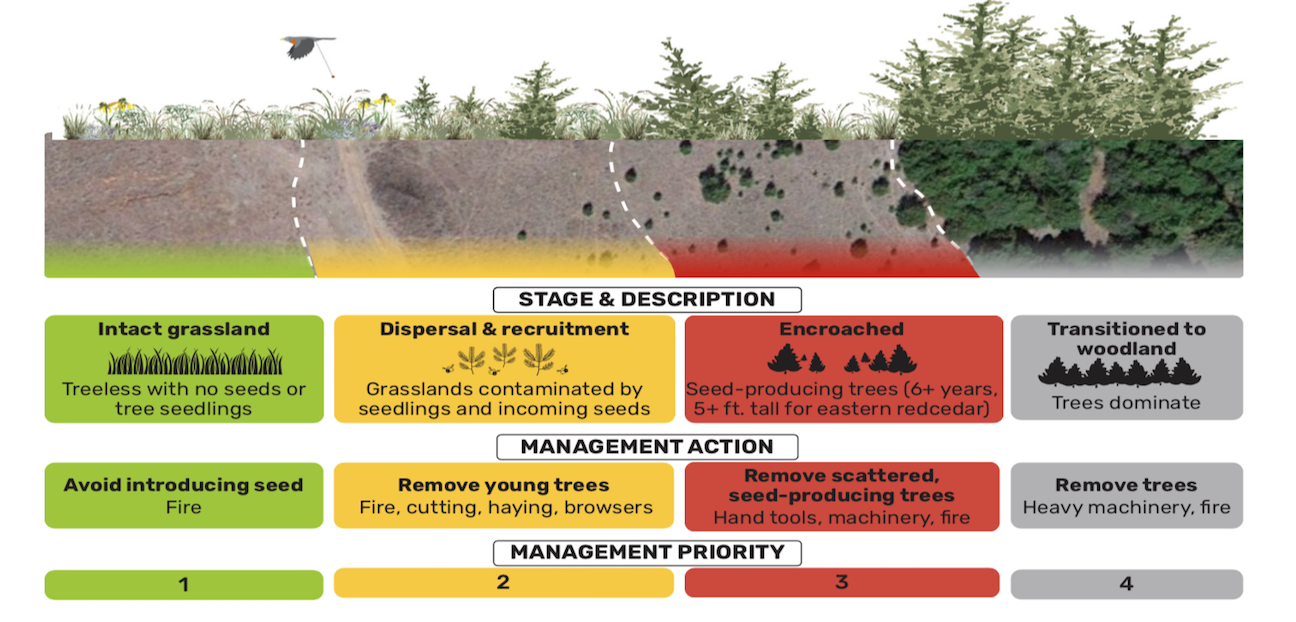
The top 5 woody invasive plant species in the Great Plains Grasslands include; Eastern redcedar, Honey mesquite, Chinese tallow, Ashe juniper, and Redberry juniper. Past brush management efforts have been unable to stop or reverse the loss of grasslands at county, state, or regional scales. Traditional management efforts have assumed that there are tolerable levels of the top five woody pests in grasslands before encroachment becomes a resource concern and mechanical or chemical removal of woody plants will restore a site back to a grassland. Scientists are now recommending more integrated approaches for dealing with woody species and ending the reinvasion cycle in grasslands. 

[Read more…] about Integrated Pest Management for Woody Encroachment

Filed Under: Brush Management, Conservation, Conservation Practices, Grazing Management, Publications, Woody Encroachment Tagged With: #grazing #ranchmanagement #brush #grasslands, brush management, Conservation, Conservation Management, Conservation Practices, Range Concepts, woody encroachment

Remove, Reduce, or Manipulate? Best Practices for Brush Management Conservation Standards in Great Plains Grasslands

August 9, 2023 by jaime.sanford

One of the biggest confusion points in brush management is the decision between removing, reducing, or manipulating woody plants. Past management decisions have addressed the symptoms of woody encroachment but not the root cause of the problem. To contribute to the efforts to confront the loss of grasslands at county and state, clarity is needed on which woody species need complete removal versus species who can be reduced or manipulated  without the threat of grassland loss.

[Read more…] about Remove, Reduce, or Manipulate? Best Practices for Brush Management Conservation Standards in Great Plains Grasslands

Filed Under: Brush Management, Grazing Management, Publications, Range Concepts, Woody Encroachment Tagged With: brush management, grazing management, woody encroachment

Prescribed Fire Checklist and Wildfire Ready Checklist

April 20, 2022 by

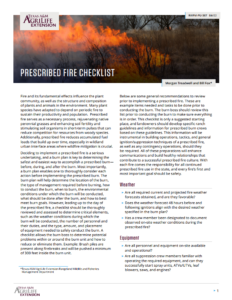
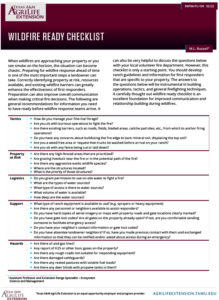
Current drought conditions coupled with hot and windy days is a recipe for all things fire. Be ready on your place for a wildfire or put that wildfire to use with a burn plan and burnout operations!

Here are two checklists that will help you prepare you for wildfires and/or assist you in executing a prescribed fire or burnout operations on your property!

To find the full factsheet, click the image above or follow the link below.

https://agrilifelearn.tamu.edu/s/product/prescribed-fire-checklist/01t4x000004P8BE


To find the full factsheet, click the image above or follow the link below.

https://agrilifelearn.tamu.edu/s/product/wildfire-ready-checklist/01t4x000004OUeKAAW


Filed Under: Brush Management, Prescribed Burning, Publications

ERM-1466 “Chemical Weed and Brush Control Reference Guide for Rangeland”

February 28, 2022 by

The ERM-1466 “Chemical Weed and Brush Control Reference Guide for Rangeland” is a great source for land managers and stewards alike with general suggestions for herbicides used to control various brush and weed species found on Texas rangelands. In addition to this, this publication provides information on the levels of control expected for each specie. Follow the link below to download the publication!

ERM-1466

Click to expand image

Filed Under: Brush Management, Publications

New Publication Available Now!

December 9, 2021 by

The Prescribed Fire Communications Kit provides resources to aid in discussion and facilitate interactions between those who conduct prescribed fires and the local community. This toolkit was designed for the landowner, county agent, or local government in mind. The goals of this free resource is to provide stewards of the land with the information to educate others and advocate for the safety and benefits of prescribed burning.

This publication can be downloaded from the link below or on the AgriLife Learn website, just search for Prescribed Burning Communication Kit.

prescribed-burning-communication-kits

Don’t forget to check us out on Facebook at West Texas Rangelands!

Filed Under: Brush Management, Prescribed Burning, Publications

  • Page 1
  • Page 2
  • Go to Next Page »

Recent Posts

  • Economic Incentives for Reducing Wildfire Risk
  • Building Knowledge and Confidence with the Updated Online Prescribed Burn School
  • The Cost of Prolonged Overgrazing: Ripple Effects on Watershed Health, Rainfall Infiltration, and Ranch Production
  • Advancing Wildland Fire Science: Inside the USDA Forest Service Fire Lab
  • Spring Weather Outlook By Luke Drosche – Texas A&M AgriLife Extension DAR Specialist

Categories

  • 4-H Range Contests
  • Beef Cattle
  • Brush Management
  • Carbon Credits
  • Carbon Markets
  • Conservation
  • Conservation Practices
  • Drought Management
  • El Niño
  • Events
  • Goats
  • Grazing Management
  • La Niña
  • Land
  • Lessons Learned
  • Meet A County Extension Agent
  • Plant ID
  • Podcast
  • Prescribed Burn Associations
  • Prescribed Burning
  • Publications
  • Range Concepts
  • RAP
  • Sheep
  • Society for Range Management
  • Soil
  • Staff
  • Targeted Grazing
  • Uncategorized
  • Water
  • Weather
  • Why I Ranch
  • Wild Pigs
  • Wildfire
  • Wildfires
  • Wind
  • Woody Encroachment
  • Youth Range Workshop

Archives

Texas A&M AgriLife Extension Service
Texas A&M University System Member
  • Compact with Texans
  • Privacy and Security
  • Accessibility Policy
  • State Link Policy
  • Statewide Search
  • Veterans Benefits
  • Military Families
  • Risk, Fraud & Misconduct Hotline
  • Texas Homeland Security
  • Texas Veteran's Portal
  • Equal Opportunity
  • Open Records/Public Information