• Skip to primary navigation
  • Skip to main content
  • Skip to primary sidebar
  • Texas A&M Forest Service
  • Texas A&M Veterinary Medical Diagnostics Laboratory
  • Texas A&M AgriLife Extension Service
  • Texas A&M AgriLife Research
  • Texas A&M College of Agrculture and Life Sciences
West Texas Rangelands
West Texas RangelandsWe hope to provide a variety of science-based rangeland information and current research on prescribed fire, wildfires, brush management, and grazing management!
  • Menu
  • Home
  • About & Contact
  • Publications
    • Extension Publications
    • Refereed Journal Articles
    • Program Summaries
  • Events
  • Lunch N’ Learn
  • Infographics
    • Drought
    • Grazing
    • Herbicide
    • Prescribed Fire
    • Rangeland Plants
    • Wildfire
  • Range Resources
    • Published to Pasture
    • Range Concepts
  • Fire Resources
  • Sponsors
  • AgriLife Learn Online Courses

Making the Most of Every Bite: How Goats and Cattle Complement One Another on Texas Rangelands

September 17, 2026 by kara.matheney

Across much of Texas, producers are continually looking for ways to improve forage utilization, increase ranch productivity, and manage woody plant encroachment without sacrificing livestock performance. While cattle are the foundation of many ranching operations, growing evidence suggests that adding small ruminants such as goats can provide benefits that extend beyond simply adding another revenue stream.

Research conducted in the Cross Timbers region found that cattle and goats utilize available plants very differently throughout the year, allowing them to occupy distinct feeding niches on the same landscape. The study demonstrated that goats consumed substantially more woody vegetation and forbs than cattle, while cattle relied more heavily on grasses and legumes. This dietary separation is one reason co-grazing systems can be so effective. Lippy et al. (2024), Journal of Animal Science 102:38-39.

Understanding the Grazing Niche
Every grazing animal has evolved to take advantage of different plant resources. Cattle are generally classified as grazers, meaning they prefer grasses and grass-like plants. Their anatomy, grazing behavior, and digestive systems are well-suited for harvesting large amounts of herbaceous forage close to the ground.
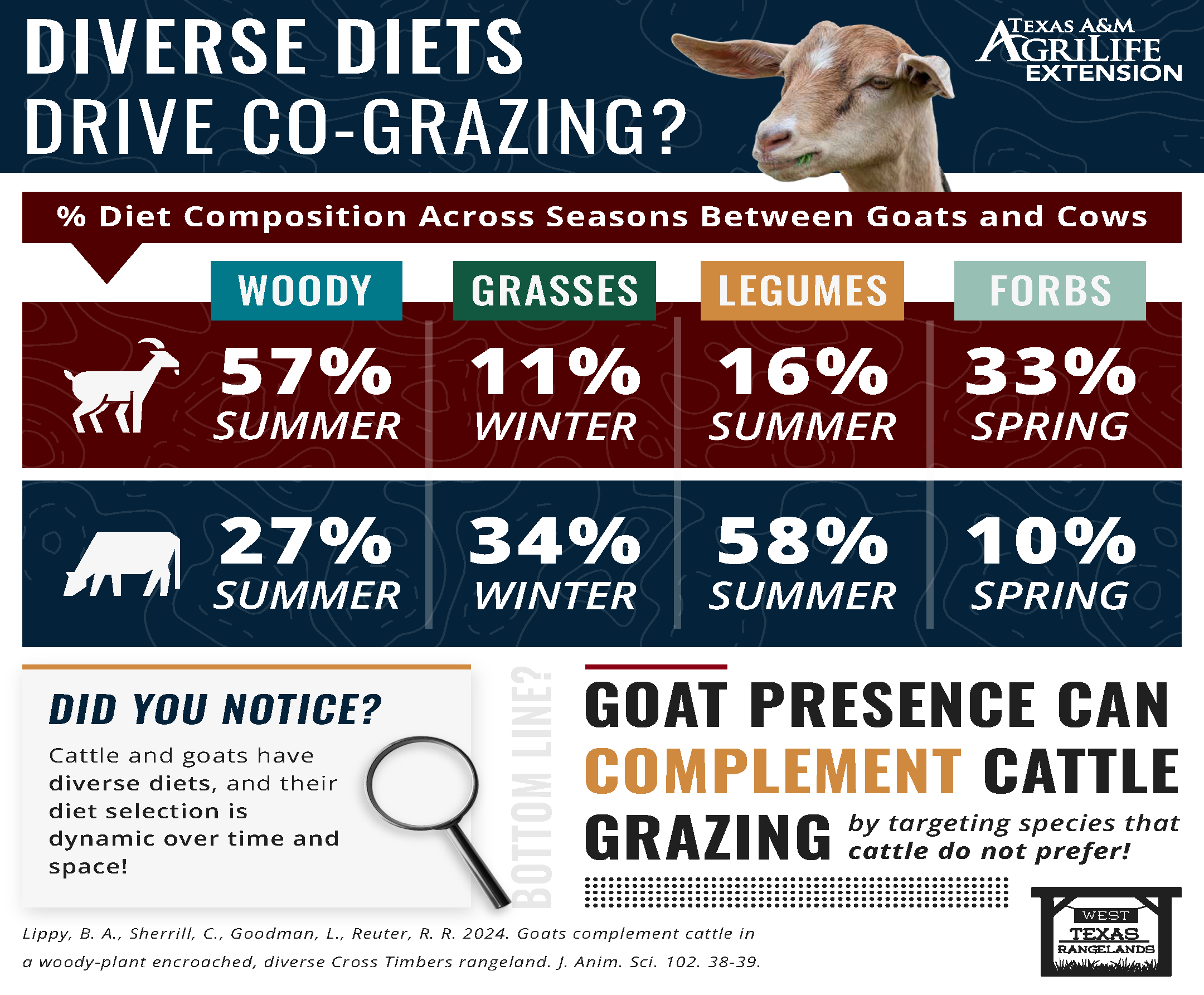
Goats, on the other hand, behave more like browsers. Rather than focusing primarily on grasses, they frequently select leaves, twigs, shrubs, vines, and broadleaf plants. Their smaller mouths and unique feeding behavior allow them to be highly selective and utilize vegetation that cattle may largely ignore.

This difference is important because rangelands rarely consist of a single plant type. A healthy landscape often contains a mixture of grasses, forbs, legumes, and woody species. When only one livestock species is present, portions of the available forage resource may remain underutilized, while preferred plants receive disproportionate grazing pressure.

Why Dietary Diversity Matters

The infographic illustrates that cattle and goats shift their diets seasonally while maintaining different forage preferences throughout the year. Those differences allow multiple livestock species to harvest forage from different parts of the plant community rather than directly competing for the same forage resources.

From a ranch management perspective, this creates opportunities to increase overall forage utilization while distributing grazing pressure across a greater variety of plant species. Instead of concentrating consumption on a narrow subset of desirable plants, co-grazing can encourage more balanced use of the landscape.

Research has shown that diverse grazing pressure can influence plant community composition over time. By incorporating animals that utilize different forage types, producers may be able to improve forage distribution and reduce the competitive advantage of less desirable species.

Managing Woody Plant Encroachment
One of the most significant rangeland challenges facing Texas is the expansion of woody plants into grass-dominated ecosystems. Species such as mesquite, juniper, and various brush species can reduce forage production, alter wildlife habitat, and impact water resources.

Traditional brush management tools remain important, but goats can serve as a valuable component of an integrated management strategy. Because goats readily consume many woody plant species, they can apply consistent browsing pressure that complements mechanical and chemical control efforts.

While goats are not a silver bullet for brush management, their dietary preferences allow them to target vegetation that cattle generally avoid. Over time, this additional grazing pressure can help suppress regrowth and provide another tool for managing woody plant expansion.

Improving Drought Resilience

Diverse grazing systems may also improve flexibility during variable forage conditions.

Texas producers are no strangers to drought. During dry periods, forage availability often changes rapidly. Some plant groups decline earlier than others, and livestock that can utilize a broader range of available vegetation may offer additional management options.

Because goats and cattle respond differently to changing forage conditions, co-grazing can help producers access forage resources across multiple plant communities. This flexibility can be particularly valuable when environmental conditions limit the growth of preferred forage species.

Maintaining diverse plant communities and utilizing multiple grazing niches can contribute to the overall resilience of both livestock operations and the rangelands on which they depend.

Looking Beyond Production
The benefits of co-grazing extend beyond forage utilization alone. Many producers find that incorporating multiple livestock species supports broader ranch objectives, including:

  • Improved use of available forage resources
  • Increased management flexibility
  • Enhanced brush management efforts
  • Diversified income opportunities
  • More balanced grazing pressure across plant communities
  • Potential improvements in rangeland condition over time

As with any management practice, successful implementation depends on factors such as fencing, predator management, labor availability, marketing opportunities, and operation-specific goals. However, understanding how different livestock species interact with vegetation can help producers make informed management decisions.

A Rangeland Perspective
One of the most important lessons from this research is that livestock should not simply be viewed as consumers of forage. Different animal species interact with rangelands in unique ways, creating opportunities for managers to influence plant communities through grazing management.

The differences highlighted in the infographic demonstrate why co-grazing has become an important consideration for many Texas producers. By combining grazers and browsers, ranchers may be able to utilize more of the available forage base, address vegetation management challenges, and support healthier, more resilient rangelands.

When cattle and goats are allowed to do what they naturally do best, the result is often a more efficient use of the landscape and a management approach that works with ecological processes rather than against them.
 

Filed Under: Beef Cattle, Forage, Goats, Grazing Management Tagged With: #AgriLifeExtension, #BeefCattle, #GoatProduction, #GrazingManagement, #RangelandManagement, #ResilientRangelands, #WestTexasRangelands, Grazing

Know Your Forage Before Winter: Why Fall Forage Testing Pays Off

August 20, 2026 by kara.matheney

As summer transitions into fall, many ranchers begin taking stock of hay inventories, pasture conditions, and winter feeding plans. While it’s easy to focus on how much forage is available, an equally important question is often overlooked:

What is the quality of the forage you have?
Forage testing is one of the most cost-effective management tools available to livestock producers. A relatively inexpensive analysis can provide valuable information that helps reduce feed costs, improve livestock performance, and support sustainable grazing management throughout the winter months. Texas A&M AgriLife Extension specialists consistently emphasize that successful winter feeding programs begin with knowing the nutrient value of available forage resources.

Why Forage Quality Matters
Winter feeding decisions are often based on assumptions. Hay that appears green and leafy may seem adequate, while coarse or weathered hay may be dismissed as low quality. However, visual appearance is not always a reliable indicator of nutritional value.

Forage quality is influenced by numerous factors, including:

  • Plant species and variety
  • Stage of maturity at harvest
  • Fertility management
  • Rainfall and weathering
  • Leaf-to-stem ratio
  • Harvest and storage conditions

As a result, nutrient levels can vary significantly between hay cuttings, fields, and even bales harvested from the same operation.

Without testing, producers are left guessing about the protein and energy content being delivered to their livestock.


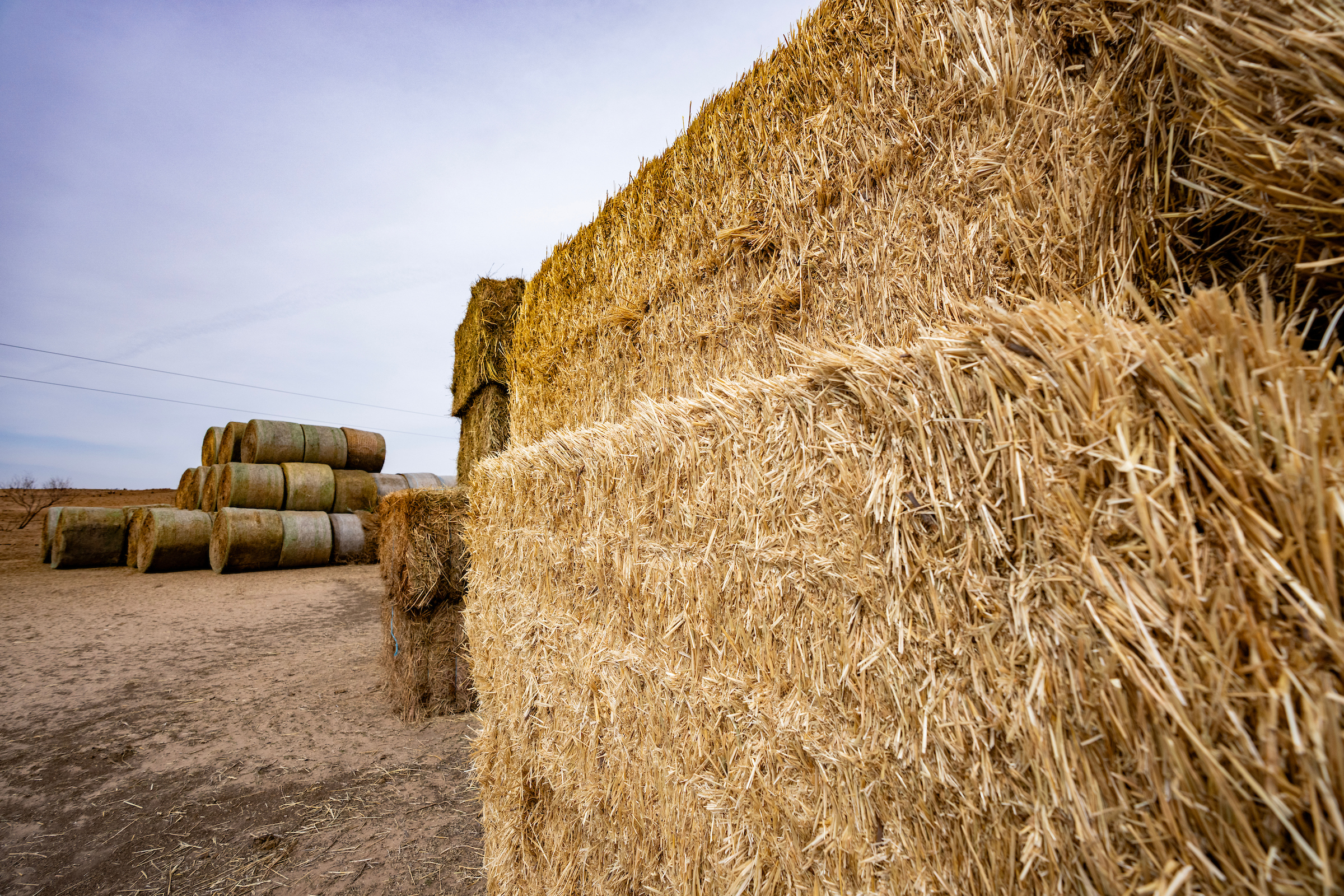
Hay bales sit alongside a farm road. (Sam Craft/Texas A&M AgriLife Marketing and Communications)

Winter Feeding Costs Start with Forage Quality
Feed costs often represent the largest annual expense for cow-calf operations. Every dollar spent on supplements should be targeted toward an actual nutritional need.

A forage test provides information that helps answer critical management questions:

  • Will this hay meet the needs of dry cows?
  • How much supplementation will lactating females require?
  • Can replacement heifers maintain desired gains?
  • Are protein supplements necessary?
  • Is energy the limiting nutrient?

Making supplementation decisions without this information can result in either underfeeding or spending money on unnecessary feed. Both scenarios affect profitability.

Match the Forage to the Livestock
One of the greatest advantages of forage testing is the ability to allocate resources strategically.

Different classes of livestock have different nutrient requirements. Lactating cows, first-calf heifers, growing replacement females, and mature bulls all require different levels of protein and energy.

Rather than feeding the same forage to all animals, producers can use test results to:

  • Reserve higher-quality hay for animals with greater nutrient demands.
  • Utilize lower-quality forage where requirements are lower.
  • Reduce unnecessary supplementation.
  • Improve overall feed efficiency.

This approach helps maximize the value of stored forage while maintaining animal performance throughout the winter.

Grazing Management Benefits Too
Forage testing is not just for hay. Many producers rely on stockpiled forage, winter annuals, crop residues, or dormant native rangelands to extend grazing and reduce feeding costs. Understanding the nutritional value of those forage resources provides important information for winter grazing decisions.

Testing standing forage can help determine:

  • When supplementation may become necessary.
  • How long available forage can support livestock requirements.
  • Whether stocking rates are appropriate.
  • How grazing pressure may affect winter pasture condition.

These decisions influence both livestock performance and long-term rangeland health. When producers understand forage quality, they can better balance animal needs with available resources while avoiding excessive grazing pressure during vulnerable periods.

Protein Is Important. Energy Is Essential.
Many producers immediately look at crude protein when a forage analysis arrives.

Protein is certainly important, but AgriLife forage specialists frequently note that energy values can be equally important, and in some cases even more critical, when evaluating winter feeding programs. Total Digestible Nutrients (TDN) provide an estimate of the energy available in forage and play a major role in maintaining body condition and supporting production.

When cows lose condition during winter, energy deficiencies are often a major contributor. Understanding both protein and energy levels allows producers to build more effective supplementation programs.

Don’t Overlook Minerals
While protein and energy often receive the most attention, minerals are another critical piece of winter nutrition. Forage quality is not just about crude protein and Total Digestible Nutrients (TDN). Mineral concentrations can vary significantly among forage species, seasons, and environmental conditions, making it difficult to know whether livestock nutritional requirements are being met without testing.

One mineral that deserves particular attention is phosphorus. Research conducted by Texas A&M University on native forage species in the Edwards Plateau documented considerable variation in phosphorus concentrations among grasses, forbs, and browse species, as well as across seasons. In general, nutrient levels are highest during periods of active growth and decline as plants mature and enter dormancy.  The study found that forbs and browse species often contained higher concentrations of nutrients, including phosphorus, than warm-season perennial grasses. Researchers also observed that nutrient levels generally decline with advancing maturity and during dormant periods.

These seasonal changes are particularly important as rangelands enter the fall and winter months. Livestock grazing dormant native rangeland, mature hay, or weathered forage may not be receiving adequate amounts of key minerals even if sufficient forage quantity is available.

Mineral deficiencies can impact:

  • Reproductive performance
  • Growth rates
  • Immune function
  • Milk production
  • Overall animal health

Because mineral availability varies widely among forage resources, forage testing provides valuable information that can help producers develop more targeted mineral supplementation programs instead of relying on a one-size-fits-all approach.

The long-term Edwards Plateau research also highlights another important lesson for range managers: diverse plant communities often provide a wider range of nutritional benefits than single-species forage systems. Researchers concluded that plant diversity provides greater opportunities for animals to select high-quality diets and meet nutritional needs throughout the year.

As you evaluate winter feeding programs, remember that a forage test can help identify not only protein and energy deficiencies but also potential mineral gaps that may affect livestock performance. The information gained can help improve supplementation decisions while supporting more efficient use of both forage and feed resources.

Getting an Accurate Sample
A forage analysis is only as good as the sample submitted.

Texas A&M AgriLife Extension recommends using a hay probe to collect representative samples from multiple bales within a lot. Samples should be combined into a composite sample that accurately reflects the forage being fed. Proper sampling is critical because pulling hay by hand from a single bale rarely provides representative results.

Many county Extension offices can assist producers with sampling recommendations and may have hay probes available for use. Producers can also submit samples through the Texas A&M AgriLife Extension Soil, Water and Forage Testing Laboratory.

Overton

Extension Specialist, examines hay. (Michael Miller/Texas A&M AgriLife)

Planning Ahead for a Better Winter
The best time to address nutritional challenges is before cattle begin losing body condition.

Fall forage testing provides time to:

  • Evaluate forage inventories.
  • Budget winter feed costs.
  • Purchase supplements before they are urgently needed.
  • Adjust stocking plans if necessary.
  • Develop targeted feeding programs.

Ultimately, forage testing transforms winter feeding from guesswork into a management decision based on data.

As producers prepare for the months ahead, understanding both the quantity and quality of available forage can help stretch feed resources, maintain livestock performance, and protect rangeland health.

Winter feeding may never be inexpensive, but having accurate information allows producers to make smarter decisions that benefit both their livestock and their land.

Source: Huston, J.E., B.S. Rector, L.B. Merrill, and B.S. Engdahl. Nutritional Value of Range Plants in the Edwards Plateau Region of Texas. Texas Agricultural Experiment Station Bulletin B-1357, Texas A&M University System

Filed Under: Forage, Range Concepts Tagged With: #ForageTesting, #ManagementMatters, #Supplementation, #WinterFeeding

Recent Posts

  • Burning From the Ground Up: How Prescribed Burn Associations Are Expanding Fire Across the Great Plains
  • Juniper Management on Texas Rangelands
  • Making the Most of Every Bite: How Goats and Cattle Complement One Another on Texas Rangelands
  • Texas Working Lands: What Land Fragmentation Means for the Future of Texas Rangelands
  • Fall Weather Update and Winter Weather Preparation

Categories

  • 4-H Range Contests
  • Beef Cattle
  • Brush Management
  • Carbon Credits
  • Carbon Markets
  • Conservation
  • Conservation Practices
  • Drought Management
  • El Niño
  • Events
  • Forage
  • Goats
  • Grazing Management
  • La Niña
  • Land
  • Lessons Learned
  • Meet A County Extension Agent
  • Plant ID
  • Podcast
  • Prescribed Burn Associations
  • Prescribed Burning
  • Publications
  • Range Concepts
  • RAP
  • Sheep
  • Society for Range Management
  • Soil
  • Staff
  • Targeted Grazing
  • Uncategorized
  • Water
  • Weather
  • Why I Ranch
  • Wild Pigs
  • Wildfire
  • Wildfires
  • Wind
  • Woody Encroachment
  • Youth Range Workshop

Archives

Texas A&M AgriLife Extension Service
Texas A&M University System Member
  • Compact with Texans
  • Privacy and Security
  • Accessibility Policy
  • State Link Policy
  • Statewide Search
  • Veterans Benefits
  • Military Families
  • Risk, Fraud & Misconduct Hotline
  • Texas Homeland Security
  • Texas Veteran's Portal
  • Equal Opportunity
  • Open Records/Public Information