• Skip to primary navigation
  • Skip to main content
  • Skip to primary sidebar
  • Texas A&M Forest Service
  • Texas A&M Veterinary Medical Diagnostics Laboratory
  • Texas A&M AgriLife Extension Service
  • Texas A&M AgriLife Research
  • Texas A&M College of Agrculture and Life Sciences
West Texas Rangelands
West Texas RangelandsWe hope to provide a variety of science-based rangeland information and current research on prescribed fire, wildfires, brush management, and grazing management!
  • Menu
  • Home
  • About & Contact
  • Publications
    • Extension Publications
    • Refereed Journal Articles
    • Program Summaries
  • Events
  • Lunch N’ Learn
  • Infographics
    • Drought
    • Grazing
    • Herbicide
    • Prescribed Fire
    • Rangeland Plants
    • Wildfire
  • Range Resources
    • Published to Pasture
    • Range Concepts
  • Fire Resources
  • Sponsors
  • AgriLife Learn Online Courses

Know Your Stocking Rate Like You Know Your Bank Balance

June 3, 2026 by kara.matheney

If you asked most producers what is in their bank account, they could give you a pretty close answer. They know what is coming in, what is going out, and how much room they have to work with.  But ask the same question about stocking rate, and the answer is often less certain.

That is a problem, because stocking rate is just as critical to the long-term success of your operation as your financial balance sheet. In fact, Texas A&M AgriLife Extension has long emphasized that stocking rate is the single most important grazing management decision a rancher makes.

Your Grass Is Your Bank Account
Think of forage as your operating capital.  Rainfall deposits forage into the system. Livestock withdrawals remove it. When withdrawals exceed deposits, you are not just reducing this year’s balance, you are damaging the account itself.

Stocking rate is the tool that keeps those deposits and withdrawals in check. It determines how much pressure your land can handle over the entire grazing season, not just at a single point in time.  When it is set correctly, you maintain plant health, soil cover, and long-term production. When it is not, you lose root mass, reduce future forage production, and increase vulnerability to drought.

A herd of cattle stands on a dirt road in a dry, scrubby landscape under a dramatic sky filled with white and grey clouds.

West Texas on Tuesday, Dec. 6, 2022. Michael Miller/Texas A&M AgriLife Marketing and Communications)

Why Stocking Rate Matters More in West Texas
In an environment that swings from drought to abundant rainfall, stocking rate becomes even more critical.  Rainfall drives forage production across Texas rangelands, and that variability means your forage supply is never constant.

This is where many operations get into trouble.

Good years create the temptation to increase stocking rates. But when conditions shift, that same stocking level can quickly exceed what the land can support.  AgriLife Extension research emphasizes that flexibility in stocking rate is key to sustainability because rainfall, forage growth, and forage use are constantly changing.

You Can Be “Right” and Still Be Wrong
There are two sides to stocking rate: 1) the land resource and 2) animal performance

You can have enough forage on paper to support your herd, but still reduce animal performance if grazing pressure forces animals to eat less desirable plants or travel farther for forage.

On the flip side, you can push animal performance short-term by stocking heavy, but do long-term damage to the resource.

Just like finances, short-term gains at the expense of long-term stability rarely pay off.

Tools to Evaluate Your Stocking Rate
You would not manage your finances without looking at numbers. The same is true for your grazing system.  Several simple, research-backed tools can help you evaluate where you stand:

1. Forage Inventory – Knowing how much grass you have is the foundation. Extension resources emphasize taking a forage inventory to understand the current supply before making decisions.

This can include – estimating pounds of forage per acre, comparing current production to expected production, and tracking changes over time.

2. Residual or Stubble Height Monitoring – Maintaining adequate plant residue is critical for capturing rainfall and protecting soil. Monitoring how much forage remains after grazing helps determine if pressure is too high.

3. Photo Monitoring and Exclosures – Permanent photo points and grazing exclosures allow you to track change over time and separate grazing impact from weather impact.

4. Grazeable Acre Evaluation – Not every acre on your ranch contributes equally. Brush cover, slope, and water distribution all affect how livestock use the land.

Adjusting stocking rate based on actual grazeable acres improves accuracy and decision-making.

Managing Stocking Rate in a Variable Climate
In West Texas, a fixed stocking rate is rarely the right answer. Adaptability is what keeps operations afloat.

Build Flexibility into Your Herd
Extension guidance recommends structuring herds so that only a portion represents your core breeding herd, while the rest can be adjusted more easily.  This allows you to reduce numbers quickly in drought and to take advantage of good years without long-term commitment

Use Conservative Stocking as a Baseline
Conservative stocking rates leave some forage unused, creating a buffer for dry periods.  That unused forage is not waste. It is insurance.

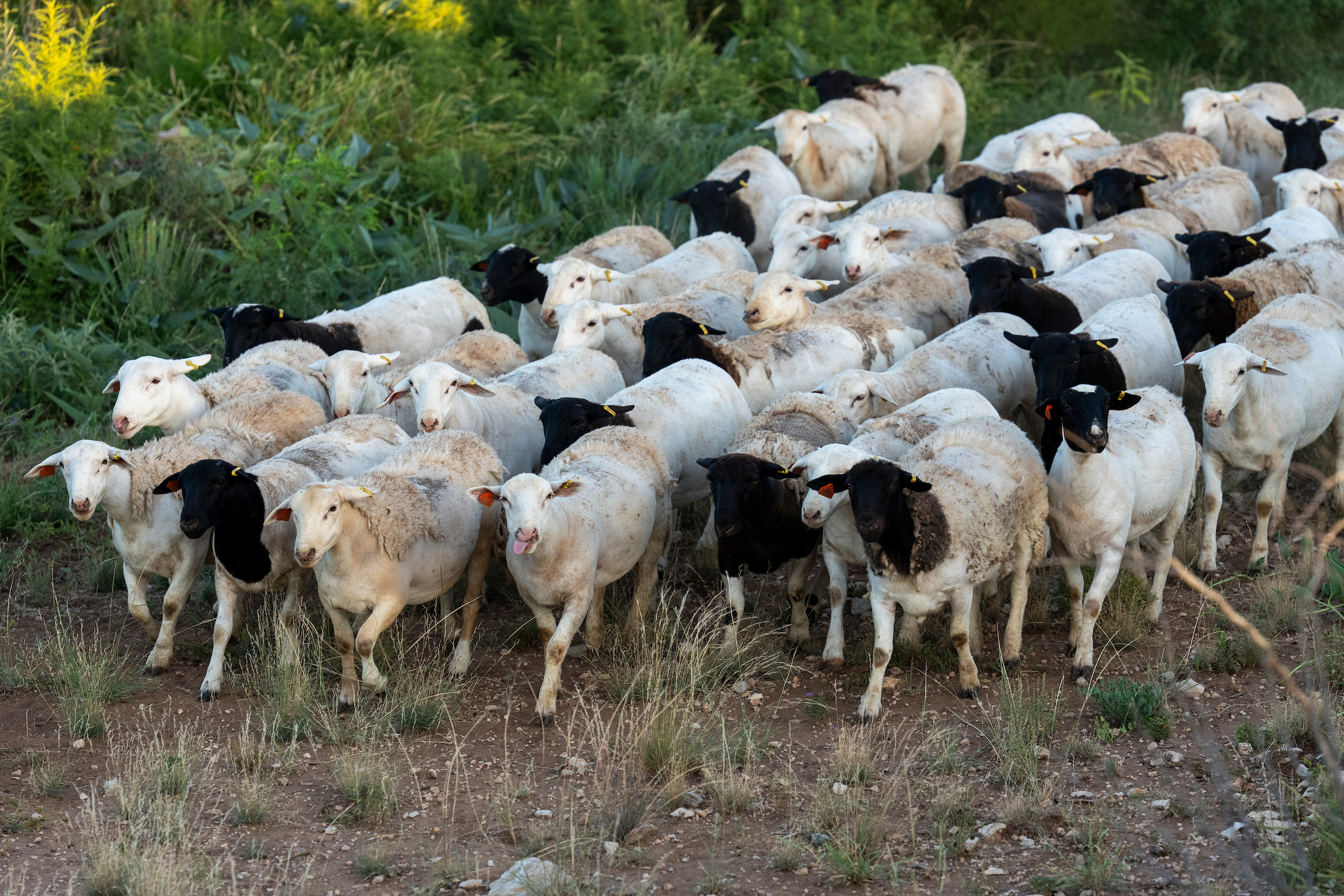
A flock of sheep, mostly white with some black faces and legs, moves across a grassy, uneven terrain with lush green foliage in the background.

Dorper sheep on Thursday, Jul 17, 2025, in San Angelo, Texas. (Michael Miller/Texas A&M AgriLife)

Adjust Early, Not Late
Waiting until forage is gone limits your options. Early adjustments protect plant health and reduce the severity of future decisions.

Match Stocking Rate to Conditions, Not Calendar
Stocking decisions should respond to rainfall and forage production, not just a set grazing plan or date on the calendar.

The Bottom Line
Stocking rate is not just a number. It is a decision that affects everything from soil health to livestock performance to long-term profitability.

Just like your bank account, you cannot manage what you do not measure.

Knowing your forage supply, tracking how it changes, and adjusting your stocking rate accordingly is one of the most practical steps you can take to build resilient rangelands.

In a system defined by variability, the operations that succeed are the ones that treat stocking rate as a dynamic decision, not a fixed number.


Filed Under: Grazing Management, Uncategorized Tagged With: #RangelandManagement, Conservation Management, Conservation Practices, Drought Management, Grazing, grazing management, Range Concepts

Adaptability Is Key as Drought Persists Across Texas Rangelands

May 20, 2026 by kara.matheney

Across much of Texas, drought remains a defining challenge for rangeland managers. A recent AgriLife Today article highlights an important reality for producers: while some areas have seen timely rainfall, much of the state is still managing through ongoing drought conditions, and adaptability remains critical for long-term rangeland resilience.

👉 Read the full AgriLife Today article: https://agrilifetoday.tamu.edu/2026/05/19/adaptability-and-managing-for-rangeland-resilience-remain-key-as-drought-covers-much-of-the-state/

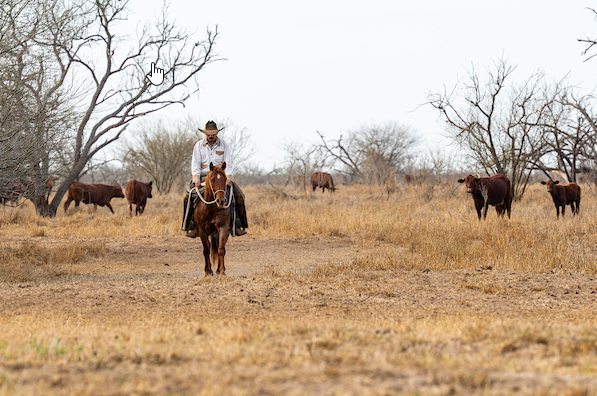
A cowboy on horseback rides through a dry, grassy field with cattle grazing in the background under a pale sky.A Mixed Picture Across the State
Texas rangelands are experiencing a wide range of conditions this year. Some regions, including parts of the Cross Timbers, Concho Valley, and Hill Country, are seeing improved forage production due to spring rainfall. These areas present an opportunity for producers to allow pastures time to recover after extended drought conditions.

At the same time, much of the state remains in drought. According to the U.S. Drought Monitor cited in the article, 81 percent of Texas is experiencing some level of drought. While fewer areas are in the most extreme categories compared to last year, drought is still widespread and continues to impact forage availability and management decisions.

For producers in the Panhandle, South Texas, and other regions facing more severe conditions, the message is clear: careful evaluation and planning are still essential.

Recovery Starts with Rest
One of the most important takeaways from the article is the value of rest during periods of active plant growth. When moisture is available, and grasses begin to respond, reducing grazing pressure allows plants to rebuild energy reserves.
This recovery period helps promote:

  • Root development
  • Leaf growth
  • Improved plant vigor

Allowing plants time to recover can have long-term benefits for both forage production and overall rangeland health. Resilient rangelands depend on maintaining this balance between use and recovery.

Managing for Resilience, Not Just Production
Producers are not just managing livestock. They are managing ecosystems. The article emphasizes that stewardship of rangeland resources includes maintaining ground cover and building organic matter in the soil.

These practices support essential ecosystem services, including:

  • Forage production for livestock
  • Habitat for wildlife, especially during critical periods
  • Soil health and water infiltration

A focus on resilience helps ensure that rangelands can continue to function through both wet and dry periods.

Drought Planning Still Matters
Even in areas that have received rain, it is important not to assume the drought is over. Conditions can change quickly, and the forage available now may need to carry operations through the remainder of the growing season.

Producers are encouraged to continually evaluate forage availability and compare it to expected needs. This is a key part of any drought contingency plan and helps guide decisions about stocking rates and grazing pressure.

In areas still experiencing severe drought, proactive steps such as adjusting stocking rates or reassessing grazing strategies may be necessary to avoid long-term damage to the land.

A Practical Takeaway for West Texas
For West Texas producers, where variability is the norm and drought cycles are familiar, this message reinforces what many already know. Flexibility is not optional. It is essential.
Whether your operation has received recent rain or is still waiting for relief, the same principles apply:

  • Take advantage of good conditions to build recovery
  • Protect plant health through strategic grazing decisions
  • Monitor forage conditions closely
  • Be prepared to adjust as conditions change

Looking Ahead
Drought will continue to be part of managing rangelands in Texas. While rainfall patterns and seasonal conditions are beyond our control, management decisions are not.

By focusing on adaptability and resilience, landowners and managers can position their operations to better withstand drought and recover more quickly when conditions improve.

Resilient rangelands are built over time with careful management, timely decisions, and a long-term perspective.

Filed Under: Conservation, Drought Management, Grazing Management, Range Concepts, Weather Tagged With: #AgriLifeExtension, #RangelandManagement, #WestTexasRangelands, Conservation, Conservation Practices, Drought Management, grazing management

The Hidden Cost of Overgrazing: How It Drains Your Watershed, Your Rainfall, and Your Bottom Line

April 22, 2026 by kara.matheney

The Hidden Cost of Overgrazing: How It Drains Your Watershed, Your Rainfall, and Your Bottom Line

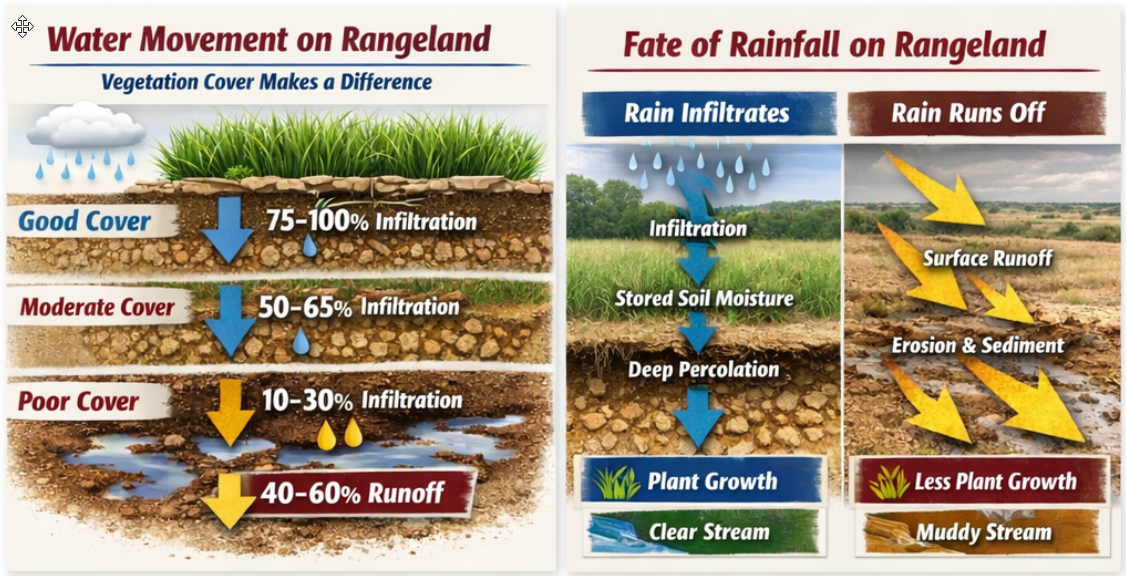
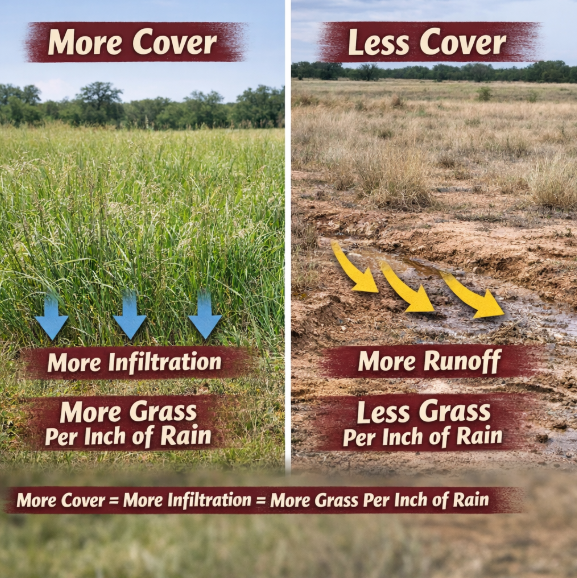
Across Texas, every drop of rain is precious. On healthy rangeland, most of that rainfall enters the soil (infiltration), is stored in the profile, and then drives forage production. Under prolonged overgrazing, however, plant vigor declines, roots shrink, litter disappears, and soils compact, reducing infiltration, increasing runoff and erosion, and shrinking the water available for grass growth. Over time, that damages both watershed function and ranch profitability. 

What overgrazing does to water

  • Less plant cover → less infiltration. Texas A&M Extension work shows that rangeland sites with robust bunchgrass or oak-understory cover retain more rainfall and lose less to runoff than sites dominated by sodgrasses or bare ground. Heavily grazed watersheds at the Sonora Station have shown runoff approaching 10% of annual precipitation, water that could have been growing grass. 
  • More bare ground and compaction → more runoff and sediment. Vegetation and ground cover are the two attributes managers can influence most to control raindrop impact, maintain soil structure, and limit concentrated flow erosion; when cover is lost, rills and sheet flow move soil, nutrients, and carbon off the pasture and downstream. 
  • Hydrologic decline scales from paddock to watershed. AgriLife Research modeling in northwest Texas found heavy continuous grazing increased bare ground and reduced infiltration, elevating surface runoff, soil erosion, and carbon export to streams, while adaptive multi-paddock (AMP) grazing reduced those losses at both ranch and watershed scales. 
  • Stream water quality takes a hit. Edge-of-field monitoring in Northeast Texas showed continuously grazed sites produced >24% more runoff than pastures under prescribed grazing and had significantly higher loads of nitrate/nitrite and total suspended solids, reflecting the combined effects of reduced infiltration and increased overland flow. Diagram illustrating how vegetation cover on rangeland affects water movement, showing infiltration rates and runoff under good, moderate, and poor cover, and the subsequent impact on soil moisture, plant growth, and stream clarity.

[Read more…] about The Hidden Cost of Overgrazing: How It Drains Your Watershed, Your Rainfall, and Your Bottom Line

Filed Under: Conservation, Grazing Management, Range Concepts Tagged With: #AgriLifeExtension, #WestTexasRangelands, grass production, grazing management, range management

The Cost of Prolonged Overgrazing: Ripple Effects on Watershed Health, Rainfall Infiltration, and Ranch Production

April 1, 2026 by morgan.treadwell

Producers often face tough choices when managing rangeland, especially during drought or market fluctuations. While maximizing livestock numbers might bring short-term profit, prolonged overgrazing can deal lasting damage to the overall health and productivity of the land. One of the most critical, but sometimes overlooked, impacts is how overgrazing disrupts the watershed and reduces rainfall infiltration, setting off a chain reaction that threatens both present and future production.

What Is Overgrazing?

Overgrazing happens when livestock remove more plant material than the land can regenerate, reducing vegetative cover. Without sufficient rest and recovery for grasses and forbs, root systems shrink, soil structure declines, and bare ground increases.

Watershed Function and Why It Matters

A healthy watershed collects, stores, and distributes water efficiently across the landscape. Vegetation intercepts rainfall, slows surface runoff, and helps water infiltrate into the soil, replenishing aquifers and supporting plant growth during dry periods. When this function is degraded, so is the life of a ranch.

The Impact of Overgrazing on Rainfall Infiltration

Intact vegetation and litter (dead plant material) act as a sponge, allowing more rainfall to soak in rather than run off. Texas A&M research consistently shows that overgrazed pastures lose this critical function (Briske et al., 2011).   The results:

  • Increased Bare Soil – without enough cover, droplets hit bare soil directly, compacting it and reducing pore spaces.
  • More Runoff – compacted, crusted soils shed water, sending it downhill rather than storing it for plant growth.
  • Erosion – runoff carries away topsoil, further reducing the land’s ability to support vegetation.

Effects on Production and Range Health

  • Lower Forage Yields – less water stored means less forage growth through the season. Productivity drops, resulting in further pressure to overstock in a vicious cycle.
  • Reliance on Supplemental Feed – with reduced native forage, producers must purchase feed or de-stock, both of which cut into profits.
  • Increased Weed Invasion – bare patches and disturbed soil invite invasive species, which further outcompete desirable native plants.
  • Reduced Drought Resilience – healthy rangeland can buffer drought impacts; degraded rangeland cannot.

Economic and Environmental Tradeoff

“A pound of prevention is worth a ton of cure,” says Dr. Larry Redmon, Professor & Extension Forage Specialist at Texas A&M. Repairing watershed function, restoring infiltration, and rebuilding soil health can take years and significant expense.

Key findings from Texas A&M’s “Rangeland Watershed Management” (B-6136) highlight how managed grazing increases infiltration by 12–60% compared to overgrazed sites.   

Steps for Ranchers

  1. Monitor Utilization – Leave adequate stubble height and ground cover after grazing.
  2. Rest Pastures – Allow for seasonal or rotational rest to restore plant and root health.
  3. Observe Hydrology – Monitor for runoff, erosion, and infiltration after rains.
  4. Consult Local Extension – Texas A&M AgriLife can provide technical assistance and region-specific recommendations.

Conclusion

The hidden cost of overgrazing is the undermining of the ranch’s very foundation which starts and ends with the soil and water resources. By prioritizing range health and managing for watershed function, producers secure not only the current year’s paycheck but the resilience and productivity of their land for years to come.

References

  1. Briske, D.D., et al. (2011). [Rangeland Watershed Management – B-6136] (https://agrilife.org/texasrangelands/files/2011/02/B-6136.pdf), Texas A&M AgriLife Extension.
  2. What Is a Watershed? (https://wrri.tamu.edu/watersheds/what-is-a-watershed/), Texas Water Resources Institute.

For more infographics and resources, visit AgriLife Extension’s West Texas Rangelands https://agrilife.org/westtexasrangelands/extension-publications/

Are you seeing signs of overgrazing, runoff, or diminished production on your ranch? Contact your county’s AgriLife Extension Office for a site assessment and recommendations today.

Filed Under: Conservation, Conservation Practices, Grazing Management, Range Concepts Tagged With: #AgriLifeExtension, #RanchManagement, #WestTexasRangelands, Conservation, Conservation Practices, soil, water

The Long-Term Cost of Overgrazing—and How to Avoid It

February 25, 2026 by morgan.treadwell

Rangeland health is shaped by cumulative management decisions rather than single events. Grazing practices that consider timing, recovery, and monitoring support long-term productivity and resilience.

Avoiding overgrazing requires consistency, observation, and flexibility. Just as our environmental conditions change (whiplash drought), so must our grazing strategies.

Connecting the Pieces

Understanding overgrazing, reading rangeland condition, and applying recovery-based grazing strategies work together. Each piece informs the next, creating a management approach that responds to what rangeland needs.

When these elements are aligned, rangelands are better equipped to handle drought, variable weather, fires, woody plant encroachment, and changing conditions.

Long-Term Benefits of Intentional Grazing

Over time, well-managed grazing supports stronger plant communities, improved soil cover, and greater forage stability. These benefits accumulate gradually, reinforcing the importance of patience and long-term thinking.

Stewardship Over Short-Term Gains

Successful rangeland management prioritizes sustainability over short-term use. Grazing decisions made with long-term outcomes in mind help ensure rangelands remain productive and functional for future generations. These strategies also create more flexibility across the operation because pastures are kept productive, healthy, and ready for the next grazing rotation despite challenging environmental conditions.

What Long-Term Success Looks Like on Rangeland

Long-term rangeland success is not defined by a single good year, but by consistent patterns over time. Healthy rangelands tend to show stable plant communities, adequate ground cover, and the ability to recover after grazing or environmental stress.

Successful grazing systems remain flexible. Stocking rates, timing, and pasture use are adjusted based on current conditions rather than fixed plans or continuous use. Monitoring becomes a regular habit, allowing managers to respond early instead of reacting after damage has occurred.

Over time, this approach supports more reliable forage production, improved soil protection, and greater resilience during drought and variable weather. Long-term success is built through intentional decisions made season after season, with the rangeland guiding every single management choice.

Filed Under: Brush Management, Conservation, Conservation Practices, Grazing Management Tagged With: #grazing #ranchmanagement #brush #grasslands, brush management, Conservation Practices, Grazing, grazing management, range management

Grazing Isn’t the Problem. Unmanaged Pressure Is.

February 18, 2026 by morgan.treadwell

Grazing is often viewed as a disturbance or impediment to rangeland health, but it is just the opposite! When applied intentionally, it can support plant diversity and ecosystem function. The key is managing pressure, timing, and recovery rather than applying constant use in a continuous grazing system.  Even if managers are conservatively or low-stocked, continuous grazing is a recipe for poor rangeland condition.  

Grazing strategies that prioritize rest allow plants to recover and strengthen root systems. 

Rest and Recovery Matter 

Plants need time after grazing to regrow leaves and rebuild energy reserves that sustains populations during drought and dormancy. Without sufficient recovery, repeated grazing weakens native perennial grasses and reduces long-term productivity and diversity. 

Planned grazing systems incorporate rest periods that match plant growth patterns and environmental conditions. 

Managing Pressure, Not Just Numbers 

Stocking rate alone does not determine grazing success. Duration and distribution of grazing pressure often have a greater impact on plant health than animal numbers. 

Adjusting pasture size, rotation timing, and water placement can help distribute grazing pressure more evenly across the landscape. 

Grazing as a Management Tool 

When managed properly, grazing can reduce excess vegetation, promote plant diversity, and support soil health. Used intentionally, livestock become a win-win synergistic balance that contributes to rangeland resilience rather than degradation. 

Filed Under: Brush Management, Conservation, Grazing Management, Range Concepts Tagged With: #grazing #ranchmanagement #brush #grasslands, Grazing, grazing management, rangelands

What Your Rangeland Is Telling You: If You Know How to Look

February 11, 2026 by morgan.treadwell

The condition of your rangeland shows how management decisions are affecting it. By paying attention to plant communities, soil cover, and overall structure, land managers can identify potential issues early and respond effectively. Regular observation is one of the most important tools in long-term rangeland stewardship. 

Key Indicators to Watch 

Plant diversity is a strong indicator of rangeland health. A mix of grasses, forbs, cool and warm season species, and varying plant heights often signals a functioning system. Uniform vegetation or dominance by a single species may indicate stress or management imbalance. Think monocultures of Purple Threeawn or Texas Wintergrass.  

Soil surface condition is equally important. Adequate litter and ground cover protect soil from erosion, temperatures, and help retain moisture. Increasing bare ground can signal declining rangeland condition.  Bare ground between bunchgrasses of plants will slowly start to expand, increasing soil movement and soil loss.  

Monitoring Beyond the Growing Season 

Rangeland monitoring does not stop when plants are dormant! Winter and early spring observations can reveal grazing patterns, hoof impact, and areas where pressure may be too concentrated.  Monitoring native perennial grasses during the winter is just as important as monitoring during the growing season, because what you protect in the winter is what jumpstarts new growth this spring.   

Tracking changes season-to-season rather than reacting to a single observation provides a clearer picture of trends and management outcomes.  

Using Monitoring to Guide Decisions 

Monitoring allows managers to make informed adjustments to grazing timing, duration, and intensity. When rangeland conditions are regularly evaluated, management becomes proactive rather than reactive setting pastures off to a great start this spring.  

Filed Under: Conservation, Grazing Management, Range Concepts, Woody Encroachment Tagged With: #grazing #ranchmanagement #brush #grasslands, Conservation, Conservation Practices, grazing management

When Does Grazing Become Overgrazing?

February 4, 2026 by morgan.treadwell

Overgrazing is often attributed to having too many animals in the pasture. In reality, overgrazing is less about the number of livestock and more about how long plants are consistently exposed to grazing pressure. On West Texas rangelands, the timing and duration of grazing and rest from grazing play a much larger role in native, perennial grass health than simple stocking numbers. 

Understanding what overgrazing actually looks like is the first step toward preventing long-term damage and supporting resilient rangeland systems. 

What Is Overgrazing? 

Overgrazing occurs when plants are grazed repeatedly without adequate time to recover. A pasture can be overgrazed even with a small number of animals if those animals remain in one area too long. When plants are repeatedly defoliated (grazed), they lose the ability to regrow effectively and rebuild root systems, steadily shrinking in mass and function. 

Functioning rangelands depend on periods of rest. Without recovery time from grazing, plant vigor declines, soil cover decreases, and erosion risk and bare ground increases. 

Overgrazing vs. Heavy Grazing 

Heavy grazing and overgrazing are not the same thing. Heavy grazing refers to short-term use where plants are grazed intensively but then allowed time to recover. Overgrazing happens when grazing pressure continues without rest, and plants are repeatedly defoliated.  

This distinction is important because grazing can be used as a management tool when paired with recovery. Problems arise when grazing pressure is constant rather than planned and rotated. 

Early Signs of Overgrazing 

Early indicators of overgrazing include reduced plant height, loss of preferred forage species, and increasing bare ground. Over time, these changes can lead to reduced forage production and increased weed or invasive species presence- including woody species establishment like honey mesquite and redberry juniper 

Monitoring these early signals from your rangeland grasses should spur managers to adjust grazing before long-term and irrecoverable damage occurs. 


Filed Under: Brush Management, Grazing Management Tagged With: #grazing #ranchmanagement #brush #grasslands, overgrazing

Prepared Today, Resilient Tomorrow: Making Wildfire Preparedness Part of Rangeland Stewardship

January 28, 2026 by morgan.treadwell

Wildfire risk is a natural part of West Texas rangelands, but preparedness is most effective when it is part of ongoing land stewardship. Managing rangelands with long-term resilience in mind not only protects property and resources, but also supports ecosystem health and sustainable operations. 

Integrating Preparedness into Stewardship Practices 
Preparedness begins with everyday land management decisions. Practices such as targeted grazing, rotational grazing, and selective vegetation management help reduce fuel loads while maintaining healthy grass and brush cover. These strategies are not one-time solutions—they are ongoing practices that strengthen the landscape over years. 

Infrastructure and Access as a Stewardship Tool 
Maintaining roads, fence lines, water sources, and access points is a long-term investment in rangeland resilience. Clear access allows for safe movement of equipment and personnel if wildfire conditions arise. Roads and defensible corridors also serve as strategic breaks in fuel, reducing potential fire spread while supporting everyday operations. 

Monitoring Conditions Over Time 
Ongoing observation of vegetation, fuel, and weather trends is central to long-term preparedness. Tools like the Jornada Rangeland Analysis Platform provide historical and current data on vegetation growth and drought patterns. Combining this data with on-the-ground monitoring helps landowners make adaptive decisions, such as adjusting grazing or vegetation treatments, in a way that supports both land health and wildfire preparedness. 

Preparedness as a Continuous Practice
Long-term wildfire preparedness is not about expecting a fire every year. It is about creating a resilient, well-managed landscape that can better withstand unpredictable events. Maintaining native grasses, managing fuel continuity, and planning infrastructure improvements over time ensures the land remains productive and safer under a variety of conditions. 

Building Resilient Rangelands
By treating preparedness as part of overall stewardship, landowners reinforce their long-term investment in rangeland health. The combined effect of fuel management, infrastructure planning, monitoring, and adaptive management reduces potential wildfire impact while sustaining the ecological and economic productivity of West Texas rangelands. 

Filed Under: Conservation, Conservation Practices, Grazing Management, Targeted Grazing, Water, Weather, Wildfire, Wildfires Tagged With: Conservation Practices, grazing management, range management, wildfire, Wildfires

Dry, Warm, Windy, and Fuel.

November 19, 2025 by morgan.treadwell

  • Drought conditions (D1–D4) increased to 33% of the state, up from 24% four weeks ago; statewide reservoir storage decreased to 73.9% full, down from 75.6% four weeks ago, about 6 percentage points below normal for this time of year.
  • We are now a La Niña Advisory with a 55% chance of La Niña conditions continuing into the January-March season.
  • Most of the state is projected to be in drought over the next three months.

Isn’t it ironic that this last summer presented us with more than above average rainfall, yet not only is 33% of Texas in D1-D4 status, but our statewide reservoir storage is currently at 73.9%.  This becomes increasingly concerning as we watch La Niña take a firm hold with a 55% chance of La Niña conditions continuing into the January-March season.  Not only does this present challenging dormant season grazing management conditions, but wildfire will be at the top of rangeland manager’s concerns.

Bottom line, this winter will suck.  Get your game face on, dust off your drought plan, budget your numbers to see how late into winter/early spring your forage base can survive.  We will always remain optimistic, but we will also plan and prepare.  And with any rangeland management, we will remain adaptive holding strong to the grazing management and soil health principles guiding our practices and decisions.  For a comprehensive Wildfire Ready checklist, please click here and for our Preparing the Ranch publication click here.

Much appreciation to Robert Mace for his insight and wisdom in his outlook + water November 3, 2025 article found at: https://texaspluswater.wp.txstate.edu/.


Filed Under: Grazing Management, La Niña, Wildfire Tagged With: drought, Rangeland, wildfire

  • Page 1
  • Page 2
  • Page 3
  • Interim pages omitted …
  • Page 8
  • Go to Next Page »

Recent Posts

  • Know Your Stocking Rate Like You Know Your Bank Balance
  • Does Prescribed Fire Ever Cross Your Mind? Join the Prescribed Burn School in Gatesville Next Month!
  • Adaptability Is Key as Drought Persists Across Texas Rangelands
  • What the National CPBM Report Means for Producers Using Prescribed Fire
  • 2025 Region 3 Texas Land Value Trends: What Stability Means for West Texas Producers

Categories

  • 4-H Range Contests
  • Beef Cattle
  • Brush Management
  • Carbon Credits
  • Carbon Markets
  • Conservation
  • Conservation Practices
  • Drought Management
  • El Niño
  • Events
  • Goats
  • Grazing Management
  • La Niña
  • Land
  • Lessons Learned
  • Meet A County Extension Agent
  • Plant ID
  • Podcast
  • Prescribed Burn Associations
  • Prescribed Burning
  • Publications
  • Range Concepts
  • RAP
  • Sheep
  • Society for Range Management
  • Soil
  • Staff
  • Targeted Grazing
  • Uncategorized
  • Water
  • Weather
  • Why I Ranch
  • Wild Pigs
  • Wildfire
  • Wildfires
  • Wind
  • Woody Encroachment
  • Youth Range Workshop

Archives

Texas A&M AgriLife Extension Service
Texas A&M University System Member
  • Compact with Texans
  • Privacy and Security
  • Accessibility Policy
  • State Link Policy
  • Statewide Search
  • Veterans Benefits
  • Military Families
  • Risk, Fraud & Misconduct Hotline
  • Texas Homeland Security
  • Texas Veteran's Portal
  • Equal Opportunity
  • Open Records/Public Information