• Skip to primary navigation
  • Skip to main content
  • Skip to primary sidebar
  • Texas A&M Forest Service
  • Texas A&M Veterinary Medical Diagnostics Laboratory
  • Texas A&M AgriLife Extension Service
  • Texas A&M AgriLife Research
  • Texas A&M College of Agrculture and Life Sciences
West Texas Rangelands
West Texas RangelandsWe hope to provide a variety of science-based rangeland information and current research on prescribed fire, wildfires, brush management, and grazing management!
  • Menu
  • Home
  • About & Contact
  • Publications
    • Extension Publications
    • Refereed Journal Articles
    • Program Summaries
  • Events
  • Lunch N’ Learn
  • Infographics
    • Drought
    • Grazing
    • Herbicide
    • Prescribed Fire
    • Rangeland Plants
    • Wildfire
  • Range Resources
    • Published to Pasture
    • Range Concepts
  • Fire Resources
  • Sponsors
  • AgriLife Learn Online Courses

Grubbing Mesquite Trees: A Long-Term Brush Management Solution for West Texas

August 27, 2026 by kara.matheney

Article written by Holt Teplicek
West Texas Rangelands Intern
Undergraduate Student – Texas A&M University

Mesquite trees are one of the most persistent brush species found across West Texas rangelands. While they provide some wildlife habitat, dense mesquite infestations compete with desirable grasses for sunlight, soil moisture, and nutrients. Over time, this competition can reduce forage production, limit grazing capacity, and make rangeland management more difficult.

One effective method of controlling mesquite is grubbing, a mechanical practice that removes the entire root crown of the tree. Unlike simply cutting a mesquite tree at ground level, grubbing removes the portion of the root system where new shoots develop. When the root crown is completely removed below the bud zone, the tree is much less likely to resprout, making grubbing a long-term control option.

Grubbing is most effective on small to medium-sized mesquite trees and is commonly performed using hand tools such as grub hoes or specialized grubbing tools. This method is especially useful for treating scattered trees, fence lines, wildlife food plots, and areas where herbicide applications may not be practical or desired.
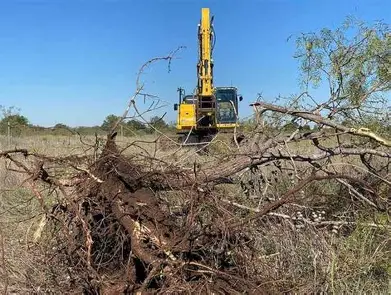
Timing can also influence success. Grubbing can be performed throughout much of the year, but favorable soil moisture conditions make the job easier by allowing the root crown to be removed more completely. It is important to remove enough of the root crown to prevent regrowth. Leaving any portion of the bud zone behind can allow the tree to resprout.

Removing mesquite provides several benefits for rangeland health. Native grasses and other desirable plants have greater access to water, nutrients, and sunlight, allowing them to establish and produce more forage. Improved grass cover also helps reduce soil erosion, improves rainfall infiltration, and supports healthier wildlife habitat. For livestock producers, increased forage production can lead to improved grazing opportunities and better overall pasture condition.

Although grubbing is an effective tool, it is often most successful when used as part of an integrated brush management program. Depending on the size of the infestation and land management goals, grubbing may be combined with prescribed fire, herbicide applications, proper grazing management, or reseeding efforts to maintain healthy, productive rangelands over the long term.

Every ranch is different, and selecting the best brush management strategy depends on factors such as mesquite density, tree size, labor availability, equipment, and management objectives. Working with your local Texas A&M AgriLife Extension Service office can help determine the most effective and economical approach for your operation.

By removing mesquite before it becomes well established, landowners can improve forage production, conserve valuable soil moisture, and promote healthier West Texas rangelands for future generations.

Source: https://agrilifeextension.tamu.edu/asset-external/brush-management-methods/

Filed Under: Brush Management, Range Concepts, Woody Encroachment Tagged With: #BrushControl, #HealthyRangelands, #LandStewardship, #LivestockProduction, #MesquiteManagement, #RangeManagement, #TexasAgriculture, #TexasAgriLife, #WestTexasRangelands, Conservation

Building Knowledge and Confidence with the Updated Online Prescribed Burn School

April 8, 2026 by kara.matheney

Building Knowledge and Confidence with the Updated Online Prescribed Burn School

Prescribed fire has long been a foundational tool for managing Texas rangelands, yet many landowners and land managers lack access to formal training that builds confidence to use fire safely and effectively. Texas A&M AgriLife Extension has addressed this need with the launch of a redesigned Online Prescribed Burn School for 2026, offering science‑based instruction in a flexible, self‑paced format.

The updated course reflects decades of research and applied experience across Texas landscapes. It is designed for landowners, ranchers, and land management professionals who want to better understand fire behavior and planning, improve decision-making, and reduce risk when applying prescribed fire as a land management tool.

Why Prescribed Fire Matters on Texas Rangelands

Fire is not new to Texas rangelands. Historically, fire occurred frequently and shaped plant communities, wildlife habitat, and forage productivity. When fire is removed from the system, woody plants often increase, fuel structure changes, and grasslands can lose productivity and diversity.

Prescribed fire can help manage brush, improve forage distribution, recycle nutrients, and restore ecological processes that benefit both livestock and wildlife. However, fire is also a tool that requires planning, preparation, and a clear understanding of weather, fuels, and safety considerations. Education is essential to ensure prescribed fire is applied appropriately and responsibly.

What the Updated Online Prescribed Burn School Offers

The Online Prescribed Burn School is a self‑guided course delivered through AgriLife Learn. The program consists of 12 modules and provides participants with the background and practical knowledge needed to confidently apply prescribed fire.

Topics covered in the course include the ecology and history of fire, basic fire behavior principles, fuels and weather considerations, topography, firing techniques, equipment, smoke management, and burn planning. The course also addresses laws and regulations related to prescribed burning in Texas, helping participants understand their responsibilities as burners.

Participants can complete the course at their own pace, which makes it accessible to working landowners and professionals balancing multiple demands. The total instructional time is approximately 24 hours, and a certificate of completion is provided upon finishing the course.

Connecting Education to Certification

One important feature of the Online Prescribed Burn School is its connection to the Texas Department of Agriculture Certified and Insured Prescribed Burn Manager program. Individuals who complete the course become eligible to pursue the official exam and field component required for certification, provided they meet TDA experience requirements.

This pathway helps expand the number of trained and qualified prescribed fire practitioners across the state. Increasing this capacity is especially important in regions like West Texas, where large properties, variable weather, and fuel conditions present unique management challenges.

Learning from Experienced Prescribed Fire Professionals

The course is instructed by AgriLife Extension prescribed fire experts, including Dr. Morgan Treadwell, Professor and Extension Range Specialist, and David Brooke, AgriLife Extension Statewide Prescribed Fire Program Coordinator. Their applied experience ensures the content is grounded in real‑world conditions and practical decision-making.

“Fire is a critical component of a healthy, well-managed rangeland,” Treadwell said. “Through this course, you will learn directly from prescribed burn experts with an emphasis on fire behavior, employing the correct firing technique, equipment, safety and much more.”

Rather than focusing solely on theory, the course emphasizes planning and evaluation. Participants learn how to assess burn units, align fire behavior with management objectives, and anticipate challenges before lighting a match. This approach supports safer burns and better outcomes on the ground.

Supporting Informed Fire Use Across Texas

The updated Prescribed Burn School is part of a broader effort by AgriLife Extension and partners to promote informed, science‑based fire use on private lands. As interest in prescribed fire continues to grow, education remains one of the most effective ways to reduce risk and increase successful application.

For landowners considering prescribed fire for brush management, wildlife habitat improvement, or rangeland restoration, this course provides a strong foundation. For professionals supporting land management decisions, it serves as a valuable reference and training resource.

Learn More and Register

Registration information and additional details about the Online Prescribed Burn School are available through AgriLife Today and AgriLife Learn. Landowners and professionals interested in prescribed fire training are encouraged to explore the course and determine whether it fits their management goals.

The course comprises 12 modules and provides participants with the background, knowledge and skills needed to safely and confidently apply prescribed fire as a land management tool.  The course cost is $300, and participants can register at tx.ag/PrescribedBurnSchool2026. Discounted registration is available for members of prescribed burn associations following verification. Participants can anticipate the self-paced course taking roughly 24 hours to complete.

Prescribed fire is a powerful tool when applied thoughtfully and safely. Continued education helps ensure fire remains part of a resilient future for Texas rangelands.


Filed Under: Conservation, Conservation Practices, Prescribed Burn Associations, Prescribed Burning, Uncategorized Tagged With: #AgriLifeExtension, #AgriLifeLearn, #FireEcology, #PrescribedFire, #RangelandManagement, #RangeManagement, #WestTexasRangelands

Recent Posts

  • Texas Working Lands: What Land Fragmentation Means for the Future of Texas Rangelands
  • Fall Weather Update and Winter Weather Preparation
  • Grubbing Mesquite Trees: A Long-Term Brush Management Solution for West Texas
  • Know Your Forage Before Winter: Why Fall Forage Testing Pays Off
  • Wildfire Resilience Starts Before the Fire: Lessons from Fire Scientist Jack Cohen

Categories

  • 4-H Range Contests
  • Beef Cattle
  • Brush Management
  • Carbon Credits
  • Carbon Markets
  • Conservation
  • Conservation Practices
  • Drought Management
  • El Niño
  • Events
  • Forage
  • Goats
  • Grazing Management
  • La Niña
  • Land
  • Lessons Learned
  • Meet A County Extension Agent
  • Plant ID
  • Podcast
  • Prescribed Burn Associations
  • Prescribed Burning
  • Publications
  • Range Concepts
  • RAP
  • Sheep
  • Society for Range Management
  • Soil
  • Staff
  • Targeted Grazing
  • Uncategorized
  • Water
  • Weather
  • Why I Ranch
  • Wild Pigs
  • Wildfire
  • Wildfires
  • Wind
  • Woody Encroachment
  • Youth Range Workshop

Archives

Texas A&M AgriLife Extension Service
Texas A&M University System Member
  • Compact with Texans
  • Privacy and Security
  • Accessibility Policy
  • State Link Policy
  • Statewide Search
  • Veterans Benefits
  • Military Families
  • Risk, Fraud & Misconduct Hotline
  • Texas Homeland Security
  • Texas Veteran's Portal
  • Equal Opportunity
  • Open Records/Public Information