• Skip to primary navigation
  • Skip to main content
  • Skip to primary sidebar
  • Texas A&M Forest Service
  • Texas A&M Veterinary Medical Diagnostics Laboratory
  • Texas A&M AgriLife Extension Service
  • Texas A&M AgriLife Research
  • Texas A&M College of Agrculture and Life Sciences
West Texas Rangelands
West Texas RangelandsWe hope to provide a variety of science-based rangeland information and current research on prescribed fire, wildfires, brush management, and grazing management!
  • Menu
  • Home
  • About & Contact
  • Publications
    • Extension Publications
    • Refereed Journal Articles
    • Program Summaries
  • Events
  • Lunch N’ Learn
  • Infographics
    • Drought
    • Grazing
    • Herbicide
    • Prescribed Fire
    • Rangeland Plants
    • Wildfire
  • Range Resources
    • Published to Pasture
    • Range Concepts
  • Fire Resources
  • Sponsors
  • AgriLife Learn Online Courses

Take What You Need & Let The Range Succeed: Principles of Sustainable Grazing

July 8, 2026 by kara.matheney

Article written by Mr. Burkes Kissire, Sutton County 4-H Member

When looking out into a rangeland, you might think that all the grass you see can be fully grazed, but when you look a little deeper into the subject, you begin to realize that you may be wrong.

Rangelands are the most valuable resource available to livestock producers in Texas. A well-managed rangeland can easily sustain both livestock and wildlife, while also maintaining healthy soil. However, these resources can decline quickly when overused. One of the most recommended grazing practices is the Take 50%, Leave 50% concept. While simple in theory, this management practice can have significant impacts on the long-term health and the productivity of your land.
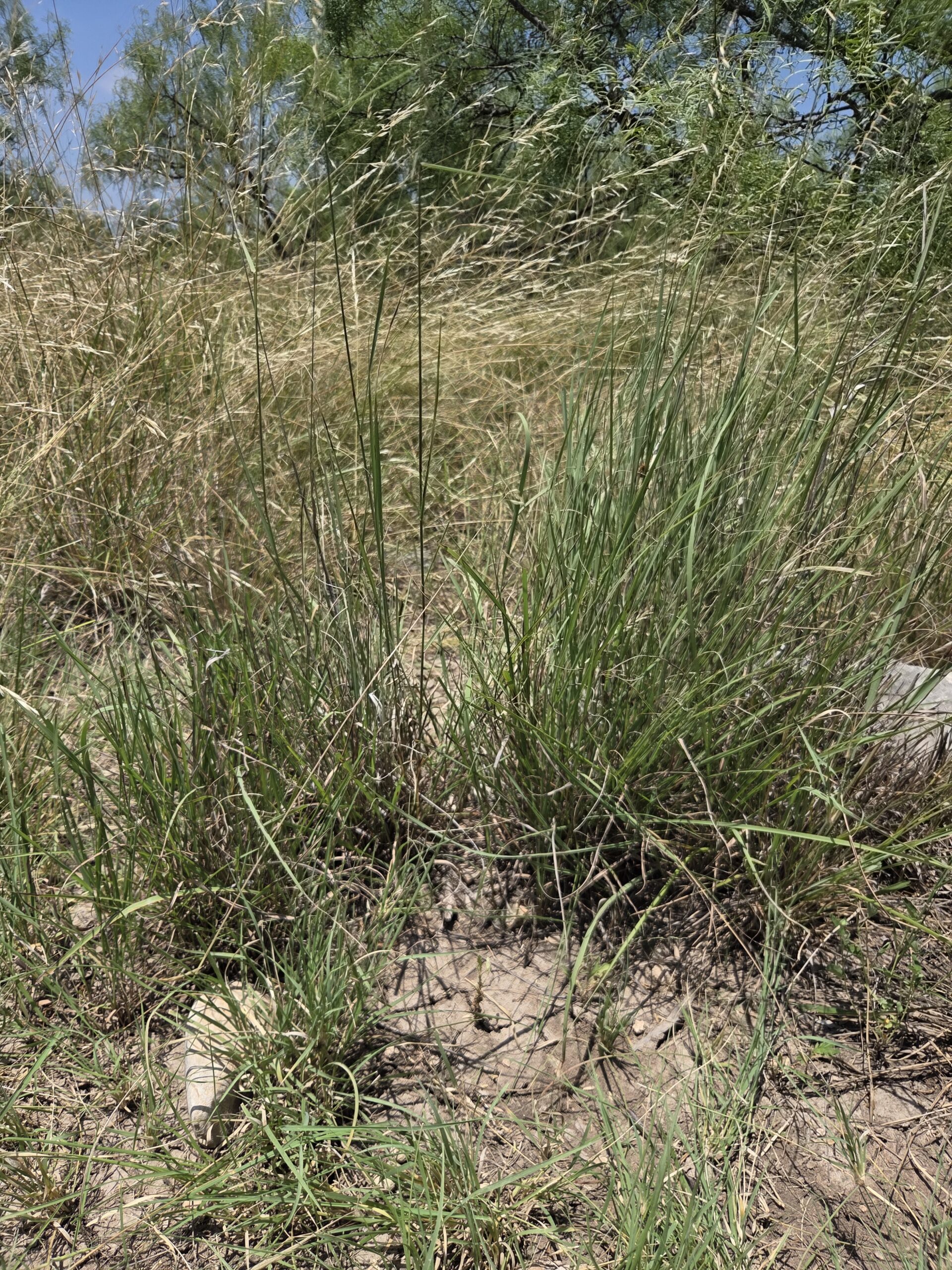
Take 50%, Leave 50% is exactly what the name suggests: only half the edible forages should be removed from the pasture. Importantly, this must be based on the weight of the edible forage, rather than the height of the plant. Different plants grow differently, making height an unreliable factor for estimating. By only focusing on the amount of forage used, rangeland managers can better manage their plants and rangelands and ensure that plants retain enough leafy material to recover the lost material efficiently and quickly.

Leaving half of the plant is essential for the plant’s health since plants rely on their leaves to capture available sunlight and produce energy they need through photosynthesis. When too much of the leaf is grazed, the plant goes into a state of emergency, in which the plant begins to use energy stored in the roots for regrowth. Depending on how much leaf was removed, a portion of the roots will stop growing. In contrast, when 50% or more of the leaf material remains and contributes to photosynthesis, the plant recovers more quickly, leading to more efficient plant growth and healthier roots.

Proper grazing affects the roots more than you think. A pasture full of healthy plants has a healthy root system that helps hold soil in place and helps hold water during a drought. Deep roots allow water to infiltrate the soil, instead of running off and eroding your soil. Healthy rangelands also promote nutrient cycling as plant material decomposes and returns nutrients to the soil. Over time, these processes and cycles will lead to better soil health, cleaner groundwater, and a more drought-resistant rangeland for years to come.

Applying the Take 50%, Leave 50% principle starts with understanding the amount available forage. Rangeland managers can visually estimate the amount of plant life in a pasture, but for precise measurements, you should weigh the grass. Begin by marking out a random square yard in your pasture, clip and weigh the grass, then convert this weight into pounds per acre. Knowing the exact amount of forage production in your pasture can help prevent overstocking and ensure that the plant retains enough material to regenerate.

Each livestock species selects different plants, making your choice of livestock very important. Cattle primarily graze taller grasses, and graze less selectively than other livestock species. Sheep graze shorter grasses, legumes, and other plants native to where they live. In contrast to both cattle and sheep, goats prefer browse, similar to a white-tail deer. Because each species has its preference, you can allow multiple species to graze or browse the same pasture to maximize operation. For example, if you have a pasture dominated by grasses that also has a considerable amount of browse, you may consider allowing both sheep and goats to graze and browse the same pasture.

Successfully applying this principle requires more than simply gauging your forage content. Rangeland managers must also consider carrying capacity, stocking rates, growing seasons, seasonal rainfall, and pasture recovery times. Strategies such as rotational grazing and deferred grazing help you maintain the perfect ratio of forage in your pasture. During a drought, you may have to reduce your stocking rate to ensure you do not lose too much grass.

The economic benefits of proper grazing are major. A healthy rangeland produces more edible forage over time, reducing the need for supplemental feeds. Good forage quality is important since it leads to efficient weight gain and overall improves herd quality. By maintaining productive plants on productive soil, producers can avoid costly restoration efforts needed after overgrazing. Sustainable grazing practices help protect natural resources we have and profitability.

The Take 50%, Leave 50% concept has remained one of the most reliable grazing practices since it can balance production and resource conservation. Following this principle helps maintain healthy plants and soil. This combination of benefits leads to productive rangelands for future generations. While every operation is unique, this practical principle can be applied almost anywhere, with any types of grass.

Sources: Dr. Doug Tolleson, Pascual Hernandez, Tammy Fisher
Filed Under: Conservation, Conservation Practices, Grazing Management, Sheep, Targeted Grazing, Woody Encroachment Tagged With: #AgriLifeExtension, #DoBetter, #GrazingManagement, #ResilientRangelands, #SustainableGrazing, #WestTexasRangelands, Growth, soil

The Cost of Prolonged Overgrazing: Ripple Effects on Watershed Health, Rainfall Infiltration, and Ranch Production

April 1, 2026 by morgan.treadwell

Producers often face tough choices when managing rangeland, especially during drought or market fluctuations. While maximizing livestock numbers might bring short-term profit, prolonged overgrazing can deal lasting damage to the overall health and productivity of the land. One of the most critical, but sometimes overlooked, impacts is how overgrazing disrupts the watershed and reduces rainfall infiltration, setting off a chain reaction that threatens both present and future production.

What Is Overgrazing?

Overgrazing happens when livestock remove more plant material than the land can regenerate, reducing vegetative cover. Without sufficient rest and recovery for grasses and forbs, root systems shrink, soil structure declines, and bare ground increases.

Watershed Function and Why It Matters

A healthy watershed collects, stores, and distributes water efficiently across the landscape. Vegetation intercepts rainfall, slows surface runoff, and helps water infiltrate into the soil, replenishing aquifers and supporting plant growth during dry periods. When this function is degraded, so is the life of a ranch.

The Impact of Overgrazing on Rainfall Infiltration

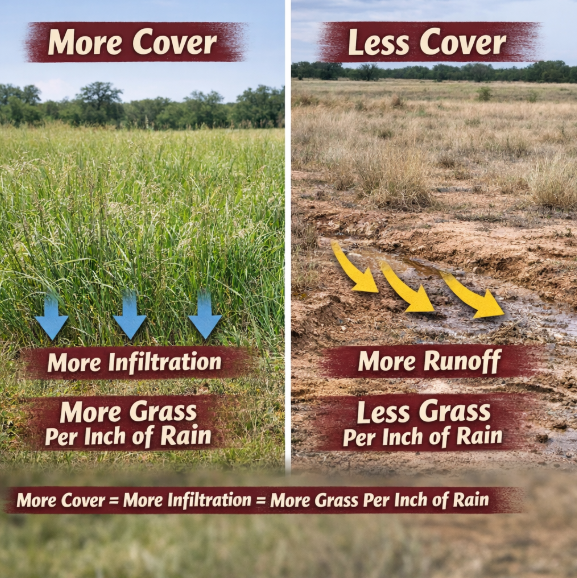
Intact vegetation and litter (dead plant material) act as a sponge, allowing more rainfall to soak in rather than run off. Texas A&M research consistently shows that overgrazed pastures lose this critical function (Briske et al., 2011).   The results:

  • Increased Bare Soil – without enough cover, droplets hit bare soil directly, compacting it and reducing pore spaces.
  • More Runoff – compacted, crusted soils shed water, sending it downhill rather than storing it for plant growth.
  • Erosion – runoff carries away topsoil, further reducing the land’s ability to support vegetation.

Effects on Production and Range Health

  • Lower Forage Yields – less water stored means less forage growth through the season. Productivity drops, resulting in further pressure to overstock in a vicious cycle.
  • Reliance on Supplemental Feed – with reduced native forage, producers must purchase feed or de-stock, both of which cut into profits.
  • Increased Weed Invasion – bare patches and disturbed soil invite invasive species, which further outcompete desirable native plants.
  • Reduced Drought Resilience – healthy rangeland can buffer drought impacts; degraded rangeland cannot.

Economic and Environmental Tradeoff

“A pound of prevention is worth a ton of cure,” says Dr. Larry Redmon, Professor & Extension Forage Specialist at Texas A&M. Repairing watershed function, restoring infiltration, and rebuilding soil health can take years and significant expense.

Key findings from Texas A&M’s “Rangeland Watershed Management” (B-6136) highlight how managed grazing increases infiltration by 12–60% compared to overgrazed sites.   

Steps for Ranchers

  1. Monitor Utilization – Leave adequate stubble height and ground cover after grazing.
  2. Rest Pastures – Allow for seasonal or rotational rest to restore plant and root health.
  3. Observe Hydrology – Monitor for runoff, erosion, and infiltration after rains.
  4. Consult Local Extension – Texas A&M AgriLife can provide technical assistance and region-specific recommendations.

Conclusion

The hidden cost of overgrazing is the undermining of the ranch’s very foundation which starts and ends with the soil and water resources. By prioritizing range health and managing for watershed function, producers secure not only the current year’s paycheck but the resilience and productivity of their land for years to come.

References

  1. Briske, D.D., et al. (2011). [Rangeland Watershed Management – B-6136] (https://agrilife.org/texasrangelands/files/2011/02/B-6136.pdf), Texas A&M AgriLife Extension.
  2. What Is a Watershed? (https://wrri.tamu.edu/watersheds/what-is-a-watershed/), Texas Water Resources Institute.

For more infographics and resources, visit AgriLife Extension’s West Texas Rangelands https://agrilife.org/westtexasrangelands/extension-publications/

Are you seeing signs of overgrazing, runoff, or diminished production on your ranch? Contact your county’s AgriLife Extension Office for a site assessment and recommendations today.

Filed Under: Conservation, Conservation Practices, Grazing Management, Range Concepts Tagged With: #AgriLifeExtension, #RanchManagement, #WestTexasRangelands, Conservation, Conservation Practices, soil, water

What Is In My Soil?!

April 19, 2023 by jaime.sanford

Did you know that your soil is a living, breathing ecosystem and is easily one of the most complex ecosystems on earth?! There are billions (perhaps trillions) of organisms in a small handful of healthy soil, with millions of different species.

[Read more…] about What Is In My Soil?!

Filed Under: Conservation, Range Concepts, Soil Tagged With: Conservation, range management, soil

Range Concepts – Web Soil Survey

April 27, 2020 by morgan.treadwell

Check out our new YouTube Channel featuring videos and handouts dedicated to increasing County Extension Agent knowledge and enhancing landowner’s understanding of tools, resources, techniques, and strategies on rangelands!

Our latest post features application and utility of Web Soil Survey, an online free resource for understanding soil mapping and tools.  Nearly all farmers, ranchers, and forest landowners across the country rely on one common resource for production: their soil. If you’re interested in learning more about this medium that grows our nation’s food, fuel, and fiber, here is a advantageous tool to help!  Get the Web Soil Survey Handout here and watch the YouTube video here!

Filed Under: Brush Management, Grazing Management, Range Concepts, Uncategorized Tagged With: soil, soil explorer, web soil survey

Recent Posts

  • Know Your Forage Before Winter: Why Fall Forage Testing Pays Off
  • Wildfire Resilience Starts Before the Fire: Lessons from Fire Scientist Jack Cohen
  • Wildfire Wisdom: Proven Strategies to Protect Your Property and Livestock
  • Early Fall Outlook Points to Heat, Fire Risk, and Continued Drought Concerns
  • How Fire and Grazing Can Impact Rangeland Resilience

Categories

  • 4-H Range Contests
  • Beef Cattle
  • Brush Management
  • Carbon Credits
  • Carbon Markets
  • Conservation
  • Conservation Practices
  • Drought Management
  • El Niño
  • Events
  • Forage
  • Goats
  • Grazing Management
  • La Niña
  • Land
  • Lessons Learned
  • Meet A County Extension Agent
  • Plant ID
  • Podcast
  • Prescribed Burn Associations
  • Prescribed Burning
  • Publications
  • Range Concepts
  • RAP
  • Sheep
  • Society for Range Management
  • Soil
  • Staff
  • Targeted Grazing
  • Uncategorized
  • Water
  • Weather
  • Why I Ranch
  • Wild Pigs
  • Wildfire
  • Wildfires
  • Wind
  • Woody Encroachment
  • Youth Range Workshop

Archives

Texas A&M AgriLife Extension Service
Texas A&M University System Member
  • Compact with Texans
  • Privacy and Security
  • Accessibility Policy
  • State Link Policy
  • Statewide Search
  • Veterans Benefits
  • Military Families
  • Risk, Fraud & Misconduct Hotline
  • Texas Homeland Security
  • Texas Veteran's Portal
  • Equal Opportunity
  • Open Records/Public Information