• Skip to primary navigation
  • Skip to main content
  • Skip to primary sidebar
  • Texas A&M Forest Service
  • Texas A&M Veterinary Medical Diagnostics Laboratory
  • Texas A&M AgriLife Extension Service
  • Texas A&M AgriLife Research
  • Texas A&M College of Agrculture and Life Sciences
West Texas Rangelands
West Texas RangelandsWe hope to provide a variety of science-based rangeland information and current research on prescribed fire, wildfires, brush management, and grazing management!
  • Menu
  • Home
  • About & Contact
  • Publications
    • Extension Publications
    • Refereed Journal Articles
    • Program Summaries
  • Events
  • Lunch N’ Learn
  • Infographics
    • Drought
    • Grazing
    • Herbicide
    • Prescribed Fire
    • Rangeland Plants
    • Wildfire
  • Range Resources
    • Published to Pasture
    • Range Concepts
  • Fire Resources
  • Sponsors
  • AgriLife Learn Online Courses

Building Fire Capacity Before the Next Burn: New Continuing Fire Training Course Supports Prescribed Fire Practitioners

October 8, 2026 by kara.matheney

Across Texas, prescribed fire continues to play an important role in rangeland management, wildlife habitat improvement, fuel reduction, and ecosystem health. As the use of prescribed fire expands, so does the need for ongoing training that helps practitioners stay current on regulations, safety considerations, and evolving best management practices.

Building fire capacity requires more than favorable weather and burn objectives. It depends on well-trained practitioners who understand the science, planning, and execution behind successful prescribed fire programs. An updated online continuing fire training course is designed to help prescribed fire practitioners, natural resource professionals, and land managers stay current on best practices while earning six hours of continuing fire training. The course also fulfills continuing education requirements for Texas Certified and Insured Prescribed Burn Managers.
Why Continuing Fire Training Matters
Prescribed fire is one of the most effective land management tools available to Texas landowners. When applied under appropriate conditions, fire can help manage brush encroachment, improve forage production, enhance wildlife habitat, reduce wildfire fuel loads, and maintain healthy rangeland ecosystems.

Like any management practice, however, prescribed burning requires planning, preparation, and ongoing professional development. Regulations evolve, new technologies become available, and lessons learned from burn programs across the state continue to improve how practitioners approach fire management.

Continuing education helps ensure prescribed fire practitioners remain informed about current standards while strengthening their ability to safely and effectively apply fire on the landscape.

Training Designed for Real-World Application
One strength of this updated course is its focus on practical topics prescribed fire practitioners encounter in the field. The program covers a range of subjects that support planning, implementation, and risk management throughout the prescribed burn process. Course modules include laws and regulations, smoke management, fuel load estimation, contingency and escape planning, prescribed burn equipment, and mapping a property for prescribed fire.

These topics represent critical components of a successful burn program and provide information that can be applied across a variety of prescribed fire objectives and operating environments.

Strengthening Prescribed Fire Capacity Across Texas
The continued growth of prescribed fire in Texas depends on more than just favorable weather conditions. It requires trained practitioners, informed landowners, and a strong network of professionals who understand both the opportunities and responsibilities associated with using fire as a management tool.

According to Morgan Treadwell, Ph.D., Texas A&M AgriLife Extension Professor and Extension Range Specialist, the goal of the course is to provide accessible, relevant training that supports practitioners in the field. Treadwell noted that the course offers science-based information that participants can apply directly to prescribed fire planning and implementation.

This emphasis on practical application aligns with the broader effort to increase prescribed fire capacity across Texas while supporting safe and effective fire use.

Making Professional Development More Accessible
One challenge many fire practitioners face is balancing training requirements with professional and operational responsibilities. Online training options help make continuing education more accessible by allowing participants to complete coursework on their own schedule while still receiving high-quality instruction.

Participants who complete the course receive a certificate of completion and earn six continuing fire training hours recognized by the Texas Department of Agriculture.   For burn managers seeking to maintain certification, as well as natural resource professionals interested in strengthening their understanding of prescribed fire, the course offers a convenient way to stay current while investing in professional development.

Investing in the Future of Good Fire
Effective prescribed fire programs depend on knowledgeable practitioners who understand both the science and application of fire. As Texas continues to address challenges related to woody plant encroachment, wildfire risk, forage management, and ecosystem resilience, continued investment in training will remain an important part of the solution.

Prescribed fire has long been a cornerstone of rangeland stewardship. Building the skills and knowledge of those who use it helps ensure that fire remains a safe, effective, and sustainable management tool for years to come.

Learn More
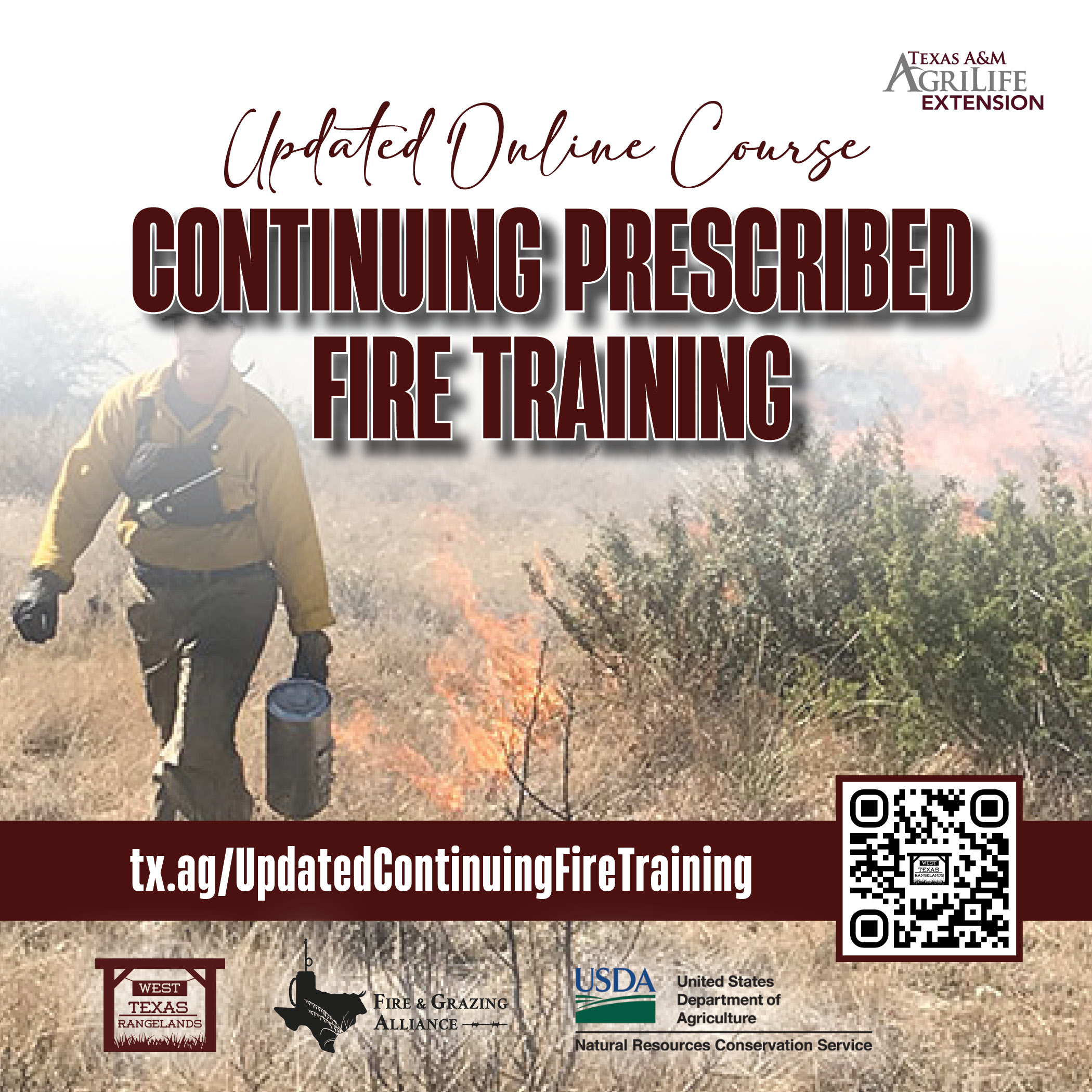
The updated Continuing Prescribed Fire Training course is available through Texas A&M AgriLife Extension. The six-hour self-paced course meets continuing fire training requirements for Texas Certified and Insured Prescribed Burn Managers and is available for registration at Updated Continuing Fire Training Course.
Filed Under: Prescribed Burn Associations, Prescribed Burning Tagged With: #AgriLifeExtension, #ContinuingEducation, #FireAndGrazing, #FireTraining, #GoodFire, #LandStewardship, #NaturalResourceManagement, #PrescribedBurning, #PrescribedFire, #RangelandManagement, #ResilientRangelands, #WestTexasRangelands

Burning From the Ground Up: How Prescribed Burn Associations Are Expanding Fire Across the Great Plains

October 1, 2026 by kara.matheney

Prescribed fire has long been one of the most effective tools for managing woody plant encroachment, improving wildlife habitat, enhancing forage production, and reducing wildfire risk. Yet for many landowners, implementing prescribed fire can seem out of reach due to concerns about labor, equipment, experience, liability, and planning requirements.

Across the Great Plains, Prescribed Burn Associations (PBAs) are helping overcome those barriers through a simple but powerful concept: neighbors helping neighbors. New research published in the International Journal of Wildland Fire demonstrates that these landowner-led organizations are expanding access to prescribed fire, building local capacity, and making meaningful contributions to rangeland stewardship across the United States.

A Movement Built by Landowners
Prescribed Burn Associations first emerged in the Great Plains in the 1990s to help ranchers gain the education, equipment, training, and support needed to safely implement prescribed fire on private lands. Since then, the model has spread nationwide, with more than 140 PBAs now operating across the country.

Unlike traditional top-down approaches, PBAs are community-led organizations that bring together landowners, volunteers, and natural resource professionals to share knowledge, labor, equipment, and experience. These local networks help reduce costs, increase confidence, and provide opportunities for people to gain hands-on experience using prescribed fire.

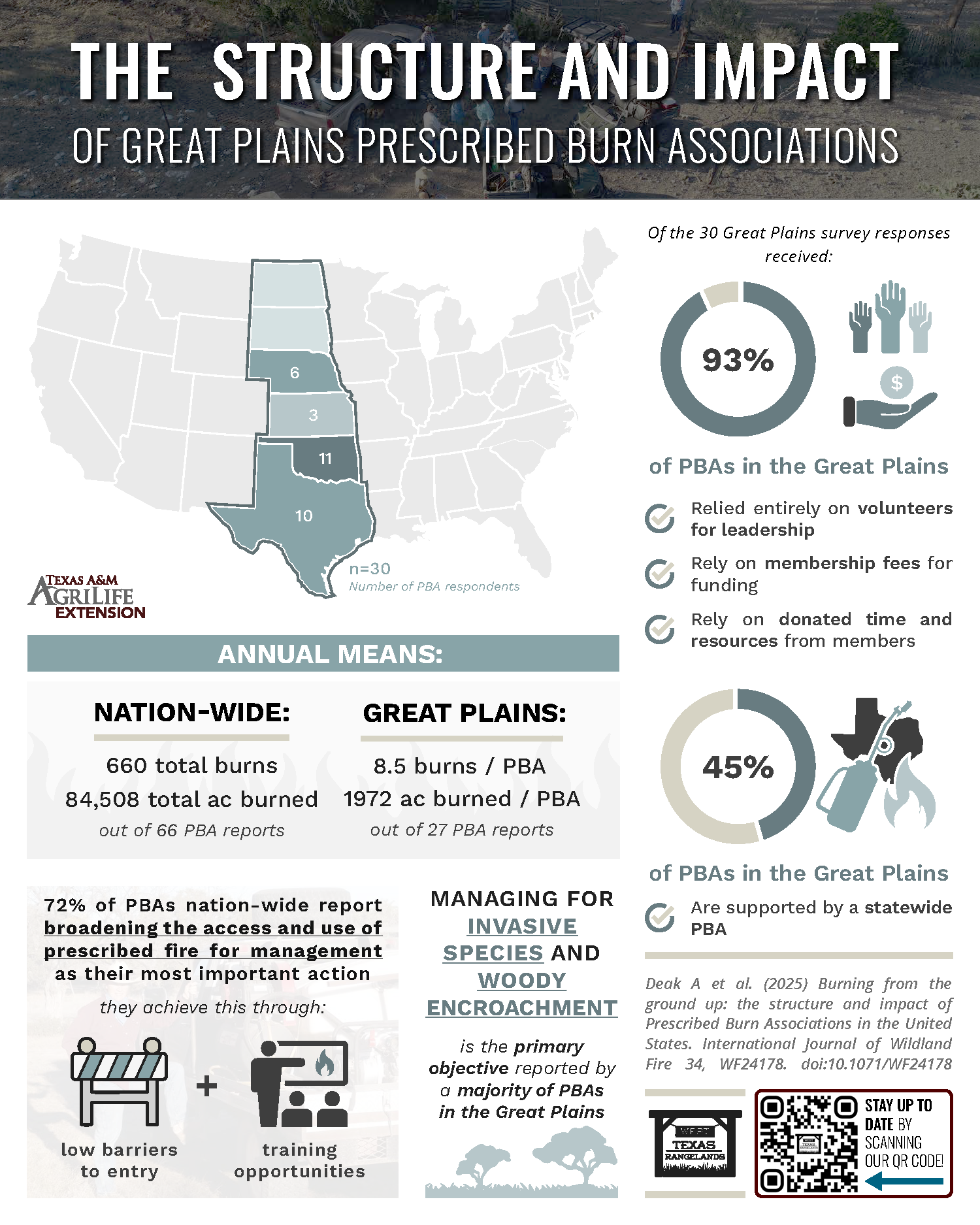
The impact of these organizations continues to grow. Survey responses from PBAs across the United States showed that associations collectively conduct an average of 660 prescribed burns across 84,508 acres annually, mobilizing thousands of volunteers to restore fire to ecosystems where it has historically been excluded.

Infographic titled "The Structure and Impact of Great Plains Prescribed Burn Associations" showing survey results, statistics on prescribed burns, and information on managing invasive species. [Read more…] about Burning From the Ground Up: How Prescribed Burn Associations Are Expanding Fire Across the Great Plains

Filed Under: Prescribed Burn Associations, Prescribed Burning, Woody Encroachment Tagged With: #AgriLifeExtension, #FireAndGrazing, #FireEcology, #GrasslandConservation, #LandStewardship, #PrescribedBurnAssociation, #PrescribedFire, #RangelandManagement, #ResilientRangelands, #TexasRangelands, #WestTexasRangelands, #WildfireMitigation, #WoodyEncroachment, #WorkingLands

Making the Most of Every Bite: How Goats and Cattle Complement One Another on Texas Rangelands

September 17, 2026 by kara.matheney

Across much of Texas, producers are continually looking for ways to improve forage utilization, increase ranch productivity, and manage woody plant encroachment without sacrificing livestock performance. While cattle are the foundation of many ranching operations, growing evidence suggests that adding small ruminants such as goats can provide benefits that extend beyond simply adding another revenue stream.

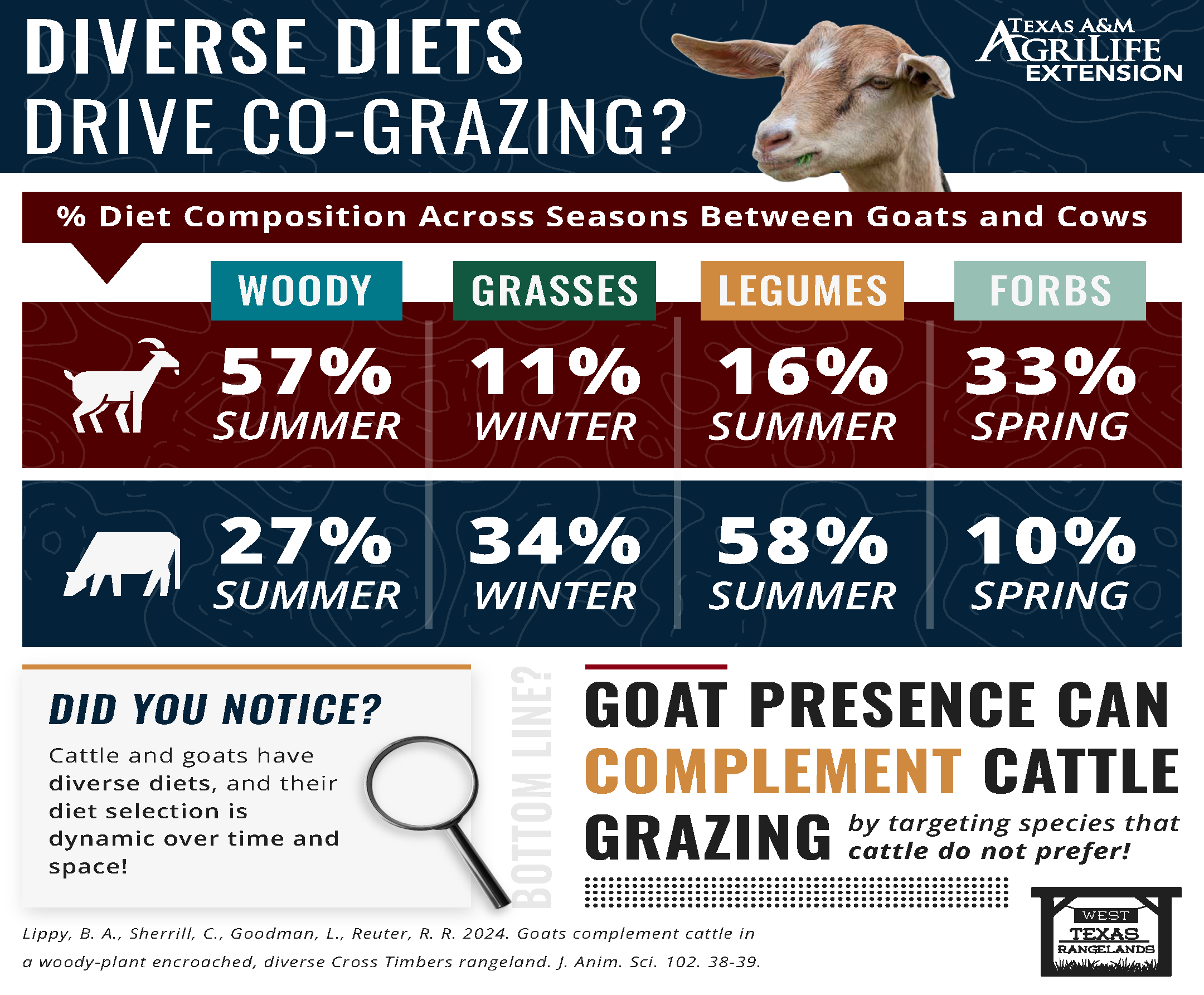
Research conducted in the Cross Timbers region found that cattle and goats utilize available plants very differently throughout the year, allowing them to occupy distinct feeding niches on the same landscape. The study demonstrated that goats consumed substantially more woody vegetation and forbs than cattle, while cattle relied more heavily on grasses and legumes. This dietary separation is one reason co-grazing systems can be so effective. Lippy et al. (2024), Journal of Animal Science 102:38-39.

Understanding the Grazing Niche
Every grazing animal has evolved to take advantage of different plant resources. Cattle are generally classified as grazers, meaning they prefer grasses and grass-like plants. Their anatomy, grazing behavior, and digestive systems are well-suited for harvesting large amounts of herbaceous forage close to the ground.

Goats, on the other hand, behave more like browsers. Rather than focusing primarily on grasses, they frequently select leaves, twigs, shrubs, vines, and broadleaf plants. Their smaller mouths and unique feeding behavior allow them to be highly selective and utilize vegetation that cattle may largely ignore.

This difference is important because rangelands rarely consist of a single plant type. A healthy landscape often contains a mixture of grasses, forbs, legumes, and woody species. When only one livestock species is present, portions of the available forage resource may remain underutilized, while preferred plants receive disproportionate grazing pressure.

Why Dietary Diversity Matters

The infographic illustrates that cattle and goats shift their diets seasonally while maintaining different forage preferences throughout the year. Those differences allow multiple livestock species to harvest forage from different parts of the plant community rather than directly competing for the same forage resources.

From a ranch management perspective, this creates opportunities to increase overall forage utilization while distributing grazing pressure across a greater variety of plant species. Instead of concentrating consumption on a narrow subset of desirable plants, co-grazing can encourage more balanced use of the landscape.

Research has shown that diverse grazing pressure can influence plant community composition over time. By incorporating animals that utilize different forage types, producers may be able to improve forage distribution and reduce the competitive advantage of less desirable species.

Managing Woody Plant Encroachment
One of the most significant rangeland challenges facing Texas is the expansion of woody plants into grass-dominated ecosystems. Species such as mesquite, juniper, and various brush species can reduce forage production, alter wildlife habitat, and impact water resources.

Traditional brush management tools remain important, but goats can serve as a valuable component of an integrated management strategy. Because goats readily consume many woody plant species, they can apply consistent browsing pressure that complements mechanical and chemical control efforts.

While goats are not a silver bullet for brush management, their dietary preferences allow them to target vegetation that cattle generally avoid. Over time, this additional grazing pressure can help suppress regrowth and provide another tool for managing woody plant expansion.

Improving Drought Resilience

Diverse grazing systems may also improve flexibility during variable forage conditions.

Texas producers are no strangers to drought. During dry periods, forage availability often changes rapidly. Some plant groups decline earlier than others, and livestock that can utilize a broader range of available vegetation may offer additional management options.

Because goats and cattle respond differently to changing forage conditions, co-grazing can help producers access forage resources across multiple plant communities. This flexibility can be particularly valuable when environmental conditions limit the growth of preferred forage species.

Maintaining diverse plant communities and utilizing multiple grazing niches can contribute to the overall resilience of both livestock operations and the rangelands on which they depend.

Looking Beyond Production
The benefits of co-grazing extend beyond forage utilization alone. Many producers find that incorporating multiple livestock species supports broader ranch objectives, including:

  • Improved use of available forage resources
  • Increased management flexibility
  • Enhanced brush management efforts
  • Diversified income opportunities
  • More balanced grazing pressure across plant communities
  • Potential improvements in rangeland condition over time

As with any management practice, successful implementation depends on factors such as fencing, predator management, labor availability, marketing opportunities, and operation-specific goals. However, understanding how different livestock species interact with vegetation can help producers make informed management decisions.

A Rangeland Perspective
One of the most important lessons from this research is that livestock should not simply be viewed as consumers of forage. Different animal species interact with rangelands in unique ways, creating opportunities for managers to influence plant communities through grazing management.

The differences highlighted in the infographic demonstrate why co-grazing has become an important consideration for many Texas producers. By combining grazers and browsers, ranchers may be able to utilize more of the available forage base, address vegetation management challenges, and support healthier, more resilient rangelands.

When cattle and goats are allowed to do what they naturally do best, the result is often a more efficient use of the landscape and a management approach that works with ecological processes rather than against them.


Filed Under: Beef Cattle, Forage, Goats, Grazing Management Tagged With: #AgriLifeExtension, #BeefCattle, #GoatProduction, #GrazingManagement, #RangelandManagement, #ResilientRangelands, #WestTexasRangelands, Grazing

Texas Working Lands: What Land Fragmentation Means for the Future of Texas Rangelands

September 9, 2026 by kara.matheney

Texas is known for its wide-open spaces, productive ranches, working farms, and privately owned forests. These working lands support agricultural production, wildlife habitat, water resources, recreation, and rural economies across the state. Today, approximately 139 million acres, or 81% of Texas, remain in privately owned working lands, making private land stewardship one of the most important factors shaping the future of Texas natural resources.

A recent article from the Texas A&M Natural Resources Institute highlights a growing challenge facing these landscapes: land fragmentation. Using an updated Texas Land Trends Fragmentation Risk Map, researchers identified areas where farms, ranches, and forests may be most vulnerable to subdivision and conversion in the future. While growth and development are a natural part of a thriving state, understanding where these changes are occurring can help landowners, communities, and conservation partners make informed decisions about the future of Texas working lands.

What Is Land Fragmentation?
Land fragmentation occurs when large properties are divided into smaller ownership parcels, often leading to conversion from agricultural uses to residential, commercial, or other non-agricultural development. While an individual subdivision may seem insignificant on its own, the cumulative impact can fundamentally alter rural landscapes. Fragmentation can reduce the viability of agricultural operations, disrupt wildlife habitat, increase management challenges, and limit opportunities for landscape-scale conservation efforts.

The Texas Land Trends program points to several interconnected drivers of fragmentation, including rapid population growth, rising land values, and changing ownership patterns. As urban areas continue to expand outward, demand for nearby rural land increases. Higher land values can create incentives to subdivide property or convert working lands to other uses, particularly in areas experiencing development pressure.

Texas Continues to Grow
The pressures contributing to fragmentation are closely tied to Texas’ remarkable growth. Between 1997 and 2022, the state’s population increased from 19 million to 30 million residents, a 55% increase. More than 1.7 million people were added during the most recent five-year period alone. The majority of that growth occurred within counties surrounding major metropolitan areas, particularly within the Texas Triangle that connects Dallas-Fort Worth, Houston, Austin, and San Antonio.

The updated Fragmentation Risk Map reflects these growth patterns, showing elevated fragmentation risk in many counties surrounding major population centers and transportation corridors. The map serves as a decision-support tool that helps identify where future conversion and subdivision pressures may be greatest.

Why This Matters for Texas Rangelands
For ranchers and landowners, fragmentation is about much more than changing property boundaries. Large, intact ranches provide the scale necessary to support productive livestock operations, functioning watersheds, connected wildlife habitat, and many of the conservation practices that sustain healthy rangelands.

Landscape-scale management approaches such as prescribed fire, invasive species control, brush management, wildlife habitat conservation, and grazing management often depend on cooperation across large areas. As ownerships become smaller and more fragmented, coordinating these efforts can become increasingly difficult. Fragmentation can also contribute to habitat fragmentation, increased infrastructure development, and reduced opportunities for long-term stewardship of natural resources.

These challenges are particularly important in Texas, where privately owned lands provide the vast majority of wildlife habitat and support many of the ecosystem services that benefit all Texans.

The Numbers Tell an Important Story
According to the latest Texas Land Trends report, the state lost nearly 3.7 million acres of working lands to non-agricultural uses between 1997 and 2022. More than 1.8 million acres were lost during the most recent five-year reporting period alone. Grazing lands have experienced some of the largest declines, with approximately 6.7 million acres converted to other uses since 1997.

These figures highlight the importance of understanding where future changes may occur and why proactive planning matters. Conservation efforts, succession planning, educational outreach, and support for working lands all play a role in maintaining the farms and ranches that contribute to Texas’ agricultural heritage and economic strength.

Looking Ahead
The updated Texas Land Trends Fragmentation Risk Map is not intended to predict the future with certainty. Instead, it provides a valuable lens through which landowners, conservation organizations, and communities can better understand ongoing changes and identify areas where proactive conversations may be needed. By understanding fragmentation trends today, Texans can make more informed decisions about the stewardship of working lands tomorrow.

As Texas continues to grow, the challenge will be finding ways to balance development with the conservation of the farms, ranches, and forests that define the state’s landscape. The future of Texas rangelands depends not only on how we manage the land, but also on how we retain the large, connected working landscapes that make effective stewardship possible.

Original Source: This article was adapted from “Updated Texas Land Trends map shows where working lands face growing fragmentation risk” by the Texas A&M Natural Resources Institute. Readers can view the original article and explore additional Texas Land Trends resources through the Texas A&M Natural Resources Institute.

Filed Under: Land, Uncategorized Tagged With: #AgriLifeExtension, #Fragmentation, #RangelandManagement, #ResilientRangelands, #TexasA&MNaturalResourcesInstitute, #WestTexasRangelands, #WorkingLands

Take What You Need & Let The Range Succeed: Principles of Sustainable Grazing

July 8, 2026 by kara.matheney

Article written by Mr. Burkes Kissire, Sutton County 4-H Member

When looking out into a rangeland, you might think that all the grass you see can be fully grazed, but when you look a little deeper into the subject, you begin to realize that you may be wrong.

Rangelands are the most valuable resource available to livestock producers in Texas. A well-managed rangeland can easily sustain both livestock and wildlife, while also maintaining healthy soil. However, these resources can decline quickly when overused. One of the most recommended grazing practices is the Take 50%, Leave 50% concept. While simple in theory, this management practice can have significant impacts on the long-term health and the productivity of your land.

Take 50%, Leave 50% is exactly what the name suggests: only half the edible forages should be removed from the pasture. Importantly, this must be based on the weight of the edible forage, rather than the height of the plant. Different plants grow differently, making height an unreliable factor for estimating. By only focusing on the amount of forage used, rangeland managers can better manage their plants and rangelands and ensure that plants retain enough leafy material to recover the lost material efficiently and quickly.

Leaving half of the plant is essential for the plant’s health since plants rely on their leaves to capture available sunlight and produce energy they need through photosynthesis. When too much of the leaf is grazed, the plant goes into a state of emergency, in which the plant begins to use energy stored in the roots for regrowth. Depending on how much leaf was removed, a portion of the roots will stop growing. In contrast, when 50% or more of the leaf material remains and contributes to photosynthesis, the plant recovers more quickly, leading to more efficient plant growth and healthier roots.

Proper grazing affects the roots more than you think. A pasture full of healthy plants has a healthy root system that helps hold soil in place and helps hold water during a drought. Deep roots allow water to infiltrate the soil, instead of running off and eroding your soil. Healthy rangelands also promote nutrient cycling as plant material decomposes and returns nutrients to the soil. Over time, these processes and cycles will lead to better soil health, cleaner groundwater, and a more drought-resistant rangeland for years to come.

Applying the Take 50%, Leave 50% principle starts with understanding the amount available forage. Rangeland managers can visually estimate the amount of plant life in a pasture, but for precise measurements, you should weigh the grass. Begin by marking out a random square yard in your pasture, clip and weigh the grass, then convert this weight into pounds per acre. Knowing the exact amount of forage production in your pasture can help prevent overstocking and ensure that the plant retains enough material to regenerate.

Each livestock species selects different plants, making your choice of livestock very important. Cattle primarily graze taller grasses, and graze less selectively than other livestock species. Sheep graze shorter grasses, legumes, and other plants native to where they live. In contrast to both cattle and sheep, goats prefer browse, similar to a white-tail deer. Because each species has its preference, you can allow multiple species to graze or browse the same pasture to maximize operation. For example, if you have a pasture dominated by grasses that also has a considerable amount of browse, you may consider allowing both sheep and goats to graze and browse the same pasture.

Successfully applying this principle requires more than simply gauging your forage content. Rangeland managers must also consider carrying capacity, stocking rates, growing seasons, seasonal rainfall, and pasture recovery times. Strategies such as rotational grazing and deferred grazing help you maintain the perfect ratio of forage in your pasture. During a drought, you may have to reduce your stocking rate to ensure you do not lose too much grass.

The economic benefits of proper grazing are major. A healthy rangeland produces more edible forage over time, reducing the need for supplemental feeds. Good forage quality is important since it leads to efficient weight gain and overall improves herd quality. By maintaining productive plants on productive soil, producers can avoid costly restoration efforts needed after overgrazing. Sustainable grazing practices help protect natural resources we have and profitability.

The Take 50%, Leave 50% concept has remained one of the most reliable grazing practices since it can balance production and resource conservation. Following this principle helps maintain healthy plants and soil. This combination of benefits leads to productive rangelands for future generations. While every operation is unique, this practical principle can be applied almost anywhere, with any types of grass.

Sources: Dr. Doug Tolleson, Pascual Hernandez, Tammy Fisher

Filed Under: Conservation, Conservation Practices, Grazing Management, Sheep, Targeted Grazing, Woody Encroachment Tagged With: #AgriLifeExtension, #DoBetter, #GrazingManagement, #ResilientRangelands, #SustainableGrazing, #WestTexasRangelands, Growth, soil

Recent Posts

  • Building Fire Capacity Before the Next Burn: New Continuing Fire Training Course Supports Prescribed Fire Practitioners
  • Burning From the Ground Up: How Prescribed Burn Associations Are Expanding Fire Across the Great Plains
  • Juniper Management on Texas Rangelands
  • Making the Most of Every Bite: How Goats and Cattle Complement One Another on Texas Rangelands
  • Texas Working Lands: What Land Fragmentation Means for the Future of Texas Rangelands

Categories

  • 4-H Range Contests
  • Beef Cattle
  • Brush Management
  • Carbon Credits
  • Carbon Markets
  • Conservation
  • Conservation Practices
  • Drought Management
  • El Niño
  • Events
  • Forage
  • Goats
  • Grazing Management
  • La Niña
  • Land
  • Lessons Learned
  • Meet A County Extension Agent
  • Plant ID
  • Podcast
  • Prescribed Burn Associations
  • Prescribed Burning
  • Publications
  • Range Concepts
  • RAP
  • Sheep
  • Society for Range Management
  • Soil
  • Staff
  • Targeted Grazing
  • Uncategorized
  • Water
  • Weather
  • Why I Ranch
  • Wild Pigs
  • Wildfire
  • Wildfires
  • Wind
  • Woody Encroachment
  • Youth Range Workshop

Archives

Texas A&M AgriLife Extension Service
Texas A&M University System Member
  • Compact with Texans
  • Privacy and Security
  • Accessibility Policy
  • State Link Policy
  • Statewide Search
  • Veterans Benefits
  • Military Families
  • Risk, Fraud & Misconduct Hotline
  • Texas Homeland Security
  • Texas Veteran's Portal
  • Equal Opportunity
  • Open Records/Public Information