Producers often face tough choices when managing rangeland, especially during drought or market fluctuations. While maximizing livestock numbers might bring short-term profit, prolonged overgrazing can deal lasting damage to the overall health and productivity of the land. One of the most critical, but sometimes overlooked, impacts is how overgrazing disrupts the watershed and reduces rainfall infiltration, setting off a chain reaction that threatens both present and future production.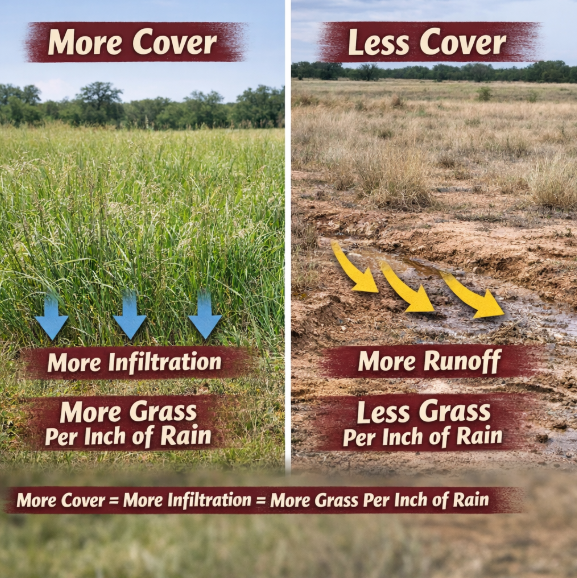
What Is Overgrazing?
Overgrazing happens when livestock remove more plant material than the land can regenerate, reducing vegetative cover. Without sufficient rest and recovery for grasses and forbs, root systems shrink, soil structure declines, and bare ground increases.
Watershed Function and Why It Matters
A healthy watershed collects, stores, and distributes water efficiently across the landscape. Vegetation intercepts rainfall, slows surface runoff, and helps water infiltrate into the soil, replenishing aquifers and supporting plant growth during dry periods. When this function is degraded, so is the life of a ranch.
The Impact of Overgrazing on Rainfall Infiltration
Intact vegetation and litter (dead plant material) act as a sponge, allowing more rainfall to soak in rather than run off. Texas A&M research consistently shows that overgrazed pastures lose this critical function (Briske et al., 2011). The results:
- Increased Bare Soil – without enough cover, droplets hit bare soil directly, compacting it and reducing pore spaces.
- More Runoff – compacted, crusted soils shed water, sending it downhill rather than storing it for plant growth.
- Erosion – runoff carries away topsoil, further reducing the land’s ability to support vegetation.
Effects on Production and Range Health
- Lower Forage Yields – less water stored means less forage growth through the season. Productivity drops, resulting in further pressure to overstock in a vicious cycle.
- Reliance on Supplemental Feed – with reduced native forage, producers must purchase feed or de-stock, both of which cut into profits.
- Increased Weed Invasion – bare patches and disturbed soil invite invasive species, which further outcompete desirable native plants.
- Reduced Drought Resilience – healthy rangeland can buffer drought impacts; degraded rangeland cannot.
Economic and Environmental Tradeoff
“A pound of prevention is worth a ton of cure,” says Dr. Larry Redmon, Professor & Extension Forage Specialist at Texas A&M. Repairing watershed function, restoring infiltration, and rebuilding soil health can take years and significant expense.
Key findings from Texas A&M’s “Rangeland Watershed Management” (B-6136) highlight how managed grazing increases infiltration by 12–60% compared to overgrazed sites.
Steps for Ranchers
- Monitor Utilization – Leave adequate stubble height and ground cover after grazing.
- Rest Pastures – Allow for seasonal or rotational rest to restore plant and root health.
- Observe Hydrology – Monitor for runoff, erosion, and infiltration after rains.
- Consult Local Extension – Texas A&M AgriLife can provide technical assistance and region-specific recommendations.
Conclusion
The hidden cost of overgrazing is the undermining of the ranch’s very foundation which starts and ends with the soil and water resources. By prioritizing range health and managing for watershed function, producers secure not only the current year’s paycheck but the resilience and productivity of their land for years to come.
References
- Briske, D.D., et al. (2011). [Rangeland Watershed Management – B-6136] (https://agrilife.org/texasrangelands/files/2011/02/B-6136.pdf), Texas A&M AgriLife Extension.
- What Is a Watershed? (https://wrri.tamu.edu/watersheds/what-is-a-watershed/), Texas Water Resources Institute.
For more infographics and resources, visit AgriLife Extension’s West Texas Rangelands https://agrilife.org/westtexasrangelands/extension-publications/
Are you seeing signs of overgrazing, runoff, or diminished production on your ranch? Contact your county’s AgriLife Extension Office for a site assessment and recommendations today.