• Skip to primary navigation
  • Skip to main content
  • Skip to primary sidebar
  • Texas A&M Forest Service
  • Texas A&M Veterinary Medical Diagnostics Laboratory
  • Texas A&M AgriLife Extension Service
  • Texas A&M AgriLife Research
  • Texas A&M College of Agrculture and Life Sciences
West Texas Rangelands
West Texas RangelandsWe hope to provide a variety of science-based rangeland information and current research on prescribed fire, wildfires, brush management, and grazing management!
  • Menu
  • Home
  • About & Contact
  • Publications
    • Extension Publications
    • Refereed Journal Articles
    • Program Summaries
  • Events
  • Lunch N’ Learn
  • Infographics
    • Drought
    • Grazing
    • Herbicide
    • Prescribed Fire
    • Rangeland Plants
    • Wildfire
  • Range Resources
    • Published to Pasture
    • Range Concepts
  • Fire Resources
  • Sponsors
  • AgriLife Learn Online Courses

What the National CPBM Report Means for Producers Using Prescribed Fire

May 13, 2026 by kara.matheney

Prescribed fire has deep roots in agricultural land stewardship, especially across working rangelands where fire has long been used to manage brush, renew forage, and support wildlife habitat. At the same time, the regulatory and social landscape surrounding prescribed fire continues to evolve. A new national report assessing Certified Prescribed Burn Manager programs provides useful context for producers navigating this changing environment.

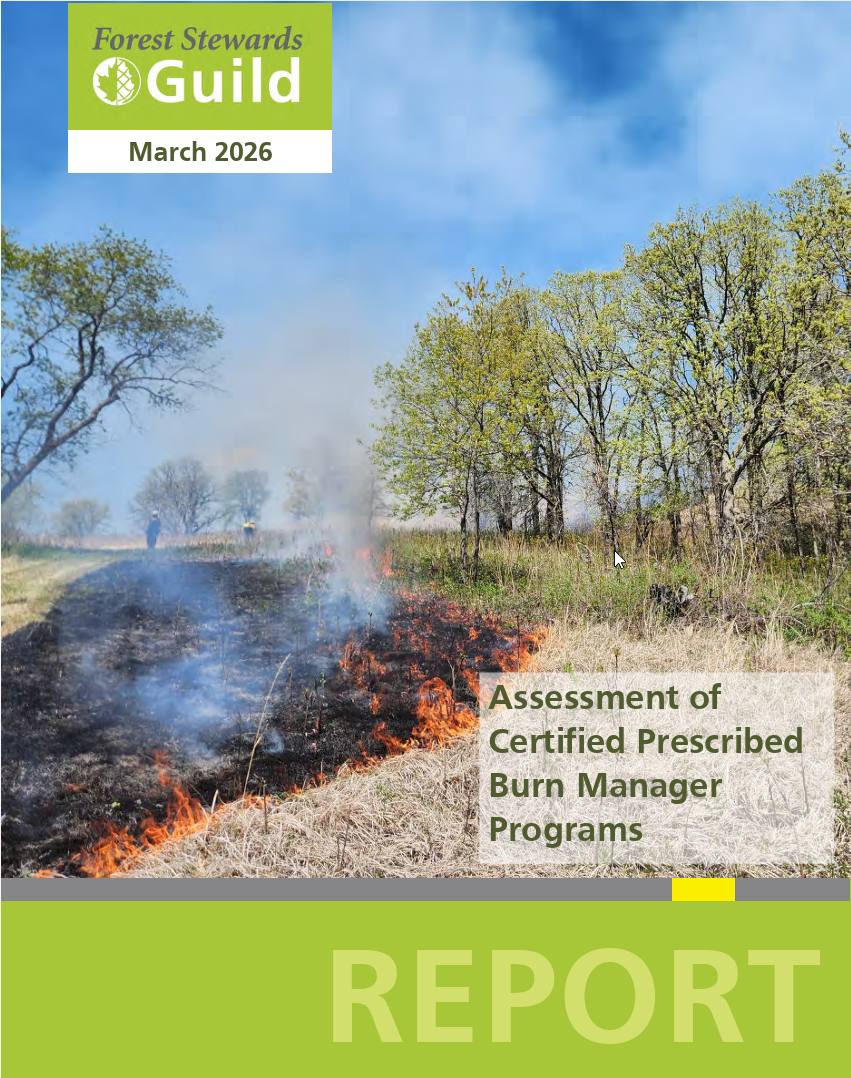
Forest Stewards Guild "March 2026" report cover featuring a controlled prescribed burn in a grassy field with trees in the background.The 2026 National Assessment of Certified Prescribed Burn Manager Programs, developed by the Forest Stewards Guild and partners, examines how states across the country are supporting safe and effective prescribed fire through training and certification. While the report is national in scope, many of its findings are directly relevant to West Texas producers.

Prescribed Fire Demand Is Increasing Nationwide
The report notes a growing recognition that fire is an essential ecological process and a critical tool for reducing hazardous fuels and restoring ecosystem function. At the same time, there is an unmet demand for prescribed fire across the United States, driven by increasing wildfire risk, woody plant encroachment, and the need for proactive land management.

For producers, this confirms what many already know. Fire remains one of the most cost‑effective tools available for managing rangelands, but opportunities to burn safely are increasingly influenced by weather constraints, public perception, smoke concerns, and liability issues.

What CPBM Programs Are Designed to Do
Certified Prescribed Burn Manager programs are one approach states have used to address these challenges. According to the report, CPBM programs provide structured training, clarify standards for safe burning, and help reduce liability exposure for practitioners by establishing clear expectations and certification pathways.

As of early 2026, 24 states operate formal CPBM programs, with additional states actively developing them. These programs vary widely, reflecting regional differences in land ownership, fire culture, and policy priorities.

Acknowledging Agricultural Fire Culture
One important finding highlighted in the report is that not all regions view certification the same way. In parts of the Great Plains and agricultural regions, prescribed fire has often been passed down through generations or coordinated informally among neighbors. In these areas, some practitioners expressed concern that formal certification could interfere with trusted local systems or add unnecessary bureaucracy for producers who already burn responsibly.

This perspective is particularly relevant to West Texas. Many producers already have deep practical knowledge of fire behavior on their land and rely on local relationships to conduct safe burns. The report acknowledges that any certification or training framework must respect these established practices while still addressing modern risk and safety expectations.

Why Training Still Matters for Producers
Even in regions with strong fire traditions, the report emphasizes that accessible training remains a key support for prescribed fire. Training helps producers stay current on weather tools, smoke management considerations, equipment standards, and evolving regulations. It also supports communication with neighbors, agencies, and insurers when burns are planned.

For producers who do not seek formal certification, structured training can still strengthen burn planning and reduce risk. For those working with certified burn managers or participating in prescribed burn associations, shared training frameworks help align expectations and improve coordination.

Implications for West Texas Rangelands
Texas is unique in that the vast majority of land is privately owned, making cooperation and producer leadership essential for successful prescribed fire use. The national CPBM report reinforces the importance of balancing flexibility with accountability, especially in states where agriculture drives land management outcomes.

For West Texas producers, the key takeaway is not that certification is required for everyone, but that informed fire use is increasingly important. Whether fire is applied directly by producers, through prescribed burn associations, or with certified professionals, understanding the broader landscape helps protect both land and livelihoods.

Using Information to Support Better Decisions
The national CPBM assessment provides context for why training programs exist and how they are being used across the country. Producers can use this information to evaluate their own goals, identify resources that fit their operation, and engage more effectively in conversations about prescribed fire at the local and state level.

Prescribed fire remains a producer‑driven tool on working rangelands. Staying informed helps ensure it remains that way.

Read the Full Report by Visiting: https://irp.cdn-website.com/447b03b9/files/uploaded/2026_National_CPBM_Report_FINAL.pdf

Filed Under: Prescribed Burning Tagged With: #AgriLifeExtension, #FireEcology, #LandStewardship, #PrescribedFire, #RangelandManagement, #TexasRanching, #WestTexasRangelands, #WorkingLands

2025 Region 3 Texas Land Value Trends: What Stability Means for West Texas Producers

May 6, 2026 by kara.matheney

West Texas Rangelands sourced this information from the Texas Agriculture Law Blog authored by Tiffany Dowell Lashmet, Professor & Extension Ag Law Specialist with Texas A&M AgriLife Extension Service.  To view the full report, please visit: https://agrilife.org/texasaglaw/2026/04/13/2025-rural-land-value-trends-report-released/.   

Land values influence nearly every management decision on a West Texas ranch, from leasing and grazing strategies to succession planning and long‑term investment. The 2025 Texas Land Value Trends for Region 3 offer an important takeaway for producers across North, Central, and South Central Texas: stability remains the dominant theme.

While individual properties differ, overall rangeland values and rental rates across Region 3 have remained steady going into 2025. For producers, this consistency provides a clearer planning window during a time when many costs and inputs remain unpredictable.

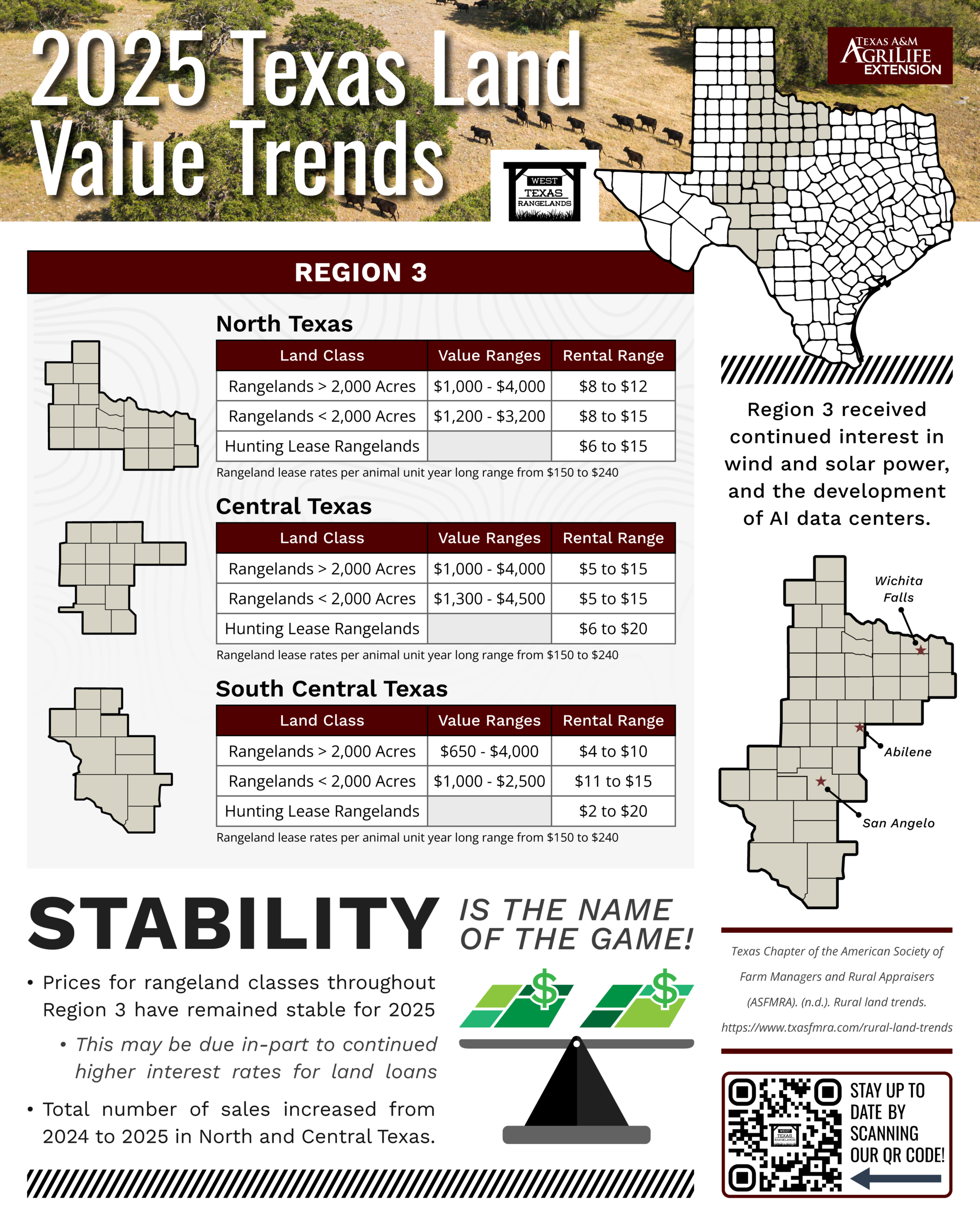
Infographic detailing 2025 Texas Land Value Trends for Region 3, presenting data for North, Central, and South Central Texas, including land classes, value ranges, and rental ranges. The infographic highlights regional stability and increased sales, with a map illustrating key cities and areas within Region 3.

A Stable Market Across Region 3
According to the Texas Chapter of the American Society of Farm Managers and Rural Appraisers, rangeland prices throughout Region 3 have largely held steady from 2024 to 2025. This includes large tracts greater than 2,000 acres as well as smaller ranches under 2,000 acres.

In North and Central Texas, total land sales increased from 2024 to 2025, even as interest rates for land loans remained higher than many producers have been accustomed to in recent years. This suggests that demand for rangeland remains strong, particularly for properties that support livestock production, hunting leases, or long‑term land investments.

For South Central Texas, values have remained stable as well, though rental ranges and entry prices continue to vary based on acreage size, location, and land condition.

What the Numbers Say About Rangeland Values
Across Region 3, rangelands larger than 2,000 acres generally continue to carry lower per‑acre values than smaller properties, reflecting typical economies of scale. Smaller tracts often command higher per‑acre prices due to accessibility, limited supply, or diversification opportunities.

Rental rates for rangeland grazing remain within consistent ranges across the region. Long‑term rangeland lease rates per animal unit year continue to fall within established norms, giving producers some predictability when budgeting for leased ground or negotiating renewals.

Hunting leases remain an important supplemental income source for many ranches. Although rates vary widely depending on habitat, access, and wildlife management, the continued presence of hunting lease value reinforces the importance of multispecies land stewardship in West Texas.

Development Pressure and Emerging Interests
There continues to be interest in wind and solar development, as well as AI data centers, within Region 3. While these developments are not evenly distributed, they are increasingly part of landowner conversations across nearly every region of Texas.

For producers, this does not necessarily mean a shift away from agriculture. Instead, it reinforces the need to understand how surface use agreements, water access, and infrastructure placement may affect long‑term ranch operations. Evaluating these opportunities through the lens of working lands remains critical.

What Stability Means for Ranch Management Decisions
Stable land values can be both reassuring and strategic for producers. When markets are not rapidly escalating or declining, decisions can be made with greater confidence and less pressure to react quickly.
For some operations, this may be an opportunity to:

  • Re-evaluate grazing or hunting lease terms
  • Invest in land improvements such as water infrastructure or brush management
  • Plan transitions within family operations
  • Reassess insurance, taxes, and long‑term budgets

Stable markets do not remove risk, but they do reduce uncertainty when compared to periods of rapid appreciation or correction.

Keeping Land Productive in a Stable Market
While land values matter, long‑term ranch success still depends on land conditions. Soil health, forage productivity, water availability, and flexibility during drought remain foundational to property value over time.

Markets reflect what land can produce. Producers who focus on sustainable grazing management, adaptive stocking strategies, and thoughtful use of tools such as prescribed fire are better positioned regardless of short‑term market shifts.

Staying Informed
Land value trends are one piece of the broader picture producers must consider. Staying informed through credible sources allows landowners to separate short‑term headlines from long‑term patterns.

The West Texas Rangelands program will continue sharing producer‑focused information that supports informed decision-making across working landscapes.

Filed Under: Conservation, Land Tagged With: #AgEconomics, #AgriLifeExtension, #LandValues, #RangelandManagement, #RuralLand, #TexasRanching, #WestTexasRangelands, #WorkingLands

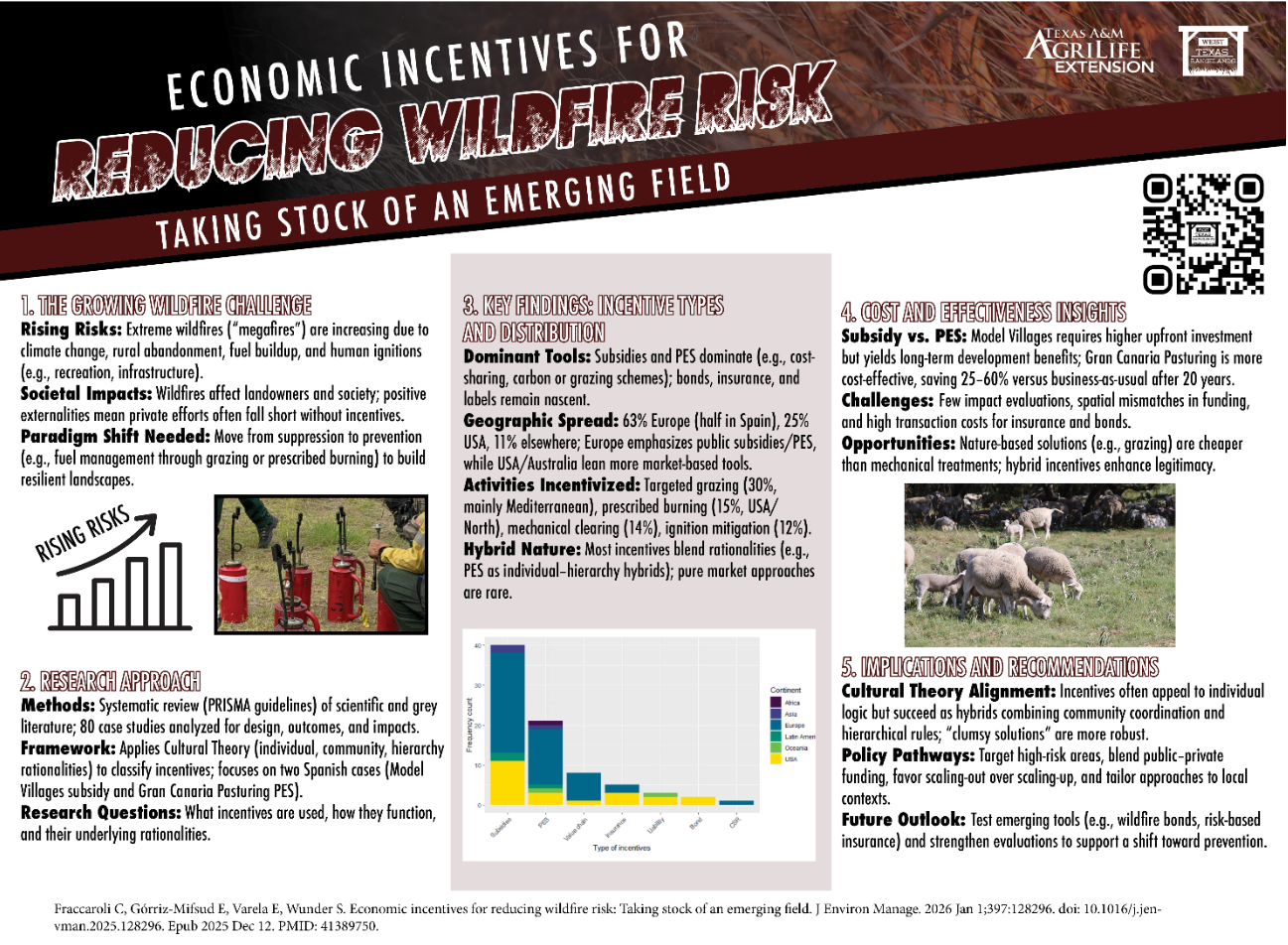
Economic Incentives for Reducing Wildfire Risk

April 15, 2026 by kara.matheney

What Landowners, Educators, and Technical Assistance Providers Should Know
Wildfire risk across Texas rangelands and working lands continues to rise. Larger fires, longer fire seasons, and increased exposure at the wildland–urban interface are no longer isolated concerns, they are becoming part of routine land management decisions. While traditional wildfire response has focused heavily on suppression, growing attention is being given to prevention and risk reduction, particularly through economic incentives that encourage proactive land stewardship.  Recent research examining economic incentives for reducing wildfire risk highlights both opportunities and challenges for landowners and those who support them through education and technical assistance.

Why Wildfire Risk Is Increasing
Several interacting forces are driving higher wildfire risk on rangelands:

  • Climate and weather variability, including hotter temperatures and more frequent droughts
  • Fuel buildup from invasive grasses, brush encroachment, and reduced disturbance
  • Land use change and fragmentation, which complicates coordinated fire management

The social and economic impacts extend beyond burned acres. Wildfires affect ranch operations, infrastructure, natural resources, insurance markets, and community safety. As a result, there is growing interest in tools that shift investments from post-fire response to pre-fire prevention.

What Are Economic Incentives for Wildfire Risk Reduction?
Economic incentives are mechanisms designed to lower the financial barriers to adopting wildfire-mitigating practices or to reward landowners for reducing risk on their properties. The research summarized in the infographic identifies four broad categories of incentives:

  1. Command-and-Control Policies – These include regulations such as burn bans, fuel treatment requirements, or zoning rules. While they can be effective in certain contexts, they often face resistance if they limit landowner flexibility or fail to account for local conditions.
  2. Information-Based Incentives – Programs such as cost-share education, outreach campaigns, and technical guidance aim to increase awareness and capacity. These approaches are common in Extension programming and are most effective when paired with financial or operational support.
  3. Market-Based Incentives
    • Cost-share programs for prescribed burning, brush management, or grazing infrastructure
    • Payments for ecosystem services
    • Insurance premium adjustments tied to risk reduction
    • Research shows that direct subsidies and cost-share programs are among the most frequently used and most studied incentive types for wildfire risk reduction.
  4. Hybrid Incentives – Hybrid approaches combine regulatory frameworks with market or informational tools. For example, insurance programs that reward compliance with fuel management standards.

Cost, Effectiveness, and Tradeoffs
One of the most important takeaways for landowners and advisors is that upfront investment matters, but long-term savings can be substantial.

  • Prescribed burning, targeted grazing, and mechanical treatments require planning and initial costs.
  • Over time, these practices can reduce wildfire suppression costs, limit infrastructure damage, and improve ecological resilience.
  • Studies summarized in the research indicate that prevention investments can yield significant cost savings compared to repeated emergency response and recovery.

However, challenges remain:

  • Incentive programs are often short-term, while wildfire risk reduction requires sustained management.
  • Programs may not align well with local ecological conditions or landowner objectives.
  • Participation can be limited by administrative burden or lack of technical support.

Implications for Extension and Technical Assistance
For Extension educators and technical assistance providers, the findings reinforce several key points:

  • Cultural context matters. Landowners are more likely to engage when incentives align with local norms, production goals, and stewardship values.
  • One-size-fits-all approaches rarely work. Flexible, locally adapted programs outperform rigid designs.
  • Education alone is not enough. Information is most effective when paired with financial or operational incentives that reduce risk and uncertainty for landowners.

Extension’s trusted role positions educators to:

  • Translate incentive opportunities into practical decision tools
  • Facilitate cooperative approaches across fence lines
  • Support landowners in navigating cost-share, insurance, and hybrid programs

Looking Ahead
As wildfire risk continues to shape rangeland management, future incentive programs are likely to place greater emphasis on:

  • Long-term contracts and sustained funding
  • Risk-based insurance models
  • Integrated approaches that combine grazing management, prescribed fire, and fuel reduction

For landowners, proactive participation in wildfire risk reduction can protect livelihoods, landscapes, and communities. For educators and technical assistance providers, aligning economic incentives with sound land management remains a powerful strategy for building more fire-resilient rangelands.

Learn More and Stay Connected
For additional resources on rangeland fire management, prescribed burning, and incentive programs, contact your local Extension office or rangeland specialist.

Filed Under: Brush Management, Conservation Practices, Prescribed Burn Associations, Prescribed Burning, Range Concepts, Wildfire, Wildfires, Woody Encroachment Tagged With: #AgriLifeExtension, #FireResilientLandscapes, #PrescribedFire, #RangelandManagement, #TargetedGrazing, #WestTexasRangelands, #WildfireRisk, #WorkingLands

Recent Posts

  • What the National CPBM Report Means for Producers Using Prescribed Fire
  • 2025 Region 3 Texas Land Value Trends: What Stability Means for West Texas Producers
  • A Tale of Two Texas Landscapes: Drought Conditions and the Road Ahead
  • The Hidden Cost of Overgrazing: How It Drains Your Watershed, Your Rainfall, and Your Bottom Line
  • Economic Incentives for Reducing Wildfire Risk

Categories

  • 4-H Range Contests
  • Beef Cattle
  • Brush Management
  • Carbon Credits
  • Carbon Markets
  • Conservation
  • Conservation Practices
  • Drought Management
  • El Niño
  • Events
  • Goats
  • Grazing Management
  • La Niña
  • Land
  • Lessons Learned
  • Meet A County Extension Agent
  • Plant ID
  • Podcast
  • Prescribed Burn Associations
  • Prescribed Burning
  • Publications
  • Range Concepts
  • RAP
  • Sheep
  • Society for Range Management
  • Soil
  • Staff
  • Targeted Grazing
  • Uncategorized
  • Water
  • Weather
  • Why I Ranch
  • Wild Pigs
  • Wildfire
  • Wildfires
  • Wind
  • Woody Encroachment
  • Youth Range Workshop

Archives

Texas A&M AgriLife Extension Service
Texas A&M University System Member
  • Compact with Texans
  • Privacy and Security
  • Accessibility Policy
  • State Link Policy
  • Statewide Search
  • Veterans Benefits
  • Military Families
  • Risk, Fraud & Misconduct Hotline
  • Texas Homeland Security
  • Texas Veteran's Portal
  • Equal Opportunity
  • Open Records/Public Information