• Skip to primary navigation
  • Skip to main content
  • Skip to primary sidebar
  • Texas A&M Forest Service
  • Texas A&M Veterinary Medical Diagnostics Laboratory
  • Texas A&M AgriLife Extension Service
  • Texas A&M AgriLife Research
  • Texas A&M College of Agrculture and Life Sciences
West Texas Rangelands
West Texas RangelandsWe hope to provide a variety of science-based rangeland information and current research on prescribed fire, wildfires, brush management, and grazing management!
  • Menu
  • Home
  • About & Contact
  • Publications
    • Extension Publications
    • Refereed Journal Articles
    • Program Summaries
  • Events
  • Lunch N’ Learn
  • Infographics
    • Drought
    • Grazing
    • Herbicide
    • Prescribed Fire
    • Rangeland Plants
    • Wildfire
  • Range Resources
    • Published to Pasture
    • Range Concepts
  • Fire Resources
  • Sponsors
  • AgriLife Learn Online Courses

Know Your Forage Before Winter: Why Fall Forage Testing Pays Off

August 20, 2026 by kara.matheney

As summer transitions into fall, many ranchers begin taking stock of hay inventories, pasture conditions, and winter feeding plans. While it’s easy to focus on how much forage is available, an equally important question is often overlooked:

What is the quality of the forage you have?
Forage testing is one of the most cost-effective management tools available to livestock producers. A relatively inexpensive analysis can provide valuable information that helps reduce feed costs, improve livestock performance, and support sustainable grazing management throughout the winter months. Texas A&M AgriLife Extension specialists consistently emphasize that successful winter feeding programs begin with knowing the nutrient value of available forage resources.

Why Forage Quality Matters
Winter feeding decisions are often based on assumptions. Hay that appears green and leafy may seem adequate, while coarse or weathered hay may be dismissed as low quality. However, visual appearance is not always a reliable indicator of nutritional value.

Forage quality is influenced by numerous factors, including:

  • Plant species and variety
  • Stage of maturity at harvest
  • Fertility management
  • Rainfall and weathering
  • Leaf-to-stem ratio
  • Harvest and storage conditions

As a result, nutrient levels can vary significantly between hay cuttings, fields, and even bales harvested from the same operation.

Without testing, producers are left guessing about the protein and energy content being delivered to their livestock.


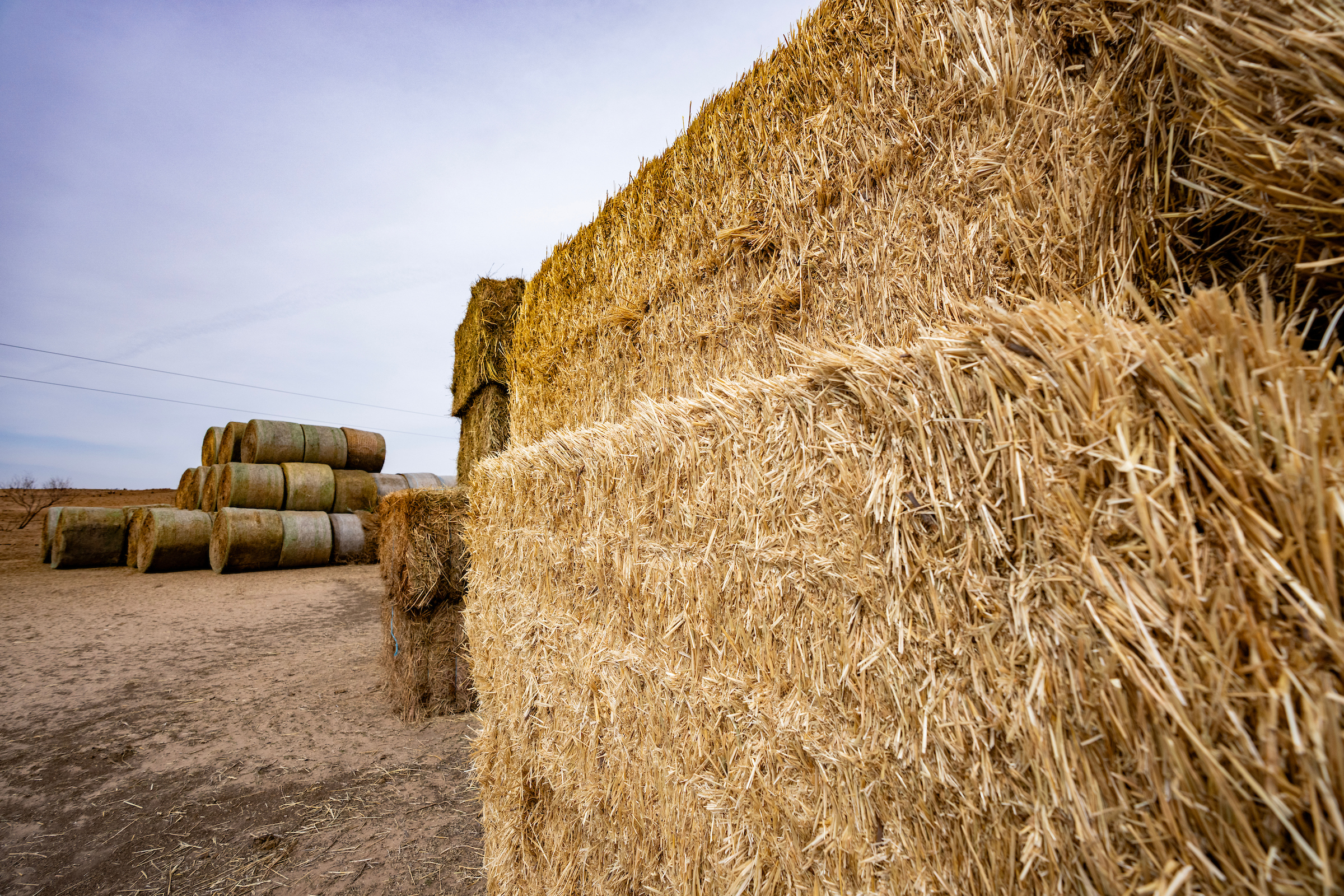
Hay bales sit alongside a farm road. (Sam Craft/Texas A&M AgriLife Marketing and Communications)

Winter Feeding Costs Start with Forage Quality
Feed costs often represent the largest annual expense for cow-calf operations. Every dollar spent on supplements should be targeted toward an actual nutritional need.

A forage test provides information that helps answer critical management questions:

  • Will this hay meet the needs of dry cows?
  • How much supplementation will lactating females require?
  • Can replacement heifers maintain desired gains?
  • Are protein supplements necessary?
  • Is energy the limiting nutrient?

Making supplementation decisions without this information can result in either underfeeding or spending money on unnecessary feed. Both scenarios affect profitability.

Match the Forage to the Livestock
One of the greatest advantages of forage testing is the ability to allocate resources strategically.

Different classes of livestock have different nutrient requirements. Lactating cows, first-calf heifers, growing replacement females, and mature bulls all require different levels of protein and energy.

Rather than feeding the same forage to all animals, producers can use test results to:

  • Reserve higher-quality hay for animals with greater nutrient demands.
  • Utilize lower-quality forage where requirements are lower.
  • Reduce unnecessary supplementation.
  • Improve overall feed efficiency.

This approach helps maximize the value of stored forage while maintaining animal performance throughout the winter.

Grazing Management Benefits Too
Forage testing is not just for hay. Many producers rely on stockpiled forage, winter annuals, crop residues, or dormant native rangelands to extend grazing and reduce feeding costs. Understanding the nutritional value of those forage resources provides important information for winter grazing decisions.

Testing standing forage can help determine:

  • When supplementation may become necessary.
  • How long available forage can support livestock requirements.
  • Whether stocking rates are appropriate.
  • How grazing pressure may affect winter pasture condition.

These decisions influence both livestock performance and long-term rangeland health. When producers understand forage quality, they can better balance animal needs with available resources while avoiding excessive grazing pressure during vulnerable periods.

Protein Is Important. Energy Is Essential.
Many producers immediately look at crude protein when a forage analysis arrives.

Protein is certainly important, but AgriLife forage specialists frequently note that energy values can be equally important, and in some cases even more critical, when evaluating winter feeding programs. Total Digestible Nutrients (TDN) provide an estimate of the energy available in forage and play a major role in maintaining body condition and supporting production.

When cows lose condition during winter, energy deficiencies are often a major contributor. Understanding both protein and energy levels allows producers to build more effective supplementation programs.

Don’t Overlook Minerals
While protein and energy often receive the most attention, minerals are another critical piece of winter nutrition. Forage quality is not just about crude protein and Total Digestible Nutrients (TDN). Mineral concentrations can vary significantly among forage species, seasons, and environmental conditions, making it difficult to know whether livestock nutritional requirements are being met without testing.

One mineral that deserves particular attention is phosphorus. Research conducted by Texas A&M University on native forage species in the Edwards Plateau documented considerable variation in phosphorus concentrations among grasses, forbs, and browse species, as well as across seasons. In general, nutrient levels are highest during periods of active growth and decline as plants mature and enter dormancy.  The study found that forbs and browse species often contained higher concentrations of nutrients, including phosphorus, than warm-season perennial grasses. Researchers also observed that nutrient levels generally decline with advancing maturity and during dormant periods.

These seasonal changes are particularly important as rangelands enter the fall and winter months. Livestock grazing dormant native rangeland, mature hay, or weathered forage may not be receiving adequate amounts of key minerals even if sufficient forage quantity is available.

Mineral deficiencies can impact:

  • Reproductive performance
  • Growth rates
  • Immune function
  • Milk production
  • Overall animal health

Because mineral availability varies widely among forage resources, forage testing provides valuable information that can help producers develop more targeted mineral supplementation programs instead of relying on a one-size-fits-all approach.

The long-term Edwards Plateau research also highlights another important lesson for range managers: diverse plant communities often provide a wider range of nutritional benefits than single-species forage systems. Researchers concluded that plant diversity provides greater opportunities for animals to select high-quality diets and meet nutritional needs throughout the year.

As you evaluate winter feeding programs, remember that a forage test can help identify not only protein and energy deficiencies but also potential mineral gaps that may affect livestock performance. The information gained can help improve supplementation decisions while supporting more efficient use of both forage and feed resources.

Getting an Accurate Sample
A forage analysis is only as good as the sample submitted.

Texas A&M AgriLife Extension recommends using a hay probe to collect representative samples from multiple bales within a lot. Samples should be combined into a composite sample that accurately reflects the forage being fed. Proper sampling is critical because pulling hay by hand from a single bale rarely provides representative results.

Many county Extension offices can assist producers with sampling recommendations and may have hay probes available for use. Producers can also submit samples through the Texas A&M AgriLife Extension Soil, Water and Forage Testing Laboratory.

Overton

Extension Specialist, examines hay. (Michael Miller/Texas A&M AgriLife)

Planning Ahead for a Better Winter
The best time to address nutritional challenges is before cattle begin losing body condition.

Fall forage testing provides time to:

  • Evaluate forage inventories.
  • Budget winter feed costs.
  • Purchase supplements before they are urgently needed.
  • Adjust stocking plans if necessary.
  • Develop targeted feeding programs.

Ultimately, forage testing transforms winter feeding from guesswork into a management decision based on data.

As producers prepare for the months ahead, understanding both the quantity and quality of available forage can help stretch feed resources, maintain livestock performance, and protect rangeland health.

Winter feeding may never be inexpensive, but having accurate information allows producers to make smarter decisions that benefit both their livestock and their land.

Source: Huston, J.E., B.S. Rector, L.B. Merrill, and B.S. Engdahl. Nutritional Value of Range Plants in the Edwards Plateau Region of Texas. Texas Agricultural Experiment Station Bulletin B-1357, Texas A&M University System

Filed Under: Forage, Range Concepts Tagged With: #ForageTesting, #ManagementMatters, #Supplementation, #WinterFeeding

Wildfire Resilience Starts Before the Fire: Lessons from Fire Scientist Jack Cohen

August 13, 2026 by kara.matheney

When headlines focus on record-setting wildfires, the conversation often centers on flame lengths, acres burned, and suppression efforts. While these factors matter, one of the nation’s leading wildfire scientists argues that we may be asking the wrong question.

Instead of asking how to stop every wildfire, Dr. Jack Cohen encourages us to ask how we can better prepare homes, ranches, and communities to withstand them. In a recent interview published in Forest News, Cohen discussed decades of research that have transformed our understanding of wildfire risk and what truly drives losses during wildfire events.

For landowners and producers across Texas, his message is both practical and empowering: wildfire resilience begins long before smoke appears on the horizon.

Rethinking Wildfire Risk
Cohen’s work as a Forest Service fire scientist helped reshape how wildfire professionals think about community losses. According to the interview, his research demonstrated that the ignitability of homes and structures is often the decisive factor in wildfire disasters, rather than the behavior of the wildfire itself.

That idea challenges a common assumption. Many people believe homes are destroyed primarily because a large wildfire directly engulfs them. In reality, homes and infrastructure are often vulnerable because of conditions immediately surrounding the structure. Cohen’s research has helped shift the focus toward creating ignition-resistant homes and fire-adapted communities.

For Texas landowners, this means wildfire preparedness is not solely about what happens across the landscape. It is also about what happens within a few feet of homes, barns, equipment sheds, livestock facilities, and other critical infrastructure.

The Growing Importance of Preparedness
Texas has experienced several significant wildfire events in recent years, including fires that moved quickly across rangelands under extreme weather conditions. As drought, heat, and wind combine to create elevated fire danger, reducing vulnerability before a wildfire occurs becomes increasingly important.

While ranchers cannot control weather conditions, they can influence how prepared their operations are when fire occurs.

Preparation may include:

  • Reducing combustible materials around structures.
  • Maintaining access routes for emergency vehicles.
  • Developing livestock evacuation or relocation plans.
  • Managing fine fuels around homes and working facilities.
  • Identifying water sources and suppression resources.
  • Coordinating with neighbors and local fire departments.

These actions may not prevent a wildfire from occurring, but they can significantly improve an operation’s ability to withstand one.

Fire Is a Natural Part of the Landscape
Another important takeaway from Cohen’s work is the recognition that fire is a natural ecological process. Throughout history, fire has shaped grasslands, woodlands, and forests across North America.

Many Texas ecosystems evolved with periodic fire. Historically, naturally occurring fires and Indigenous burning practices helped maintain healthy plant communities, recycle nutrients, reduce woody encroachment, and create diverse wildlife habitat.

When fire is excluded from fire-adapted landscapes for extended periods, fuels can accumulate. This build-up can contribute to more challenging fire behavior when wildfires eventually occur.

For many landowners, prescribed fire remains one of the most effective tools available for reducing hazardous fuels while maintaining healthy and productive rangelands.

Building Fire-Adapted Communities
Cohen emphasized the importance of creating wildfire-resistant communities rather than relying solely on fire suppression. His research helped influence national programs such as Firewise USA and broader efforts to improve community resilience.

Although much of the national conversation focuses on neighborhoods in forested regions, the same principles apply to rural communities and ranching operations across Texas.

Fire-adapted communities often share several characteristics:

  • Awareness of local fire risk.
  • Coordinated planning among landowners.
  • Regular fuel management.
  • Infrastructure designed to reduce vulnerability.
  • Strong partnerships with local emergency responders.

These efforts help communities prepare for wildfire as an inevitable event rather than treating it as a rare possibility.

What This Means for Texas Ranchers
For producers, wildfire resilience extends beyond protecting homes. Livestock, fences, water infrastructure, hay supplies, equipment, and grazing resources are all vulnerable to wildfire impacts.

A wildfire preparedness plan should consider:

Livestock Management

Identify potential evacuation routes, temporary holding areas, and transportation resources before they are needed.

Infrastructure Protection
Evaluate vulnerable structures and facilities. Simple maintenance actions can reduce fire risk around homes, barns, and equipment storage areas.

Fuel Management
Maintain defensible space around critical infrastructure and consider long-term fuel reduction strategies where appropriate.

Communication
Know how emergency information will be received and shared during a wildfire incident.

Recovery Planning
Think beyond response. Consider how fencing, grazing management, and livestock operations would recover following a wildfire.

Resilience Starts Now
One of the most important lessons from Cohen’s career is that successful wildfire management is not solely measured by fires extinguished. It is also measured by communities that are prepared, landscapes that are resilient, and structures that can survive when wildfire occurs.

For Texas landowners, that is encouraging news. While wildfire is an unavoidable part of many landscapes, there are practical actions that can reduce risk and improve outcomes.

The most effective wildfire response often begins months or even years before the first spark. Whether through fuel management, prescribed fire, preparedness planning, or community collaboration, every step taken today can help create a more resilient tomorrow.

As wildfires continue to shape landscapes across the West, Cohen’s message remains highly relevant: protecting communities starts with making them less vulnerable to ignition in the first place.

Source: “A Conversation With Jack Cohen,” Forest News, Summer 2026, Forest Service Employees for Environmental Ethics.

Filed Under: Lessons Learned, Wildfire Tagged With: #ConservationMatters, #FireAdaptedCommunities, #PrescribedFire, #RangelandManagement, #TexasRanching, #WestTexasRangelands, #WildfirePreparedness, #WildfireResilience

Wildfire Wisdom: Proven Strategies to Protect Your Property and Livestock

August 6, 2026 by kara.matheney

Article written by Kathryn O’Daniel
West Texas Rangelands Intern and Senior, Texas A&M University

Wildfires can start easily and spread rapidly under the correct conditions. High winds, dry conditions, and high fuel amounts can cause wildfires to spread across long distances, causing immense damage. As a landowner, it is imperative that your rangeland is protected from possible cases of wildfire ignition and spread.

Historically, fires were common; however, after European settlement, fires were greatly suppressed, causing high fuel loads. These high fuel loads cause wildfires to be a real threat to landowners. It is important to learn how to protect against wildfires, one of which is structural protection. Consider the materials for your buildings to be the first defense in your structural protection. Stay away from any highly flammable wood because it often becomes extremely dry, causing rapid ignition from embers. Instead, consider asphalt shingles or a metal roof and steel siding. Additionally, ensure there are no accumulations of fuel around the buildings to reduce the chance of material igniting. Consider the distance of trees, shrubs, grass, firewood, and propane tanks from the building, as proximity can be an issue.

The ‘home ignition zone’ includes the structure and the 200-foot radius around it. This area is sectioned into 3 smaller portions. The smallest zone, closest to the house, also known as zone 1, includes the 30 feet outside of the building. This area should be mowed regularly, free of dead vegetation, and contain fire-resistant material for any outdoor furniture. Additionally, the closest 5 feet to the house should be a “fire-free area”, containing nonflammable, high-moisture plants.

Zone 2 is considered the area 30-100 feet from the house. This area should have spaced-out trees, with 20 feet between individual trees or 30 feet between clusters of trees. Driveways and walkways are used as fuel breaks, and mowing should be used to reduce fuel loads.

Zone 3 includes 100 to 200 feet away from the house. In this area, less spacing is required between trees. Remove any woody debris piles and ensure tree canopies are not touching.

Lastly, infrastructure fire breaks can make or break one’s wildfire protection plan. Using gravel or caliche as a fuel break can be extremely helpful, as well as access roads and 2-track roads, which all have the potential to stop a ground-driven fire. Additionally, these firebreaks can be used to stop a wildfire by providing an area for a prescribed backfire to be lit. Backfires remove fuel loads, which can stop the wildlife when it hits the black due to the lack of fuel.

Landowners can also employ heavy grazing during the dormant season around structures to minimize fuel loads. Alternating between grazing and preemptively burning each season keeps the rangeland productivity high compared to solely grazing. In the case of a wildfire, cattle are often capable of finding a safe area on their own. Make quick openings for livestock by cutting fences if needed, and do not attempt to drive livestock to safety when a wildfire is coming. Be sure not to put yourself in harm’s way.

Wildfires are a persistent threat to rangeland owners, especially in areas with high fuel loads and dry conditions. By understanding the factors that contribute to wildfire risk and implementing strategic structural and land management practices, you can significantly reduce the potential danger to your property and livestock. Proactive prevention and preparedness are essential; safeguarding your land and structures not only protects your own assets but also contributes to the resilience of your entire community. By taking these steps, landowners can be better equipped to withstand, manage, and mitigate the challenges presented by wildfires.

Filed Under: Uncategorized Tagged With: #LandStewardship, #PrescribedFire, #RangelandProtection, #StructurePraperation, #WildfireProtection, Grazing, Rangeland, wildfire

Early Fall Outlook Points to Heat, Fire Risk, and Continued Drought Concerns

July 30, 2026 by kara.matheney

West Texas Rangelands would like to extend our gratitude to Mr. Luke Drosche for collaborating with us and providing this weather update for our readers.  We thank him for sharing his time, talents, and knowledge with us as a guest contributor.  Luke serves with Texas A&M AgriLife Extension Service as a Disaster Assessment and Recovery Specialist.  

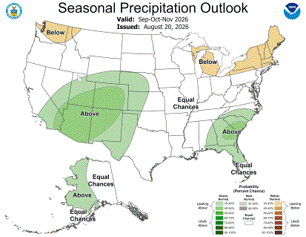
3-Month Precipitation Outlook
Heavy Rainfall is always two-sided. This month we have seen extremely high rainfall totals across the Hill Country.  All of that rain flows into the Highland Lakes, Choke Canyon, Lake Corpus Christi, and Canyon Lake.  These lakes needed a boost, especially those down in South Texas near Corpus Christi.  While providing necessary drinking water, unfortunately, this extreme event took multiple lives and has cost Texas millions of dollars.  To those who are tired of the rain, the next 3 months are expected to be slightly drier than what we have recently experienced.  Most of the state is in a “Leaning Below” category while El Paso sits in a rare “Leaning Above” category. They are more likely to see some rain.  Both categories are in slight chances, meaning there is less likelihood of deviation from the typical early fall precipitation.

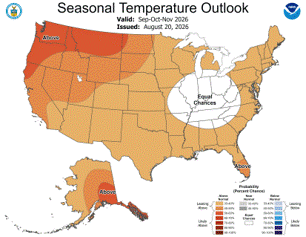
3-Month Temperature Outlook
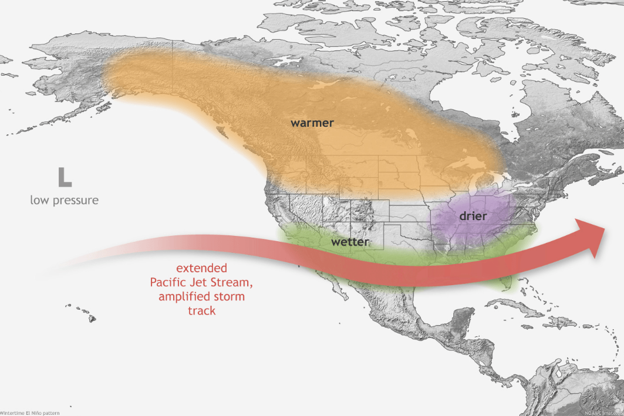
While rainfall chances sit in the middle, our temperature predictions are confident. That’s right, hot.  It is near August in Texas, and here we are seeing extreme heat across our state.  Nothing new for the majority of us, who have understood what the late dog days of summer typically bring.  NOAA also understands this, as all of the state is in a Higher-than-Average category for summertime temperatures.  We will need to watch areas that have high fuel loads from previous rains and remaining grasses, as the expedited drying will create dangerous fire weather conditions across the State.

Drought Update
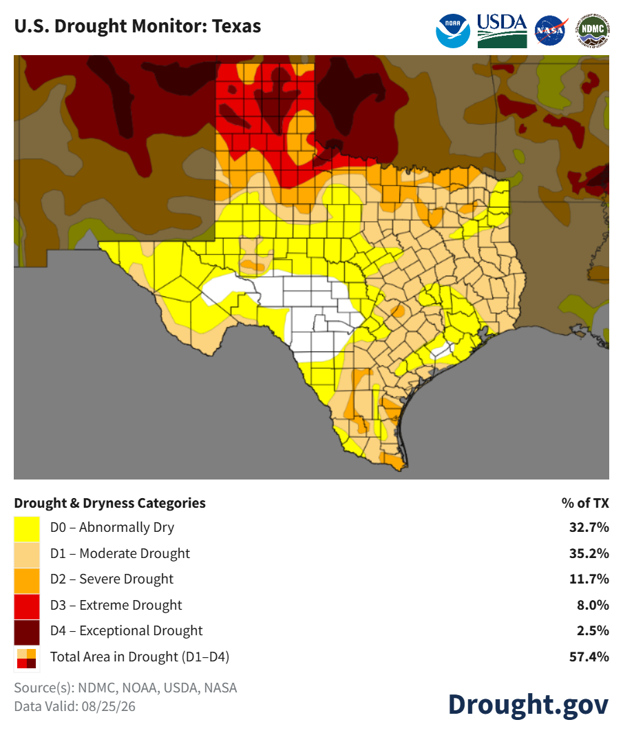
We have seen continued improvements in the Hill Country, Northeast, and in West Texas with recent rainfall.  Some light improvements have also found the panhandle with areas of extreme drought shrinking down to 1% rather than 4% from last update.  The Panhandle still needs more rainfall to find further relief before stifling summer temperatures bake the moisture from the ground.  It is also important to note increasing areas of Abnormally Dry Conditions down in Deep South Texas.   We hope to see moderate rainfall amounts for those of us still in drought, especially in the Panhandle and along/East of I-35, and a break from rain for those in the Hill Country areas.

Hurricane Season
Last week we got our first true taste of the Tropical Weather Season.  Tropical Storm Bertha gave some Texans a scare when its track took a southward shift and hung out over warm Gulf Waters.  Luckily, it did not carry any major impacts to Texas, but it served as a wake-up call for all of us that we are still in Hurricane Season and to check our Hurricane Preparedness Plan.  Hurricane Season in Texas is officially June 1st through November 30th.  The US has seen hurricanes on either side of those dates.  For us, our hurricanes come from the Atlantic Basin.  Hurricanes in the Gulf are also categorized under the Atlantic Basin Title.  This area sees hurricanes throughout the entirety of hurricane season, but we are more likely to experience these between August 1st and November 15th.  Our waters warm all through the summer and become energy powerhouses for anything that forms in the early fall.  Texas has seen some of its worst storms in the early fall, such as Hurricane Harvey in 2017.  Make a plan, stay informed, and stay prepared for Hurricanes and any disaster.


Resources and References
*https://www.cpc.ncep.noaa.gov/
*https://www.drought.gov/states/texas


Filed Under: Drought Management, El Niño, La Niña, Weather Tagged With: #HurricaneSeason, #Percipitation, #Temperature, #Weather, drought

How Fire and Grazing Can Impact Rangeland Resilience

July 23, 2026 by kara.matheney

Article written by Jacob Court
West Texas Rangelands Intern
Graduate Student – Texas A&M University

Rangelands are one of the most important ecosystems in the United States, providing habitat for wildlife, forage for livestock, and many environmental and recreational benefits. However, rangelands are currently facing many issues, including woody plant encroachment, invasive species spreading, and overgrazing. Many of these issues stem from how we currently manage our rangelands. The article Rangeland Resilience: Using Fire and Grazing Together discusses how including both prescribed fire and livestock grazing techniques into management systems can help to create a healthier ecosystem. Both fire and grazing are beneficial natural disturbances that rangelands evolved alongside, so reintroducing them can help to restore the environment to what it once was.

Historically, rangelands evolved alongside both fire and grazing; therefore, by reinstating both fire and grazing, we can begin to mimic these natural processes and, in doing so, promote more diverse landscapes and enhance the biodiversity of the area. Utilizing fire and grazing techniques in various amalgamations is called pyric herbivory. Burning different areas at different times helps to create spaces where both warm and cool-season plants can thrive, which in turn helps to stabilize forage production. In addition to supporting plant and animal populations, pyric herbivory helps improve ecosystem services like soil health and water quality. Once pyric herbivory is in place, it becomes a self-reinforcing process.

Pyric herbivory is the combination of prescribed fire and timed grazing. In these systems, livestock are allowed to graze shortly after an area is burned. This allows them to feed on the high-quality new growth that shortly follows fire. It also allows for the suppression of any unwanted plants that would grow quickly and take over post-fire, which in turn promotes a more diverse array of plants. Ideally, in the 12 months post-burn, high-intensity grazing would be taking place. Goats are great for this as they selectively choose what they want to feed on and therefore can target the high-quality regrowth. In the one-to-three year range post-fire, it’s important to slightly back off on the grazing intensity. Moderately grazing the area during this time will allow for efficient regrowth of plants to take place. After this period, let the area rest and accumulate fuel for the next burn. A great way to implement this is by the patch-burn method. This method utilizes a rotational system where the entire area is not burned at one time, and instead focuses on creating a mosaic of areas in different stages of burn through recovery. Rotational grazing can be easily implemented into this system as you can rotate pastures that are in stages of burn, grazing, or recovering.

Historically, bison and other animals grazed upon the rangelands. Wildfires burned frequently across the rangeland, and their size and speed were limited due to the lack of fuel buildup. Due to our current management systems, these beneficial natural processes aren’t normal anymore. If we take the time and effort to integrate livestock grazing and prescribed burning, the natural cycle of pyric herbivory can benefit our rangelands. Utilizing these natural processes to help manage the land can be difficult to incorporate, but it helps to foster the long-term sustainability that we are currently missing. With adequate planning and adaptability, this approach can create rangelands that handle drought better, have less uncontrollable wildfire risk, and are more diverse.

References:
Texas A&M AgriLife Extension – Rangeland Resilience: Using Fire and Grazing Together

Filed Under: Uncategorized

Mesquite Seedling Mastery – New Insights on Limiting Mesquite Recruitment with Fire

July 15, 2026 by kara.matheney

Article written by Hayden Webb
West Texas Rangelands Intern
Graduate Student – Texas A&M University

It is no mystery that honey mesquite is one of the most difficult brush species for West Texas landowners to manage. Its ability to resprout and its deep root system make it one of the most resilient plants on Texas rangelands. Because of these traits, long-term control often requires herbicide treatment.

Prescribed fire is the most cost-effective brush management tool available to landowners (Van Liew et al. 2012), but it often struggles to overcome mesquite’s well-protected bud bank—the source of its ability to resprout. Research has shown that while fire is effective at top-killing mesquite, its ability to achieve true mortality, or root kill, is much lower than desired. In a 2022 Texas A&M study, high-intensity fires top-killed 100% of mesquite trees, but only 29% of those trees failed to resprout (Starns et al. 2022). Although this was the highest mortality rate achieved by fire in recent mesquite studies, researchers had to add extra fuel around the base of each tree to create fire intensities that would be difficult to achieve under natural conditions.

While this study demonstrated that fire can kill mesquite roots even outside drought conditions, these mortality rates still do not compare to those achieved with herbicides such as Sendero or Remedy.

All is not lost for landowners hoping to reduce mesquite recruitment with prescribed fire. A North Texas study published this year by Ansley et al. provides new insight into the vulnerability of mesquite seedlings to fire and identifies the factors that most influence seedling mortality.

Infographic titled "Mesquite Seedling Mastery" explaining how to limit mesquite recruitment with fire.
Fire Temperature Duration
Laboratory studies have long suggested that plant tissue dies when exposed to temperatures of at least 140°F for one minute or longer (Van Wagner, 1973). However, it has remained unclear whether these findings apply to woody resprouting species in field conditions.

Ansley et al. found that to maximize root kill in mesquite seedlings between 0 and 2 years old, temperatures at the soil surface must remain at or above 140°F for at least two minutes. Under these conditions, summer fires achieved mortality rates greater than 84%, regardless of fuel type.

The fact that these mortality rates were only achieved when heat remained at the soil surface for a sufficient amount of time suggests that the tissues responsible for resprouting are still located above ground in very young seedlings. Because soil is an excellent insulator, fire-induced mortality may only be possible until those resprouting tissues move below the soil surface as the plant matures.

Predictors of Seedling Mortality
The strongest predictor of mesquite seedling mortality was flame length, followed by fire temperature duration. As flame lengths increase, the hottest part of the fire moves farther away from the soil surface. As a result, longer flames may actually reduce the likelihood of root kill because less heat is concentrated where it is needed most.

Wind is a major factor that increases flame length, but it also speeds up the movement of the fire front. Landowners hoping to maximize mesquite seedling mortality should recognize that summer burns and headfires may produce taller flames and faster-moving fires. In some cases, the fire may not remain over a seedling long enough to maintain the recommended two-minute heating period at the soil surface.

Importance of Fire Season and Fuel Load
Both fire season and fuel load play important roles in producing the fire behavior needed to kill mesquite seedlings. The highest temperatures and longest heating durations occurred during summer burns, and the greatest mortality rates were also achieved during the summer.

Conditions common during summer burns, including high temperatures, low fuel moisture, stronger winds, and rainfall deficits, help create more intense fires. High fuel loads, especially in tallgrass prairie ecosystems, further increase fire intensity and improve the chances of achieving seedling mortality.

Because the study found lower mortality rates during winter burns and in mixed-grass systems with lower fuel loads, landowners should consider taking advantage of summer burn opportunities whenever possible.

The Big Takeaway
Managing woody resprouting plants remains one of the greatest challenges facing Texas landowners and rangeland managers. Honey mesquite is especially difficult to control because its belowground bud bank allows it to survive drought, disturbance, and even fire.

However, prescribed fire can help limit future mesquite recruitment by killing seedlings between 0 and 2 years of age. To achieve mortality, temperatures at the soil surface must reach at least 140°F and remain there for a minimum of two minutes. Landowners can improve their chances of meeting these conditions by burning during summer windows and allowing fine fuels to accumulate before a prescribed burn.

Citations:

Ansley, R. J. et al. (2026) Effect of Fuel Load, Fire Season, and Fire Temperature Duration on Honey Mesquite Seedling Mortality. Rangeland Ecology & Management 106:24-46

Van Liew, D. et al. (2012) An economic comparison of prescribed extreme fire and alternative methods for managing invasive brush species in Texas: a modeling approach. The Open Agricultural Journal 6.1

Starns, Heath, et al. “Prosopis glandulosa persistence is facilitated by differential protection of buds during low-and high-energy fires.” Journal of Environmental Management 303(2022) 114141

Van Wagner, C. E. (1973) Height of Crown Scorch in Forest Fires.Canadian Journal for Restoration. 3: 373-378.

Filed Under: Brush Management, Conservation Practices, Prescribed Burning Tagged With: #AgriLifeExtension, #BrushManagement, #MesquiteSeedlingMastery, #PrescribedFire, #WestTexasRangelands

Take What You Need & Let The Range Succeed: Principles of Sustainable Grazing

July 8, 2026 by kara.matheney

Article written by Mr. Burkes Kissire, Sutton County 4-H Member

When looking out into a rangeland, you might think that all the grass you see can be fully grazed, but when you look a little deeper into the subject, you begin to realize that you may be wrong.

Rangelands are the most valuable resource available to livestock producers in Texas. A well-managed rangeland can easily sustain both livestock and wildlife, while also maintaining healthy soil. However, these resources can decline quickly when overused. One of the most recommended grazing practices is the Take 50%, Leave 50% concept. While simple in theory, this management practice can have significant impacts on the long-term health and the productivity of your land.

Take 50%, Leave 50% is exactly what the name suggests: only half the edible forages should be removed from the pasture. Importantly, this must be based on the weight of the edible forage, rather than the height of the plant. Different plants grow differently, making height an unreliable factor for estimating. By only focusing on the amount of forage used, rangeland managers can better manage their plants and rangelands and ensure that plants retain enough leafy material to recover the lost material efficiently and quickly.

Leaving half of the plant is essential for the plant’s health since plants rely on their leaves to capture available sunlight and produce energy they need through photosynthesis. When too much of the leaf is grazed, the plant goes into a state of emergency, in which the plant begins to use energy stored in the roots for regrowth. Depending on how much leaf was removed, a portion of the roots will stop growing. In contrast, when 50% or more of the leaf material remains and contributes to photosynthesis, the plant recovers more quickly, leading to more efficient plant growth and healthier roots.

Proper grazing affects the roots more than you think. A pasture full of healthy plants has a healthy root system that helps hold soil in place and helps hold water during a drought. Deep roots allow water to infiltrate the soil, instead of running off and eroding your soil. Healthy rangelands also promote nutrient cycling as plant material decomposes and returns nutrients to the soil. Over time, these processes and cycles will lead to better soil health, cleaner groundwater, and a more drought-resistant rangeland for years to come.

Applying the Take 50%, Leave 50% principle starts with understanding the amount available forage. Rangeland managers can visually estimate the amount of plant life in a pasture, but for precise measurements, you should weigh the grass. Begin by marking out a random square yard in your pasture, clip and weigh the grass, then convert this weight into pounds per acre. Knowing the exact amount of forage production in your pasture can help prevent overstocking and ensure that the plant retains enough material to regenerate.

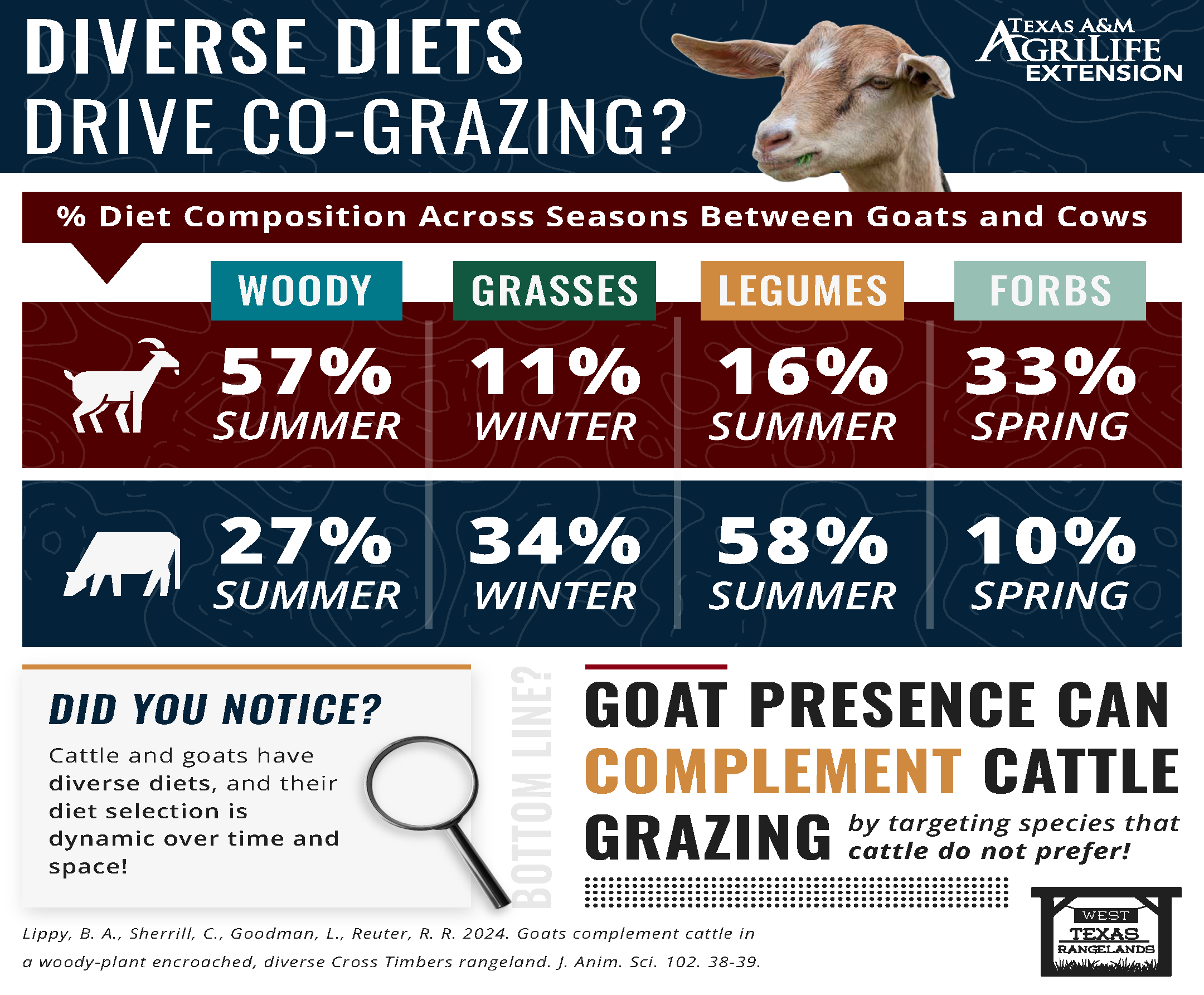
Each livestock species selects different plants, making your choice of livestock very important. Cattle primarily graze taller grasses, and graze less selectively than other livestock species. Sheep graze shorter grasses, legumes, and other plants native to where they live. In contrast to both cattle and sheep, goats prefer browse, similar to a white-tail deer. Because each species has its preference, you can allow multiple species to graze or browse the same pasture to maximize operation. For example, if you have a pasture dominated by grasses that also has a considerable amount of browse, you may consider allowing both sheep and goats to graze and browse the same pasture.

Successfully applying this principle requires more than simply gauging your forage content. Rangeland managers must also consider carrying capacity, stocking rates, growing seasons, seasonal rainfall, and pasture recovery times. Strategies such as rotational grazing and deferred grazing help you maintain the perfect ratio of forage in your pasture. During a drought, you may have to reduce your stocking rate to ensure you do not lose too much grass.

The economic benefits of proper grazing are major. A healthy rangeland produces more edible forage over time, reducing the need for supplemental feeds. Good forage quality is important since it leads to efficient weight gain and overall improves herd quality. By maintaining productive plants on productive soil, producers can avoid costly restoration efforts needed after overgrazing. Sustainable grazing practices help protect natural resources we have and profitability.

The Take 50%, Leave 50% concept has remained one of the most reliable grazing practices since it can balance production and resource conservation. Following this principle helps maintain healthy plants and soil. This combination of benefits leads to productive rangelands for future generations. While every operation is unique, this practical principle can be applied almost anywhere, with any types of grass.

Sources: Dr. Doug Tolleson, Pascual Hernandez, Tammy Fisher

Filed Under: Conservation, Conservation Practices, Grazing Management, Sheep, Targeted Grazing, Woody Encroachment Tagged With: #AgriLifeExtension, #DoBetter, #GrazingManagement, #ResilientRangelands, #SustainableGrazing, #WestTexasRangelands, Growth, soil

The Power of Connection: How Social Interactions Affect the Utilization of Prescribed Fires

July 2, 2026 by kara.matheney

Article written by Jacob Court
West Texas Rangelands Intern
Graduate Student – Texas A&M University

Prescribed fire is one of the most effective methods of rangeland management, with benefits encompassing enhancing biodiversity, reducing woody plant encroachment, and even lowering wildfire risk. Despite these benefits, it is not often promoted by federal agencies due to the social stigma that surrounds fire. Many people just see it as a natural disaster and an event that needs to be avoided at all costs. This is not the case, though, because fire is a natural system that has existed in our rangelands long before humans came along. In fact, the reason fires are so large and destructive nowadays is due to the zero-tolerance policy towards fire that has been in place for decades. Due to this avoidance mentality, fires are happening less frequently and then burn with more intensity due to the increase of fuel loads on the ground, ironically caused by the lack of more regular fires. Today, people have strong anti-fire opinions, so Kreuter et al. decided to look into how these opinions affect the Natural Resource Conservation Service (NRCS) employees’ recommendations when it comes to prescribed fire management.

[Read more…] about The Power of Connection: How Social Interactions Affect the Utilization of Prescribed Fires

Filed Under: Prescribed Burning Tagged With: #AgriLifeExtension, #PrescribedFire, #WestTexasRangelands

Summer Weather Outlook

June 25, 2026 by kara.matheney

West Texas Rangelands would like to extend our gratitude to Mr. Luke Drosche for collaborating with us and providing this weather update for our readers.  We thank him for sharing his time, talents, and knowledge with us as a guest contributor.  Luke serves with Texas A&M AgriLife Extension Service as a Disaster Assessment and Recovery Specialist.   

3-Month Precipitation Outlook
The last few months have proven soggy for much of the State with the exception of our friends in the panhandle and in the Northeast.  Multiple weather systems have impacted central and south Texas helping the drought situation.  Some of this looks to continue heading into the dog days of summer as a majority of the state is expected to mark near normal for monthly rainfall over the course of the next 3 months.  The exception to this is the immediate coastlines and some of the coastal prairies where there is a lesser chance of receiving normal rainfall.   It is important to note that we will certainly see dry, hot spells this summer that can create dry conditions and, in some areas, worsen droughts.

[Read more…] about Summer Weather Outlook

Filed Under: El Niño, Weather Tagged With: #AgriLifeExtension, #RangelandManagement, #Weather, #WestTexasRangelands

Burn Smarter, Not Just Hotter: Timing Fire for Plant Response in the Edwards Plateau

June 11, 2026 by kara.matheney

Article written by Kathryn O’Daniel
West Texas Rangelands Intern and Senior, Texas A&M University

The hottest fire is not always the best fire for meeting your management goals. In many cases, a fire applied at the right time is more effective than one with the highest intensity. Choosing when to burn is one of the most powerful tools land managers can use to guide rangelands toward a desired plant community.

Before striking a match, take time to evaluate what plants are currently present and what you want the landscape to look like in five or ten years. The timing of a prescribed burn can shift the ecological balance and help promote more productive, diverse, and resilient rangelands.

How Season Affects Fire Behavior
Fire behavior changes across the year due to variations in fuel type and moisture. Burns conducted during the growing season, typically late spring through summer and in some cases early fall, include more live plant material and higher fuel moisture. These conditions often result in variable fire behavior and patchier burns compared to dormant season fires.

Dormant season burns, commonly conducted in late fall and winter, rely primarily on dry, cured grasses. These fires are often more uniform in coverage due to consistent fuel conditions.

Understanding these differences allows managers to better match fire behavior with their objectives.

Managing Warm-Season Grasses
Warm-season grasses dominate much of West Texas rangeland and reach peak productivity during the summer. These grasses are generally well-adapted to fire.

Growing season burns can help favor warm-season native grasses, increase their competitiveness, and reduce accumulated plant litter. When combined with proper grazing management, these burns may also help suppress certain invasive species.

However, outcomes are influenced by factors such as rainfall, grazing pressure, and existing plant composition, so results may vary year to year.

Managing Cool-Season Grasses
Cool-season grasses grow earlier in the year and can provide valuable forage when warm-season grasses are dormant. Fire timing plays an important role in managing their abundance.

Burning during the active growth period of cool-season grasses, typically in the spring, can reduce their presence since plants are more susceptible to heat damage. In contrast, burning outside their growing season, such as in the summer, can favor cool-season species by reducing competition from warm-season grasses.

Because cool-season grasses extend the grazing season, managers should consider their goals carefully before altering their abundance.

Influencing Forb Diversity
Forbs are often among the first plants to respond after a prescribed burn. They provide important forage for livestock and wildlife, especially in terms of protein.

Fire timing can influence forb populations. Summer burns often promote greater forb diversity, while earlier-season burns may reduce forb abundance. Including forbs in the plant community can improve overall ecosystem function and wildlife habitat, so their role should be considered in burn planning.

Brush Management Considerations
Prescribed fire is a valuable tool for managing woody plants, but its effectiveness depends on the type of shrub present.

Resprouting species, such as mesquite and huisache, are highly adapted to fire. In these cases, prescribed fire alone is often not enough to achieve significant mortality. Instead, fire is more effective when combined with other management practices, such as mechanical or chemical control, to target seedlings and limit regrowth.

Non-resprouting species, on the other hand, are more susceptible to fire since their buds are located above ground. These plants can experience higher mortality from well-timed burns. Fire applied in the spring or winter can be used to reduce these species while retaining desirable vegetation.

Putting It All Together
Plant communities are shaped by many interacting factors, including weather, precipitation, grazing management, fuel conditions, and soil characteristics. Prescribed fire timing is just one piece of the puzzle, but it is a tool managers can actively control.

Whether your goal is improving forage production, enhancing wildlife habitat, or maintaining healthy rangeland, strategic fire timing can help move the landscape in the desired direction. Well-planned burns allow land managers to influence grasses, forbs, and woody plants simultaneously.

Plan Ahead and Burn with Purpose
Ready to burn smarter? Look beyond the hottest day and consider the season; your land will thank you. Work with local professionals, develop a burn plan, and consider how the timing of fire fits into your long-term management goals. With thoughtful planning, prescribed fire can help transform West Texas rangelands into more productive and resilient ecosystems.

Filed Under: Prescribed Burning Tagged With: #AgriLifeExtension, #BrushManagement, #FireEcology, #LandStewardship, #PlantCommunities, #PrescribedFire, #RangelandManagement, #TexasLandowners, #TexasRangelands, #WestTexasRangelands, #WorkingLands

  • Page 1
  • Page 2
  • Page 3
  • Go to Next Page »

Recent Posts

  • Know Your Forage Before Winter: Why Fall Forage Testing Pays Off
  • Wildfire Resilience Starts Before the Fire: Lessons from Fire Scientist Jack Cohen
  • Wildfire Wisdom: Proven Strategies to Protect Your Property and Livestock
  • Early Fall Outlook Points to Heat, Fire Risk, and Continued Drought Concerns
  • How Fire and Grazing Can Impact Rangeland Resilience

Categories

  • 4-H Range Contests
  • Beef Cattle
  • Brush Management
  • Carbon Credits
  • Carbon Markets
  • Conservation
  • Conservation Practices
  • Drought Management
  • El Niño
  • Events
  • Forage
  • Goats
  • Grazing Management
  • La Niña
  • Land
  • Lessons Learned
  • Meet A County Extension Agent
  • Plant ID
  • Podcast
  • Prescribed Burn Associations
  • Prescribed Burning
  • Publications
  • Range Concepts
  • RAP
  • Sheep
  • Society for Range Management
  • Soil
  • Staff
  • Targeted Grazing
  • Uncategorized
  • Water
  • Weather
  • Why I Ranch
  • Wild Pigs
  • Wildfire
  • Wildfires
  • Wind
  • Woody Encroachment
  • Youth Range Workshop

Archives

Texas A&M AgriLife Extension Service
Texas A&M University System Member
  • Compact with Texans
  • Privacy and Security
  • Accessibility Policy
  • State Link Policy
  • Statewide Search
  • Veterans Benefits
  • Military Families
  • Risk, Fraud & Misconduct Hotline
  • Texas Homeland Security
  • Texas Veteran's Portal
  • Equal Opportunity
  • Open Records/Public Information