• Skip to primary navigation
  • Skip to main content
  • Skip to primary sidebar
  • Texas A&M Forest Service
  • Texas A&M Veterinary Medical Diagnostics Laboratory
  • Texas A&M AgriLife Extension Service
  • Texas A&M AgriLife Research
  • Texas A&M College of Agrculture and Life Sciences
West Texas Rangelands
West Texas RangelandsWe hope to provide a variety of science-based rangeland information and current research on prescribed fire, wildfires, brush management, and grazing management!
  • Menu
  • Home
  • About & Contact
  • Publications
    • Extension Publications
    • Refereed Journal Articles
    • Program Summaries
  • Events
  • Lunch N’ Learn
  • Infographics
    • Drought
    • Grazing
    • Herbicide
    • Prescribed Fire
    • Rangeland Plants
    • Wildfire
  • Range Resources
    • Published to Pasture
    • Range Concepts
  • Fire Resources
  • Sponsors
  • AgriLife Learn Online Courses

The Cost of Prolonged Overgrazing: Ripple Effects on Watershed Health, Rainfall Infiltration, and Ranch Production

April 1, 2026 by morgan.treadwell

Producers often face tough choices when managing rangeland, especially during drought or market fluctuations. While maximizing livestock numbers might bring short-term profit, prolonged overgrazing can deal lasting damage to the overall health and productivity of the land. One of the most critical, but sometimes overlooked, impacts is how overgrazing disrupts the watershed and reduces rainfall infiltration, setting off a chain reaction that threatens both present and future production.
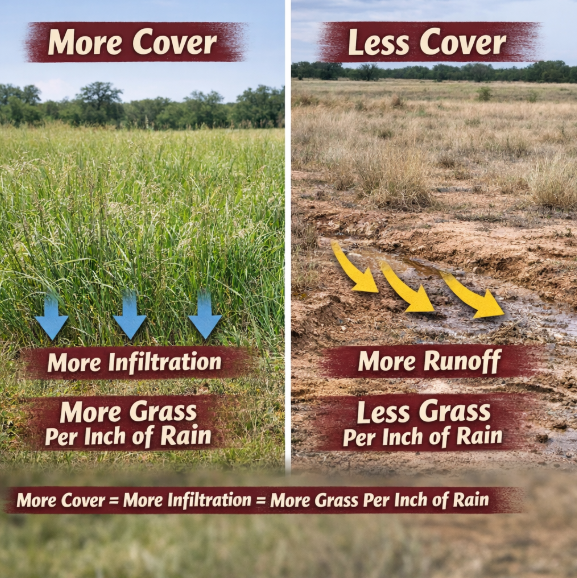
What Is Overgrazing?

Overgrazing happens when livestock remove more plant material than the land can regenerate, reducing vegetative cover. Without sufficient rest and recovery for grasses and forbs, root systems shrink, soil structure declines, and bare ground increases.

Watershed Function and Why It Matters

A healthy watershed collects, stores, and distributes water efficiently across the landscape. Vegetation intercepts rainfall, slows surface runoff, and helps water infiltrate into the soil, replenishing aquifers and supporting plant growth during dry periods. When this function is degraded, so is the life of a ranch.

The Impact of Overgrazing on Rainfall Infiltration

Intact vegetation and litter (dead plant material) act as a sponge, allowing more rainfall to soak in rather than run off. Texas A&M research consistently shows that overgrazed pastures lose this critical function (Briske et al., 2011).   The results:

  • Increased Bare Soil – without enough cover, droplets hit bare soil directly, compacting it and reducing pore spaces.
  • More Runoff – compacted, crusted soils shed water, sending it downhill rather than storing it for plant growth.
  • Erosion – runoff carries away topsoil, further reducing the land’s ability to support vegetation.

Effects on Production and Range Health

  • Lower Forage Yields – less water stored means less forage growth through the season. Productivity drops, resulting in further pressure to overstock in a vicious cycle.
  • Reliance on Supplemental Feed – with reduced native forage, producers must purchase feed or de-stock, both of which cut into profits.
  • Increased Weed Invasion – bare patches and disturbed soil invite invasive species, which further outcompete desirable native plants.
  • Reduced Drought Resilience – healthy rangeland can buffer drought impacts; degraded rangeland cannot.

Economic and Environmental Tradeoff

“A pound of prevention is worth a ton of cure,” says Dr. Larry Redmon, Professor & Extension Forage Specialist at Texas A&M. Repairing watershed function, restoring infiltration, and rebuilding soil health can take years and significant expense.

Key findings from Texas A&M’s “Rangeland Watershed Management” (B-6136) highlight how managed grazing increases infiltration by 12–60% compared to overgrazed sites.   

Steps for Ranchers

  1. Monitor Utilization – Leave adequate stubble height and ground cover after grazing.
  2. Rest Pastures – Allow for seasonal or rotational rest to restore plant and root health.
  3. Observe Hydrology – Monitor for runoff, erosion, and infiltration after rains.
  4. Consult Local Extension – Texas A&M AgriLife can provide technical assistance and region-specific recommendations.

Conclusion

The hidden cost of overgrazing is the undermining of the ranch’s very foundation which starts and ends with the soil and water resources. By prioritizing range health and managing for watershed function, producers secure not only the current year’s paycheck but the resilience and productivity of their land for years to come.

References

  1. Briske, D.D., et al. (2011). [Rangeland Watershed Management – B-6136] (https://agrilife.org/texasrangelands/files/2011/02/B-6136.pdf), Texas A&M AgriLife Extension.
  2. What Is a Watershed? (https://wrri.tamu.edu/watersheds/what-is-a-watershed/), Texas Water Resources Institute.

For more infographics and resources, visit AgriLife Extension’s West Texas Rangelands https://agrilife.org/westtexasrangelands/extension-publications/

Are you seeing signs of overgrazing, runoff, or diminished production on your ranch? Contact your county’s AgriLife Extension Office for a site assessment and recommendations today.
Filed Under: Conservation, Conservation Practices, Grazing Management, Range Concepts Tagged With: #AgriLifeExtension, #RanchManagement, #WestTexasRangelands, Conservation, Conservation Practices, soil, water

Fire Field Day – Mason, Tx: A Hands-On Learning Experience for Landowners

March 4, 2026 by morgan.treadwell

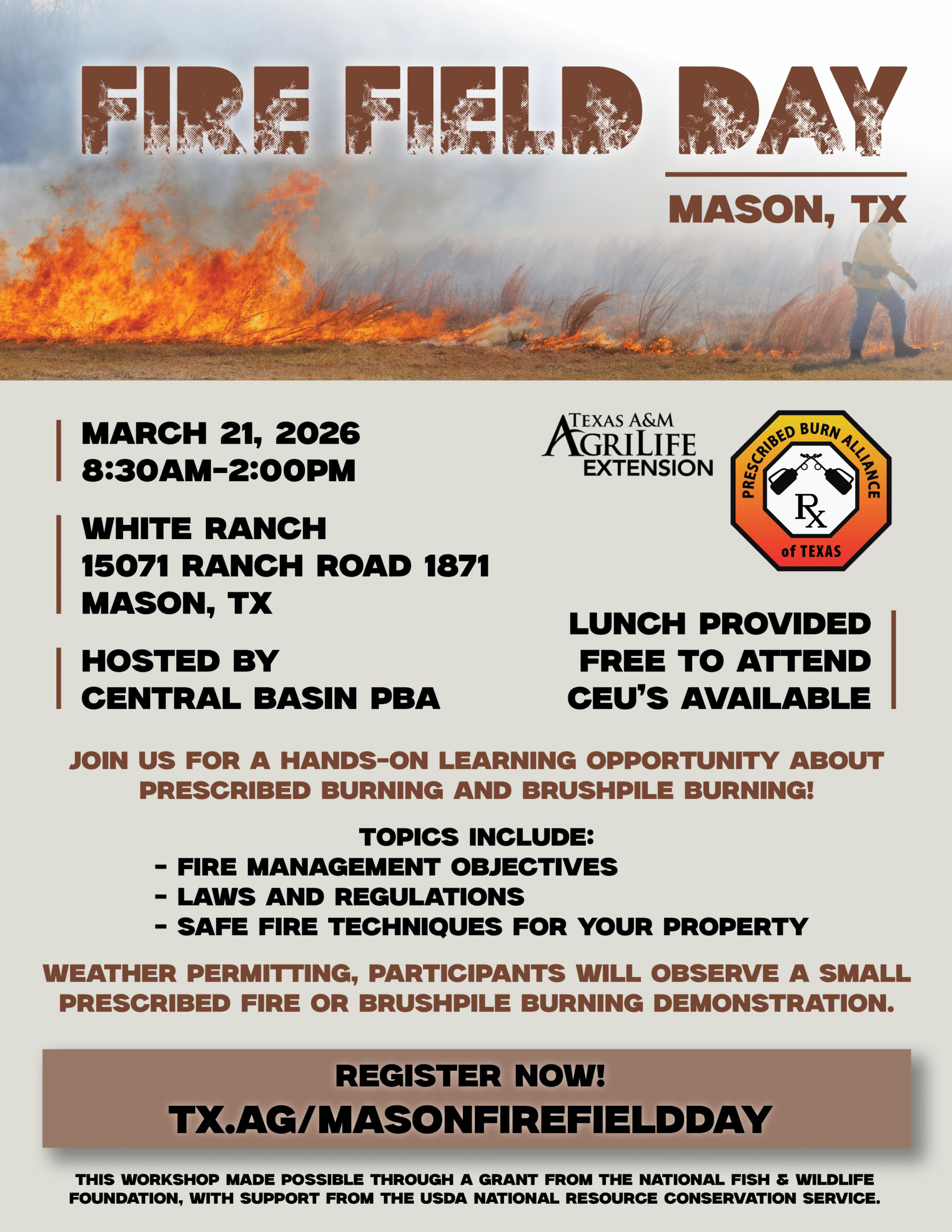
Landowners, ranchers, and natural resource managers across the region are invited to take part in an exciting and educational Fire Field Day.  The event is slated for March 21, 2026, at the scenic White Ranch in Mason, Texas. This in-person workshop offers a unique opportunity to learn directly from prescribed fire experts and the Central Basin Prescribed Burn Association (PBA).

With growiA promotional flyer for a “Fire Field Day” event in Mason, Texas, featuring a background photo of an active grass fire with flames and smoke. Event details include date, time, location at White Ranch, and host information. The flyer highlights topics such as prescribed burning, brushpile burning, fire management objectives, regulations, and safe techniques. It notes lunch is provided, the event is free, CEUs are available, and participants may observe a live demonstration. A registration link is included at the bottom.ng interest in safe and effective rangeland management practices, prescribed fire has become an essential tool for improving rangeland health, reducing wildfire risk, and managing brush and tree encroachment. This event is designed to equip participants with both foundational knowledge and practical, hands-on experience.

What to Expect at Fire Field Day
The workshop runs from 8:30am to 2:00pm, and lunch will be provided at no cost to attendees. The day includes expert-led discussions and demonstrations focusing on:

⭐ Fire Management Objectives
Learn why fire is such an effective ecological tool, how it benefits rangelands, and what outcomes you can expect when applying prescribed burning on your property.

⭐ Laws and Regulations
Prescribed fire is a powerful tool that comes with responsibilities. Attendees will gain clarity on Texas laws governing burn plans, permitting, liability, and proper safety protocols.

⭐ Safe Fire Techniques for Your Property
From ignition methods to firebreak preparation, participants will walk away with practical strategies they can apply at home.

Weather permitting, the event will also feature a live prescribed fire or brushpile burn demonstration, giving attendees a chance to observe fire behavior and management techniques in real time.

This Fire Field Day is proudly hosted by the Central Basin Prescribed Burn Association, with support from Texas A&M AgriLife Extension and the Prescribed Burn Alliance of Texas. These organizations are committed to helping landowners apply safe, science-based fire practices to improve their rangeland and encourage healthier ecosystems across the region.

Why Prescribed Fire Matters
Prescribed burning is one of the most cost-effective and natural methods for managing unwanted brush and trees, improving wildlife habitat, stimulating new plant growth, and reducing the intensity of future wildfires. For many Texas landowners, gaining confidence and practical knowledge is the key first step toward implementing burns on their own property.

This workshop is an ideal starting point, whether you are brand new to prescribed fire or looking to expand your experience with support from certified professionals.

We hope you will mark your calendar and JOIN US!
📍 Location: White Ranch – 15071 Ranch Road 1871, Mason, TX
📅 Date: March 21, 2026
⏰ Time: 8:30 AM–2:00 PM
💲 Cost: FREE
🍽️ Lunch Included
📜 CEU’s Available

For more information and to register please visit: TX.AG/MASONFIREFIELDDAY
Spaces often fill quickly for hands-on burn workshops so don’t miss this chance to learn from experts and connect with landowners across the region.

Stay Connected with Us!
Follow along for more land management events, educational workshops, and updates across the region.

Filed Under: Brush Management, Conservation, Conservation Practices, Prescribed Burn Associations, Prescribed Burning, Range Concepts, Wildfire Tagged With: #BrushManagement, #CentralBasinPBA, #FireEcology, #FireFieldDay, #PrescribedBurn, #RanchManagement, #SustainableLandManagement, #TexasAgriLifeExtension, #TexasLandowners, #TexasRangeManagement, #WildfirePrevention

Recent Posts

  • A Tale of Two Texas Landscapes: Drought Conditions and the Road Ahead
  • The Hidden Cost of Overgrazing: How It Drains Your Watershed, Your Rainfall, and Your Bottom Line
  • Economic Incentives for Reducing Wildfire Risk
  • Building Knowledge and Confidence with the Updated Online Prescribed Burn School
  • The Cost of Prolonged Overgrazing: Ripple Effects on Watershed Health, Rainfall Infiltration, and Ranch Production

Categories

  • 4-H Range Contests
  • Beef Cattle
  • Brush Management
  • Carbon Credits
  • Carbon Markets
  • Conservation
  • Conservation Practices
  • Drought Management
  • El Niño
  • Events
  • Goats
  • Grazing Management
  • La Niña
  • Land
  • Lessons Learned
  • Meet A County Extension Agent
  • Plant ID
  • Podcast
  • Prescribed Burn Associations
  • Prescribed Burning
  • Publications
  • Range Concepts
  • RAP
  • Sheep
  • Society for Range Management
  • Soil
  • Staff
  • Targeted Grazing
  • Uncategorized
  • Water
  • Weather
  • Why I Ranch
  • Wild Pigs
  • Wildfire
  • Wildfires
  • Wind
  • Woody Encroachment
  • Youth Range Workshop

Archives

Texas A&M AgriLife Extension Service
Texas A&M University System Member
  • Compact with Texans
  • Privacy and Security
  • Accessibility Policy
  • State Link Policy
  • Statewide Search
  • Veterans Benefits
  • Military Families
  • Risk, Fraud & Misconduct Hotline
  • Texas Homeland Security
  • Texas Veteran's Portal
  • Equal Opportunity
  • Open Records/Public Information