• Skip to primary navigation
  • Skip to main content
  • Skip to primary sidebar
  • Texas A&M Forest Service
  • Texas A&M Veterinary Medical Diagnostics Laboratory
  • Texas A&M AgriLife Extension Service
  • Texas A&M AgriLife Research
  • Texas A&M College of Agrculture and Life Sciences
West Texas Rangelands
West Texas RangelandsWe hope to provide a variety of science-based rangeland information and current research on prescribed fire, wildfires, brush management, and grazing management!
  • Menu
  • Home
  • About & Contact
  • Publications
    • Extension Publications
    • Refereed Journal Articles
    • Program Summaries
  • Events
  • Lunch N’ Learn
  • Infographics
    • Drought
    • Grazing
    • Herbicide
    • Prescribed Fire
    • Rangeland Plants
    • Wildfire
  • Range Resources
    • Published to Pasture
    • Range Concepts
  • Fire Resources
  • Sponsors
  • AgriLife Learn Online Courses

Does Prescribed Fire Ever Cross Your Mind? Join the Prescribed Burn School in Gatesville Next Month!

May 27, 2026 by morgan.treadwell

For many Texas landowners and managers, prescribed fire is one of the most effective tools available for improving rangeland health, managing brush, supporting wildlife habitat, and reducing fuel loads. Still, knowing when to burn, how to plan, and what it takes to do it safely can feel overwhelming without the right training.

That is exactly where the Prescribed Burn School in Gatesville comes in.

Hosted by Dr. Morgan Treadwell, West Texas Rangelands, and Texas A&M AgriLife Extension Service, this comprehensive three-day training will be held Monday, June 15, through Wednesday, June 17, 2026, at the Gatesville Civic Center in Gatesville, Texas. Designed for landowners, fire professionals, and agency personnel, this course offers a practical learning experience that connects classroom instruction with real-world application.

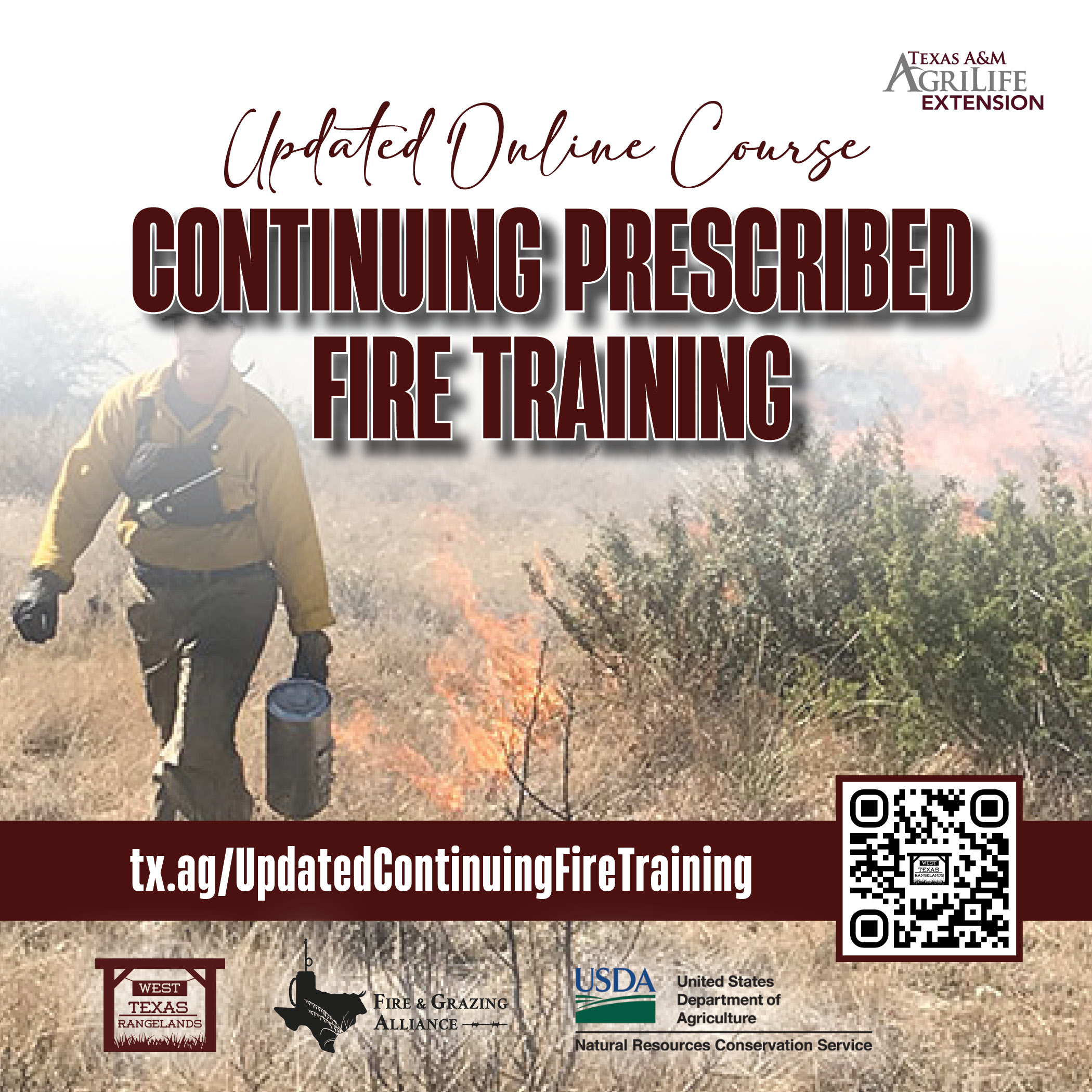
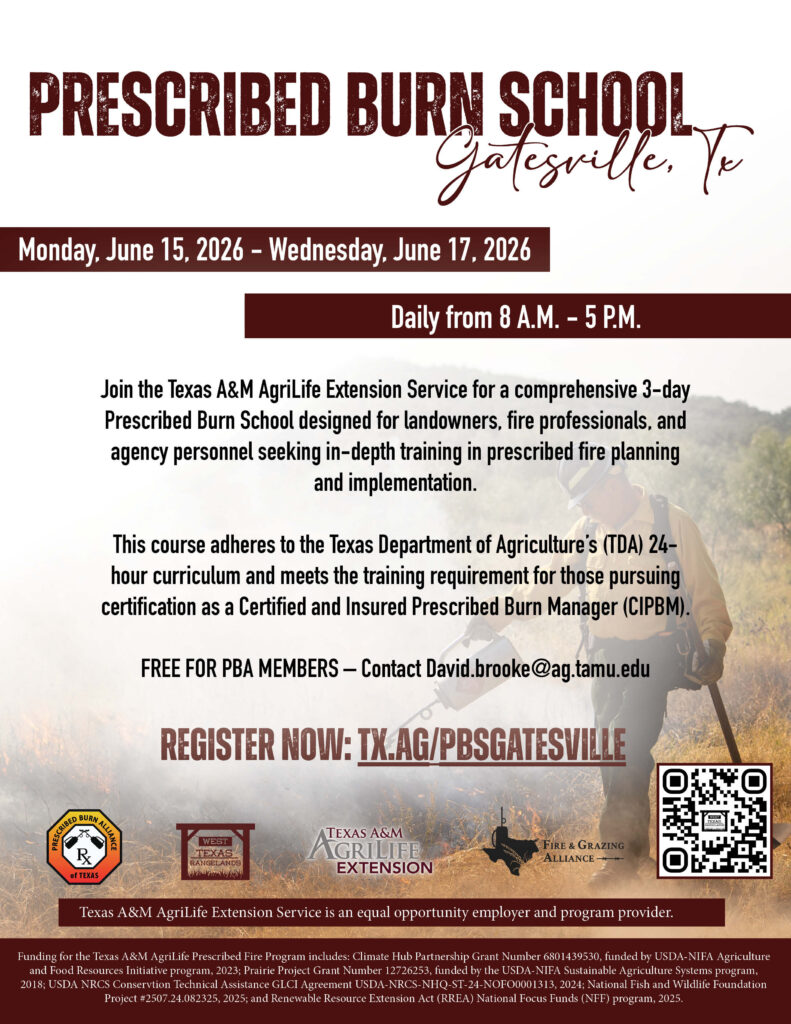
Whether prescribed fire is already part of your management plan or it is something you have considered but never pursued, this course provides a strong foundation in the principles and practice of prescribed burning in Texas.Prescribed Burn School in Gatesville, Texas, June 15-17, 2026, daily from 8 AM to 5 PM. Hosted by Texas A&M AgriLife Extension, this 3-day course provides in-depth training for landowners, fire professionals, and agency personnel seeking certification as a Certified and Insured Prescribed Burn Manager. Registration is open at TX.AG/PBSGATESVILLE

Why Prescribed Fire Still Matters
Across Texas rangelands, prescribed fire remains one of the most valuable tools for restoring and maintaining healthy landscapes. Fire can help reduce woody plant encroachment, improve forage production, recycle nutrients, and create better conditions for native plant communities and wildlife.

Prescribed fire is more than just lighting a match under the right weather conditions. Effective burning requires planning, situational awareness, and an understanding of fire behavior, fuel conditions, smoke management, and post-burn evaluation. Training matters, especially for producers who want to use fire with confidence and responsibility.

What Participants Can Expect
The Gatesville Prescribed Burn School follows the Texas Department of Agriculture’s 24-hour curriculum and meets the training requirement for those pursuing certification as a Certified and Insured Prescribed Burn Manager (CIPBM).

Participants will receive in-depth instruction in areas including fire behavior, weather interpretation, prescribed burn planning, ignition techniques, and post-burn evaluation.

When conditions allow, the course will also include multiple prescribed burns, allowing participants to gain valuable field experience alongside experienced instructors and burn professionals.

That hands-on component is especially important. For producers, there is real value in seeing how planning decisions translate to field conditions and how burn objectives, weather, fuels, and crew coordination come together on the ground.

Who Should Attend?
This training is a great opportunity for a wide range of participants, including:

  • Landowners and land managers interested in using prescribed fire as a management tool
  • Fire department personnel and emergency responders
  • Municipal, county, and agency staff involved in land or resource management
  • Anyone wanting to build a deeper understanding of prescribed fire in Texas ecosystems

For producers specifically, this course offers a chance to better understand how prescribed fire may fit into a broader management strategy that includes grazing, brush control, drought planning, and long-term stewardship.

A Practical Opportunity for Producers
One of the most valuable parts of this training is that it is designed to be practical. This is not simply a classroom discussion about fire ecology. It is an opportunity to learn how prescribed fire is planned and implemented in real-world conditions.

For producers who want to incorporate prescribed fire into their operation, this course can help answer important questions:

  • What makes a burn plan workable?
  • How do weather and fuel conditions affect success?
  • What equipment and personnel are needed?
  • How do you evaluate a burn after it is complete?

These are the kinds of questions that matter when fire becomes part of a rangeland management plan.

Registration and Event Details for the Prescribed Burn School:

Dates: Monday, June 15, 2026 through Wednesday, June 17, 2026
Time: 8 a.m. to 5 p.m. daily
Location: Gatesville Civic Center, 301 Veterans Mem Lp, Gatesville, Texas 76528

Registration: tx.ag/PBSGatesville

Free registration is available for Prescribed Burn Association members, with membership verification required to confirm eligibility.

For additional information, contact David Brooke at David.brooke@ag.tamu.edu.

Building Fire Knowledge That Supports Better Stewardship
At West Texas Rangelands, we know prescribed fire is not just a tool for specialists. It is a land management practice that can play a meaningful role on working ranches and private lands when backed by training, planning, and sound decision-making.

If prescribed fire has ever crossed your mind, this course offers a valuable opportunity to build the knowledge and field skills needed to better understand its role on Texas landscapes.

Filed Under: Events, Prescribed Burn Associations, Prescribed Burning Tagged With: #AgriLifeExtension, #BrushManagement, #FireEcology, #LandStewardship, #PrescribedBurnAssociation, #PrescribedBurnSchool, #PrescribedFire, #RangelandManagement, #TexasLandowners, #TexasRangelands, #WestTexasRangelands, #WorkingLands

What the National CPBM Report Means for Producers Using Prescribed Fire

May 13, 2026 by kara.matheney

Prescribed fire has deep roots in agricultural land stewardship, especially across working rangelands where fire has long been used to manage brush, renew forage, and support wildlife habitat. At the same time, the regulatory and social landscape surrounding prescribed fire continues to evolve. A new national report assessing Certified Prescribed Burn Manager programs provides useful context for producers navigating this changing environment.

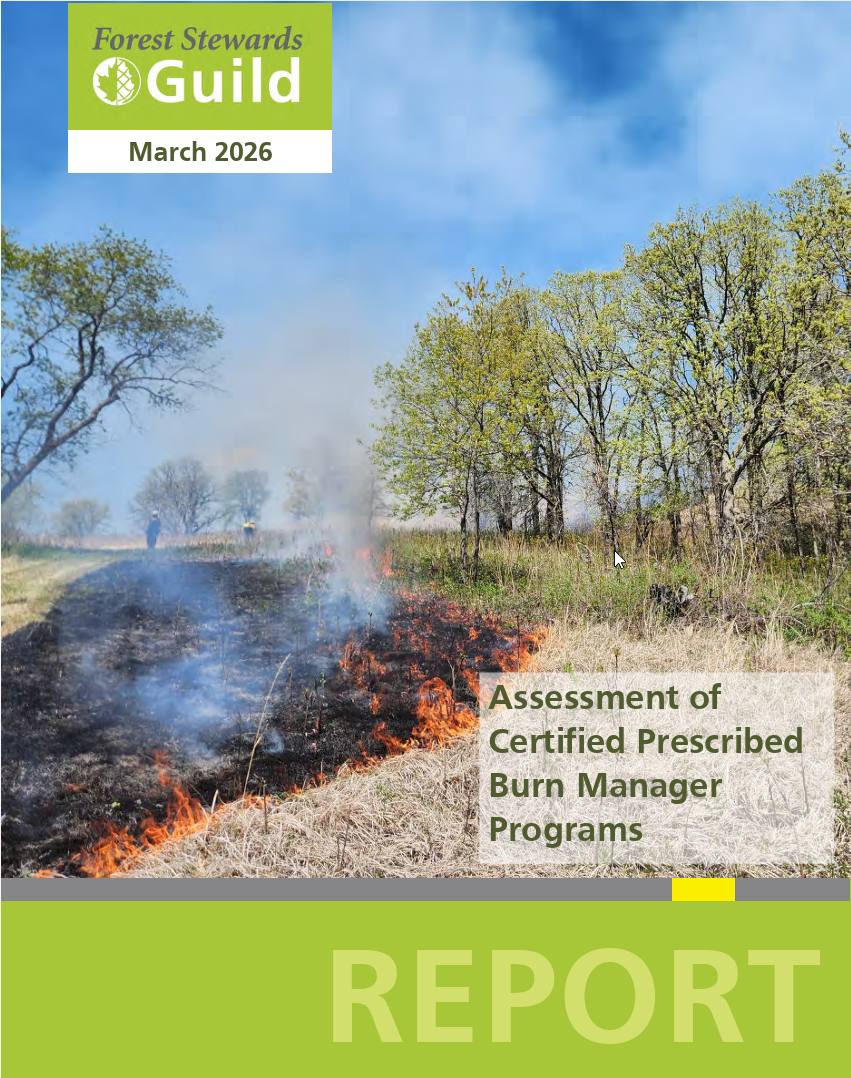
Forest Stewards Guild "March 2026" report cover featuring a controlled prescribed burn in a grassy field with trees in the background.The 2026 National Assessment of Certified Prescribed Burn Manager Programs, developed by the Forest Stewards Guild and partners, examines how states across the country are supporting safe and effective prescribed fire through training and certification. While the report is national in scope, many of its findings are directly relevant to West Texas producers.

Prescribed Fire Demand Is Increasing Nationwide
The report notes a growing recognition that fire is an essential ecological process and a critical tool for reducing hazardous fuels and restoring ecosystem function. At the same time, there is an unmet demand for prescribed fire across the United States, driven by increasing wildfire risk, woody plant encroachment, and the need for proactive land management.

For producers, this confirms what many already know. Fire remains one of the most cost‑effective tools available for managing rangelands, but opportunities to burn safely are increasingly influenced by weather constraints, public perception, smoke concerns, and liability issues.

What CPBM Programs Are Designed to Do
Certified Prescribed Burn Manager programs are one approach states have used to address these challenges. According to the report, CPBM programs provide structured training, clarify standards for safe burning, and help reduce liability exposure for practitioners by establishing clear expectations and certification pathways.

As of early 2026, 24 states operate formal CPBM programs, with additional states actively developing them. These programs vary widely, reflecting regional differences in land ownership, fire culture, and policy priorities.

Acknowledging Agricultural Fire Culture
One important finding highlighted in the report is that not all regions view certification the same way. In parts of the Great Plains and agricultural regions, prescribed fire has often been passed down through generations or coordinated informally among neighbors. In these areas, some practitioners expressed concern that formal certification could interfere with trusted local systems or add unnecessary bureaucracy for producers who already burn responsibly.

This perspective is particularly relevant to West Texas. Many producers already have deep practical knowledge of fire behavior on their land and rely on local relationships to conduct safe burns. The report acknowledges that any certification or training framework must respect these established practices while still addressing modern risk and safety expectations.

Why Training Still Matters for Producers
Even in regions with strong fire traditions, the report emphasizes that accessible training remains a key support for prescribed fire. Training helps producers stay current on weather tools, smoke management considerations, equipment standards, and evolving regulations. It also supports communication with neighbors, agencies, and insurers when burns are planned.

For producers who do not seek formal certification, structured training can still strengthen burn planning and reduce risk. For those working with certified burn managers or participating in prescribed burn associations, shared training frameworks help align expectations and improve coordination.

Implications for West Texas Rangelands
Texas is unique in that the vast majority of land is privately owned, making cooperation and producer leadership essential for successful prescribed fire use. The national CPBM report reinforces the importance of balancing flexibility with accountability, especially in states where agriculture drives land management outcomes.

For West Texas producers, the key takeaway is not that certification is required for everyone, but that informed fire use is increasingly important. Whether fire is applied directly by producers, through prescribed burn associations, or with certified professionals, understanding the broader landscape helps protect both land and livelihoods.

Using Information to Support Better Decisions
The national CPBM assessment provides context for why training programs exist and how they are being used across the country. Producers can use this information to evaluate their own goals, identify resources that fit their operation, and engage more effectively in conversations about prescribed fire at the local and state level.

Prescribed fire remains a producer‑driven tool on working rangelands. Staying informed helps ensure it remains that way.

Read the Full Report by Visiting: https://irp.cdn-website.com/447b03b9/files/uploaded/2026_National_CPBM_Report_FINAL.pdf

Filed Under: Prescribed Burning Tagged With: #AgriLifeExtension, #FireEcology, #LandStewardship, #PrescribedFire, #RangelandManagement, #TexasRanching, #WestTexasRangelands, #WorkingLands

Recent Posts

  • Know Your Stocking Rate Like You Know Your Bank Balance
  • Does Prescribed Fire Ever Cross Your Mind? Join the Prescribed Burn School in Gatesville Next Month!
  • Adaptability Is Key as Drought Persists Across Texas Rangelands
  • What the National CPBM Report Means for Producers Using Prescribed Fire
  • 2025 Region 3 Texas Land Value Trends: What Stability Means for West Texas Producers

Categories

  • 4-H Range Contests
  • Beef Cattle
  • Brush Management
  • Carbon Credits
  • Carbon Markets
  • Conservation
  • Conservation Practices
  • Drought Management
  • El Niño
  • Events
  • Goats
  • Grazing Management
  • La Niña
  • Land
  • Lessons Learned
  • Meet A County Extension Agent
  • Plant ID
  • Podcast
  • Prescribed Burn Associations
  • Prescribed Burning
  • Publications
  • Range Concepts
  • RAP
  • Sheep
  • Society for Range Management
  • Soil
  • Staff
  • Targeted Grazing
  • Uncategorized
  • Water
  • Weather
  • Why I Ranch
  • Wild Pigs
  • Wildfire
  • Wildfires
  • Wind
  • Woody Encroachment
  • Youth Range Workshop

Archives

Texas A&M AgriLife Extension Service
Texas A&M University System Member
  • Compact with Texans
  • Privacy and Security
  • Accessibility Policy
  • State Link Policy
  • Statewide Search
  • Veterans Benefits
  • Military Families
  • Risk, Fraud & Misconduct Hotline
  • Texas Homeland Security
  • Texas Veteran's Portal
  • Equal Opportunity
  • Open Records/Public Information