West Texas Rangelands would like to extend our gratitude to Mr. Luke Drosche for collaborating with us and providing this weather update for our readers. We thank him for sharing his time, talents, and knowledge with us as a guest contributor. Luke serves with Texas A&M AgriLife Extension Service as a Disaster Assessment and Recovery Specialist.
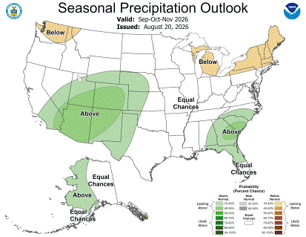
3-Month Precipitation Outlook
After an extremely dry August, we are moving into a wetter seasonal pattern. While tropical mischief remains in the Gulf, we will see heightened rain chances throughout October before we begin to trend away from Hurricane Season and look towards more cold fronts. Most of Texas is in an equal-chances category for precipitation, with some lucky areas included and a “Leaning Above” category for receiving higher-than-average rainfall.
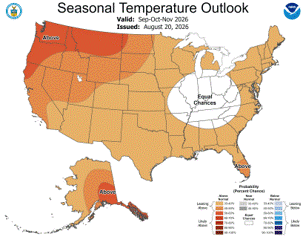
3-Month Temperature Outlook
Exceedingly hot August temperatures have thoroughly cooked our state, as we have seen all the once-green grass turn brown and become gasoline for wildfires. Unfortunately, we appear to have a higher chance of recording warmer-than-average temperatures on our thermometers through November. Does this mean it will not get cold? Absolutely not; we will see some fronts and temperature changes, but we are less likely to see cooler-than-average temperatures through the next three months. These two NOAA outlooks highlight the trends we will begin to see as we move into an El Niño fall and winter. See more below in our El Niño discussion.
Drought Update:
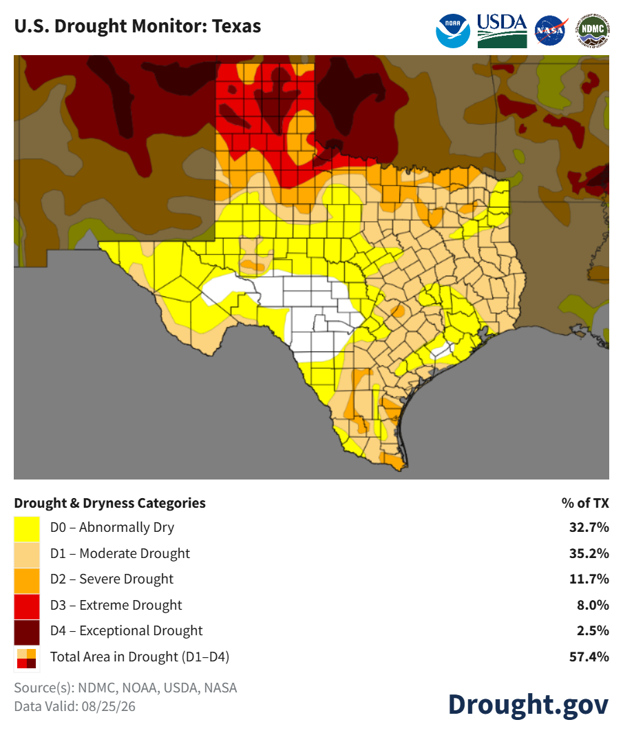
The State of Texas saw no relief from drought in August. Last month, the state had a total of 22.1% of its area in drought. None of the state was in an exceptional drought category. Unfortunately, this month has shown a rather drastic change. 57.4% of the State is now in a drought category. We have seen drying conditions over most of the state, with 2.5% now in Exceptional Drought. While the 2.5% is not a lot, it is a sign of the seriousness of our drought. Wildfire risk has been extremely dangerous, but hopefully some of that will be mitigated as we should receive some rain over the next few months and certainly will over our winter season.
Winter El Niño and Preparation
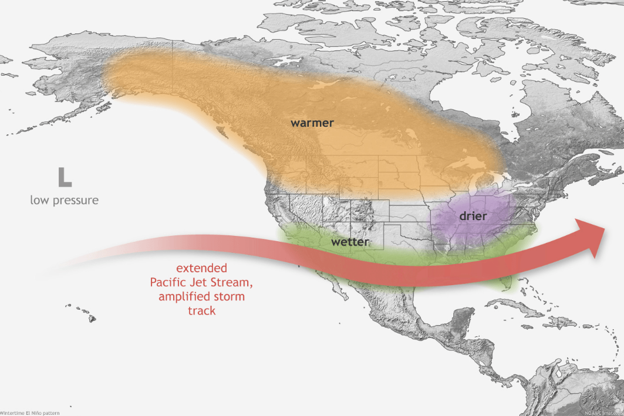
More rainfall, potentially some snow, chilly temperatures, and an overall more active weather pattern are what we are expecting beginning in fall and really kicking in for our Winter months. With strong El Ninos, more winter storms and rainfall occur in the Southern parts of the United States. Winter Storms are more common along with periods of very cold weather. This is due to changes in the “Pacific Jet Stream,” which pushes storms through our neck of the woods.
Cooler weather, the potential for winter storms, and the winter season in general mean it is time to start preparing feeding plans and management. There are some winterizing techniques we can plan now to help prepare us for later. Now is the time to have plans to make liquid drinking water available if pumps/pipes freeze up and tanks freeze over. Access to these may also be cut off by ice for farm equipment. Make sure water access is available to both you, the producer, and your livestock. Also important is choosing feed that increases body heat without negative side effects during periods of cooler weather. When choosing different feeding plans, always consult a vet or feed specialist. During winter weather, having a windbreak in the form of a brush barrier, barns, forests, or embankments can provide some shelter for livestock. Feeding livestock and providing supplements in these areas help keep cattle concentrated during winter storms. Winterizing equipment before the cold season is essential for continuity of operations. Choosing the correct diesel and/or gas additive for your motorized machinery can be accomplished according to the user manual or local mechanic shop technicians. Wrapping pipes, disconnecting hoses, and warming pumphouses are also part of this winterization. By ensuring adequate water, food, shelter, and upkeep, your operation can fare the weather better.
*https://www.cpc.ncep.noaa.gov/
*https://www.drought.gov/states/texas