Article written by Jacob Court
West Texas Rangelands Intern
Graduate Student – Texas A&M University
Prescribed fire is one of the most effective methods of rangeland management, with benefits encompassing enhancing biodiversity, reducing woody plant encroachment, and even lowering wildfire risk. Despite these benefits, it is not often promoted by federal agencies due to the social stigma that surrounds fire. Many people just see it as a natural disaster and an event that needs to be avoided at all costs. This is not the case, though, because fire is a natural system that has existed in our rangelands long before humans came along. In fact, the reason fires are so large and destructive nowadays is due to the zero-tolerance policy towards fire that has been in place for decades. Due to this avoidance mentality, fires are happening less frequently and then burn with more intensity due to the increase of fuel loads on the ground, ironically caused by the lack of more regular fires. Today, people have strong anti-fire opinions, so Kreuter et al. decided to look into how these opinions affect the Natural Resource Conservation Service (NRCS) employees’ recommendations when it comes to prescribed fire management.
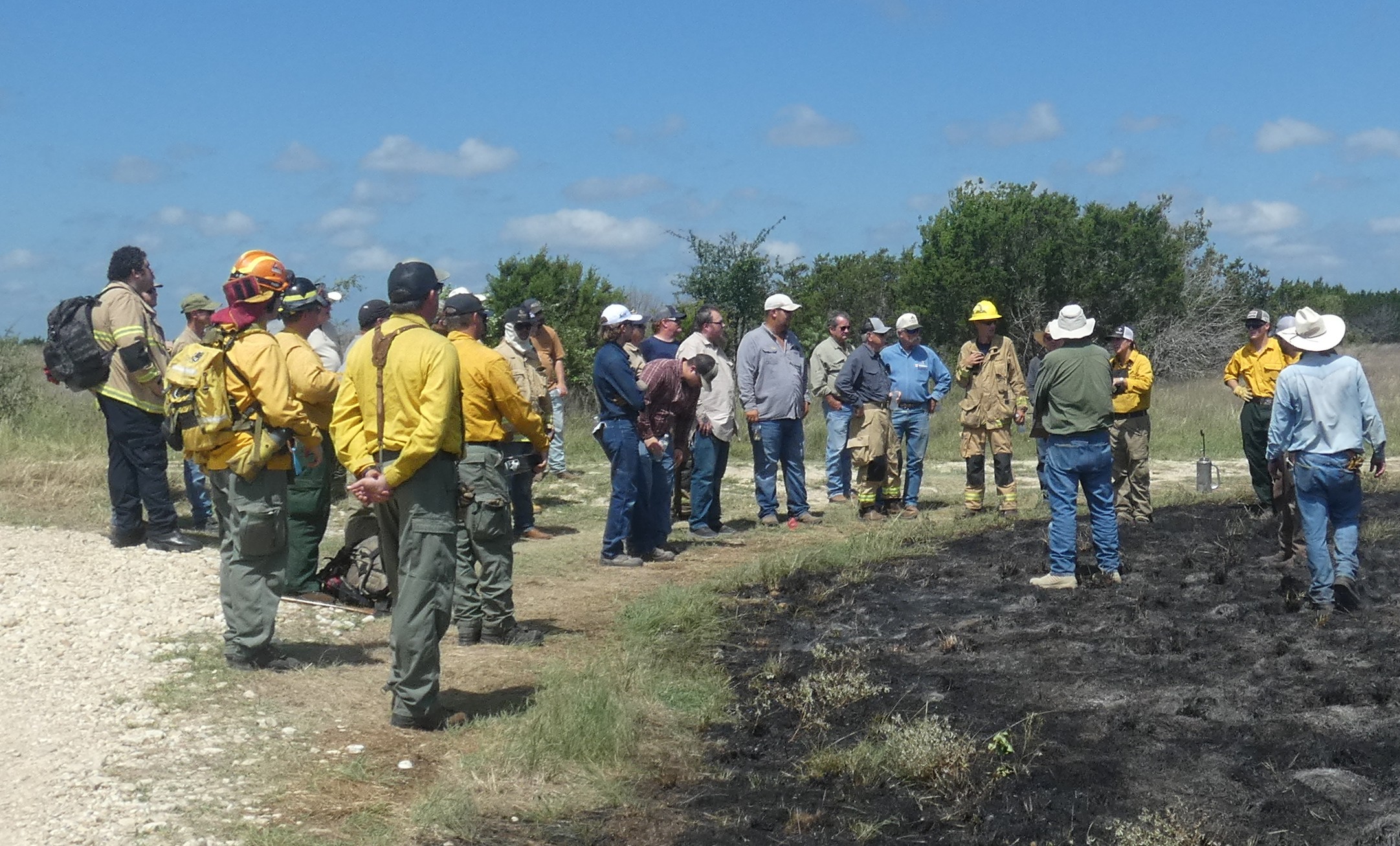
The study done in “Awareness and Social Interactions Influence Natural Resource Professionals’ Recommendations for Prescribed Fire Use” looks at the Southern Great Plains of North America, which extends from Kansas to Mexico, with a focus on the Texas and Oklahoma regions, which typically consist of semi-arid grassland/savannas, short-grass prairies to the west, and tall and mixed grass prairies to the east. These areas are also largely privately owned. Due to poor management, including overgrazing and fire suppression, much of this area has been taken over by woody plants. To determine why prescribed fire isn’t being used to help restore the area, a mail survey was conducted of NRCS employees in Texas and Oklahoma. There were 414 employees across the two states, and 215 responses were received. Of the returned questionnaires, only 136 were sufficiently completed and usable for this study. The data collected from these surveys were then entered into a spreadsheet to facilitate analysis.
The participants of this study, on average, were 55 years old, male, and possessed an undergraduate degree. They worked for the NRCS an average of 16.5 years and were working at their current location for 9.5 years. The most interesting result of this study is that regardless of the benefits of prescribed fires, NRCS employees did not base their recommendations on the landowner’s prescribed fire awareness but instead were mainly affected by the social interactions with these landowners. When encountering a positive interaction concerning utilizing prescribed fires, the survey respondents were 3.12 times more likely to recommend these methods to the landowners. Another major factor was whether or not the employees considered it part of their job to educate people about prescribed fires. The more frequently people worked with brush management, the more likely they were to advocate for prescribed burning.
Ultimately, this study reinforces what was already widely believed: that the issue of prescribed fire management isn’t a technical issue but a social one. This was revealed by the social interaction factors being the dominant drivers when it came to fire recommendations. In addition to the stigma surrounding fire, there are liability and legal concerns that come with it. This can serve as another barrier to entry for land managers who haven’t worked with fire before. To solve these issues, we must create a better culture around fire and familiarize those who haven’t worked with prescribed fire before with its vast benefits. There are currently National efforts in place to aid in this endeavor, and if this is done well, we can help to normalize prescribed fires on private property and be better able to utilize one of the least costly and most effective land management tools.
References: Kreuter UP, Wonkka CL, Twidwell D, Treadwell ML, May NL. 2025. Awareness and social interactions influence natural resource professionals’ recommendations for prescribed fire use. Rangeland Ecology & Management 100:89–98.