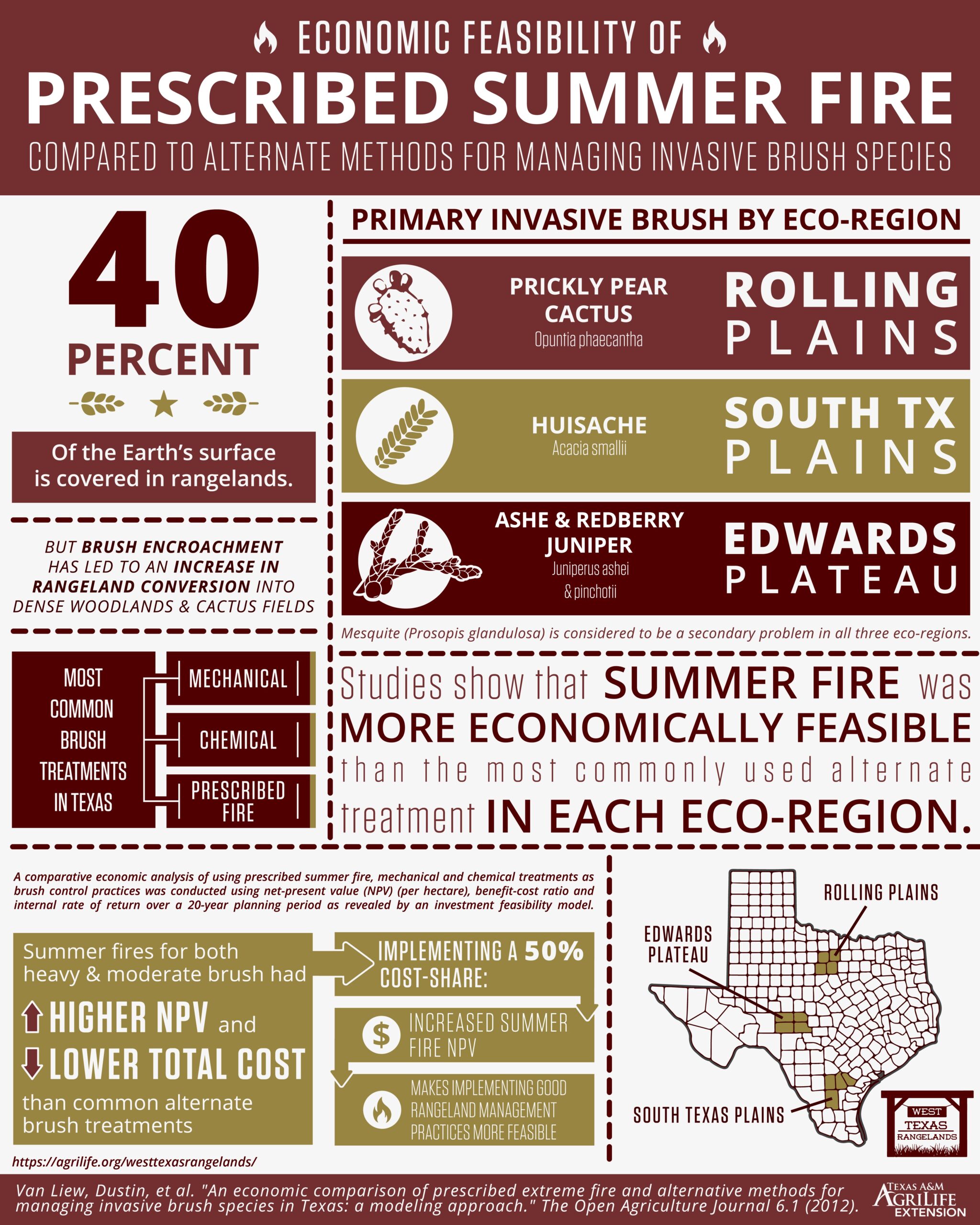
 Did you know that 40% of the Earth’s surface is covered in Rangelands? However with the increase of brush encroachment, there has been an increase in conversion from rangeland into undesirable and unproductive species. In the Rolling Plains the primary invasive species focused on is prickly pear cactus, in South Texas Plains huisache is the primary focused species, and in the Edwards Plateau, Ashe & Redberry Juniper are of concerns. One fun fact, Mesquite is considered to be a secondary problem in all three of these ecoregions.
Analysis of the Cost and Cost Components of Conducting Prescribed Fires in the Great Plains
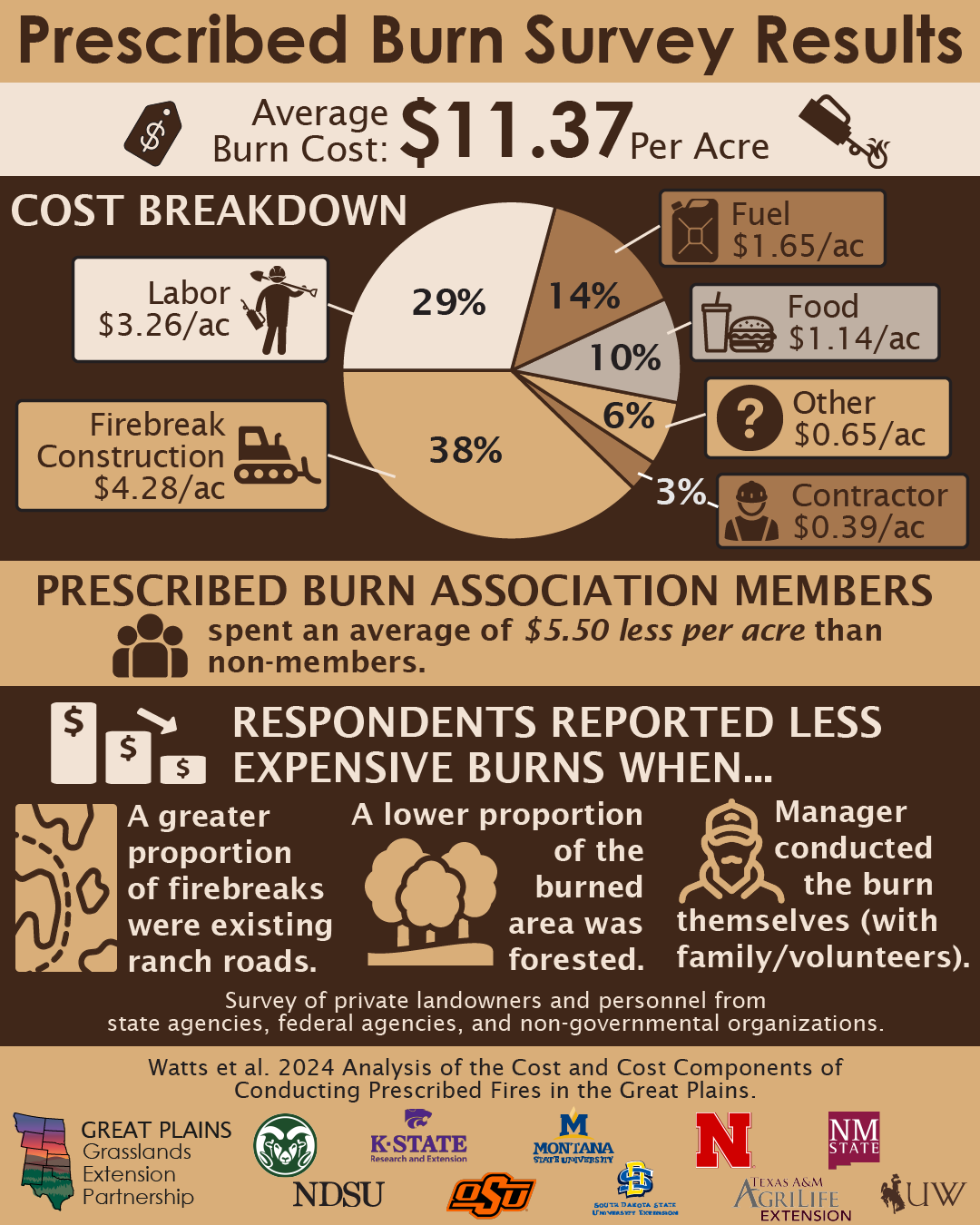 Fire is a naturally occurring process that was first applied by the Native Americans and continues today in the Great Plains by a diverse group of landowners. Fire is an incredible tool that is used to help restore fire regimes in the region. Not only is it used to restore fire regimes, it is also used to maintain and grow benefits for Agricultural outputs, risk reduction, and ecosystem maintenance.
USDA Expands Conservation Practices Qualifying for Climate-Smart Funding
 At the end of October, USDA released an updated NRCS expanded list of practices and activities that are eligible for Climate-Smart funding through the Inflation Reduction Act. In addition, they added additional funding for the practices for the fiscal year 2024.
[Read more…] about USDA Expands Conservation Practices Qualifying for Climate-Smart Funding
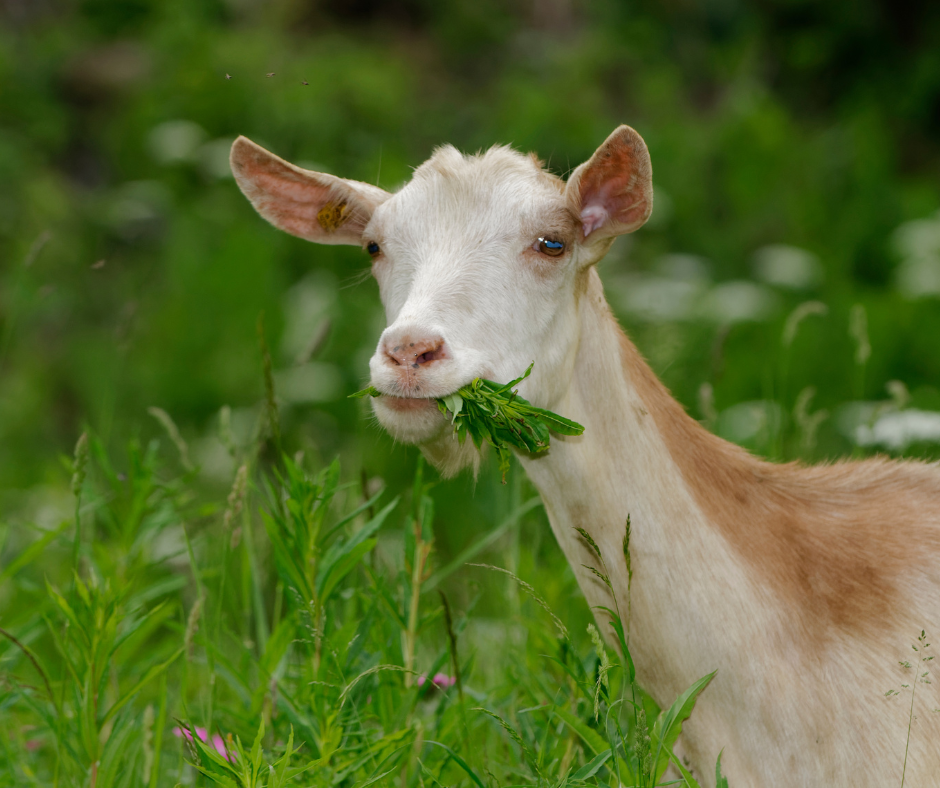
What Goats Really Eat, With Grazing Menu Tips to Benefit Your Ranch
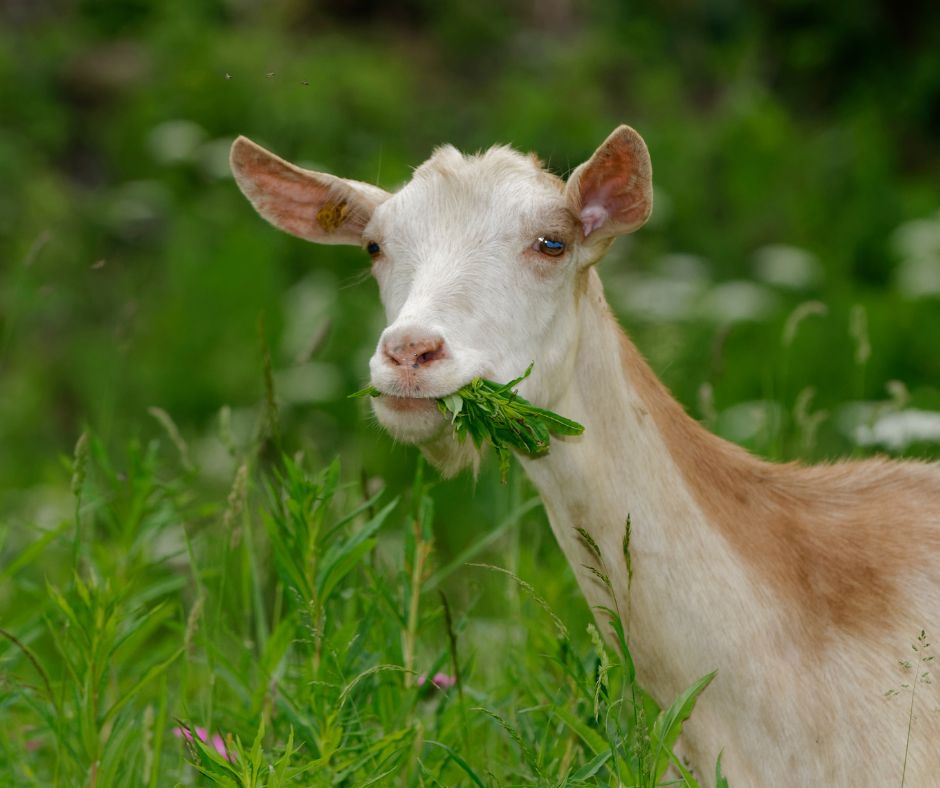 Did you know that goats are meticulous eaters? They move across the landscape selectively browsing, picking out desirable pieces of forage, and combing hard to access pastures and areas for their favorite plant parts and species.
[Read more…] about What Goats Really Eat, With Grazing Menu Tips to Benefit Your Ranch
Deer and Trees
 Have you heard the myth that to have good deer hunting, you need lots of trees? In the Great Plains, healthy deer populations are supported without trees. The misconception lies in the fact that most of the time people are looking for deer around trees and not out away from trees.
Integrated Pest Management for Woody Encroachment
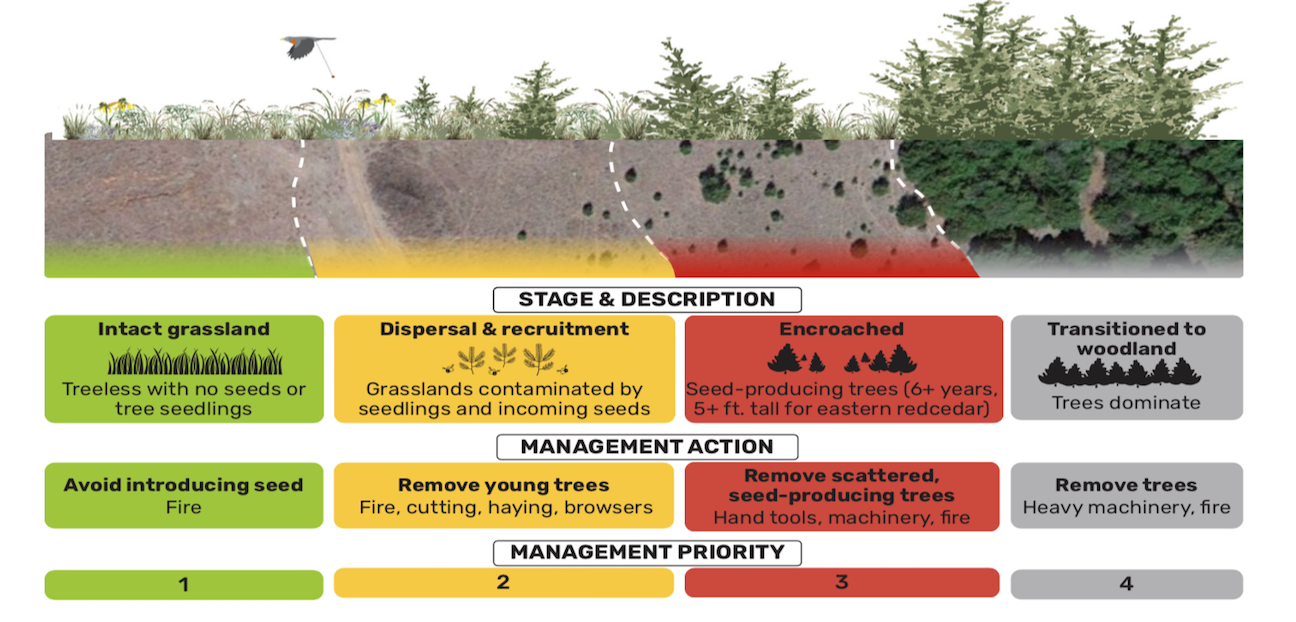 The top 5 woody invasive plant species in the Great Plains Grasslands include; Eastern redcedar, Honey mesquite, Chinese tallow, Ashe juniper, and Redberry juniper. Past brush management efforts have been unable to stop or reverse the loss of grasslands at county, state, or regional scales. Traditional management efforts have assumed that there are tolerable levels of the top five woody pests in grasslands before encroachment becomes a resource concern and mechanical or chemical removal of woody plants will restore a site back to a grassland. Scientists are now recommending more integrated approaches for dealing with woody species and ending the reinvasion cycle in grasslands.
[Read more…] about Integrated Pest Management for Woody Encroachment
100 Years of Data to Identify the Right Time to Regenerate Perennial Grasses
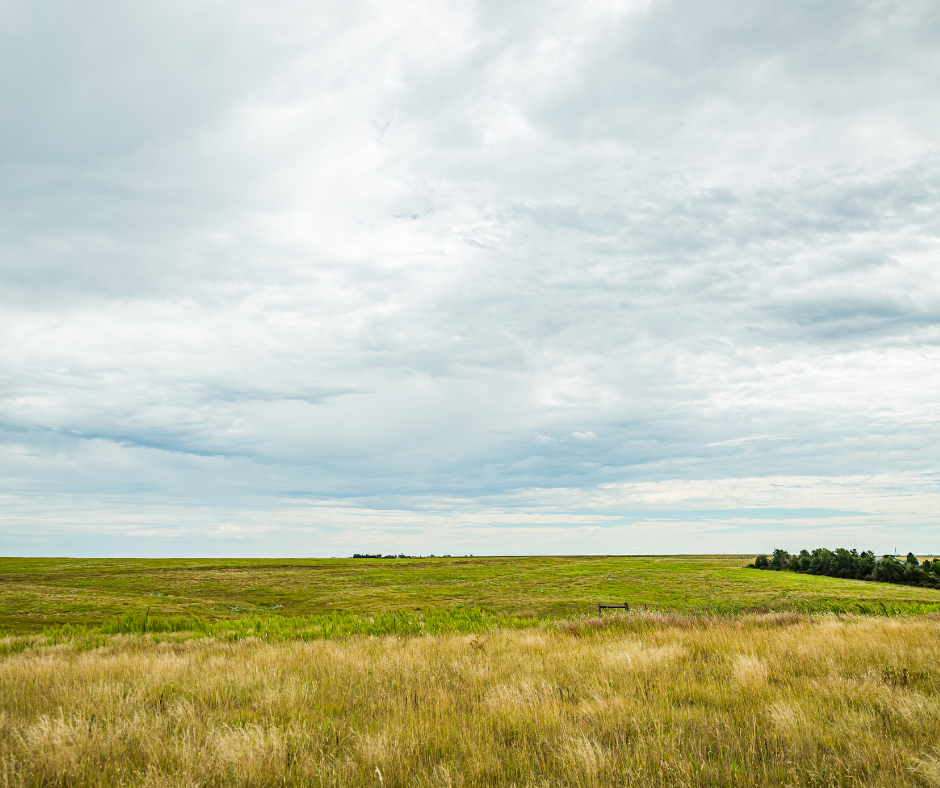 In a recent study, the Army Research Laboratory in N.M. and the USDA ARS’s Jornada Experimental Range, used 100 years of measurements of perennial grass growth to identify how climate controls changes in grass cover.
[Read more…] about 100 Years of Data to Identify the Right Time to Regenerate Perennial Grasses
Reducing Woody Encroachment in Grasslands: A Pocket Guide for Planning and Design
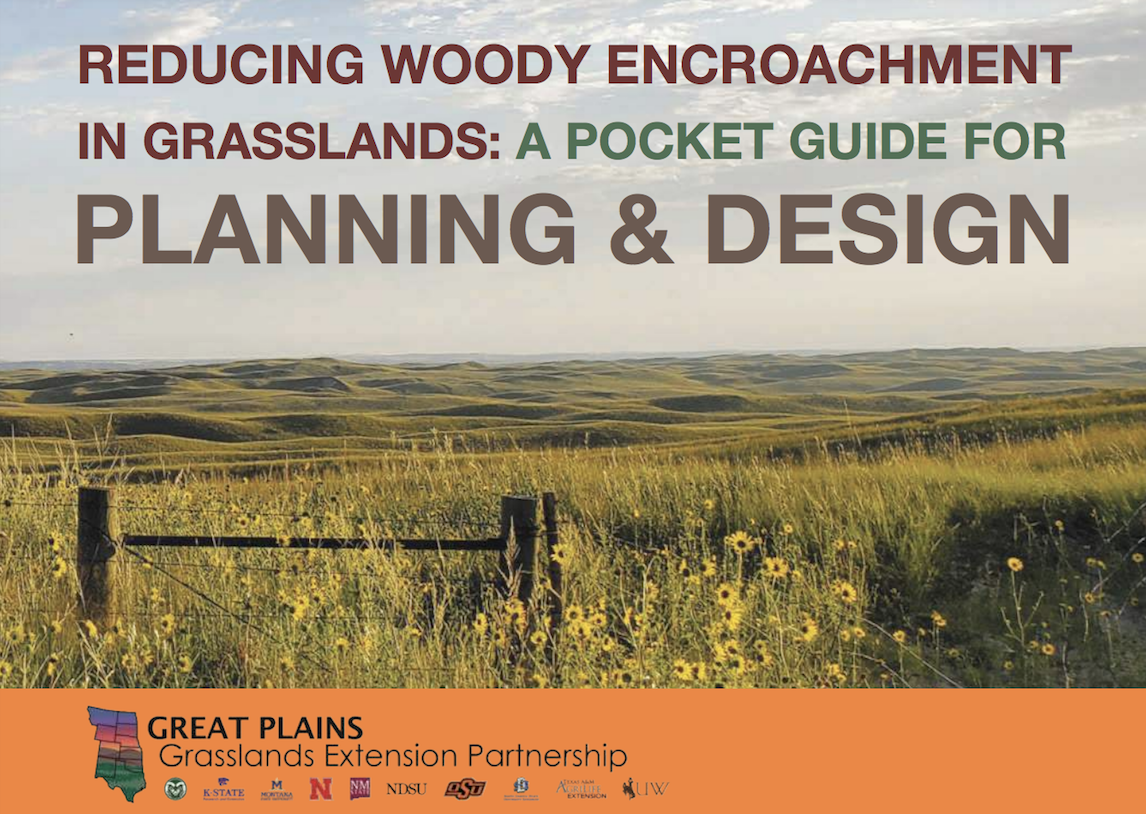 Have you seen the latest Pocket Guide from the Great Plains Grasslands Extension Partnership? This Pocket Guide integrates new guidelines for reducing woody encroachment with a planning process. It is also an important resource that further incorporates the latest, science-based approaches for reducing woody encroachment.
[Read more…] about Reducing Woody Encroachment in Grasslands: A Pocket Guide for Planning and Design
Remove, Reduce, or Manipulate? Best Practices for Brush Management Conservation Standards in Great Plains Grasslands
 One of the biggest confusion points in brush management is the decision between removing, reducing, or manipulating woody plants. Past management decisions have addressed the symptoms of woody encroachment but not the root cause of the problem. To contribute to the efforts to confront the loss of grasslands at county and state, clarity is needed on which woody species need complete removal versus species who can be reduced or manipulated without the threat of grassland loss.
NIFA Invests $9 million in Extension, Education and USDA Climate Hubs Partnership
 We are excited to announce that Drs. Morgan Treadwell, Melissa Shehane, and Ben Wu will be continuing education and extension Prairie Project efforts after receiving a $1.5 million grant from the USDA-NIFA Extension, Education and USDA Climate Hubs Partnership program area priority within AFRI’s Foundational and Applied Science Program to support a project titled, “Promoting Climate-Smart Agricultural Practice to Reduce Risk and Impacts of Drought, Wildfire and Woody Encroachment on Livestock Production.”
[Read more…] about NIFA Invests $9 million in Extension, Education and USDA Climate Hubs Partnership