• Skip to primary navigation
  • Skip to main content
  • Skip to primary sidebar
  • Texas A&M Forest Service
  • Texas A&M Veterinary Medical Diagnostics Laboratory
  • Texas A&M AgriLife Extension Service
  • Texas A&M AgriLife Research
  • Texas A&M College of Agrculture and Life Sciences
West Texas Rangelands
West Texas RangelandsWe hope to provide a variety of science-based rangeland information and current research on prescribed fire, wildfires, brush management, and grazing management!
  • Menu
  • Home
  • About & Contact
  • Publications
    • Extension Publications
    • Refereed Journal Articles
    • Program Summaries
  • Events
  • Lunch N’ Learn
  • Infographics
    • Drought
    • Grazing
    • Herbicide
    • Prescribed Fire
    • Rangeland Plants
    • Wildfire
  • Range Resources
    • Published to Pasture
    • Range Concepts
  • Fire Resources
  • Sponsors
  • AgriLife Learn Online Courses

Know Your Stocking Rate Like You Know Your Bank Balance

June 3, 2026 by kara.matheney

If you asked most producers what is in their bank account, they could give you a pretty close answer. They know what is coming in, what is going out, and how much room they have to work with.  But ask the same question about stocking rate, and the answer is often less certain.

That is a problem, because stocking rate is just as critical to the long-term success of your operation as your financial balance sheet. In fact, Texas A&M AgriLife Extension has long emphasized that stocking rate is the single most important grazing management decision a rancher makes.

Your Grass Is Your Bank Account
Think of forage as your operating capital.  Rainfall deposits forage into the system. Livestock withdrawals remove it. When withdrawals exceed deposits, you are not just reducing this year’s balance, you are damaging the account itself.

Stocking rate is the tool that keeps those deposits and withdrawals in check. It determines how much pressure your land can handle over the entire grazing season, not just at a single point in time.  When it is set correctly, you maintain plant health, soil cover, and long-term production. When it is not, you lose root mass, reduce future forage production, and increase vulnerability to drought.

A herd of cattle stands on a dirt road in a dry, scrubby landscape under a dramatic sky filled with white and grey clouds.

West Texas on Tuesday, Dec. 6, 2022. Michael Miller/Texas A&M AgriLife Marketing and Communications)

Why Stocking Rate Matters More in West Texas
In an environment that swings from drought to abundant rainfall, stocking rate becomes even more critical.  Rainfall drives forage production across Texas rangelands, and that variability means your forage supply is never constant.

This is where many operations get into trouble.

Good years create the temptation to increase stocking rates. But when conditions shift, that same stocking level can quickly exceed what the land can support.  AgriLife Extension research emphasizes that flexibility in stocking rate is key to sustainability because rainfall, forage growth, and forage use are constantly changing.

You Can Be “Right” and Still Be Wrong
There are two sides to stocking rate: 1) the land resource and 2) animal performance

You can have enough forage on paper to support your herd, but still reduce animal performance if grazing pressure forces animals to eat less desirable plants or travel farther for forage.

On the flip side, you can push animal performance short-term by stocking heavy, but do long-term damage to the resource.

Just like finances, short-term gains at the expense of long-term stability rarely pay off.

Tools to Evaluate Your Stocking Rate
You would not manage your finances without looking at numbers. The same is true for your grazing system.  Several simple, research-backed tools can help you evaluate where you stand:

1. Forage Inventory – Knowing how much grass you have is the foundation. Extension resources emphasize taking a forage inventory to understand the current supply before making decisions.

This can include – estimating pounds of forage per acre, comparing current production to expected production, and tracking changes over time.

2. Residual or Stubble Height Monitoring – Maintaining adequate plant residue is critical for capturing rainfall and protecting soil. Monitoring how much forage remains after grazing helps determine if pressure is too high.

3. Photo Monitoring and Exclosures – Permanent photo points and grazing exclosures allow you to track change over time and separate grazing impact from weather impact.

4. Grazeable Acre Evaluation – Not every acre on your ranch contributes equally. Brush cover, slope, and water distribution all affect how livestock use the land.

Adjusting stocking rate based on actual grazeable acres improves accuracy and decision-making.

Managing Stocking Rate in a Variable Climate
In West Texas, a fixed stocking rate is rarely the right answer. Adaptability is what keeps operations afloat.

Build Flexibility into Your Herd
Extension guidance recommends structuring herds so that only a portion represents your core breeding herd, while the rest can be adjusted more easily.  This allows you to reduce numbers quickly in drought and to take advantage of good years without long-term commitment

Use Conservative Stocking as a Baseline
Conservative stocking rates leave some forage unused, creating a buffer for dry periods.  That unused forage is not waste. It is insurance.
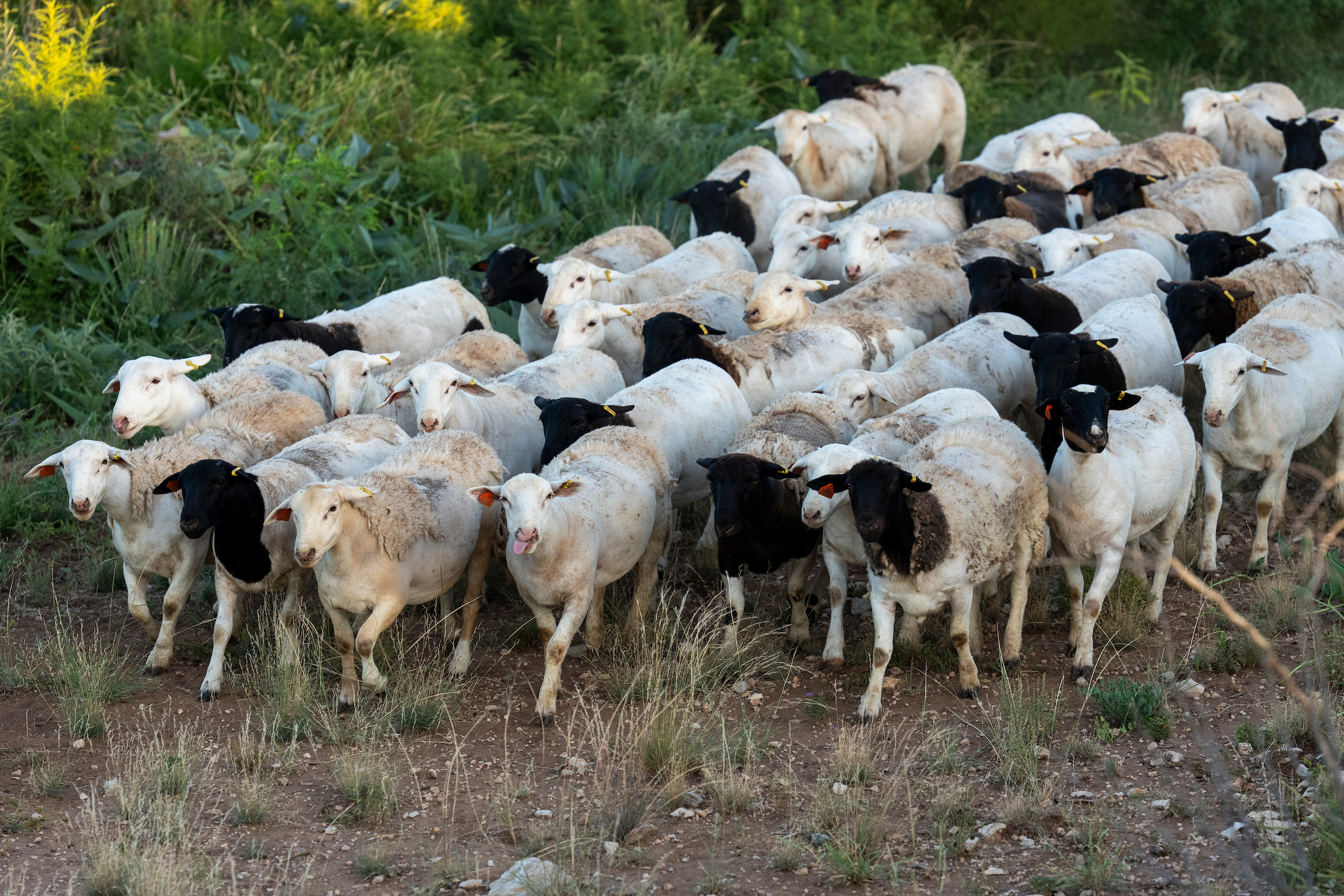
A flock of sheep, mostly white with some black faces and legs, moves across a grassy, uneven terrain with lush green foliage in the background.

Dorper sheep on Thursday, Jul 17, 2025, in San Angelo, Texas. (Michael Miller/Texas A&M AgriLife)

Adjust Early, Not Late
Waiting until forage is gone limits your options. Early adjustments protect plant health and reduce the severity of future decisions.

Match Stocking Rate to Conditions, Not Calendar
Stocking decisions should respond to rainfall and forage production, not just a set grazing plan or date on the calendar.

The Bottom Line
Stocking rate is not just a number. It is a decision that affects everything from soil health to livestock performance to long-term profitability.

Just like your bank account, you cannot manage what you do not measure.

Knowing your forage supply, tracking how it changes, and adjusting your stocking rate accordingly is one of the most practical steps you can take to build resilient rangelands.

In a system defined by variability, the operations that succeed are the ones that treat stocking rate as a dynamic decision, not a fixed number.

 

Filed Under: Grazing Management, Uncategorized Tagged With: #RangelandManagement, Conservation Management, Conservation Practices, Drought Management, Grazing, grazing management, Range Concepts

Fuel, Weather, and Risk: Monitoring Wildfire Conditions on Your Land

January 21, 2026 by morgan.treadwell

Wildfire risk on rangelands is influenced by changing conditions rather than a fixed season. Weather patterns, vegetation growth, and fuel dryness all vary throughout the year. Monitoring these conditions helps landowners and managers understand when wildfire risk may increase and supports better decision-making. 

Tracking Fuel Conditions
One of the most important factors to watch is fuel condition. Grasses and other fine fuels dry at different rates depending on temperature, wind, and recent precipitation. After periods of rainfall, rangelands may produce increased vegetation that later becomes dry fuel. Observing changes in fuel amount and dryness over time provides valuable context for management activities. 

Watching Weather Patterns
Weather conditions also play a key role. Low humidity, strong winds, and extended dry periods can increase fire potential. Monitoring forecasts and short-term weather trends helps identify periods when caution may be needed. These conditions can occur at any time of year in West Texas, including winter months. 

Using Regional Data Tools
In addition to on-the-ground observations, land managers can use online tools to track broader trends. The Rangeland Analysis Platform (RAP) provides data and visual tools that help users assess vegetation productivity, drought patterns, and long-term rangeland conditions. This platform allows landowners to view changes across large areas and compare current conditions to historical averages. 

Connecting Data with Local Knowledge
Using tools like RAP alongside local knowledge creates a clearer picture of rangeland conditions. While no single dataset can predict wildfire, combining field observations with regional data improves awareness and supports informed planning. 

Applying What You Observe
Monitoring conditions also helps guide everyday decisions. Timing of equipment use, grazing rotations, or vegetation treatments can be adjusted based on current fuel and weather conditions. This approach reduces unnecessary risk while maintaining normal land management operations. 

Staying Aware Over Time
Monitoring is not about expecting wildfire to occur. Instead, it is a way to stay informed and adaptable. Conditions change, and understanding those changes helps landowners respond thoughtfully rather than reactively. 

Filed Under: Conservation, Conservation Practices, Land, Wildfire, Wildfires Tagged With: #grazing #ranchmanagement #brush #grasslands, Conservation Management, wildfire, wildfire prevention, Wildfires

Integrated Pest Management for Woody Encroachment

September 20, 2023 by jaime.sanford

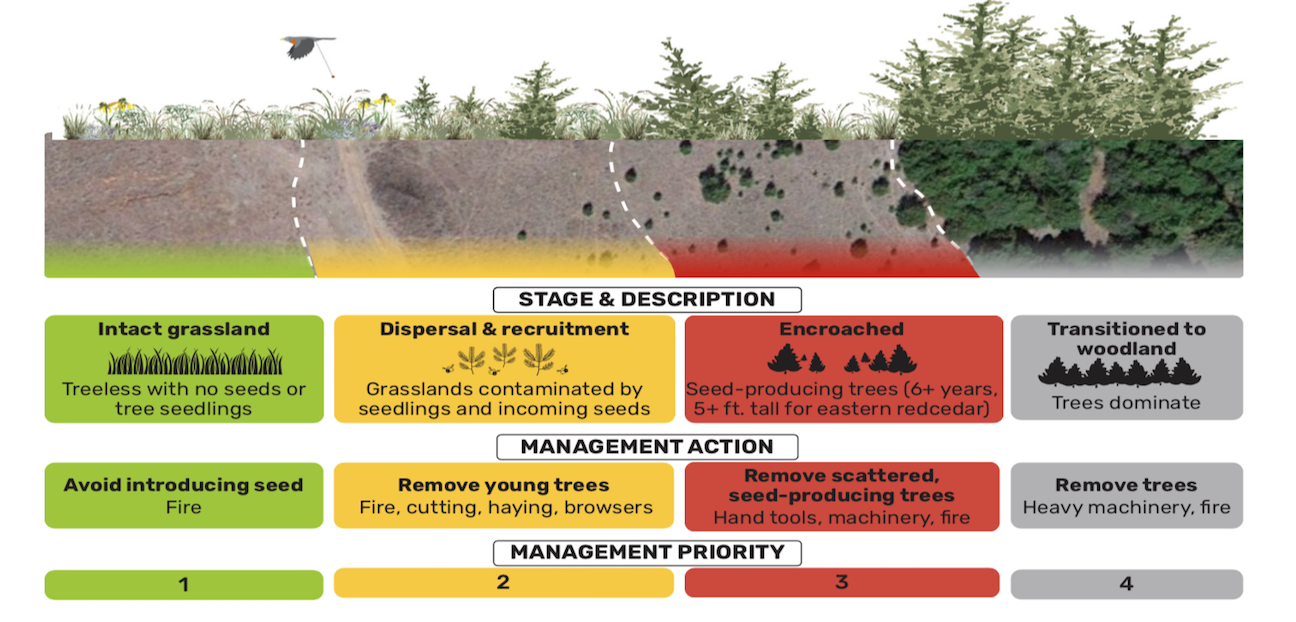
The top 5 woody invasive plant species in the Great Plains Grasslands include; Eastern redcedar, Honey mesquite, Chinese tallow, Ashe juniper, and Redberry juniper. Past brush management efforts have been unable to stop or reverse the loss of grasslands at county, state, or regional scales. Traditional management efforts have assumed that there are tolerable levels of the top five woody pests in grasslands before encroachment becomes a resource concern and mechanical or chemical removal of woody plants will restore a site back to a grassland. Scientists are now recommending more integrated approaches for dealing with woody species and ending the reinvasion cycle in grasslands. 

[Read more…] about Integrated Pest Management for Woody Encroachment

Filed Under: Brush Management, Conservation, Conservation Practices, Grazing Management, Publications, Woody Encroachment Tagged With: #grazing #ranchmanagement #brush #grasslands, brush management, Conservation, Conservation Management, Conservation Practices, Range Concepts, woody encroachment

SRM Multidisciplinary Rangeland Ecosystem Services Report

August 30, 2023 by jaime.sanford

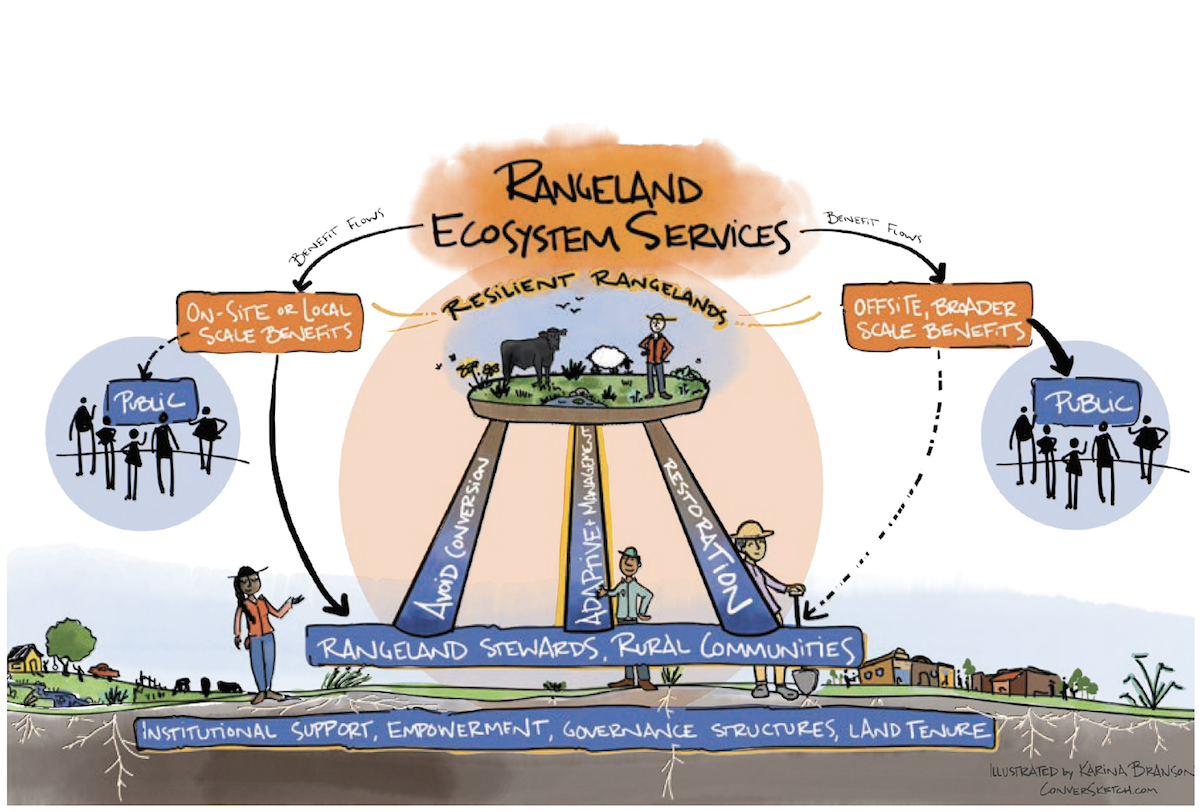
The Society for Rangeland Management recently released their Rangeland Ecosystem Services Report: Connecting Nature and People. The report includes five key rangeland service topic areas including; food and fiber, water as an ecosystem driver in rangelands, carbon sequestration and security, plant and insect biodiversity, and wildlife habitat provision. 


Photo: Rangeland Ecosystem Services Report

[Read more…] about SRM Multidisciplinary Rangeland Ecosystem Services Report

Filed Under: Beef Cattle, Conservation, Conservation Practices, Grazing Management, Society for Range Management Tagged With: brush management, Conservation, Conservation Management, Conservation Practices, Grazing

Reducing Woody Encroachment in Grasslands: A Pocket Guide for Planning and Design

August 23, 2023 by jaime.sanford

Have you seen the latest Pocket Guide from the Great Plains Grasslands Extension Partnership? This Pocket Guide integrates new guidelines for reducing woody encroachment with a planning process. It is also an important resource that further incorporates the latest, science-based approaches for reducing woody encroachment.


[Read more…] about Reducing Woody Encroachment in Grasslands: A Pocket Guide for Planning and Design

Filed Under: Brush Management, Conservation, Conservation Practices, Grazing Management, Range Concepts, Woody Encroachment Tagged With: #grazing #ranchmanagement #brush #grasslands, brush management, Conservation, Conservation Management, Conservation Practices, Range Concepts, woody encroachment

Conserving Texas: Quantifying Ecological Return on Investment

May 31, 2023 by jaime.sanford

In Texas, close to 95% of the land lies in private ownership, which means relying on collaborative solutions and public-private partnerships to support the stewardship and conservation of natural resources for the public good.

[Read more…] about Conserving Texas: Quantifying Ecological Return on Investment

Filed Under: Conservation, Conservation Practices Tagged With: Conservation, Conservation Management, Conservation Practices

Prescribed Burn School April 19 – 21, 2023 – San Angelo, Texas

March 24, 2023 by jaime.sanford

Prescribed Burn School April 19 – 21, 2023 – San Angelo, Texas

Dr. Morgan Treadwell is back with her first Prescribed Burn School for 2023 in San Angelo, Texas on April 19 – 21! If you are curious about prescribed fire or would like to get more hands-on experience, this 3-day school is for you! View the agenda here.

[Read more…] about Prescribed Burn School April 19 – 21, 2023 – San Angelo, Texas

Filed Under: Conservation, Conservation Practices, Grazing Management, Prescribed Burn Associations, Prescribed Burning Tagged With: Conservation, Conservation Management, prescribed burning

Recent Posts

  • Burn Smarter, Not Just Hotter: Timing Fire for Plant Response in the Edwards Plateau
  • Know Your Stocking Rate Like You Know Your Bank Balance
  • Does Prescribed Fire Ever Cross Your Mind? Join the Prescribed Burn School in Gatesville Next Month!
  • Adaptability Is Key as Drought Persists Across Texas Rangelands
  • What the National CPBM Report Means for Producers Using Prescribed Fire

Categories

  • 4-H Range Contests
  • Beef Cattle
  • Brush Management
  • Carbon Credits
  • Carbon Markets
  • Conservation
  • Conservation Practices
  • Drought Management
  • El Niño
  • Events
  • Goats
  • Grazing Management
  • La Niña
  • Land
  • Lessons Learned
  • Meet A County Extension Agent
  • Plant ID
  • Podcast
  • Prescribed Burn Associations
  • Prescribed Burning
  • Publications
  • Range Concepts
  • RAP
  • Sheep
  • Society for Range Management
  • Soil
  • Staff
  • Targeted Grazing
  • Uncategorized
  • Water
  • Weather
  • Why I Ranch
  • Wild Pigs
  • Wildfire
  • Wildfires
  • Wind
  • Woody Encroachment
  • Youth Range Workshop

Archives

Texas A&M AgriLife Extension Service
Texas A&M University System Member
  • Compact with Texans
  • Privacy and Security
  • Accessibility Policy
  • State Link Policy
  • Statewide Search
  • Veterans Benefits
  • Military Families
  • Risk, Fraud & Misconduct Hotline
  • Texas Homeland Security
  • Texas Veteran's Portal
  • Equal Opportunity
  • Open Records/Public Information