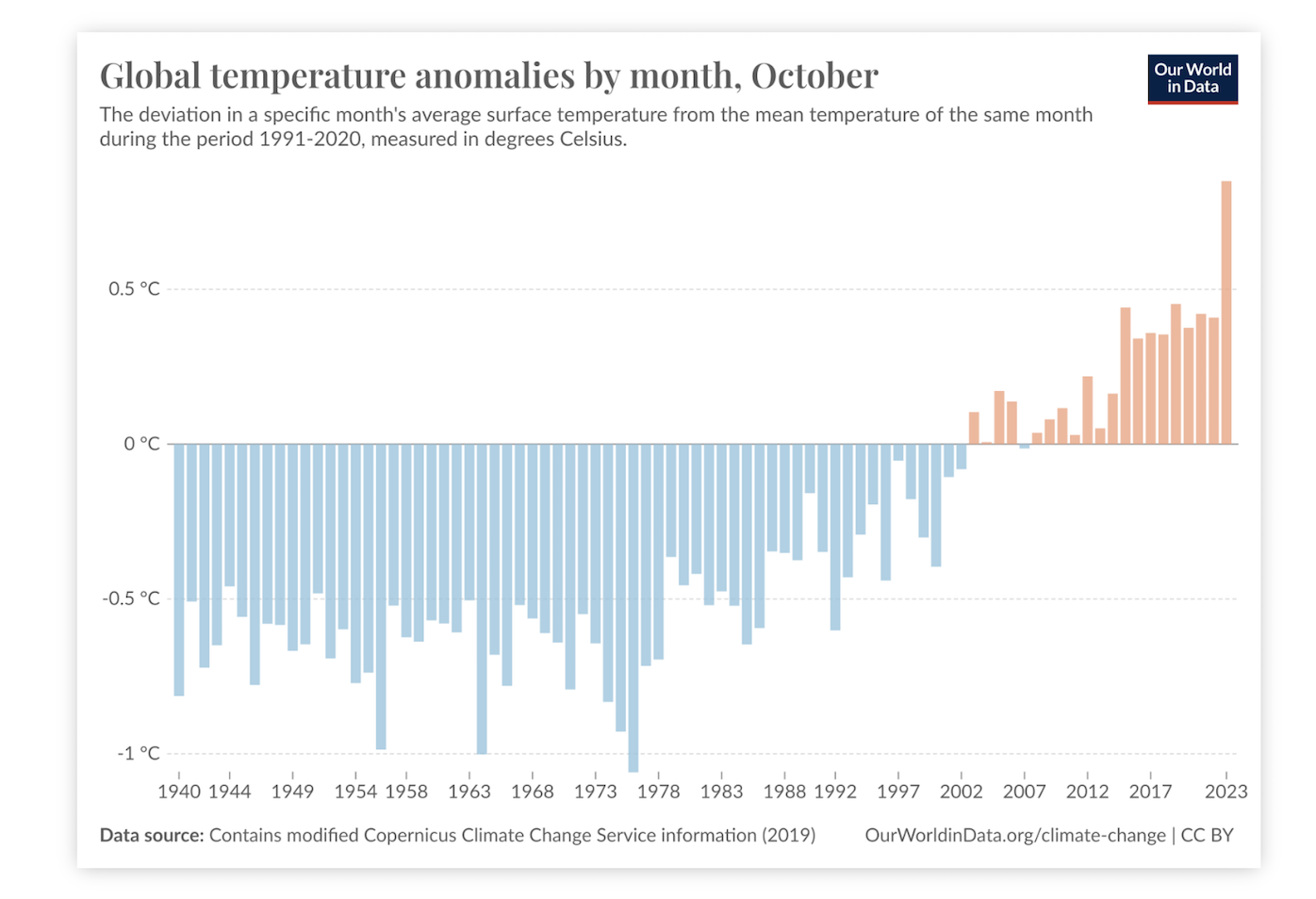
 October was the warmest and driest October on record across the state of Texas. We are also tracking to have the warmest year on record, which would replace 2023 as the warmest. While some of the state saw some rain over the last week, in other areas of the state the predictions for rain did not pan out. According to the figure below, for the month of October, the entire state saw less than 25% of the normal amount of rain.
Portugal Wildfires and What Does That Have to do With Texas?
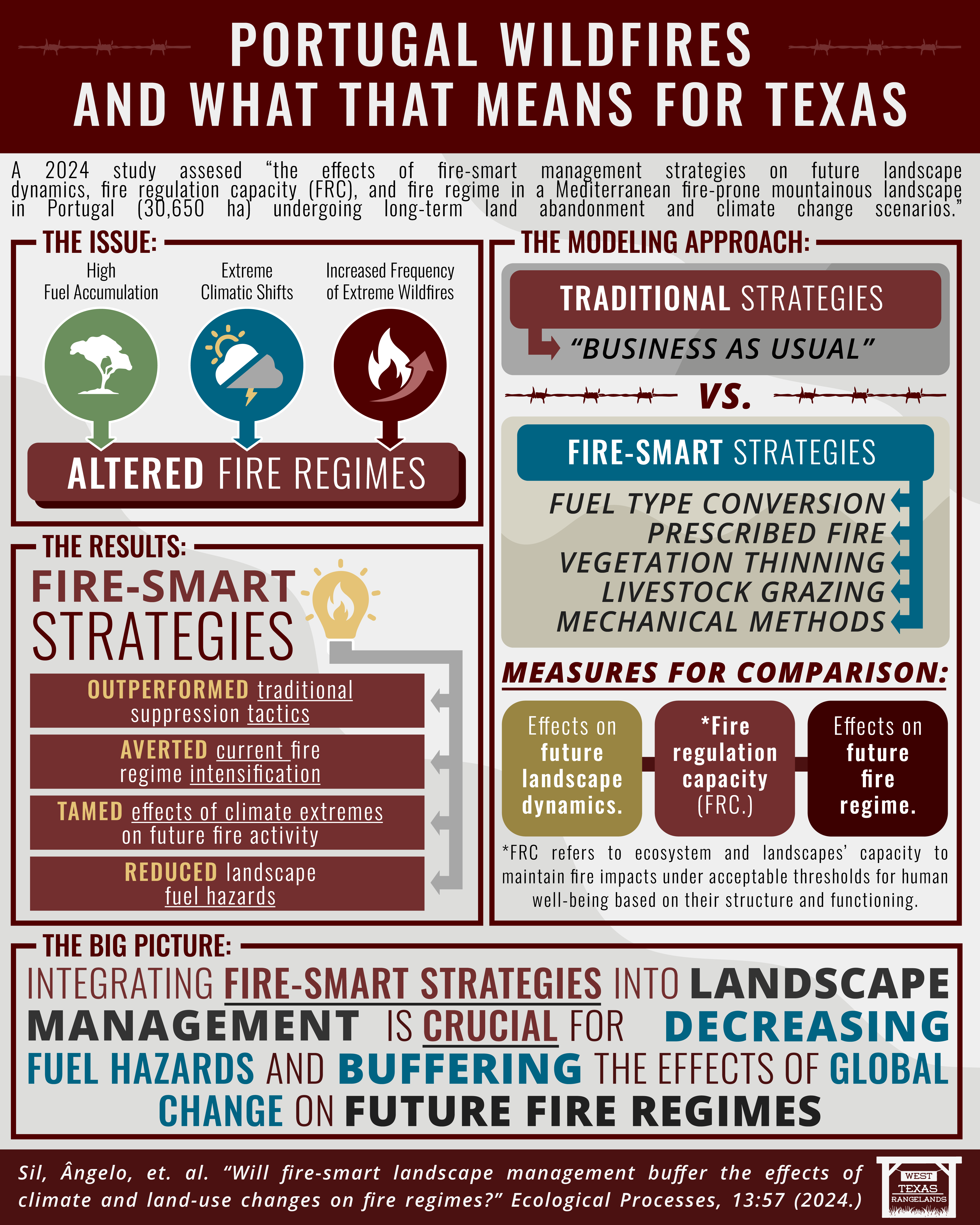 The Euro-Mediterranean region is a high fire prone area with 48,000 fires reported annually. The fires are the result of landscape fuel build up which has been driven by absentee land ownership, wildfire suppression policies, extreme temperatures, and extended droughts that simultaneously occur. This study used the LANDIS-II forest landscape model which is considered a fire-smart management tool. Fire-smart management is based on controlling fire regimes through landscape interventions to reduce hazardous fuels and foster fire-resistant/resilient landscapes. The study included assessing how alternative fire management strategies affect future landscape dynamics, the fire regulation capacity, and fire regimes under long-term absentee land ownership and extreme climate scenarios.
[Read more…] about Portugal Wildfires and What Does That Have to do With Texas?
Fire Weather Alert System and Wildfire Risk to Communities Resources from the U.S. Forest Service
 The Fire Weather Alert System (FWAS) is a vital tool designed to support firefighters on the front lines by providing timely and critical weather information. This app is specifically designed to provide wildland firefighters alerts and notifications for changing weather conditions based on user-set thresholds. The app also provides convenient access to RAWS data, Zone Fire Weather Forecasts, and other important fire weather information.
Let’s Dance: Finding a Fire Rhythm for a Native Perennial Grass
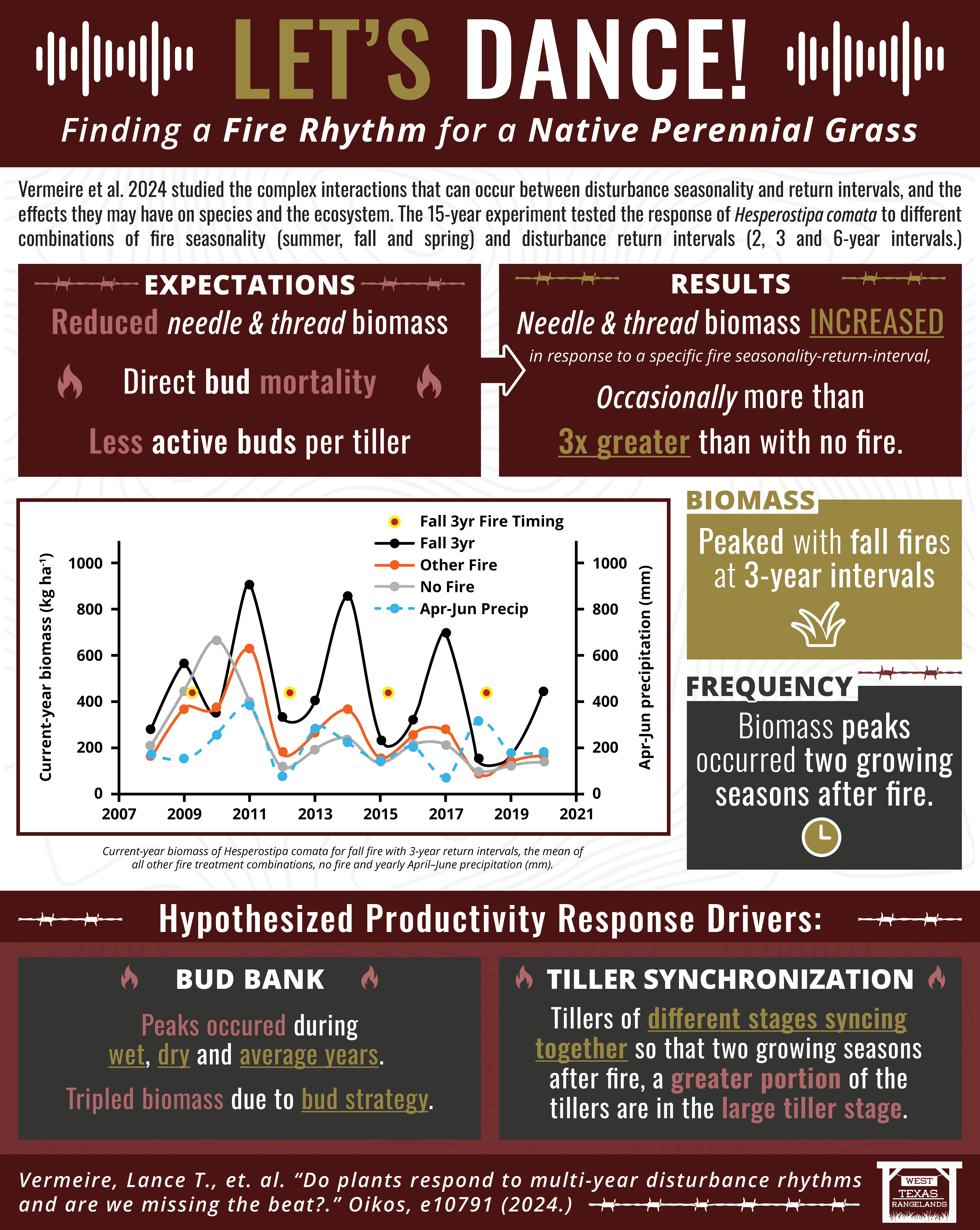 As rangeland ecologists and managers, we are quick to produce definitive results after short-term treatments or management strategies. For example, many of our research studies revolve on the same timeline as graduate students. That in rangeland time, is pretty dang short. That’s why this study is so important. It is the first of its kind and it emphasizes just how crucial long-term research is, because what we think is the answer may just be the tip of the iceberg. There are certain rhythms to pick up on, especially after fire. We just need to stick around long enough with it, to find that rhythm.
[Read more…] about Let’s Dance: Finding a Fire Rhythm for a Native Perennial Grass
81% La Niña Conditions
Pockets of drought relief exist, but not much. In fact, 74% of the state is abnormally dry or worse, up 4% from last month. Underlying dryness and dry, drought cured grasses will support low to moderate potential for wildfires with steady 10-15 mph winds as frontal activity increases. As forage transitions to fuel, rangeland managers are monitoring perennial grass response throughout the Concho Valley as some counties received over 12” of rainfall in September alone.
As we move from a summer to fall-like pattern this week, the Outlook +Water Report from October 5th keenly acknowledges sea-surface temperatures in the Central Pacific (defining the status of the weather phenomenon known as the El Niño Southern Oscillation) are under neutral conditions, but sea-surface temps continue to drop suggesting a transition to La Niña conditions in September-November (81% chance). However, current dynamical and statistical models show the La Niña period promises to be weak and short.

The current U.S. Seasonal Drought Outlook shows drought development over the eastern third of Texas and in the Panhandle. With the increased drought designation, temperatures over the next 3 months are expected to be above-average with rainfall deficits for Far West, Panhandle, and Eastern Texas.
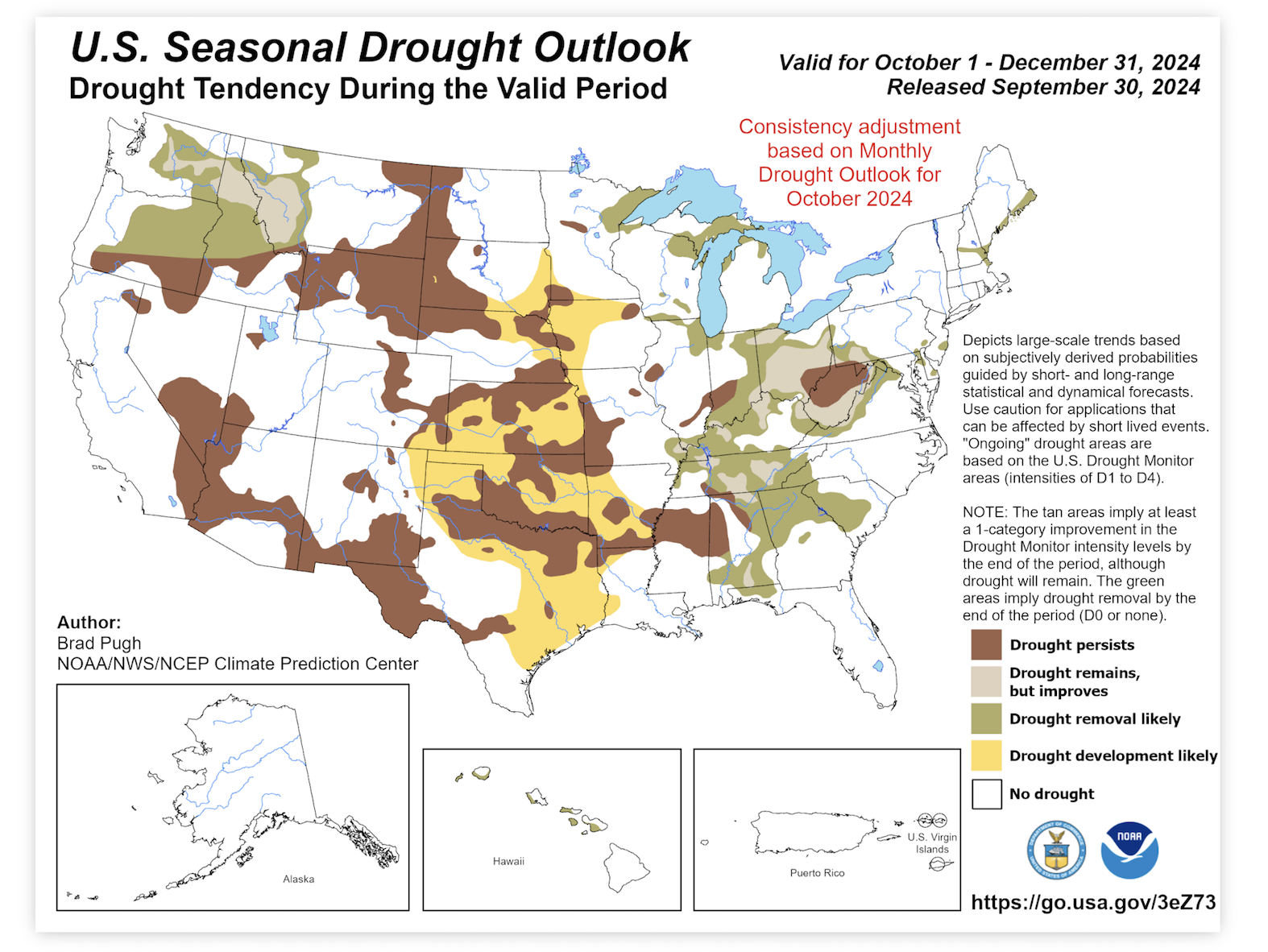
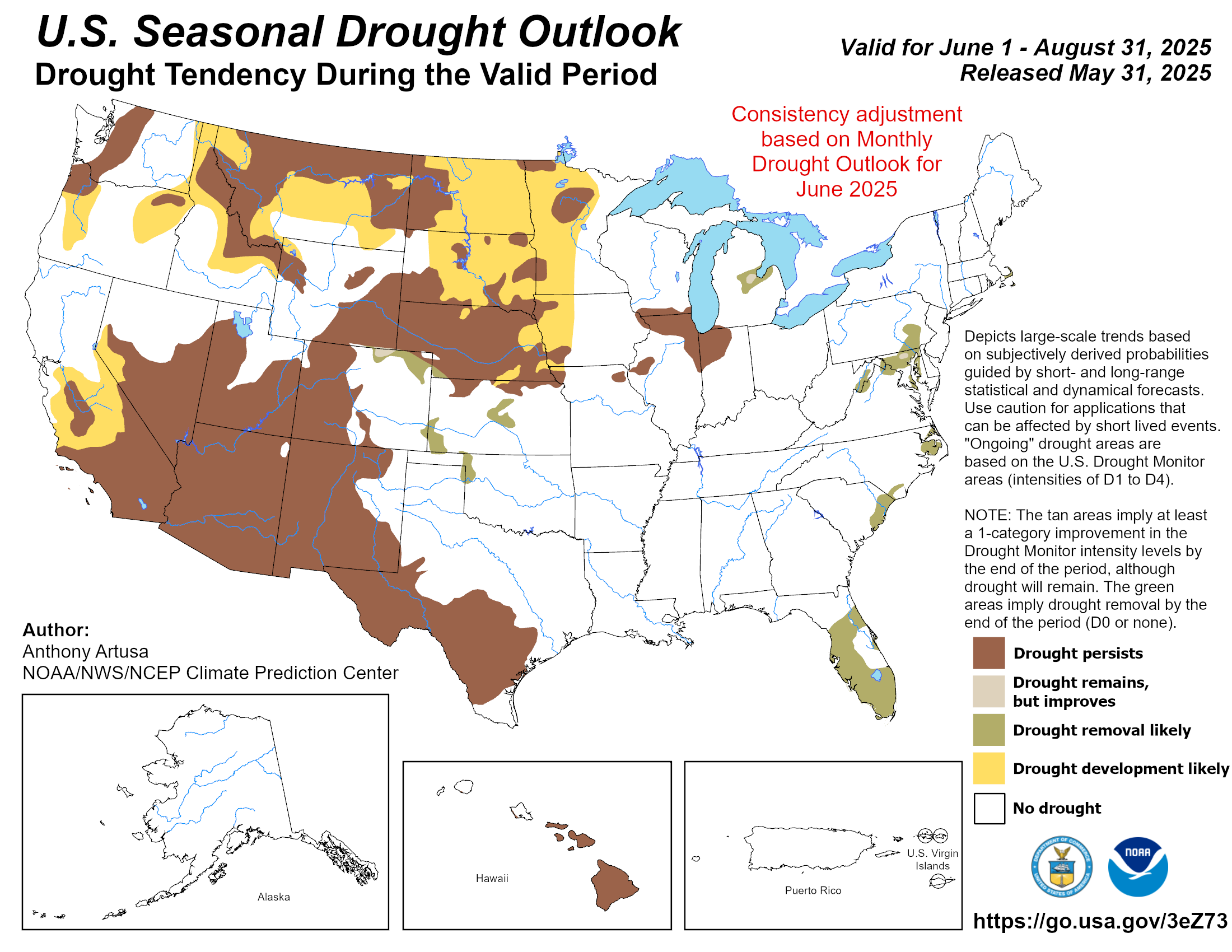
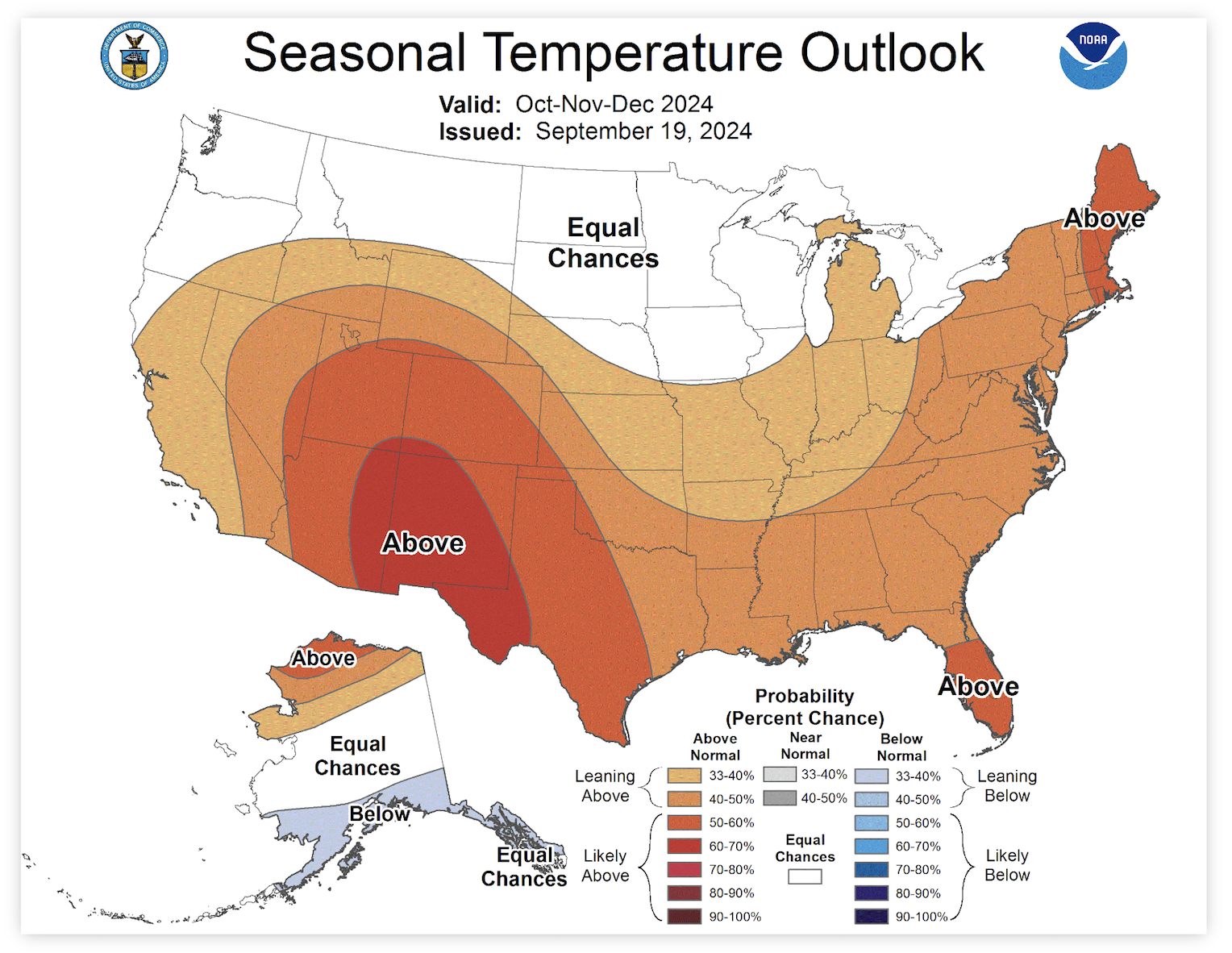
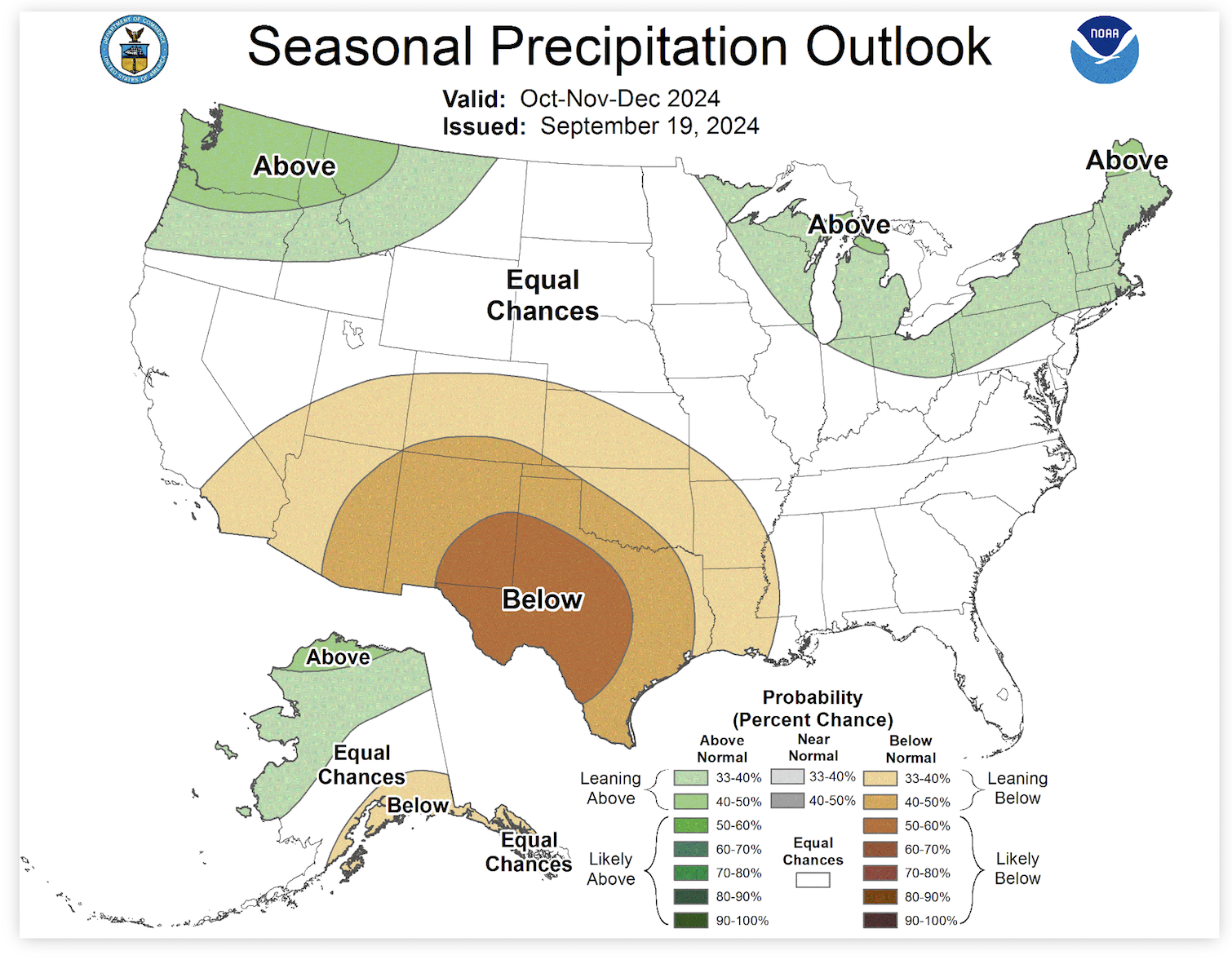
As with any drought monitoring or transitions into La Niña this fall and winter, West Texas Rangeland managers know to prioritize keeping the ground covered, maintaining residual forage, rotating livestock, and plan, plan, plan.
For more information, be sure to check out the full article from Outlook + Water here!
Mace, R. (2024, October 8). outlook+water: Drought declines, La Niña delayed again, more drought expected. texaspluswater.wp.txstate.edu. October 14, 2024, https://texaspluswater.wp.txstate.edu/2024/10/08/outlookwater-drought-declines-la-nina-delayed-again-more-drought-expected/?utm_source=Texas%2BWater+Newsletter&utm_campaign=c569d9ca52-EMAIL_CAMPAIGN_2023_03_22_08_02_COPY_01&utm_medium=email&utm_term=0_-86323a7a46-%5BLIST_EMAIL_ID%5D&mc_cid=c569d9ca52&mc_eid=23994de06b
70 Questions Important for Grassland Conservation
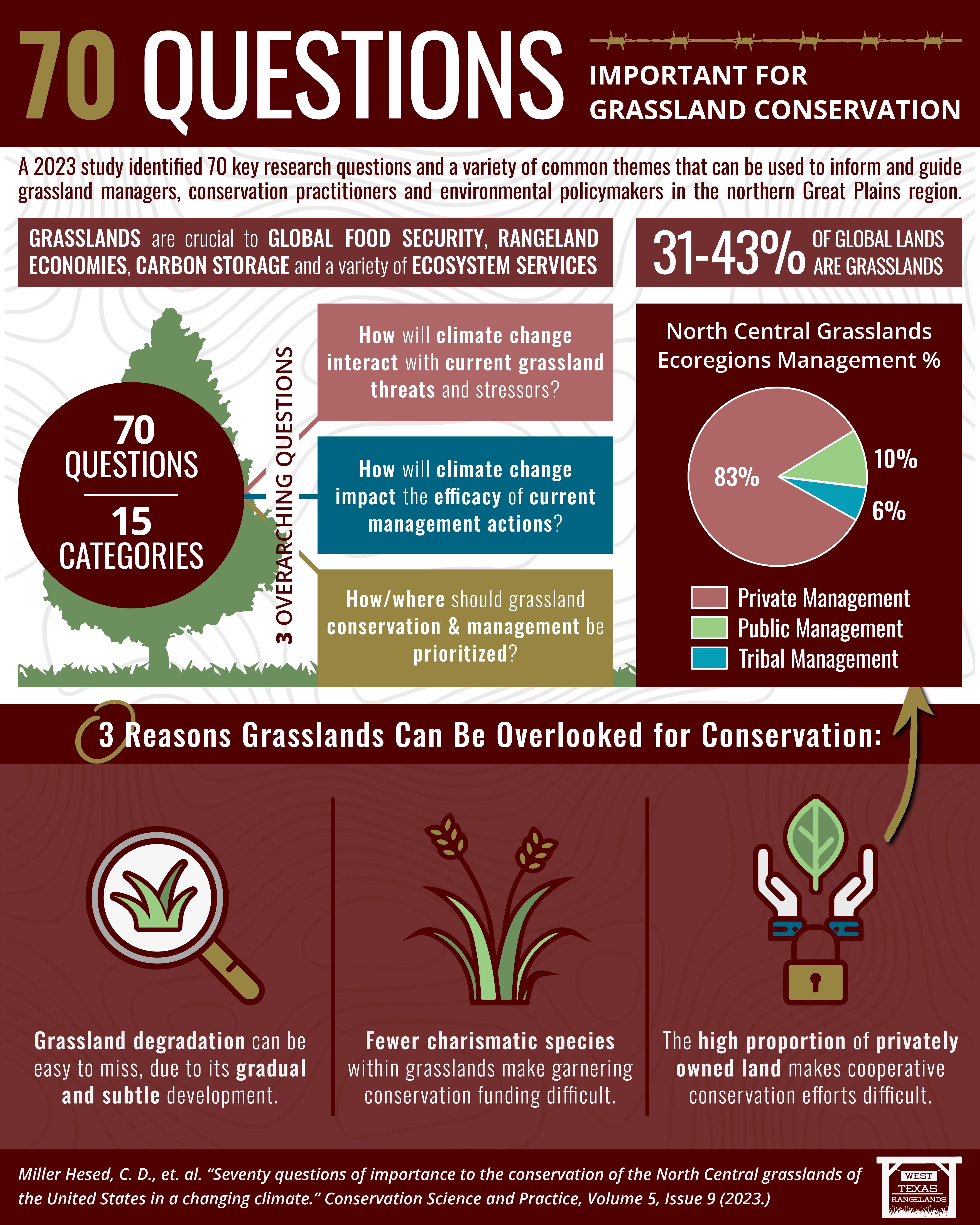 Did you know that Grasslands are crucial to global food security, rangeland economies, carbon storage, and a variety of ecosystem services? Did you know that 31-43% of global lands are grasslands?
A Management Priorities Working Group (MPWG) comprised of 11 individuals was tasked with identifying and reviewing the management related documents in order to:
1) Synthesize grassland management goals and challenges.
2) Identify questions and information needed to allow grassland managers to meet their goals within the context of climate change.
[Read more…] about 70 Questions Important for Grassland Conservation
Texas Producer Average Age Increases 1.2% to 59.9
 Every 5 years the USDA’s National Agricultural Statistics Service’s Census of Agriculture publishes and provides data at the U.S., state, and county levels. One of the metrics that is tracked in this census is the average age of agricultural producers.
[Read more…] about Texas Producer Average Age Increases 1.2% to 59.9
Woody Plant Encroachment – What other states are doing and saying
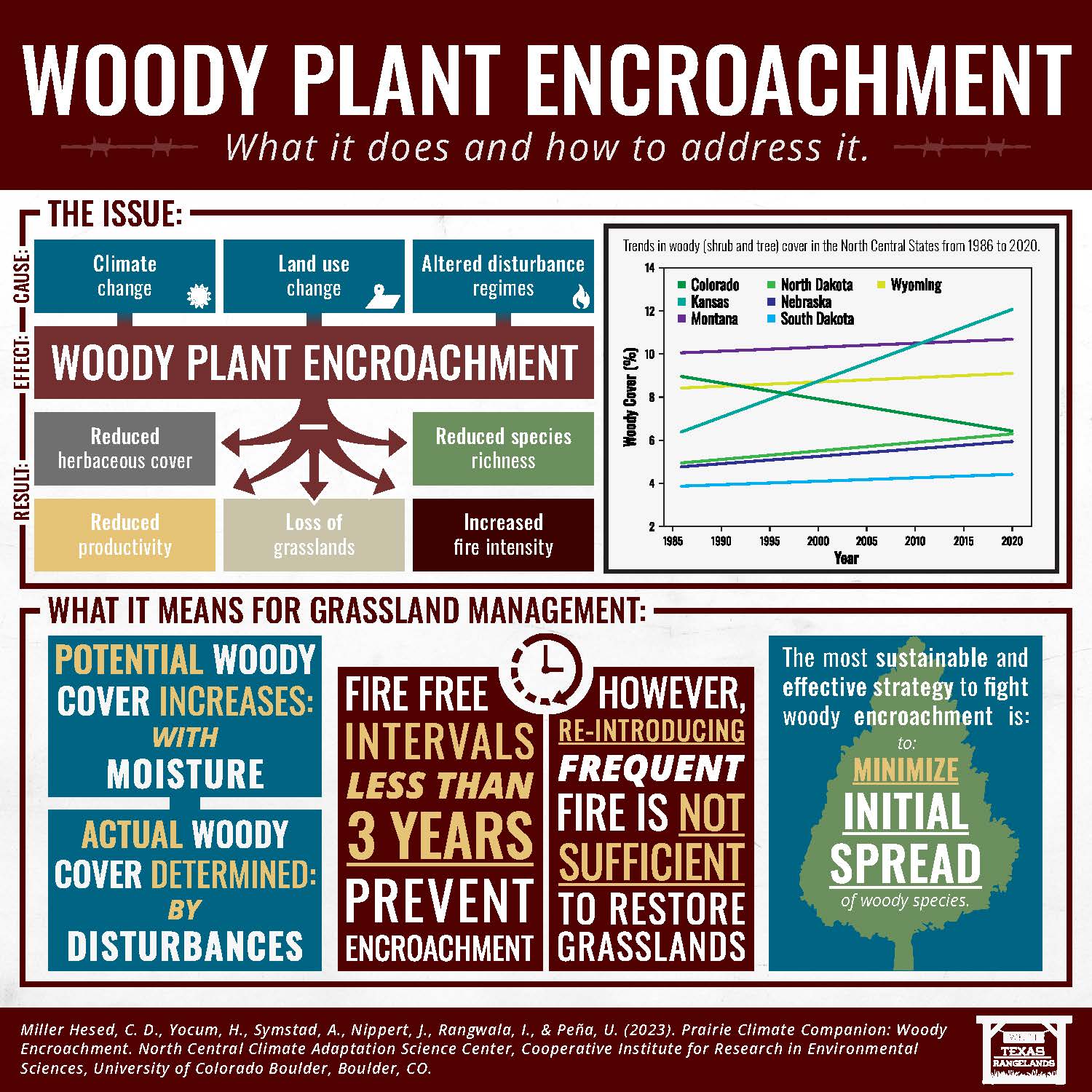 Extreme climate swings, lengthened fire seasons, drought, floods, overgrazing, fragmentation, land-use change, urbanization, and altered disturbance regimes has created an increase in woody plants, commonly referred to as woody plant encroachment or (WPE). Woody encroachment has become a global phenomenon in nearly all grassland ecosystems. We have seen the devastating results of WPE in Texas grasslands and savannas and as we learn from our North Central partners (CO, KS, MT, ND, NE, SD, and WY) many of these states are on a similar trajectory of plant community transition. Through the work of the North Central Climate Adaptation Science Center and the Rangeland Analysis Platform, other states can learn from our Texas lessons of WPE and aim for fire return intervals that minimize initial spread of woody species in grasslands.
[Read more…] about Woody Plant Encroachment – What other states are doing and saying
Drought and La Niña Update
 Even with recent rains in the central part of Texas, drought conditions have, unfortunately, increased. There are moderate to severe droughts along the Northern border between Texas and Oklahoma and in the far West Texas region, drought conditions are extreme and in some areas have increased to exceptional drought. Central Texas, along the Gulf Coast, and parts of East Texas are looking above average showing no drought indicators.
Patch Burn Grazing: An Economic Analysis of Pyric Herbivory Rangeland Management by Cow-Calf Producers
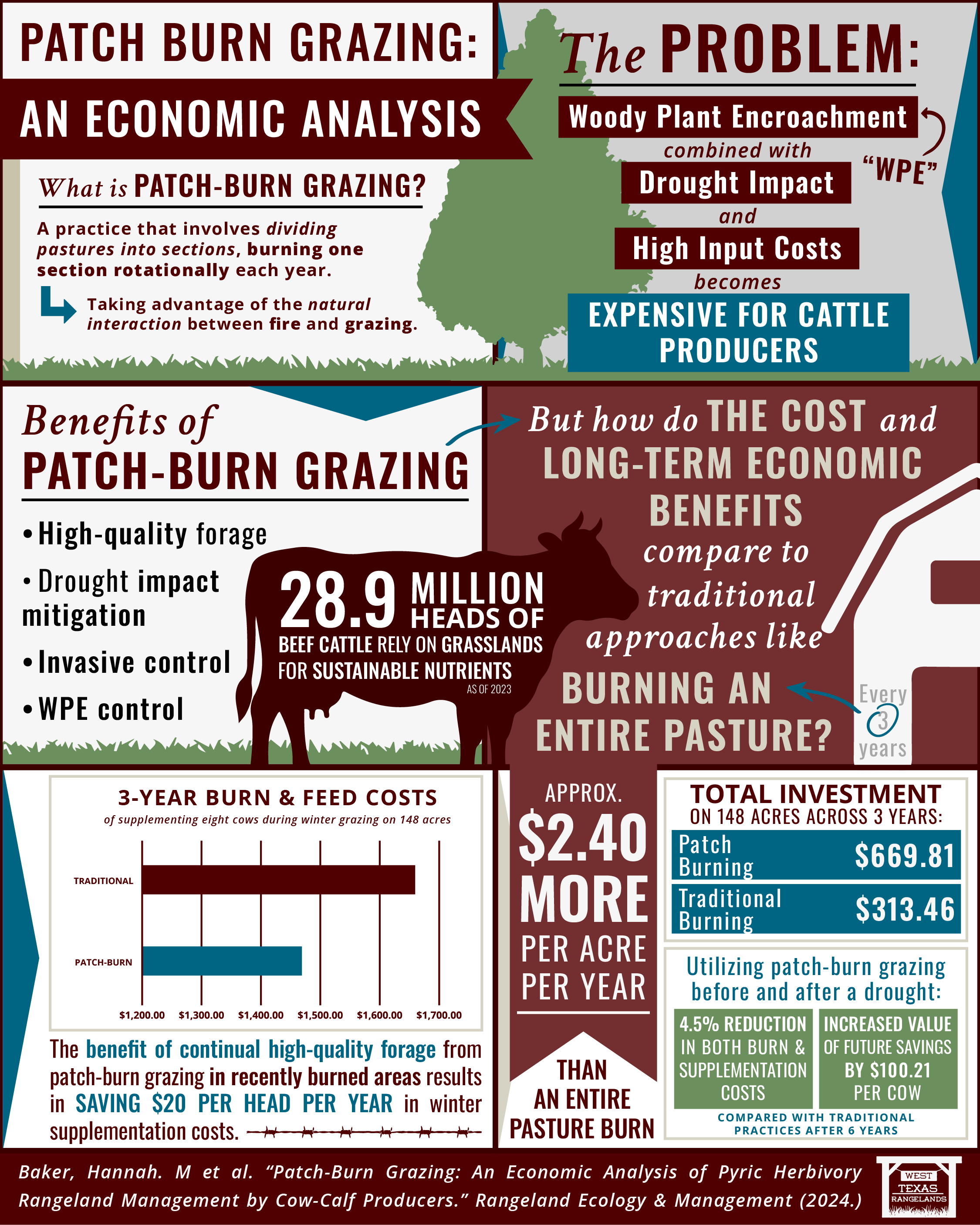 Patch-burn grazing is a practice that requires an understanding of the interaction of fire and grazing (pyric herbivory) (for more information check out www.theprairieproject.org). It divides a pasture into pieces/patches, with one burn rotationally each year. It helps control woody plant encroachment and provides high-quality forages. Despite these known benefits, the adoption of this practice by ranchers has been slow and limited. This study focused on the benefits of patch-burn grazing by estimating the costs and long-term economic benefits. Additionally, researchers compared patch-burning to traditional applications of prescribed fire burning fenceline to fenceline or an entire pasture at once with a 3-year fire return interval.