 Wildfire risk is a natural part of West Texas rangelands, but preparedness is most effective when it is part of ongoing land stewardship. Managing rangelands with long-term resilience in mind not only protects property and resources, but also supports ecosystem health and sustainable operations.
Integrating Preparedness into Stewardship Practices
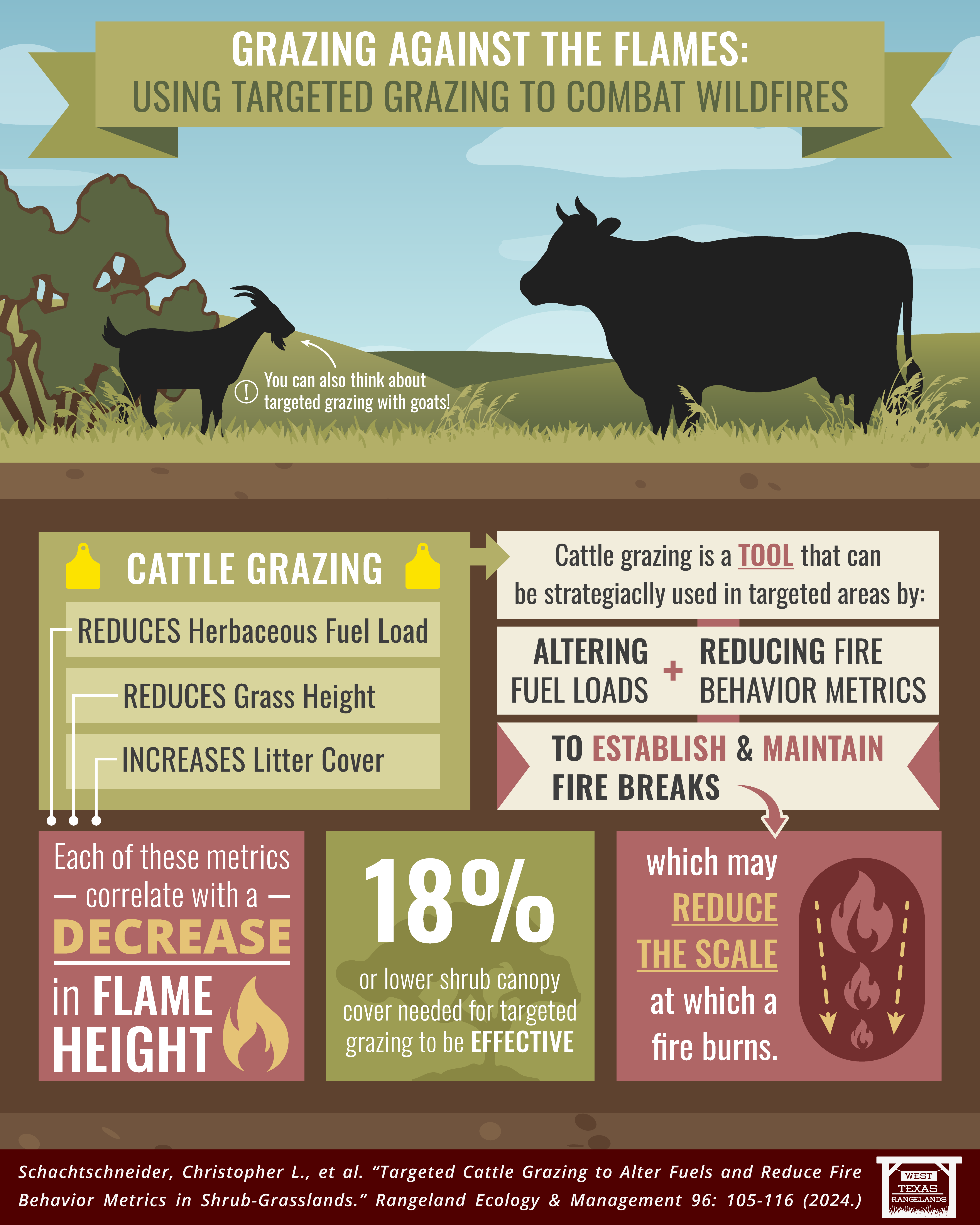
Preparedness begins with everyday land management decisions. Practices such as targeted grazing, rotational grazing, and selective vegetation management help reduce fuel loads while maintaining healthy grass and brush cover. These strategies are not one-time solutions—they are ongoing practices that strengthen the landscape over years.
Infrastructure and Access as a Stewardship Tool
Maintaining roads, fence lines, water sources, and access points is a long-term investment in rangeland resilience. Clear access allows for safe movement of equipment and personnel if wildfire conditions arise. Roads and defensible corridors also serve as strategic breaks in fuel, reducing potential fire spread while supporting everyday operations.
Monitoring Conditions Over Time
Ongoing observation of vegetation, fuel, and weather trends is central to long-term preparedness. Tools like the Jornada Rangeland Analysis Platform provide historical and current data on vegetation growth and drought patterns. Combining this data with on-the-ground monitoring helps landowners make adaptive decisions, such as adjusting grazing or vegetation treatments, in a way that supports both land health and wildfire preparedness.
Preparedness as a Continuous Practice
Long-term wildfire preparedness is not about expecting a fire every year. It is about creating a resilient, well-managed landscape that can better withstand unpredictable events. Maintaining native grasses, managing fuel continuity, and planning infrastructure improvements over time ensures the land remains productive and safer under a variety of conditions.
Building Resilient Rangelands
By treating preparedness as part of overall stewardship, landowners reinforce their long-term investment in rangeland health. The combined effect of fuel management, infrastructure planning, monitoring, and adaptive management reduces potential wildfire impact while sustaining the ecological and economic productivity of West Texas rangelands.