Across Texas, conversations about rural growth increasingly include a new type of development: data centers. Driven by advances in cloud computing, artificial intelligence, and digital infrastructure, data centers are expanding into communities well beyond traditional urban areas. While these facilities can bring economic opportunities, they also raise important questions about land use, water resources, energy demand, and compatibility with surrounding agricultural landscapes.
A recent white paper from Mike Turner, Vice Chair of the Loudoun County, Virginia Board of Supervisors, outlines key considerations for communities evaluating data center development. While the report focuses on one of the nation’s largest data center regions, many of the issues discussed are highly relevant to Texas communities where working lands, natural resources, and rural quality of life are important considerations.
Why Data Centers Are Expanding Into Rural Areas
Modern data centers require large amounts of land, reliable electric infrastructure, and access to communication networks. Rural areas often offer available acreage and fewer development constraints than urban locations. As a result, communities that have traditionally been dominated by agriculture, ranching, and natural resource industries may increasingly find themselves evaluating proposals for data center projects.
For landowners and local leaders, these developments can present both opportunities and challenges. Understanding the potential impacts before projects are approved can help communities make informed decisions about long-term land use and resource management.
Beyond Buildings: Looking at Resource Demands
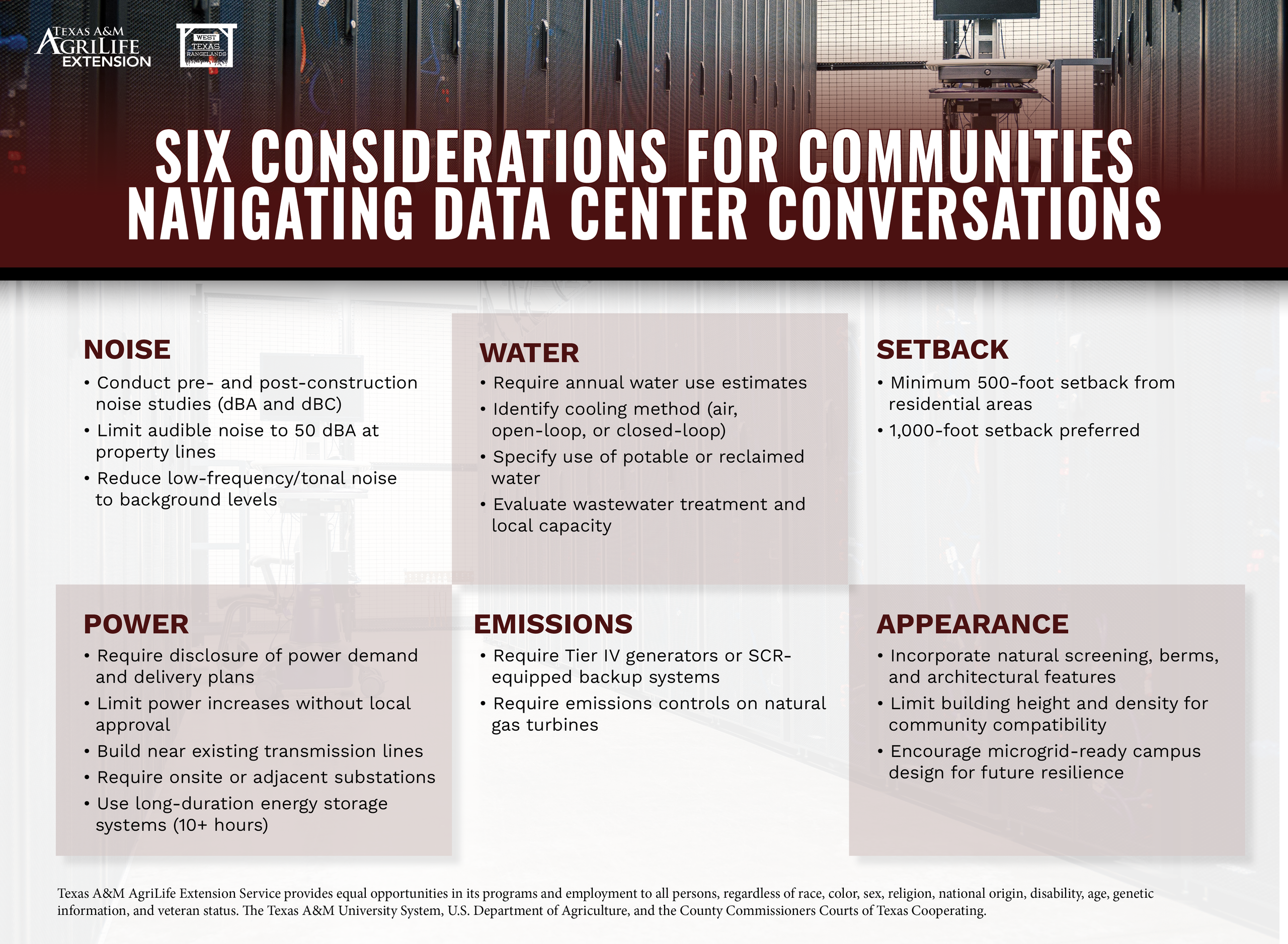
One of the key themes emphasized in the Loudoun County guidance is that data centers are more than large buildings. Their operation depends on substantial supporting infrastructure, particularly energy and water resources. The report recommends requiring clear documentation regarding projected electricity demands, transmission needs, substations, and long-term utility requirements before projects move forward.
This is particularly relevant in many parts of Texas where electric infrastructure already serves agricultural operations, rural communities, and growing populations. Large industrial power users can influence future infrastructure investments and may affect how utility systems expand over time.
The report also recommends understanding how much water a facility will use annually, what cooling systems will be utilized, and whether potable or reclaimed water sources will be required. These considerations are especially important in areas where water availability is already a concern.
Water Matters in Texas
For those involved in agriculture and rangeland management, water is often at the center of long-term planning discussions. Whether managing livestock, wildlife habitat, or forage production, water availability influences virtually every aspect of land stewardship.
The Loudoun County recommendations encourage communities to evaluate cooling technologies, water sources, and wastewater treatment requirements before approving development. Understanding these needs allows communities to better assess whether existing infrastructure can support future demands and whether additional resource pressures may emerge. https://www.loudoun.gov/DocumentCenter/View/217610/15-Best-Practices-for-Communities-Considering-Data-Centers?bidId=
In Texas, where drought planning and water conservation remain ongoing priorities, these questions become especially important when evaluating new large-scale developments.
Considering Compatibility with Working Lands
Many Texas counties are working to maintain productive farms, ranches, and open spaces while accommodating growth. From a rangeland stewardship perspective, one of the most important questions is whether a proposed use is compatible with surrounding rangeland uses and long-term community goals.
The Loudoun County recommendations suggest incorporating performance standards into land-use plans and zoning regulations rather than allowing projects to proceed automatically. The report also highlights setbacks, screening, landscaping, and design considerations that can influence the visual impacts of large facilities.
For communities adjacent to working lands, these discussions extend beyond aesthetics. Development decisions can influence land values, infrastructure demands, wildlife movement, and future land-use patterns.
Noise, Light, and Community Impacts
Another topic addressed in the report is operational impacts. Data centers can generate continuous equipment noise, require backup power systems, and contribute to light pollution depending on facility design and operation. The guidance recommends conducting both pre- and post-construction noise studies and establishing clear performance standards to address potential concerns.
For rural residents accustomed to quieter environments, these considerations may significantly influence perceptions of compatibility and quality of life. Understanding potential impacts before construction begins can help communities address concerns proactively rather than reactively.
Balancing Economic Opportunities and Resource Stewardship
The report notes that data centers can provide substantial tax revenue, support local initiatives, create construction jobs, and often have relatively low demands on schools and transportation infrastructure compared to some other forms of development. At the same time, the report identifies concerns related to power consumption, water use, transmission infrastructure, noise, and visual impacts.
This balance between economic opportunity and resource stewardship is not unique to data centers. It mirrors many of the conversations occurring across Texas as communities consider how best to accommodate growth while preserving the natural resources and working landscapes that define their region.
Planning Before Growth Occurs
Perhaps the most important takeaway from the white paper is the importance of planning before development proposals arrive. Land-use plans, zoning ordinances, and infrastructure evaluations are most effective when they provide clear guidance in advance rather than responding after major projects are proposed. The report recommends ensuring that land-use plans address data center performance standards and that zoning regulations align with those goals.
For Texas communities, this proactive approach can help create a framework for evaluating future developments while protecting local priorities related to agriculture, water resources, wildlife habitat, and rural quality of life.
Looking Ahead
As demand for digital infrastructure continues to grow, more rural communities will likely encounter discussions about data center development. Whether a community views these facilities as opportunities, challenges, or some combination of both, understanding their potential impacts is critical.
For landowners, natural resource professionals, and local decision-makers, the conversation should extend beyond the facility footprint itself. Questions about water, energy, land use, infrastructure, and long-term community goals all deserve consideration. Thoughtful planning today can help ensure that future development aligns with the values and resources that make Texas working lands so important.
Original Source
This article was inspired by “15 Best Practices for Communities Considering Data Centers”, published by the Loudoun County, Virginia Board of Supervisors, May 2026. The document outlines key considerations related to noise, power, water, emissions, setbacks, and community planning for data center development.