Mealybug in Medio bluestem. (Photo by S. Biles)
Once we know the species, we should get a clearer picture on the biology of the mealybug which may lead to better understanding of how to manage the pest. I hope to hear from the identifier next week.
In Australia, there are mealybugs that effect their pastures. The Australian pasture mealybug (Heliococcus summervillei) is responsible for what they call “pasture dieback.” The symptoms they describe are similar to what we are experiencing.
While our mealybug may or may not be the same species, we can learn from their experience. Their management suggestions state spraying insecticides and burning have shown inconsistent and short term control. Insecticides have not provided a long term solution to their problem. Instead, they focus on pasture management: “managing your pasture biomass so that it does not have continuous high biomass can reduce the prevalence and severity.”
Read this Australian publication HERE.
Their findings regarding insecticides are similar to what I have found in the short time I have been studying the problem. Insecticides seem to be inconsistent at providing a grass response to mealybug control.
My August 12 post showed some results of the first insect control test I conducted on the pasture mealybug. This test was done near Nursery, TX in a grazed bermudagrass pasture.
What we learned was Carbaryl, Lannate, and pyrethroid insecticides do not control this mealybug. We also learned that Sivanto provides fairly good control at 8 and 14 oz/A, which are expensive treatments.
Sivanto is it is NOT labeled for use in pastures or hayfields in Texas, only in Idaho and Oregon. Most of the products that may provide control of the mealybug, will likely require a label change before they can be used in pastures or hayfields.
While an insecticide may provide control of the pest, we also have to consider what the grass response to management will be. Yesterday, I visited all five field test sites to evaluate the grass growth after treatment. Results were mixed.
In the first test, sprayed July 28, Sivanto provided control of the mealybug, but there is no visible differences in grass growth between the treated and untreated plots at 25 days after treatment. This trial is ongoing.
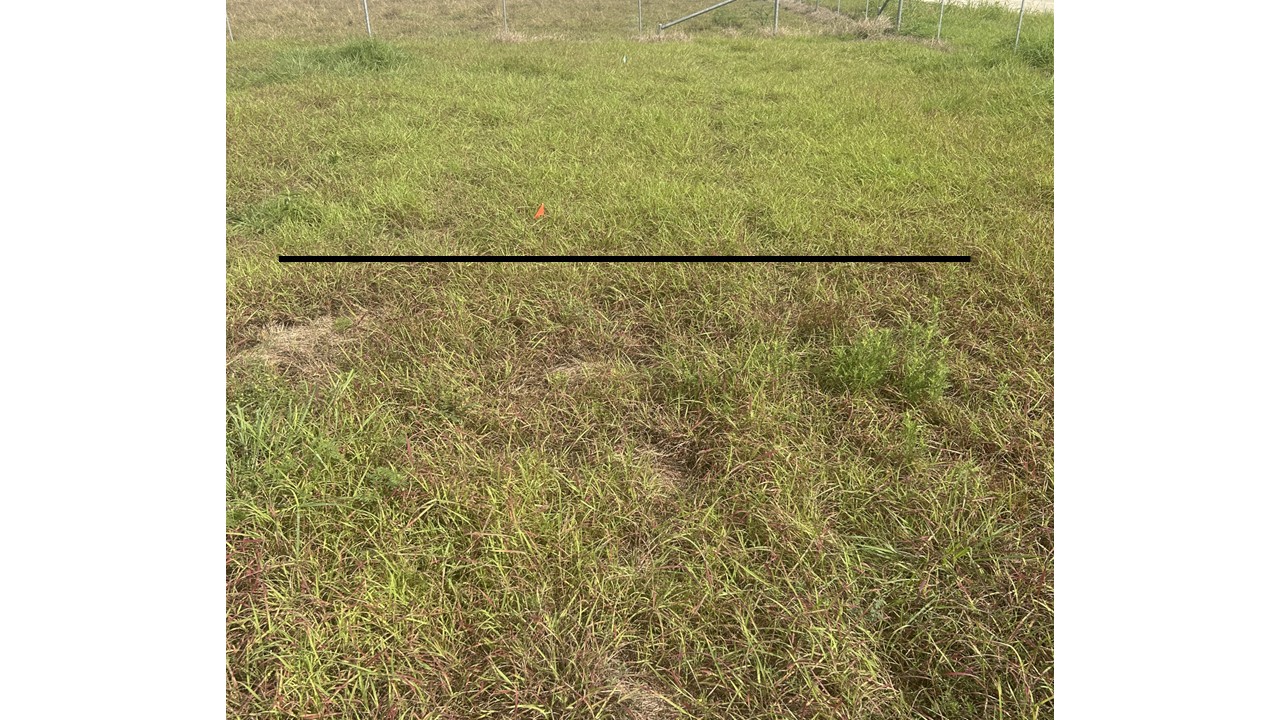
Above line is Sivanto (14 oz/A) below is pyrethorid.
The second test was conducted south of Inez, TX. This test was sprayed on August 6 in a field of Gordo bluestem. Visible differences were seen in grass growth between treatments that worked and those that did not. It is nice to see a line in the grass from a product that worked. Again, the products that appear to show promise in this test are not labeled for pastures and hayfields.
Insecticides that did not provide control in this trial include: Carbaryl, Lannate, Besiege, and pyrethroid insecticides. Imidacloprid, which is not labeled for pasture use, was less impressive than the other unlabeled products that looked better.
The third test was in eastern Goliad County off of Coletoville Road. This test was sprayed on August 7 in a bermudagrass hayfield. No visible differences were found between insecticides and untreated plots at 15 days after treatment. This trial is ongoing.
The fourth and fifth tests were initiated last week and 7 days is too soon to be able to determine mealybug mortality or grass response. These tests were sprayed on a field of medio bluestem. These tests include lower rates of Sivanto and two other untested products. I plan to revisit this test next week.
Thanks to the growers who allow us to spray tests in their pastures and hayfields.
Latest Thoughts
Treating this late in the infestation is not likely to benefit this season’s grass production very much. The only labeled product I have hope for is Sefina, and I have yet to include it in a field study.
If you are planning to spray a field for mealybugs, make sure the product is labeled for use in hay and pastures. I also suggest you leave a marked, untreated strip in the middle of the field to see what benefit was gained by the treatment.
Beginning in early spring 2026, we need to study insect management to see if the damage is preventable. We also need to look at management response in different grass species.
So far, I can confirm heavy damage on most bluestem species, bermudagrass, and Bahia grass.
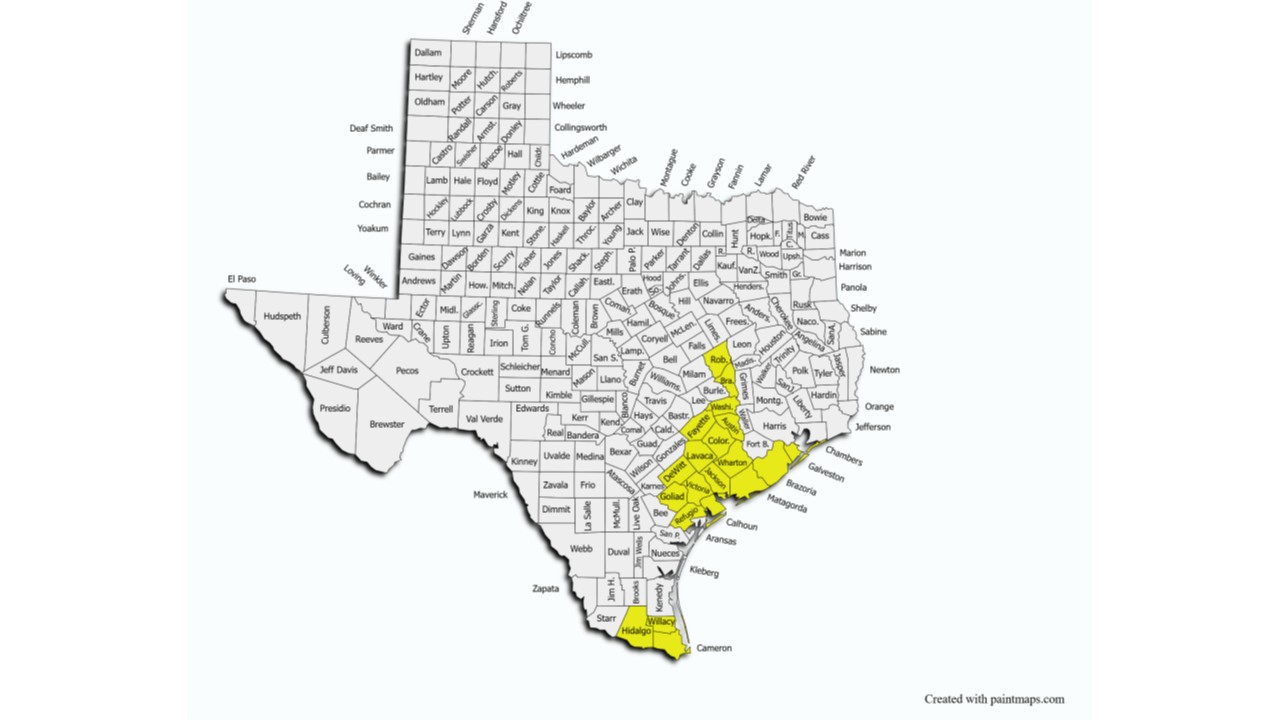
This mealybug has been found in many counties of South-Central Texas. If you have found this mealybug in your field, and your county is not shown on the map below in yellow, please send me a picture of the mealybug and the grass species it is infesting.
Email: biles-sp@tamu.edu
Text message: 361-920-1138