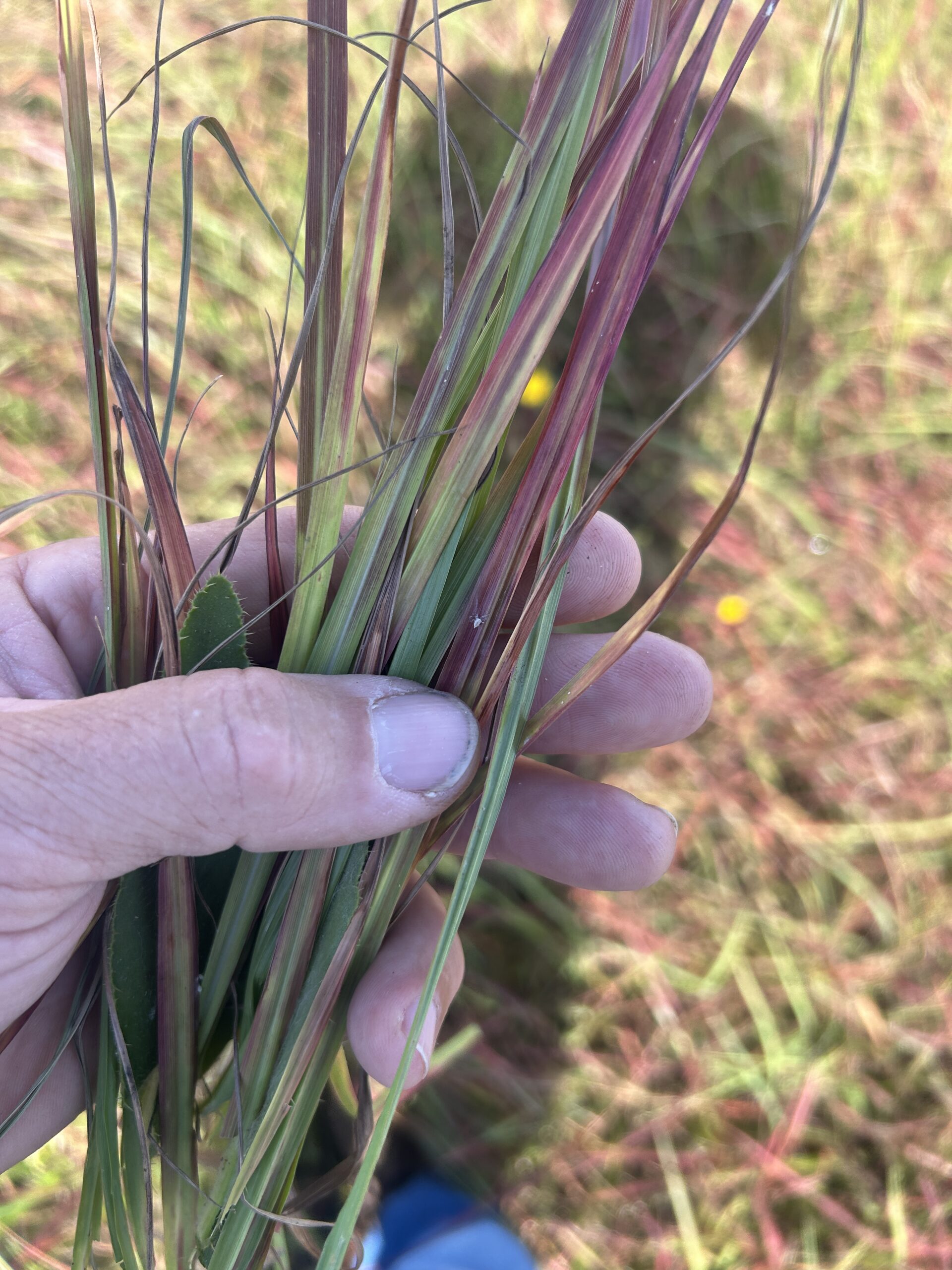
 The species of this mealybug has still not been determined. I expect to hear from the identifier soon, but these identifications can sometimes take longer because they want to be sure to get an accurate identification which may include DNA analysis.
Several questions have been asked about how the mealybug can move from place to place. Mealybugs can move from plant to plant by crawling, but they will need help to move greater distances. This help comes from wind, animals, vehicles, and people. I have seen videos of large numbers of mealybugs on hay equipment so I suggest cleaning equipment before moving to another field.
Can the mealybugs move in the hay bales? Possibly, but the longer the hay sits in place, the less likely it is to move live mealybugs. Once the grass dries, the insect will no longer have it as a food source and will begin to move to live grass. Many of the mealybugs will move off the hay after cutting and before baling. In published studies, other mealybug species have not survived long period (2-3 weeks) off of their host plants. Understand we have not yet studied the biology of this mealybug or opened hay bales to inspect them.
Yesterday (8/29), I spent the morning looking at fields and assessing two mealybug control tests near Nursery. I have found it difficult to count mealybug control at 7 days after treatment, which is a common timing of assessing insecticide tests. This has resulted in me waiting to 14 days to evaluate the trials. Fourteen days is a long time to expect control from most insecticides, but if a treatment is not going to provide long lasting control, I am not sure it has much value in the pastures.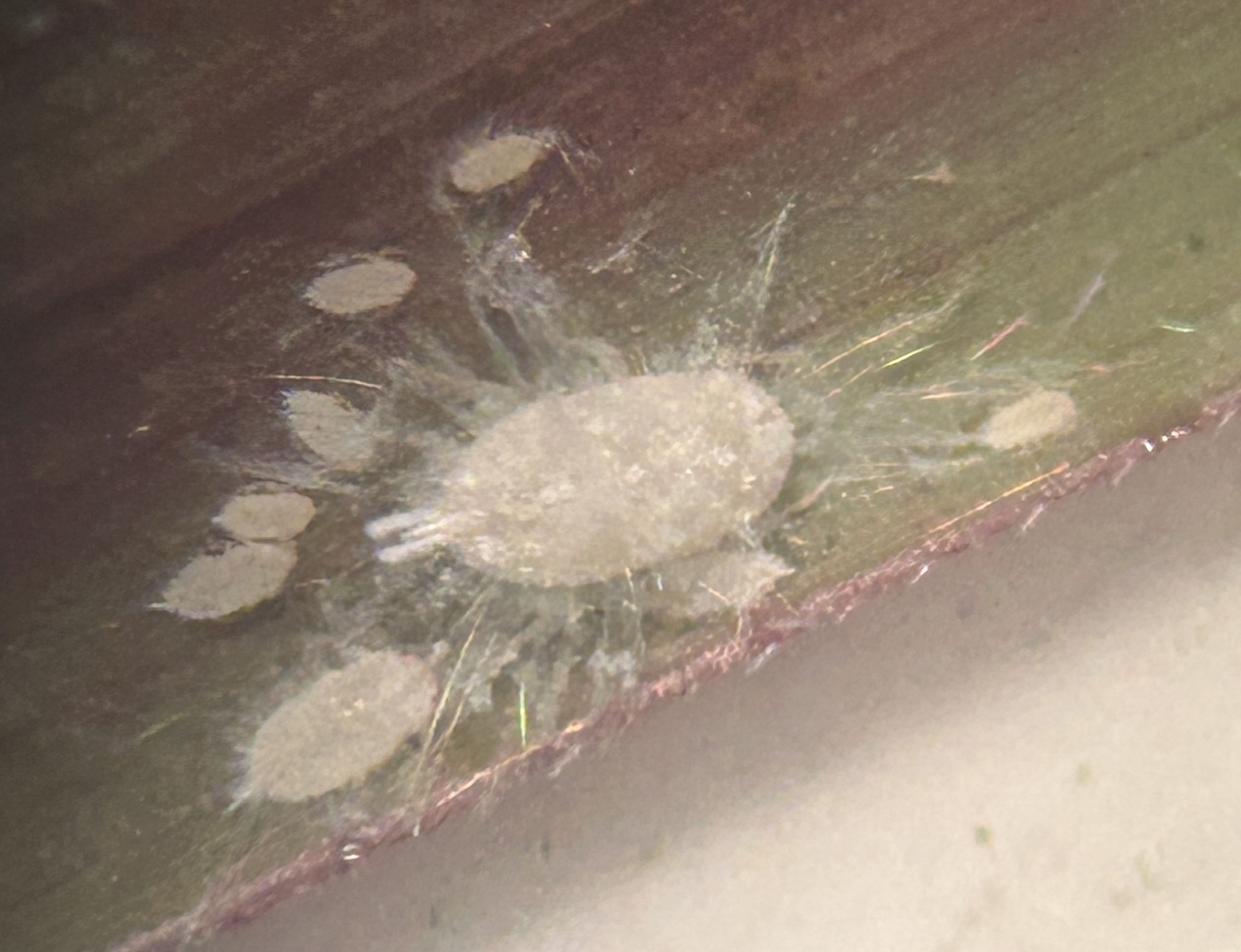
Keep in mind these insecticides are not currently labeled for use in pastures.
The test had Courier (13.6 oz), Portal (16 oz) and Sivanto Prime (4 and 6 oz). The results of this test were disappointing as none of the insecticides provided control of the mealybug at 14 days after treatment. (Results at bottom of page)
Summary of insect control trials for control of mealybugs in pastures: I have sprayed 5 tests on bermudagrass, gordo bluestem, and medio bluestem. Two of the five sites have shown positive results with one or more insecticides. The first showed reduced infestation but no grass response and another showed grass response to several insecticides. The other three insecticide trials have not shown insecticides to benefit grass growth.
As a result of these studies, I do not recommend treating pastures with insecticides to control the mealybugs. I recognize we want to do something, but so far, I have not seen any consistent results from insecticide use.
If you plan on spraying anything to control the mealybug, I encourage you to leave a marked, untreated strip in the middle of the field to see how grass growth is affected by the treatment.
It is likely that the long term management of this pest will be to conserve the beneficial insects that prey and reproduce on the mealybugs.
Contact me with questions or comments:
Stephen Biles email: biles-sp@tamu.edu or text: 361-920-1138
| Table 1. Mealybugs counted on 10 plants in various insecticide treated plots 14 days after treatment. (8/29/2025) | |||||
| # /10 plants | |||||
| Treatment | Rate | 14 DA-A | |||
| 1 | Sivanto Prime | 4 | oz/a | 17.3 | NS |
| 2 | Sivanto Prime | 6 | oz/a | 18.5 | NS |
| 3 | Portal | 16 | oz/a | 13.5 | NS |
| 4 | Courier | 13.6 | oz/a | 15.8 | NS |
| 5 | Untreated Check | 22.3 | NS | ||
| Tukey’s HSD P=.05 | 19.64 | ||||
| Standard Deviation | 8.71 | ||||
| CV | 49.93 | ||||
| Treatment Prob(F) | 0.6947 | ||||


