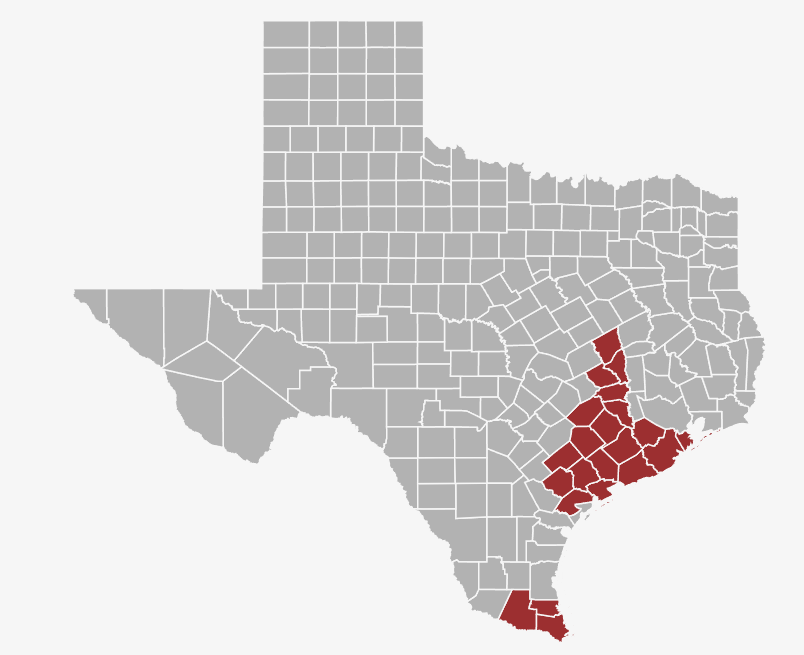
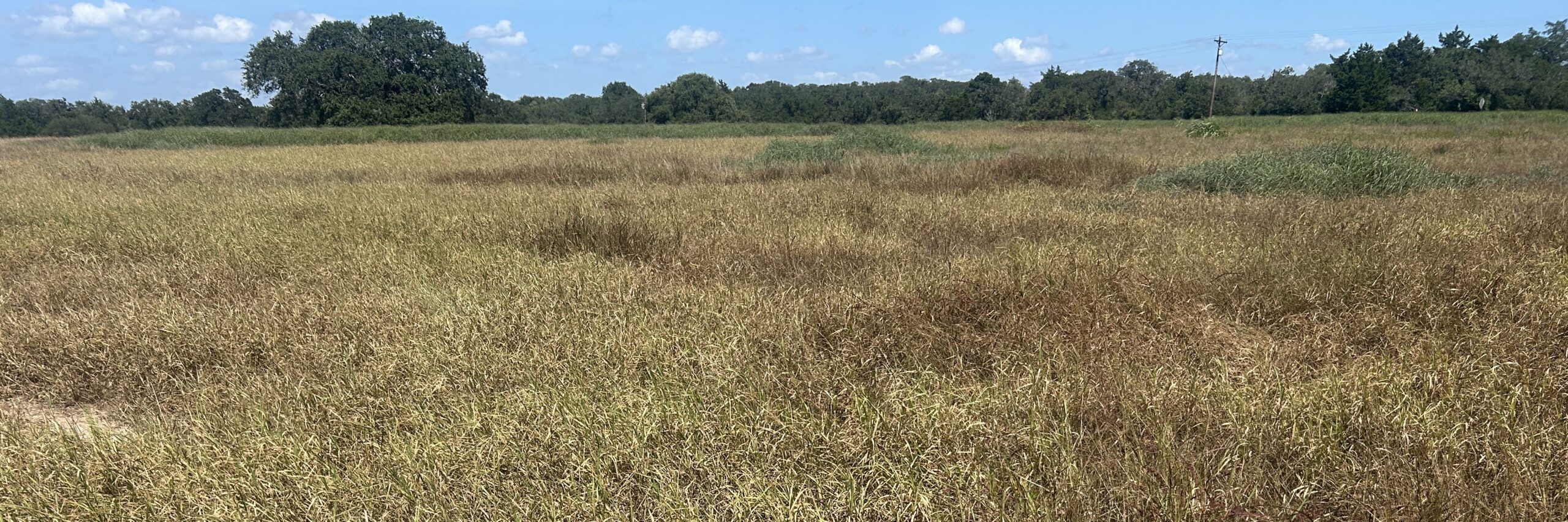
 Since mid-April, a pasture mealybug has been reported from Cameron County to Robertson County and as far east as Galveston County. It has been found to be damaging many different grass species including Bermudagrass, Bahia grass, Johnsongrass, Haygrazer (Sorghum-Sudan) grass, several bluestem species, and St. Augustine turfgrass.
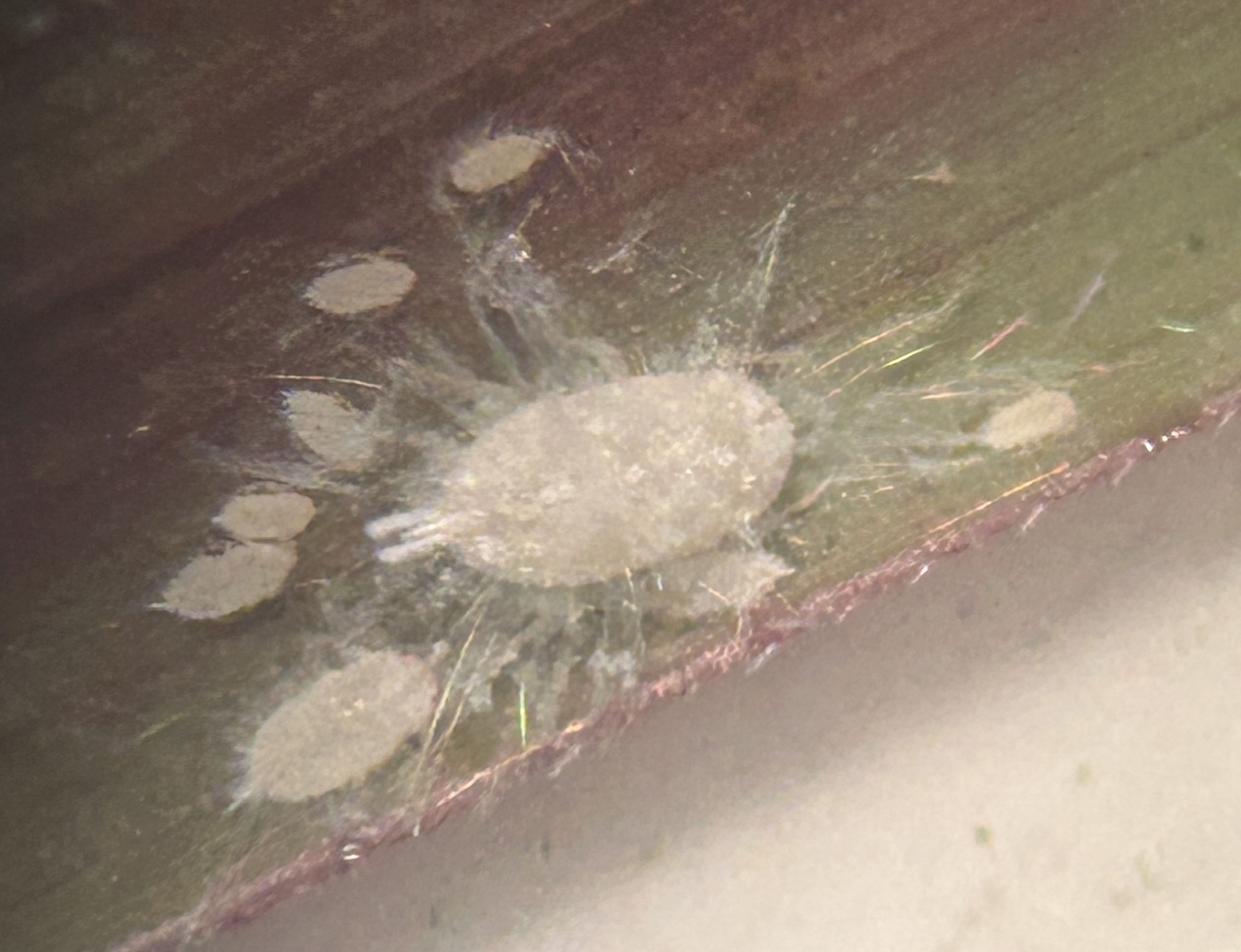 The USDA identified our samples of mealybugs found in pastures and roadsides as the species Heliococcus summervillei. This mealybug is an insect pest known to damage pasture grasses in Australia, causing what they call “pasture dieback.”
Texas A&M AgriLife Extension Service has released a new fact sheet to help forage producers and ranchers identify and monitor the pasture mealybug, an invasive pest recently confirmed in multiple Texas counties.
Identification
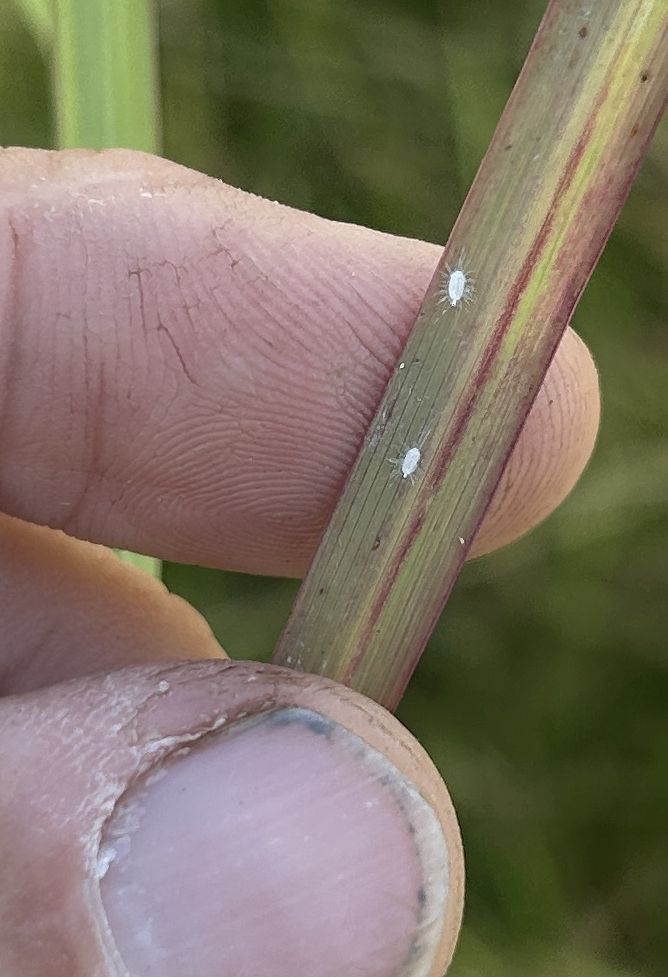
Adult female mealybugs are 2-5 mm long and oval with a posterior short anal tube. The insect body is usually covered with a waxy coat, giving them a white “mealy” appearance. Older pasture mealybugs have fine hair extending out to all sides. The nymphs are quite small (less than 1 mm in length) and require a magnifier to be seen. Nymphs are the damaging stage of the pest. Adults do not feed on the grass.
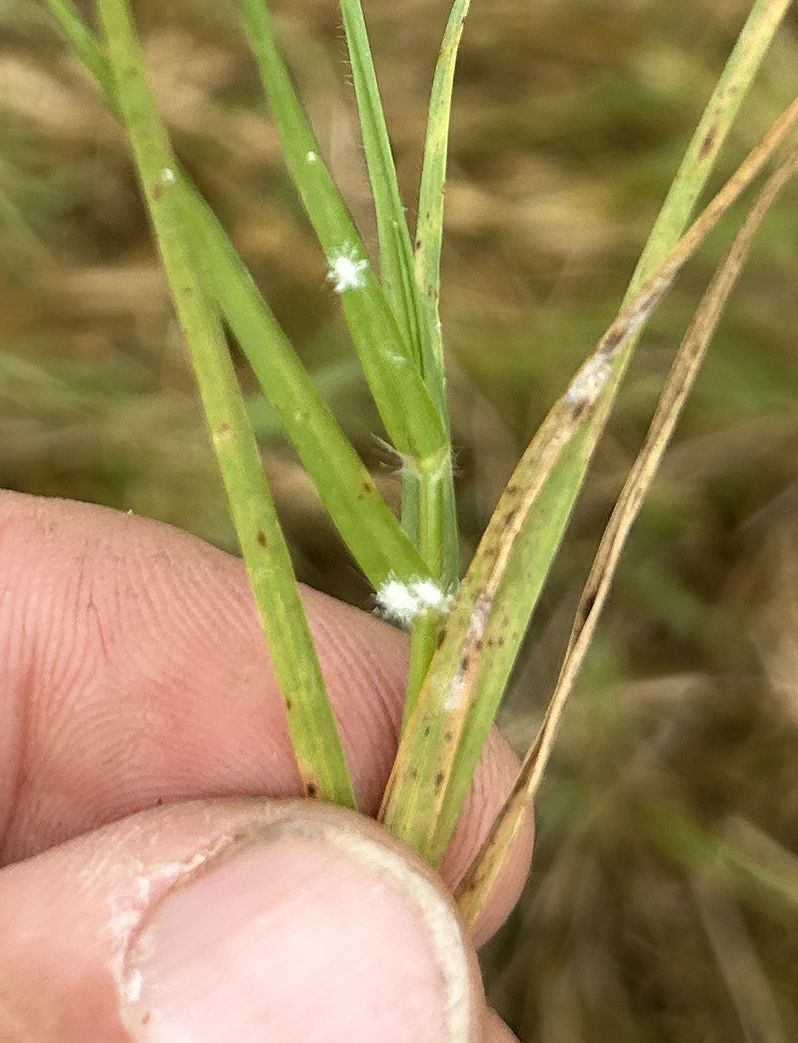 The pasture mealybug is mobile in all life stages. It may be found either in larger groups or individually on leaves. Females leave the plant after mating and might be found at or below the soil surface or under field debris, such as dried cow manure, where it will produce its offspring. The females overwinter in soil, so heavy wintertime rainfall could adversely affect mealybugs and reduce their population in the field.
Damage and Symptoms
The severity of damage varies widely and may be dependent on many factors including grass species, growing conditions, growth stage when feeding began, and rainfall patterns. Some pastures have minimal damage and recover quickly while in other pastures, much of the grass may die.
Mealybug symptoms can show up within a week of infestation, but it may take longer for the grass to show signs of feeding. The early plant symptomology of grass affected by mealybug feeding is yellowing, followed by purpling or reddening of the leaves. Plants may look stunted and show drought stress even after a rainfall event. These symptoms are first observed in older leaves starting from the tip and moving down the leaf blade. As few as one mealybug per plant can cause leaf reddening.
Mealybug Movement
 Pasture mealybugs can move naturally by wind and by animal movement. The movement of livestock and machinery can also be a method of movement between fields. Ensure all farm equipment traveling between fields is not carrying pasture mealybugs. The spread of mealybugs in hay bales has not been confirmed, but it is highly suspected.
Mealybug Management
No currently labeled insecticides are effective at controlling the pasture mealybug. The results from insecticide trials conducted this year have been inconsistent. There is still work needed for evaluating insecticides.
Biological control will be an important method of controlling the mealybugs. Beneficial insects such as lady beetles and parasitoids may provide the best control. As such, it is important to use insecticides that target specific pest species and not broad-spectrum insecticides such as pyrethroids.
Other management tactics that have been discussed include grazing or cutting infested pastures, cultivation, resistant forages, and burning. These tactics have not been studied in Texas, so their effectiveness is unknown.
Pasture Scouting
Monitoring pastures in the spring for mealybug emergence will be important if management is possible. Starting when the grass begins to grow, inspect stems and leaves for small, early instar mealybugs. These young mealybugs are very small and not necessarily white like the older mealybugs. We have not developed an economic threshold for the pasture mealybug.
For more information follow this link: https://agrilifeextension.tamu.edu/pasture-mealybug/
Research/Extension Opportunities
It is important for us to know where this mealybug is being found. Below is a map of counties where the mealybug has been reported. If you find pasture mealybugs in your pastures, please contact Stephen Biles (biles-sp@tamu.edu).