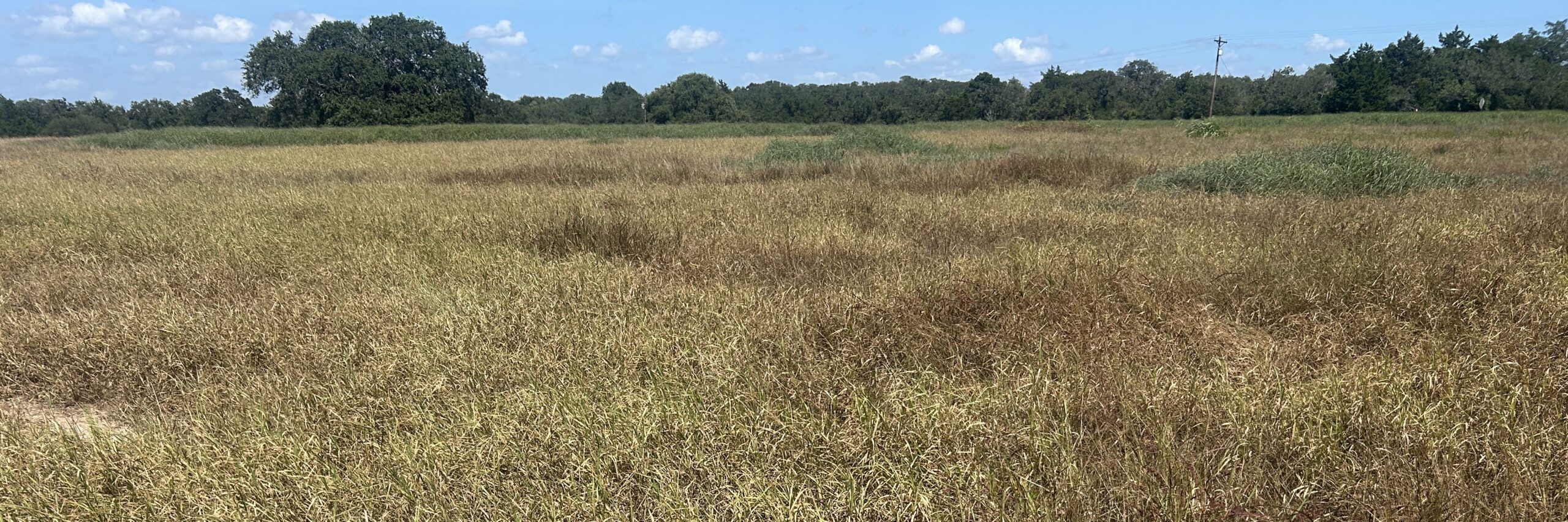
 Many pastures and hayfields are experiencing an unusual insect problem. These fields have areas of various size that are red to brown and look like some or all of the grass is dead or dying.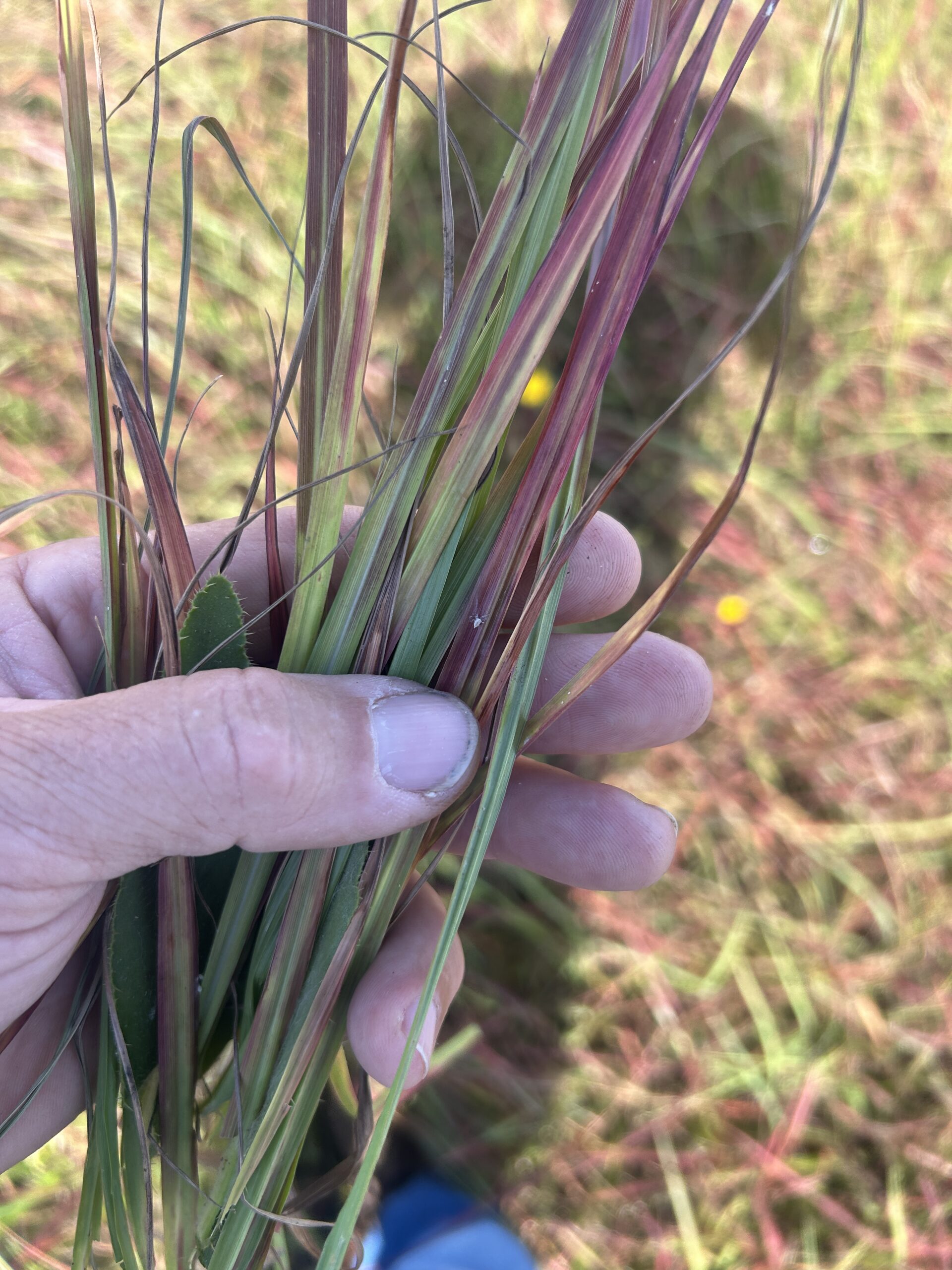
On July 22, we visited several Bermudagrass hayfields in Victoria County responding to grower calls. The worst of these fields was entirely brown and desiccated. We have since, visited many more pastures and hayfields with a wide range of severity.
A mealybug has been found from the Rio Grande Valley to north of Bryan, TX and east to Sealy, TX. The bug has been found on many different grasses including bermudagrass, bahiagrass, johnsongrass and several different bluestem species.
Similar issues have occurred in the Rio Grande Valley as recent as 2022. From discussions with Danielle Sekula, the Extension Agent – IPM in Weslaco, the mealybug shows up in April and May but damage is not always noticeable until mid to late summer. Early plant symptomology is yellowing or reddening of the leaves on which the mealybug is feeding.
We do not yet have this mealybug identified to species.
Insect Description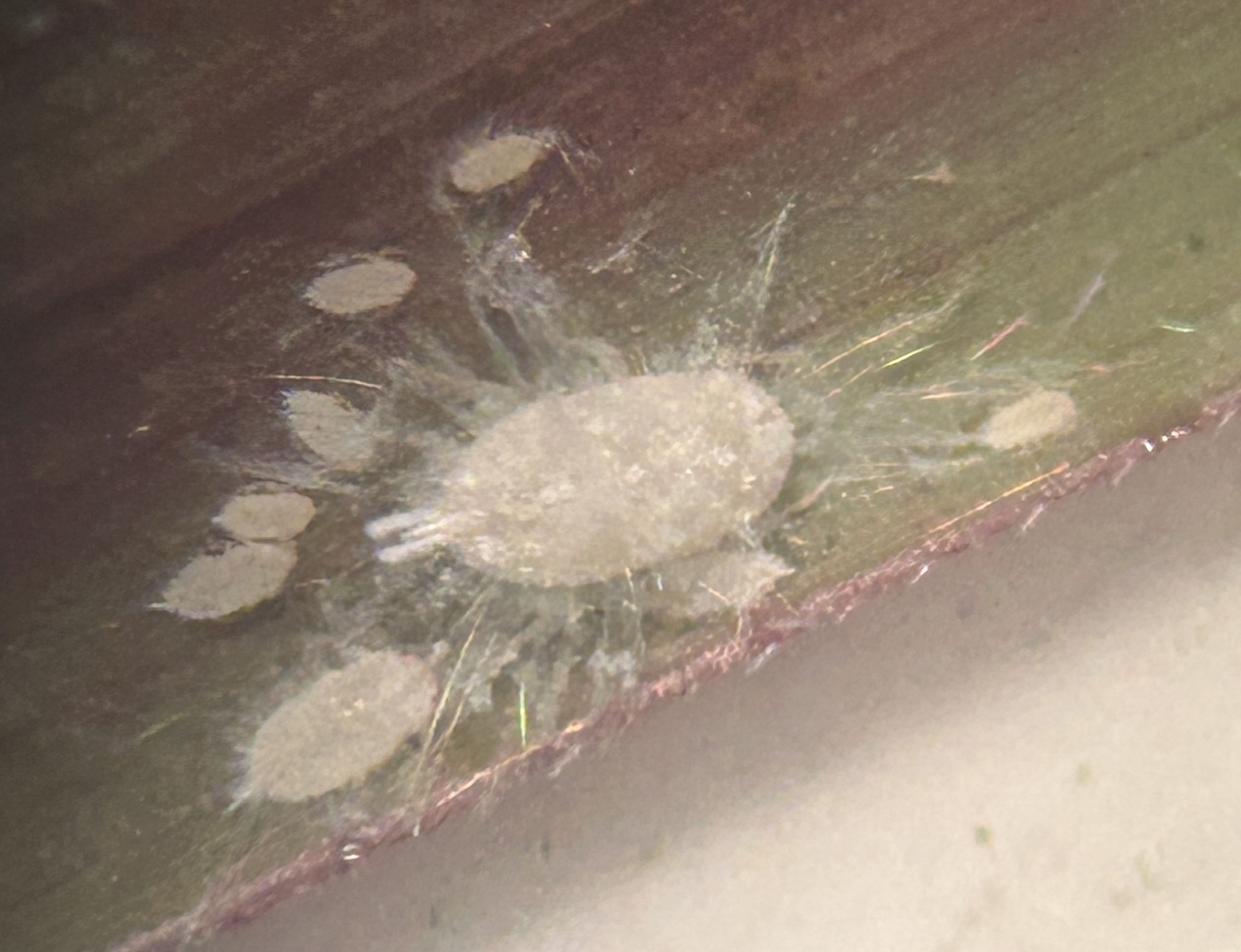
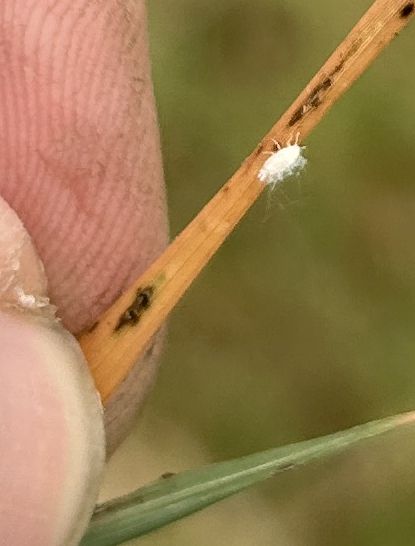
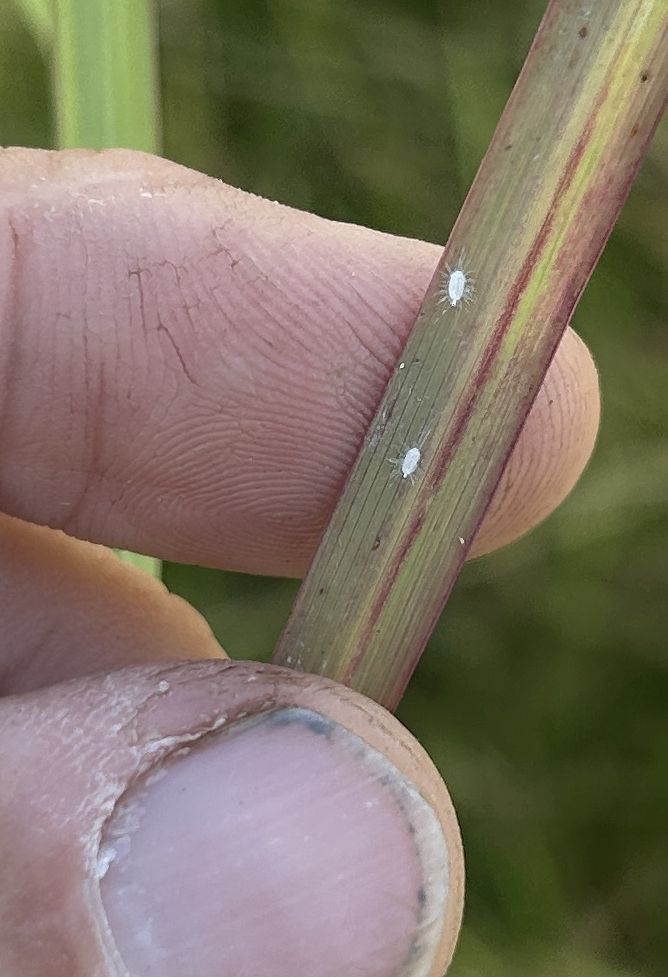
The adult mealybugs are 2-3 mm long and oval with a short anal tube at the rear. The body of older mealybugs has fine hairs about the length of the width of the body. These hairs extend out to all sides. Nymphs are very small, first instars are less than 1 mm in length.
The mealybugs are not necessarily gregarious and may be found individually on leaves or in larger groups of 20-30. As few as one per plant can cause leaf damage.
The mealybugs tend to be on the underside of the leaves showing damage, often toward the base of the leaf.
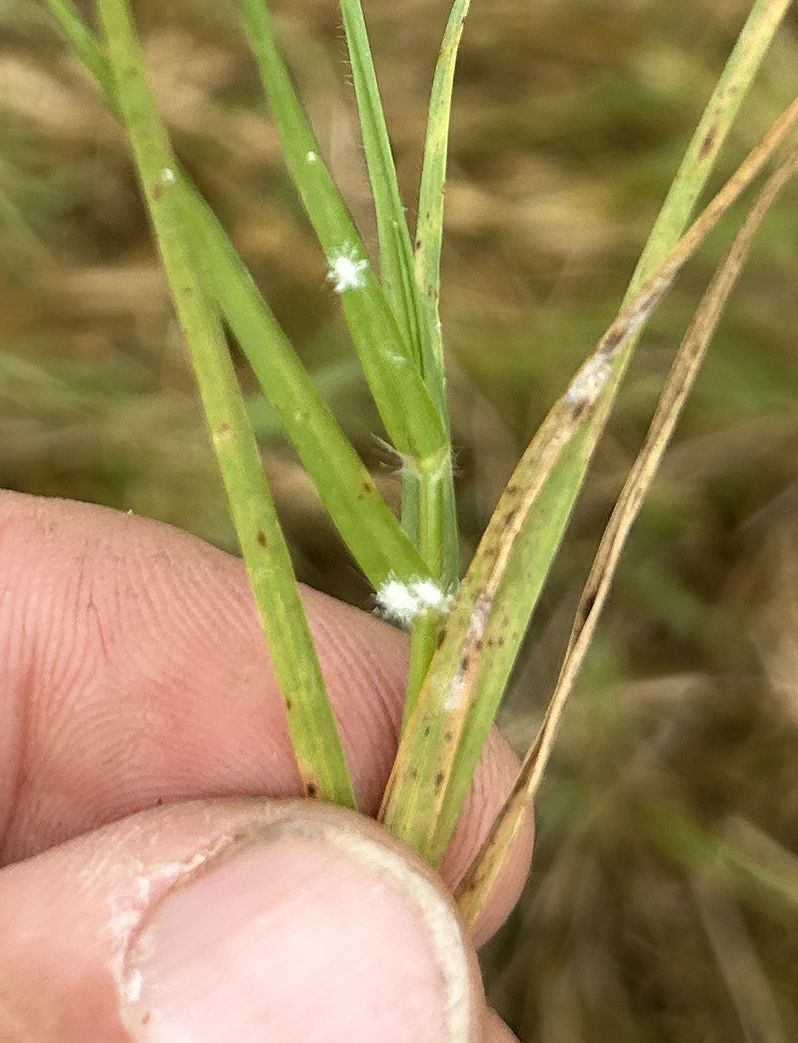 They are mobile in all life stages and will move slowly when prodded.
Insect samples have been sent to experts for identification and more information will be available once the insect species is determined.
Management
Natural control of the mealybug through beneficial insects such as parasitic wasps is common but this seems to not be working in these fields. We have no economic threshold for this pest.
 Insecticides likely to provide control in pastures include Sivanto and Sefina. Sivanto is only labeled for grass forage and hay in Oregon and Idaho. Sivanto is not labeled for use in pastures in Texas.
Sefina is labeled for aphid and leafhopper control in grass forage and hay. Flupyradifurone, the active ingredient in Sivanto, has been found to control the rhodesgrass mealybug in turfgrass. I expect Sefina will work but we need to conduct field trials to verify control. Other insecticides are being evaluated.
We sprayed an insecticide control test and will provide results after evaluations are made. The test included Sivanto, Mustang Maxx, Carbaryl, and Lannate.
Pyrethroid insecticides have grass mealybugs on the label, but I would not expect them to provide adequate control. The broad spectrum insecticides may provide a quick knockdown but will also reduce beneficial insects leading to a pest resurgence.
 Research/Extension Opportunities
It is important for us to know where this mealybug is being found. If you find fields with this mealybug, you can contact Stephen Biles (biles-sp@tamu.edu, 361-920-1138).
We are also looking for locations to conduct field projects to learn more about managing this pest.


