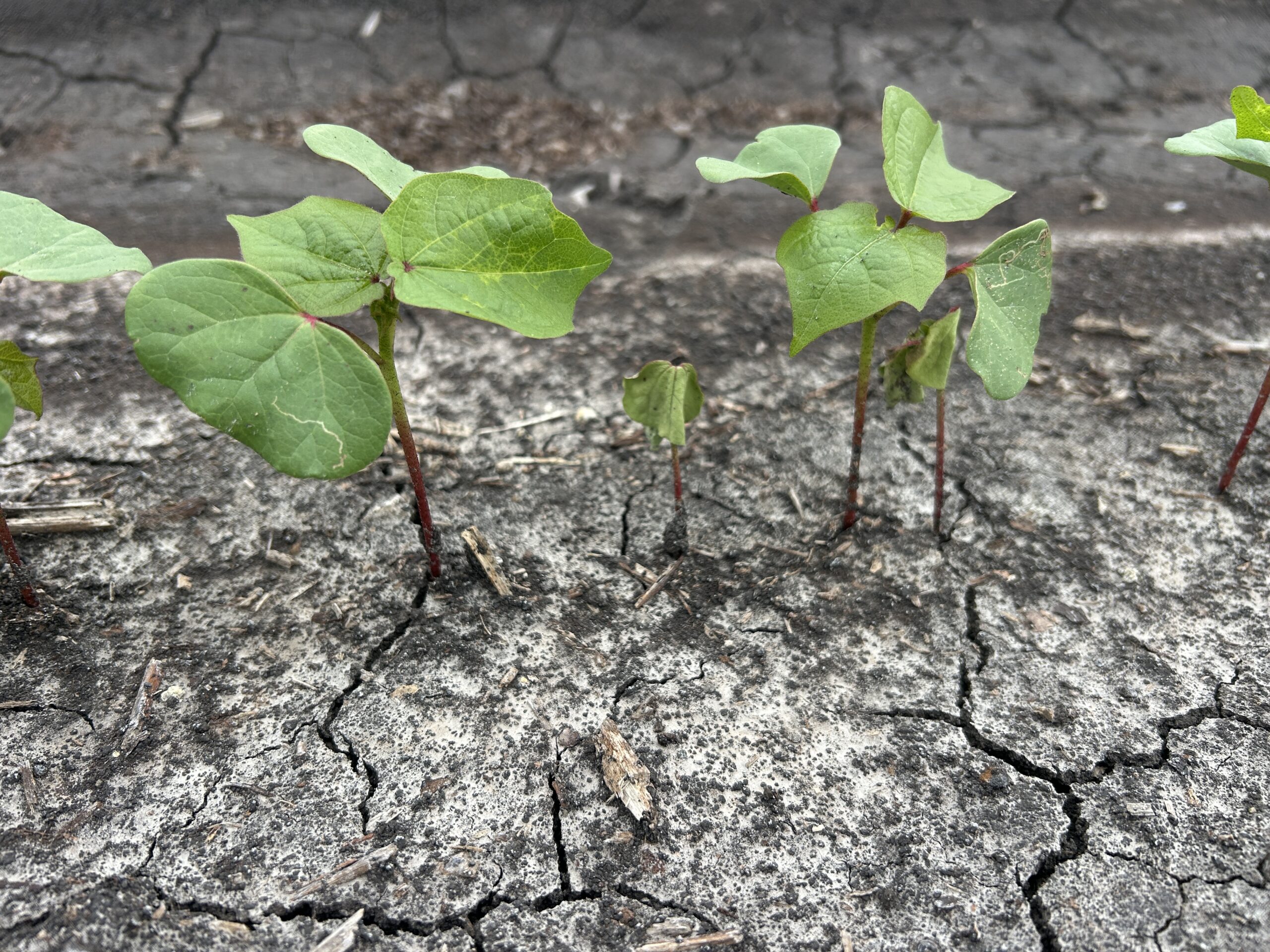
 Cotton Maturity ranges from seedlings to 12-14 node squaring cotton. In some cases, these are in the same field. My cotton on the research farm in Port Lavaca has two emergence dates with older plants having 2 leaves and newly emerging plants coming up daily.
I have noticed seedling disease being fairly common in some fields. Notice two of the plants in the above picture are dying. This demonstrated the importance of seed applied fungicides and variety choice.
Cotton should be scouted for thrips through the 4-5 leaf stage. Economic loss can occur if plants have 2 or more thrips per leaf. This being said, I have not found concerning thrips populations in the past week but I have found fields with noticeable wind damage. Wind and Thrips damage often look similar, with plants having deformed or blackened leaves, and loss of the plant terminal. In the current warm climate with adequate soil moisture, I don’t expect thrips to cause significant plant damage.
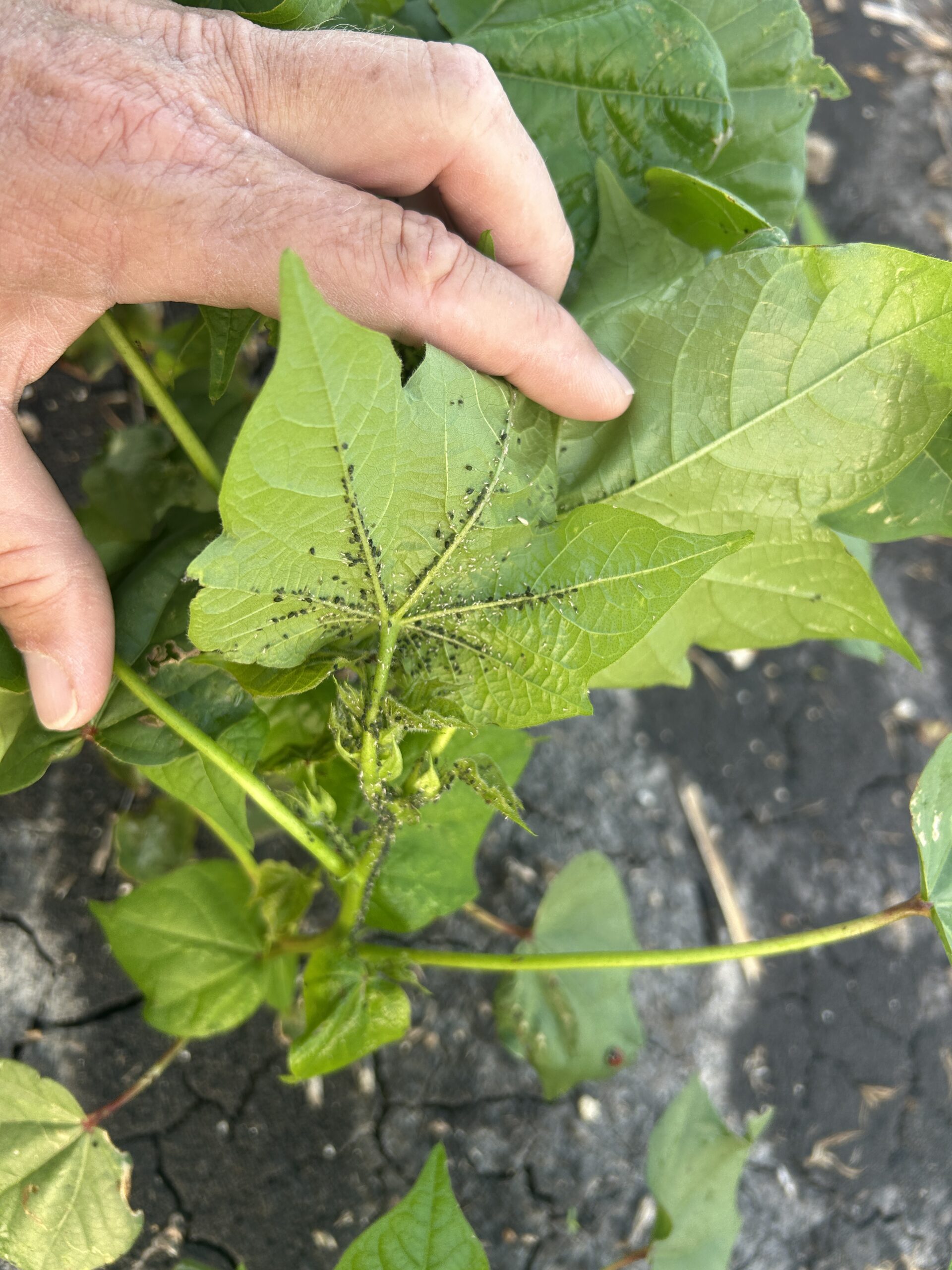 I am finding aphids in small pockets but I am not too worried about them. Early season aphids don’t tend to hang around long enough to cause much damage. In the current field conditions, I expect the plants will be able to grow through aphid populations under 50-100 per leaf. It is important to average the number of aphids across the field. Many of the areas with aphid-infested plants are pretty small and it would not be profitable to spray a whole field for aphids that are on less than 5-10% of the plants.
The oldest cotton has 10-14 nodes and is squaring which means cotton fleahoppers can be a problem. My economic threshold of cotton fleahoppers is 10% infested plants or 10 fleahoppers per 100 plants. The cotton fleahopper will cause more yield loss to cotton with lower yield potential. Thus, you may want to use a lower treatment threshold in areas expecting less than 1.5 bales than in fields with a 2+ bale yield potential.


