 Most of the cotton fields in the Mid-Coast are squaring and the Cotton Fleahopper is the primary insect pest of squaring cotton.
Early this week, we started finding more adult fleahoppers in cotton fields. Some of these fields had 6 to 8 adult fleahoppers in 20 plants (30-40 per 100 plants). This is well above my treatment threshold of 10 per 100 plants.
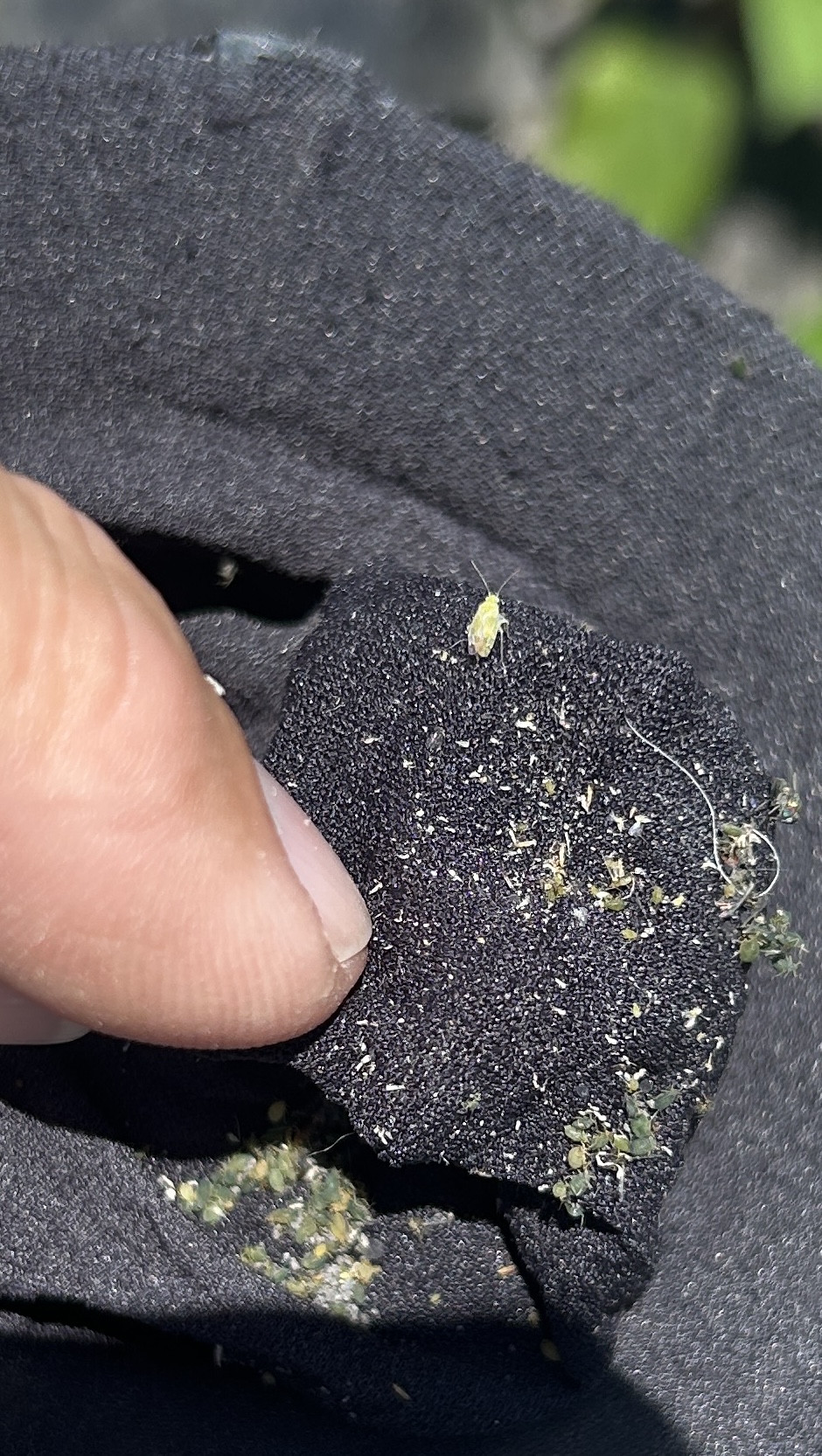
Cotton fleahopper adult on vacuum sampler.
Interestingly enough, adjacent fields had much fewer cotton fleahoppers. This difference between fields demonstrates the importance of scouting each field and making treatment decisions on a field by field basis.
Last year, we changed our cotton fleahopper scouting procedures and now use a modified hand-held battery-powered leaf vacuum, with the addition of a black stocking (Women’s Sheer Knee-High Pantyhose) placed over the aspiration tube or air intake to collect insect samples. Using the vacuum to sample 20 cotton plant terminals at a time, scouting is more accurate between scouts and the time required to check a field is significantly reduced.
In addition to cotton fleahoppers, we continue to find aphids in most fields. The aphids tend to be found in clumps on the plants in 1-3 feet of row. Some plants show signs of aphid feeding by having leaves cupped downward. This is a good indicator to check these plants when scouting through a field.
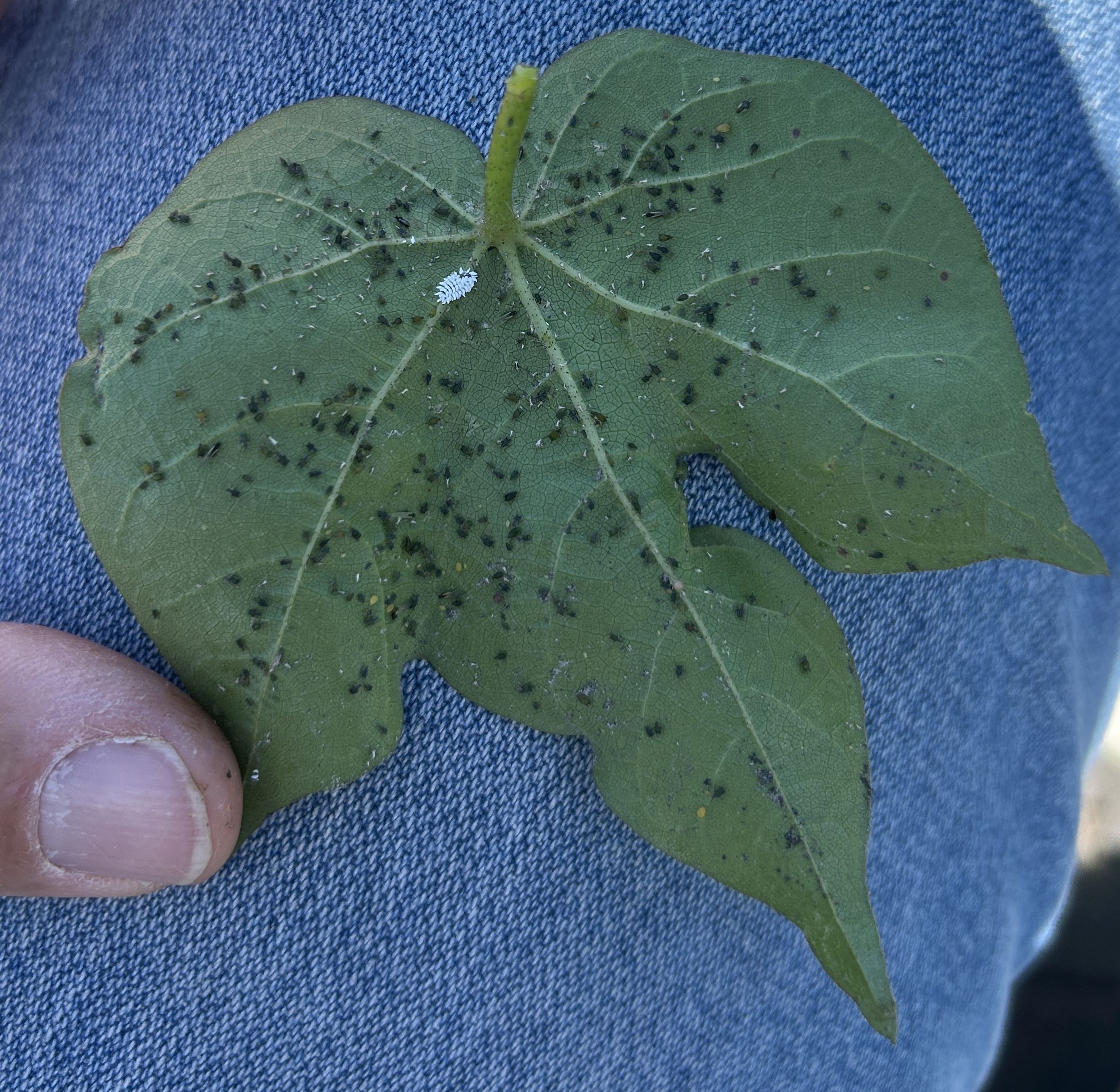
Cotton Aphids and Scymnus Lady Beetle Larvae
While the aphids are in higher numbers than usual, treating for aphids in pre-bloom cotton has not often shown to be profitable. One additional thought is that many of the insecticide choices you have for cotton fleahoppers will also control or suppress the aphids.
In fields with both aphids and cotton fleahoppers, consider lowering the fleahopper threshold a little and treat the field to control both the fleahoppers and aphids.


