 We have found a few corn leafhoppers in Victoria corn fields. These have been much more difficult to find than last year. I suggest you listen to the update below to learn how Dr Kerns is finding them in corn fields in the Brazos valley.
Most of the corn in the mid-coast is in dent stage and well past the damage window of the corn stunt disease transmitted by the insect.
A Corn Leafhoppers update from Dr David Kerns is available here: https://soundcloud.com/user-766365640-259391064/corn-leafhopper-update-6-18?utm_source=clipboard&utm_medium=text&utm_campaign=social_sharing
You can get text message alerts for these updates here: https://www.texasinsects.org/south-texas.html
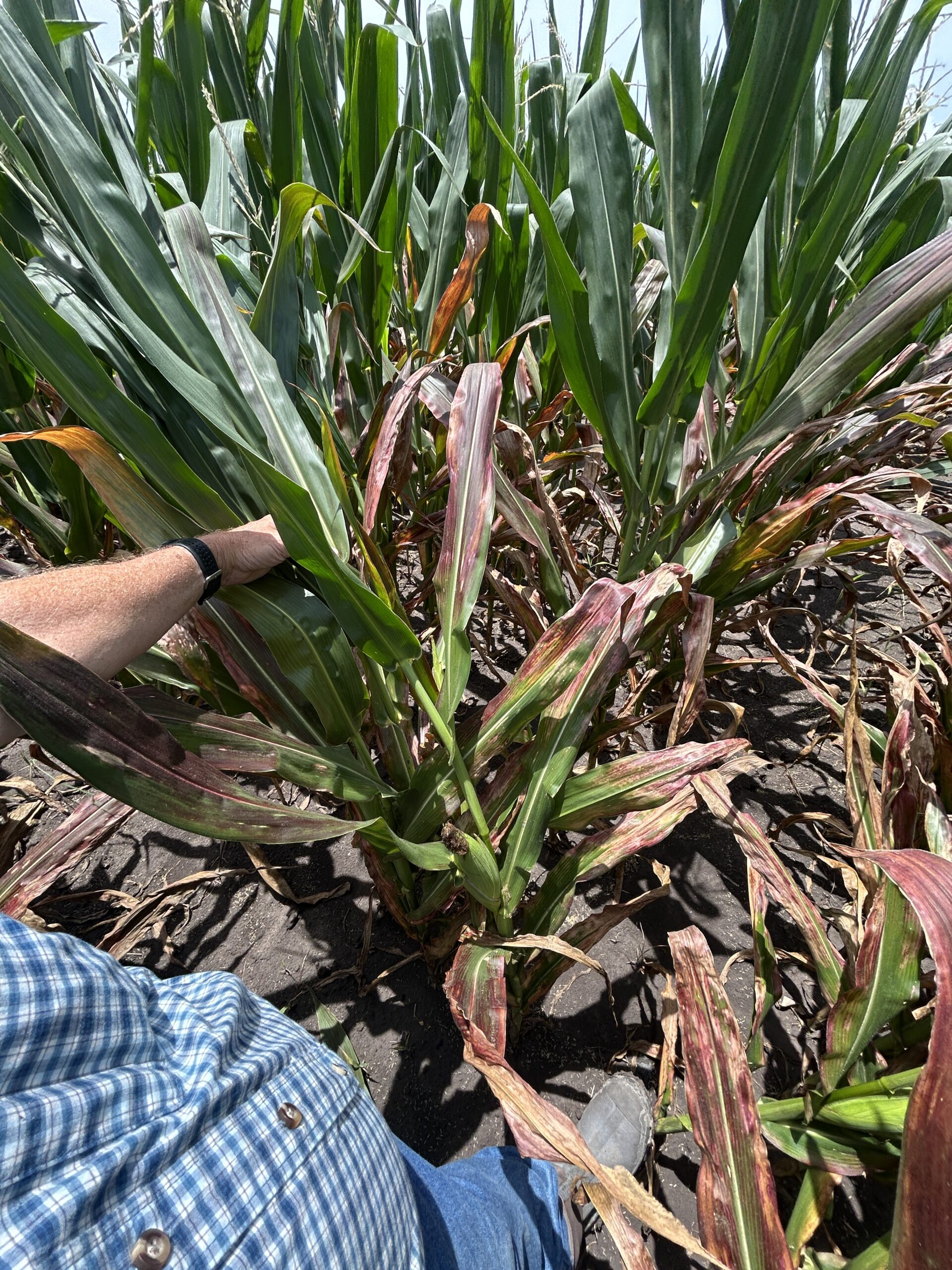 AgriLife Extension Entomology has published a fact sheet on the corn leafhopper and the stunt disease. The bulletin can be found here: https://agrilife.org/mid-coast-ipm/files/2024/10/ENTO-PU-229-Corn-Leafhopper-and-the-Red-Stunt-Disease-Complex.pdf
For U.S. corn growers, we suggest the following.
1. Plant resistant corn hybrids. Currently, we do not have this option because we do not know which commercial hybrids in the U.S. offer resistance. If the corn leafhopper problems persist, there will be a need to screen corn hybrids for corn leafhopper and red stunt resistance.
2. Volunteer corn management. In areas that may not experience killing freezes, it is essential to eliminate volunteer corn. Volunteer corn serves as a green bridge host for the corn leafhopper and as a reservoir for the causal agents of disease.
3. Plant as early as possible. Early-planted corn is not affected as much by corn leafhoppers and its diseases. It is simply a matter of getting the corn beyond V8 before the leafhoppers infest it.
4. Use a high seed treatment rate of insecticide. This is especially important for late-planted or second crop corn. Seed treatments containing Cruiser® Corn 1250 or Poncho® 1250 should provide protection from corn leafhoppers until V3 through V8. In Brazil and Argentina, corn leafhoppers have resistance to these insecticides. Resistance in the U.S. is unknown, but is unlikely.


