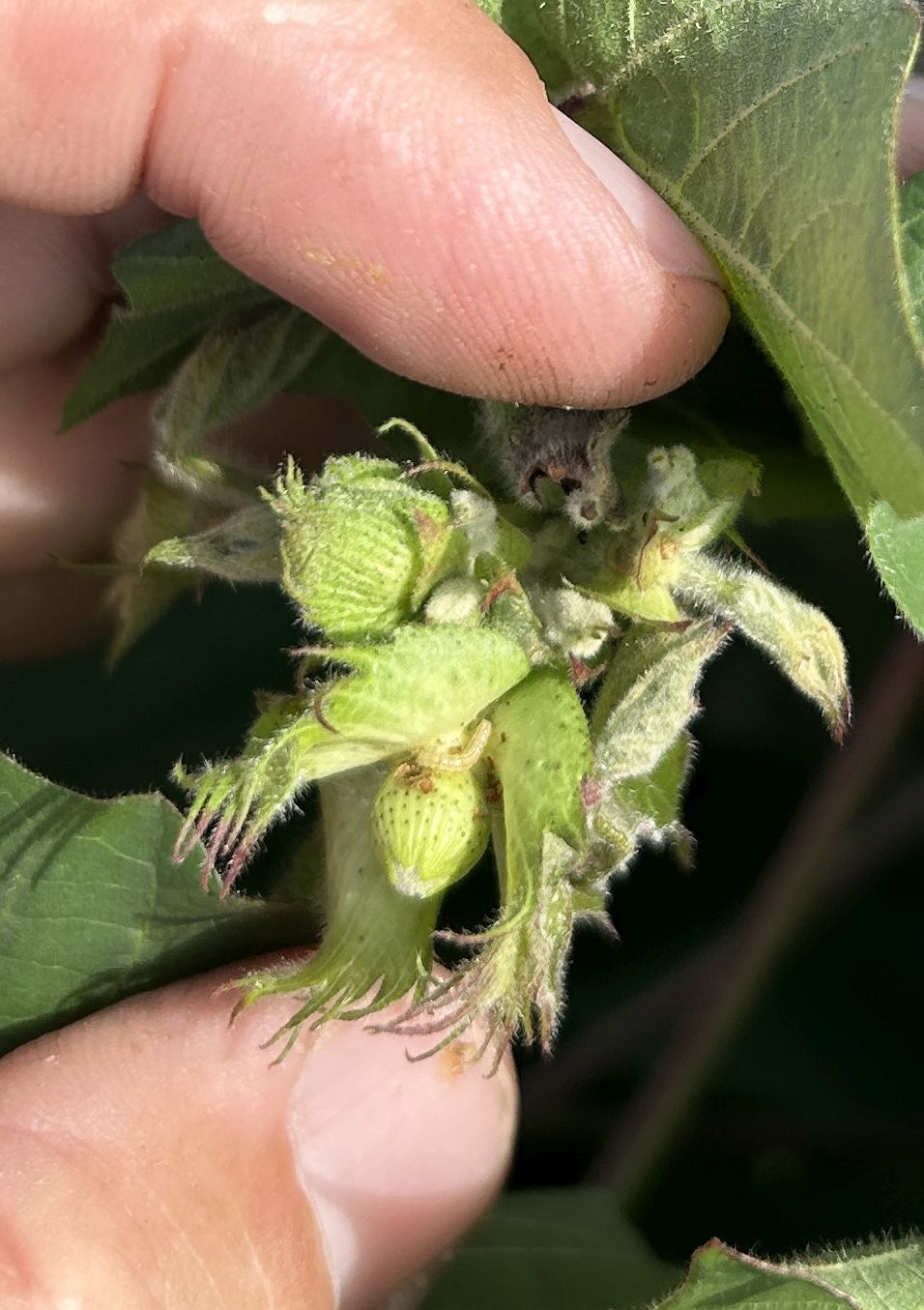
Bollworm on Squares. Photo by S. Biles
Today we are finding cotton bollworms in some cotton fields of Calhoun County. The cotton fields with the worms are planted with 2-gene Bt cotton varieties.
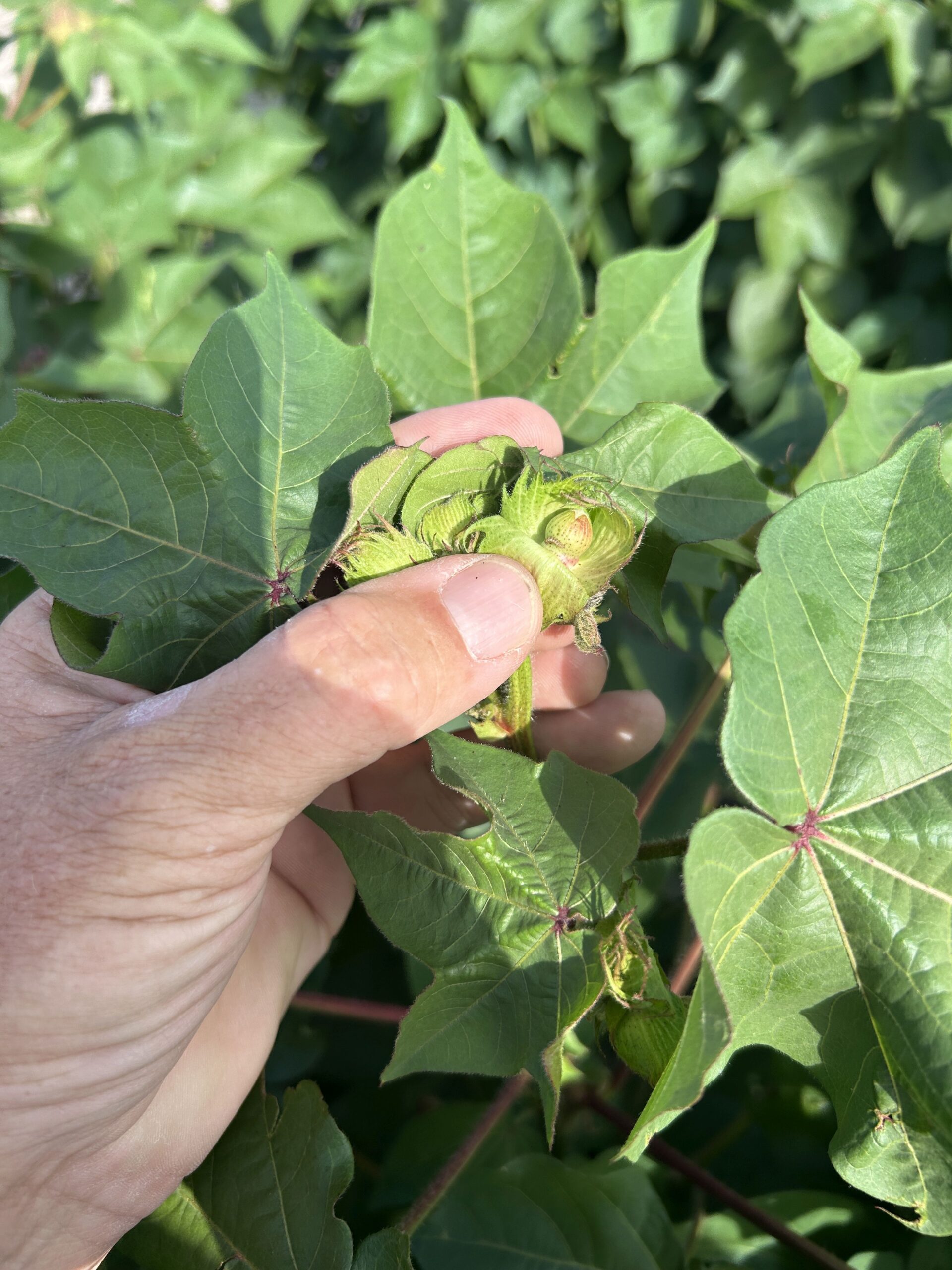
Bollworm on Square. Photo by S. Biles
We have a Bt overspray test containing 4 Bt varieties and a non-Bt variety. We plan to count worms and worm feeding damage in this test tomorrow and will update this post when the data is analyzed.
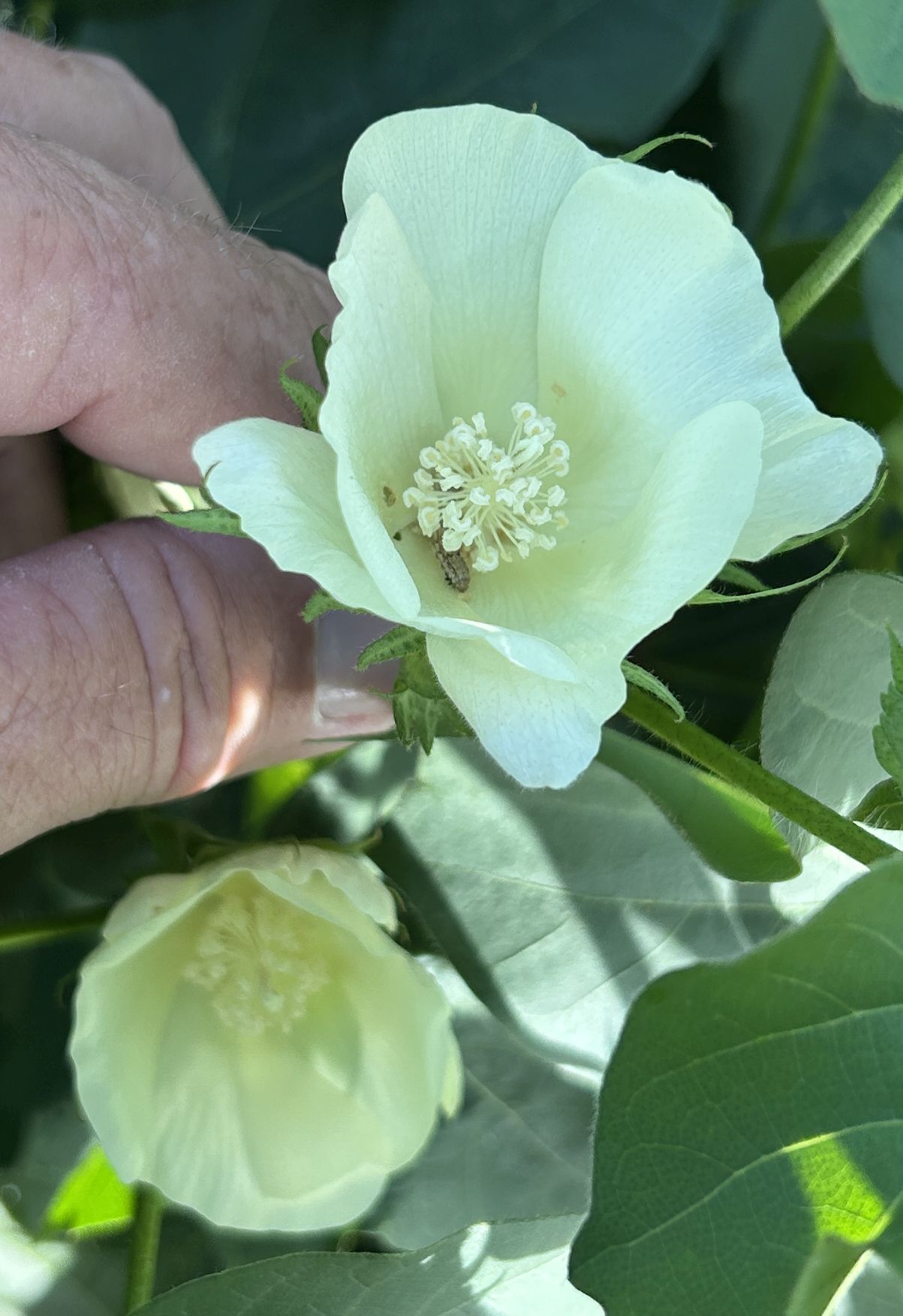
Bollworm in Bloom. Photo by S. Biles
When scouting cotton for worms it is important to check plant terminals, squares, blooms and bolls for worm feeding.
The published Economic Threshold for worms in blooming cotton is based on feeding damage. Treat when feeding damage is found on 6% or more of the squares, blooms, and bolls.
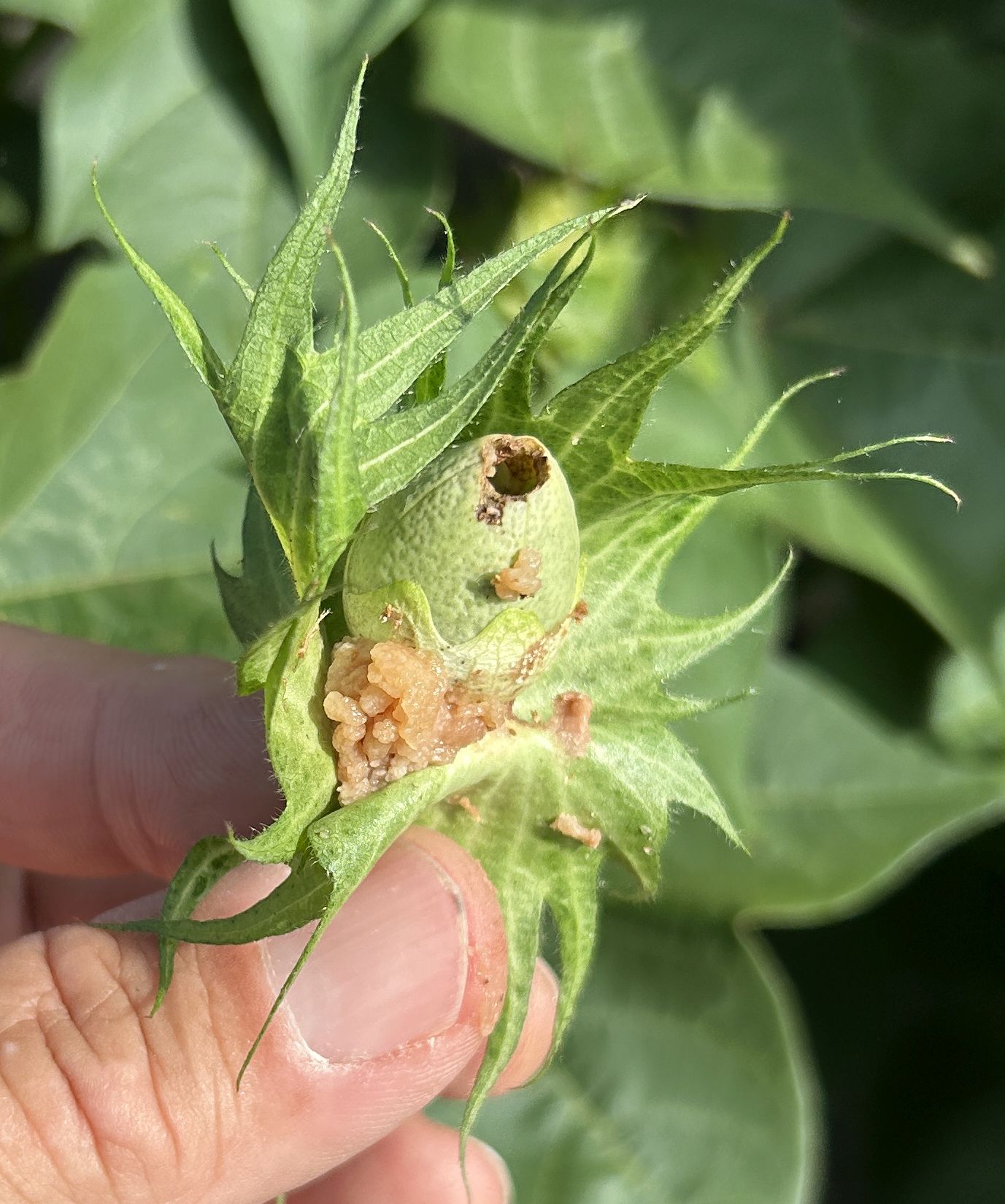
Bollworm damage in Cotton Boll. Photo bu S. Biles
While most of the cotton is Bt cotton, I suggest you also check for bollworms. This is especially important in cotton without the VIP gene. Search the entire plant for bollworm eggs, larvae and injury. A proper sample includes squares, white blooms, pink blooms, bloom tags, and bolls. Reduce the scouting intervals to 3 to 4 days during periods of increasing bollworm egg- laying, especially during peak bloom. The presence of eggs alone should not trigger treatment since hatching larvae must first feed on the cotton plant to receive a toxic dose.
More information on cotton bollworm management can be found here: https://cottonbugs.tamu.edu/fruit-feeding-pests/bollworm-and-tobacco-budworm/


