• Skip to primary navigation
  • Skip to main content
  • Skip to primary sidebar
  • Texas A&M Forest Service
  • Texas A&M Veterinary Medical Diagnostics Laboratory
  • Texas A&M AgriLife Extension Service
  • Texas A&M AgriLife Research
  • Texas A&M College of Agrculture and Life Sciences
West Texas Rangelands
West Texas RangelandsWe hope to provide a variety of science-based rangeland information and current research on prescribed fire, wildfires, brush management, and grazing management!
  • Menu
  • Home
  • About & Contact
  • Publications
    • Extension Publications
    • Refereed Journal Articles
    • Program Summaries
  • Events
  • Lunch N’ Learn
  • Infographics
    • Drought
    • Grazing
    • Herbicide
    • Prescribed Fire
    • Rangeland Plants
    • Wildfire
  • Range Resources
    • Published to Pasture
    • Range Concepts
  • Fire Resources
  • Sponsors
  • AgriLife Learn Online Courses

Fuel on the Ground: Managing Vegetation to Reduce Wildfire Risk 

January 8, 2026 by morgan.treadwell

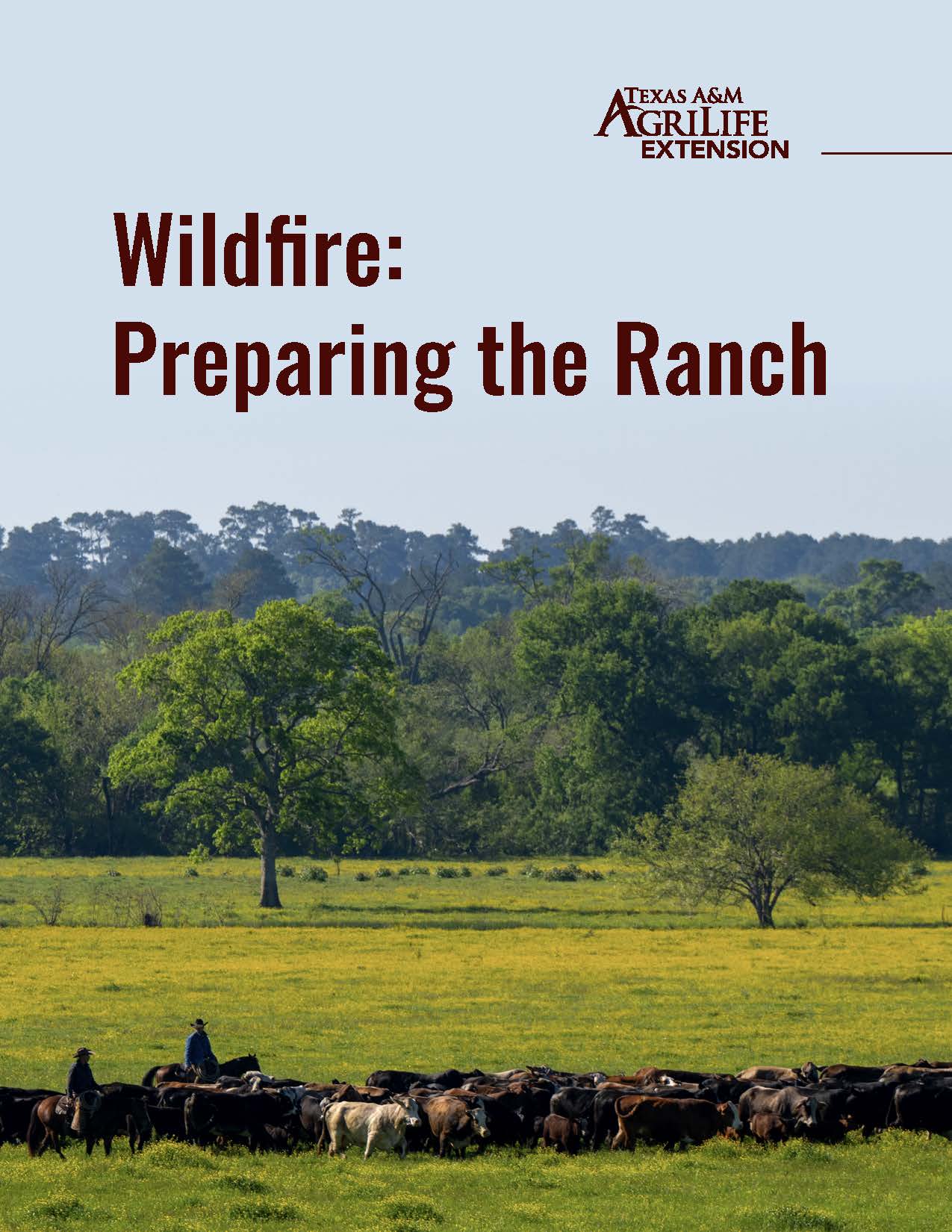
In West Texas, wildfire risk does not wait for summer. By January, grasses are dry, humidity is low, and wind events are common across open rangelands. These conditions make early preparation important. Taking steps now to manage fuel helps reduce how fast fire can move and improves safety when wildfire season approaches. 

What Are Fuel Loads? 

Fuel loads are the amount and arrangement of vegetation available to burn. Heavy fuel loads include thick grasses, dense brush, and dead plant material. These fuels dry out easily during drought or winter, making them more flammable. Reducing fuel loads helps slow fire spread and gives firefighters better chances to contain fires.  

Targeted Grazing to Reduce Fuel 

Targeted grazing uses livestock to reduce fine fuels like grasses and forbs. Cattle, goats, or sheep can be placed in specific areas to eat vegetation before wildfire season. This process lowers grass height and reduces the total fuel available. Research shows that targeted grazing can reduce flame height and fuel continuity, especially where herbaceous fuels are high and woody cover is low.  

Targeted grazing can also be used to form fuel breaks—strips of land with reduced vegetation. Fuel breaks slow fire spread and help protect key areas such as roads, fences, or infrastructure. Placing livestock to graze along these strips before fire season can improve their effectiveness.  

Infrastructure and Access 

Good infrastructure supports fuel management and wildfire response. Well-maintained roads and access points allow managers and fire crews to reach critical areas quickly. Roads also act as breaks in fuel continuity. Regularly clearing vegetation along fence lines, around water sources, and near buildings reduces fuel near structures and allows safer movement of equipment and personnel during a fire event.  

Integrated Fuel Management Fuel reduction works best when multiple tools are used together. In addition to targeted grazing, mechanical treatments, mowing, and prescribed burns may be appropriate on certain sites. Planning fuel management before wildfire season improves its success. Collaboration with local Extension services and wildfire professionals can help tailor strategies to specific rangeland conditions. 

For more information, please download Wildfire…Preparing the Ranch!
Filed Under: La Niña, Wildfire Tagged With: fuel mitigation, Rangeland, wildfire

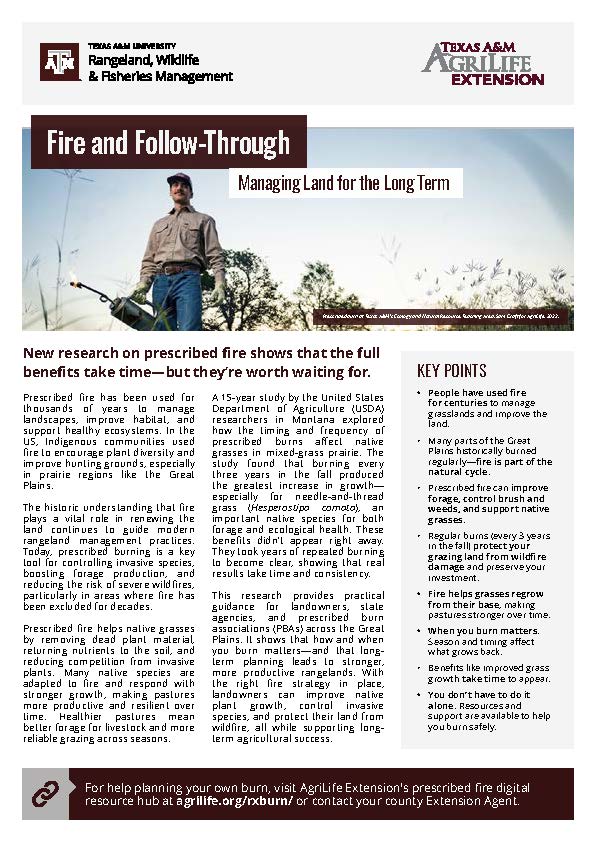
Fire and Follow-Through!

December 17, 2025 by morgan.treadwell

This amazing class at TAMU RWFM is focused on Communicating Natural Resources. It covers principles for effectively sharing natural resource science with diverse stakeholders, building essential skills for careers in rangeland, wildlife, and fisheries management. Topics include audience analysis, mixed-media presentations, and interpersonal communication tailored to natural resource contexts. Check out 2025 spring semester’s capstone project!


Filed Under: Conservation, Prescribed Burn Associations, Prescribed Burning, Uncategorized, Woody Encroachment Tagged With: Edwards Plateau Prescribed Burn Association, prescribed fire, Rangeland

Dry, Warm, Windy, and Fuel.

November 19, 2025 by morgan.treadwell

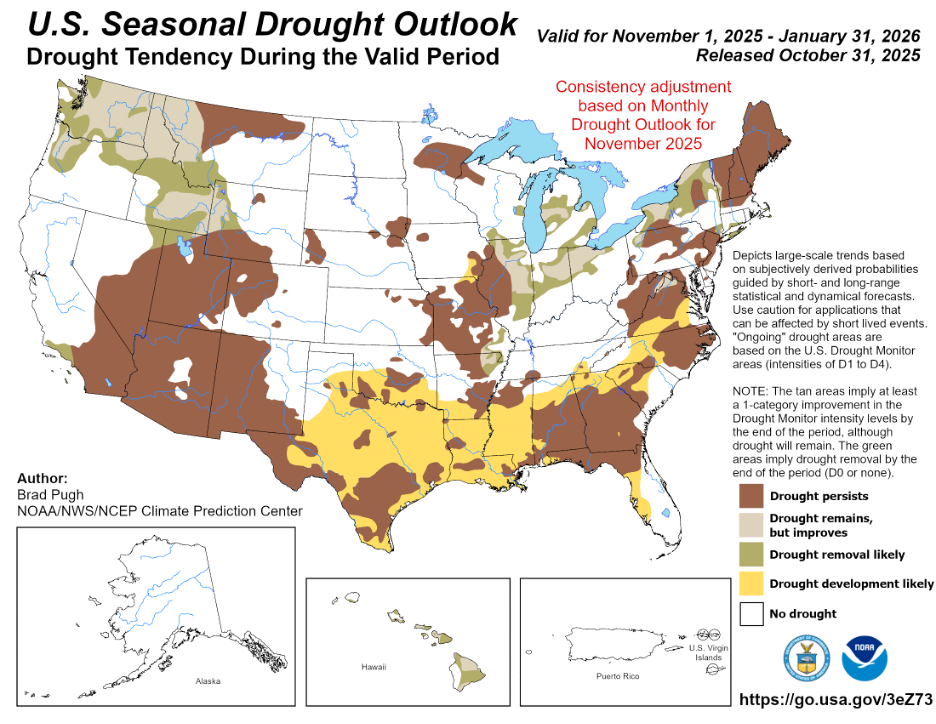
  • Drought conditions (D1–D4) increased to 33% of the state, up from 24% four weeks ago; statewide reservoir storage decreased to 73.9% full, down from 75.6% four weeks ago, about 6 percentage points below normal for this time of year.
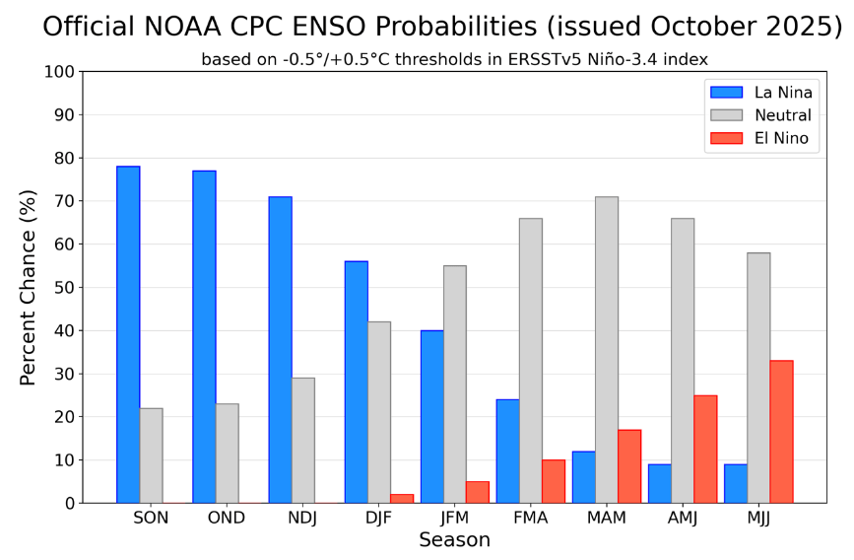
  • We are now a La Niña Advisory with a 55% chance of La Niña conditions continuing into the January-March season.
  • Most of the state is projected to be in drought over the next three months.

Isn’t it ironic that this last summer presented us with more than above average rainfall, yet not only is 33% of Texas in D1-D4 status, but our statewide reservoir storage is currently at 73.9%.  This becomes increasingly concerning as we watch La Niña take a firm hold with a 55% chance of La Niña conditions continuing into the January-March season.  Not only does this present challenging dormant season grazing management conditions, but wildfire will be at the top of rangeland manager’s concerns.

Bottom line, this winter will suck.  Get your game face on, dust off your drought plan, budget your numbers to see how late into winter/early spring your forage base can survive.  We will always remain optimistic, but we will also plan and prepare.  And with any rangeland management, we will remain adaptive holding strong to the grazing management and soil health principles guiding our practices and decisions.  For a comprehensive Wildfire Ready checklist, please click here and for our Preparing the Ranch publication click here.

Much appreciation to Robert Mace for his insight and wisdom in his outlook + water November 3, 2025 article found at: https://texaspluswater.wp.txstate.edu/.


Filed Under: Grazing Management, La Niña, Wildfire Tagged With: drought, Rangeland, wildfire

Why I Ranch…Dr. Jake Landers

July 11, 2018 by morgan.treadwell

Dr. Jake Landers

After a 30-year career with Extension, I hope I have half the brains, sanity, and passion that my dear friend and colleague, Dr. Jake Landers possesses.  Dr. Landers set the bar pretty dang high and it is an honor to learn from him in the pasture and in the classroom.  As I said in an earlier post, Dr. Landers morphed into a Range Father of mine overnight.  The second I met him he was my hero.

Dr. Jake Landers served as an Extension Range Specialist at the Texas A & M Research and Extension Center, San Angelo in 1979.  He developed techniques and procedure for individual plant treatment of brush and prickly pear cactus for ranchers in 17 counties.  He initiated prescribed burning as a procedure for managing rangeland to reduce undesirable species and stimulate grasses.  He wrote short articles for newspapers and magazines and continued writing after his retirement from the Extension Service.  He was recognized as the outstanding person in Range by the Texas Section of the Society for Range Management in 1990 and Sustained Lifetime Achievement Award by the parent society in 2016.

Jake described himself as a gentleman rancher at best, but I beg to differ.  His Dad was in full charge until Jake was 60, and his brother Fritz assumed the duties until they divided up 20 years later. Since then Dr. Landers has helped decide when and where to graze and when and where to burn, control mesquite and pricklypear. Dr. Landers is not trying to make a profit, but he is still learning and operating by experiment.  Most of which I am convinced is adaptive management, but Jake makes it look so dang easy, fun, and effortless that it is more stewardship than anything.

How did you get your start in ranching?  I learned a lot about raising sheep, goats and cattle growing up on the ranch until I was 18. I had intended to get a degree and come home to ranch. But the drought and other interests kept me in school until I was independent of making a living  on the ranch.

How important is agriculture to your family?  Agriculture was important growing up because it was 95% of our income. Now it is important as an enjoyable experimental hobby.

What makes ranching in West Texas so unique? Speaking more of the Edwards Plateau, the mix of vegetation allows raising of cattle sheep and goats while keeping a viable white tailed deer herd for hunting.

Do you feel like there is enough emphasis on agriculture in K-12 education? Not in the least. My experience with teachers in conservation workshops indicates that most do not have an adequate background in agriculture to provide the information.

Who did you learn the most from along the way? I learned about plants mostly on my own. I learned a lot working on programs with county agents and a lot about burning from Larry White, Range Extension Specialist at Uvalde.

Filed Under: 4-H Range Contests, Brush Management, Grazing Management, Prescribed Burn Associations, Prescribed Burning, Why I Ranch, Youth Range Workshop Tagged With: Rangeland, SRM, TSSRM, West Texas

Meet a CEA…Lisa Brown

October 24, 2017 by morgan.treadwell

Meet Lisa Brown – Menard County Extension Agent!  Lisa recently won the top Professional Category Award for Plant ID at the Texas Section Society for Range Management meeting in San Angelo earlier this month!

Why did you become a County Extension Agent? Growing up in a ranching family here in Menard the local ranchers are close to my heart so the opportunity to work with them was exciting. I also knew working with the youth here in Menard…bringing agriculture into the classrooms of the hallways in which I used to walk myself would be rewarding.   In addition I found great comfort in knowing I had 3 retired county agents and a retired range specialist living in Menard  to help show me the ropes. 

What are some concerns specific to agriculture in your county? Increased amounts of invasive brush and lack of water are the main concerns here in Menard County. 

What is the most rewarding part of your position? Working with the ranchers and landowners would by far be my favorite part of this job.  I have great respect for them as stewards of the land. 

What is the weirdest request you have ever received as a CEA and how did you solve it? I received a phone call that went something like this:  “My daughter just bought some goldfish.  Can you sex them for me?”  would definitely be my weirdest request.  While I scrambled to figure out which specialist I should call to find out the answer to this question, the caller finally identified himself as a fellow agent playing a joke on me….we still laugh about this.

If you could be anything else, what would you be? A FULLTIME rancher…no doubt. 

Filed Under: Meet A County Extension Agent Tagged With: 4H, AgriLife, Extension, ranching, Rangeland

Why I Ranch…

October 24, 2017 by morgan.treadwell

Frank and Sims Price Ranch

In 2012, Price Ranch was recognized for their range management when they were presented the Outstanding Rangeland Stewardship Award by the Texas Section, Society for Range Management and Texas and Southwestern Cattle Raisers Association. And it was recognized as a 2013 regional Environmental Stewardship Award Program (ESAP) winner during the 2013 Cattle Industry Summer Conference.
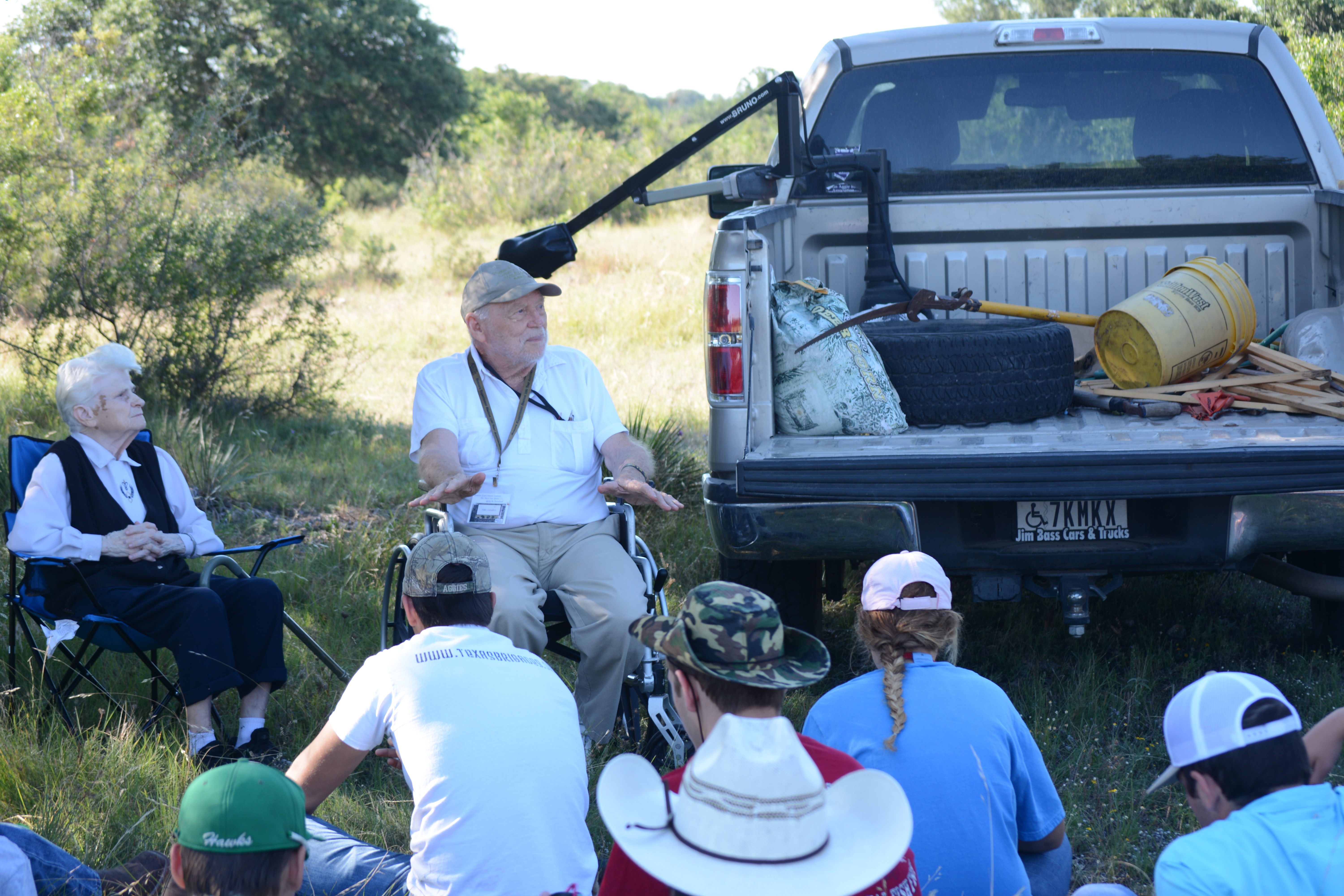
How did you get your start in ranching? The Price family began ranching in 1876. Frank Price has managed his family’s ranch for 40 years, first in partnership with his father, and then in partnership with his son Sims in 2011. Together, they run their cow-calf operation on 68,000 acres. Sims and his wife Krista are the fifth generations of Prices on the ranch, which they operate in four counties. The ranch operates with three primary income enterprises including sheep, cattle, and hunting. 

How important is agriculture to your family?  The Price family has two primary goals. First, the ranch is operated as a separate business, self-sustaining, and is expected to show an annual profit. Second, but equal, their goal is to leave their natural resources in the best possible condition for the next generations.The family is dedicated to these goals. They have recently started using Environmental Quality Incentive Program (EQIP) dollars to make continuous improvements to the ranch, and they also use controlled and prescribed burning to their benefit by adjusting their livestock grazing charts to include speed of moves, flash grazing, animal density and total deferment.

What makes ranching in West Texas so unique? In a normal year, they receive 18 inches of rainfall. These last two years have been abnormal, with exceptional drought and devastating wildfires, particularly in their area,” said Texas and Southwestern Cattle Raisers Association President Joe Parker, Jr. “Even though they had to reduce their herd to protect their land, they still found lessons in flexibility during the adversities. The Price family’s experiences with wildfire lead them to be a leading voice in Texas on inter-agency cooperation in fighting wildfires. We are glad to have his practical and sound leadership in such an important area.” The father-son partnership at Price Ranch represents the fourth and fifth generations of Prices to ranch in west Texas.

Filed Under: Brush Management, Grazing Management, Prescribed Burning, Why I Ranch Tagged With: ESAP, family, ranching, Rangeland, West Texas

Dr. Jake Landers’ Thoughts on Mesquite

November 9, 2016 by morgan.treadwell

Dr. Jake Landers morphed into a Range Father of mine overnight.  The second I met him he was my hero.

Dr. Jake Landers served as an Extension Range Specialist at the Texas A & M Research and Extension Center, San Angelo in 1979.  He developed techniques and procedure for individual plant treatment of brush and prickly pear cactus for ranchers in 17 counties.  He initiated prescribed burning as a procedure for managing rangeland to reduce undesirable species and stimulate grasses.  He wrote short articles for newspapers and magazines and continued writing after his retirement from the Extension Service.  He was recognized as the outstanding person in Range by the Texas Section of the Society for Range Management in 1990 and Sustained Lifetime Achievement Award by the parent society in 2016.

dsc_0806

Below, are Dr. Lander’s thoughts on mesquite.  Have a laugh, enjoy the irony, and appreciate the life-long hobby of brush management 🙂

“SOME OF MY DEEPEST THOUGHTS, SOME ON MESQUITE

  1. People who have a kind feeling toward Mesquite, by and large, have not had to make a living on Mesquite-covered rangeland.
  2. Mesquite trees, like West Texas ranchers, have roots deep in the land where we tend to admire and respect tenacity.
  3. Mesquite on rangeland reminds me of athlete’s foot; you can live without treating it for a long time, even a lifetime, but it is aggravating, and it tends to get worse if ignored.
  4. Mesquite shade is a poor excuse for shade.
  5. In a forest of Mesquite trees, none of them grow straight.
  6. The inside of a Mesquite tree when polished is prettier than the outside, unless it’s rotten.
  7. The smell of meat cooking over Mesquite wood coals is as pleasurable as opening a fresh can of your favorite coffee.
  8. I’ve never chewed on a Mesquite bean that I really liked, but it gives you something to do if you don’t have tobacco.
  9. Mesquite doesn’t seem to have any enemies except humans.
  10. A wooden nickel made of Mesquite is worth a lot in China, I’ll bet on it.
  11. If we came up with a sure-fire, cheap method of killing Mesquite, there would be at least one rancher who would complain about losing the beans for his cows during the next drought.
  12. I started making wooden nickels out of Mesquite to get rid of it, now I might have to replant some or borrow from my neighbors.
  13. I keep a few old Mesquite trees just to grow beautiful Mistletoe for Christmas decorations.
  14. Goats have been bred up to consume Cedar, why not breed up a llama to eat Mesquite leaves.
  15. There’s no thorn like a Mesquite thorn; it even hurts when you pull it out.
  16. When Algerita berries don’t make a crop, the Mockingbirds have to depend on Mistletoe berries on Mesquite and Hackberry.
  17. I almost disabled my pickup hitting a Mesquite stump hidden in the grass that grew after the tree was cut down.
  18. If you cut down a Mesquite and don’t paint the stump to keep it from sprouting, you are not going to Heaven when you die.
  19. Real old Mesquite are as rare as real old people, a tiny percent of the whole population.
  20. You would think there would be a disease like Oak wilt that could wipe out Mesquite.”

Thank you Dr. Landers!

Filed Under: Brush Management, Grazing Management, Plant ID Tagged With: AgriLife Extension, brush control, Dr. Jake Landers, Rangeland

Recent Posts

  • Fuel on the Ground: Managing Vegetation to Reduce Wildfire Risk 
  • Managing Old World Bluestems…A Review
  • Fire and Follow-Through!
  • High-Energy Fire Significantly Improves Honey Mesquite Control: Key Findings from a 2022 Texas Study
  • Fire Up Plant Diversity!

Categories

  • 4-H Range Contests
  • Beef Cattle
  • Brush Management
  • Carbon Credits
  • Carbon Markets
  • Conservation
  • Conservation Practices
  • Drought Management
  • El Niño
  • Events
  • Goats
  • Grazing Management
  • La Niña
  • Land
  • Lessons Learned
  • Meet A County Extension Agent
  • Plant ID
  • Podcast
  • Prescribed Burn Associations
  • Prescribed Burning
  • Publications
  • Range Concepts
  • RAP
  • Sheep
  • Society for Range Management
  • Soil
  • Staff
  • Targeted Grazing
  • Uncategorized
  • Water
  • Weather
  • Why I Ranch
  • Wild Pigs
  • Wildfire
  • Wildfires
  • Wind
  • Woody Encroachment
  • Youth Range Workshop

Archives

Texas A&M AgriLife Extension Service
Texas A&M University System Member
  • Compact with Texans
  • Privacy and Security
  • Accessibility Policy
  • State Link Policy
  • Statewide Search
  • Veterans Benefits
  • Military Families
  • Risk, Fraud & Misconduct Hotline
  • Texas Homeland Security
  • Texas Veteran's Portal
  • Equal Opportunity
  • Open Records/Public Information