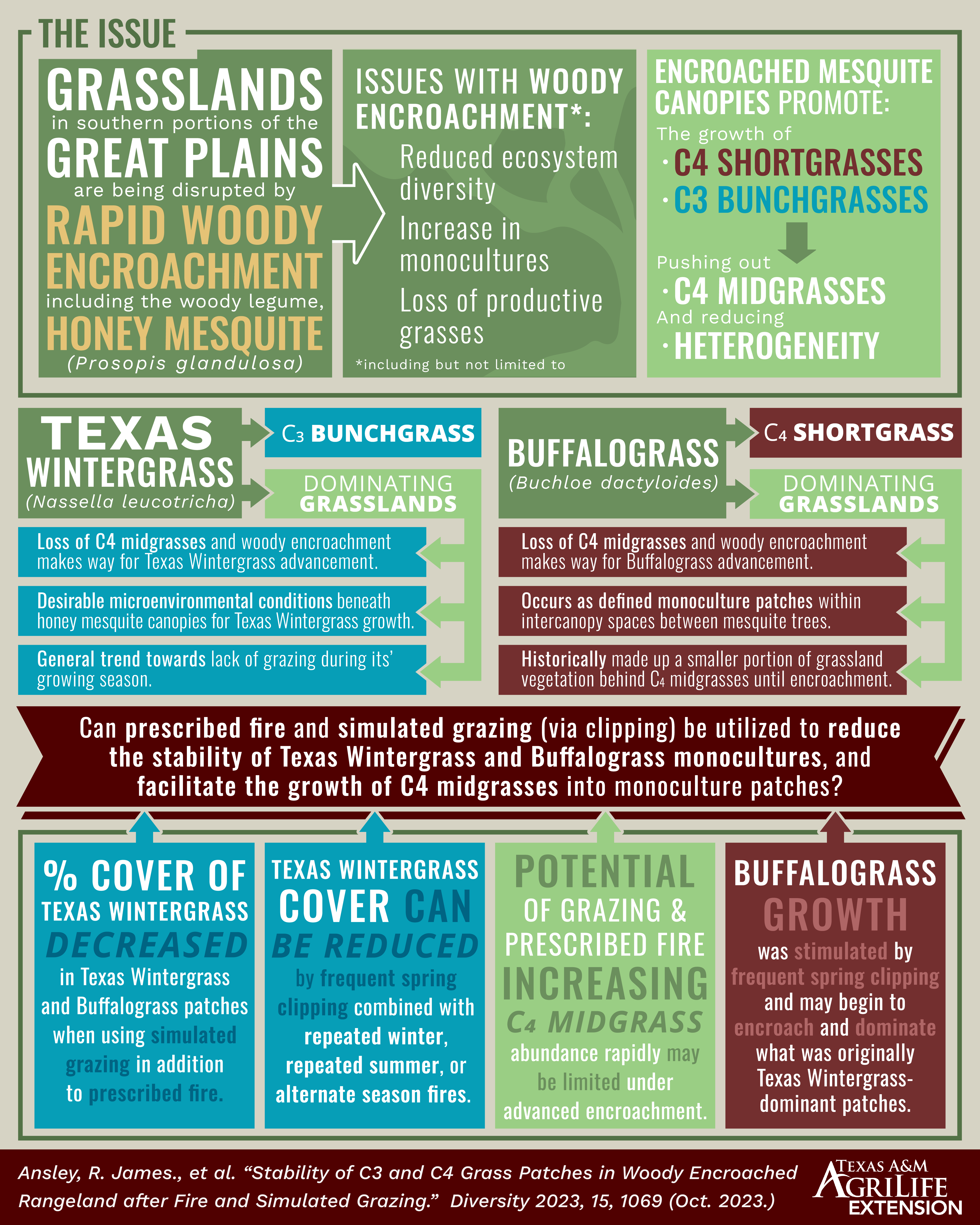
 In the western portion of the southern Great Plains, grasslands are defined as “southern mixed”, with warm season or C4 mid-grasses being dominant and cool season or C3 short-grasses in less frequent densities. As woody plant encroachment increasingly dominates, the productive warm season C4 grasses begin to decline with less abundance on the landscape and even less productivity. Woody plant dominance also reduces plant diversity eroding heterogeneity in the mixed-grass prairie. Recently, researchers measured the effects of various combinations of spring clipping (mimicked cattle grazing) and prescribed fire treatments over an 8 year period on Texas wintergrass and buffalograss with the overall objective of reducing Texas wintergrass abundance and increasing warm season C4 mid-grass species and diversity.
Impact of Goats on Cattle Diet Composition
 Did you know that having goats in your pasture could potentially complement the existing cattle operation while boosting livestock productivity and plant community diversity? Goats normally prefer and preferentially consume various types of woody and forb species more so than cattle do, and that their presence in a pasture does not alter what the cattle preferentially select to eat.
[Read more…] about Impact of Goats on Cattle Diet Composition
Influence of Environment and Stage of Growth on Honey Mesquite Response to Herbicides
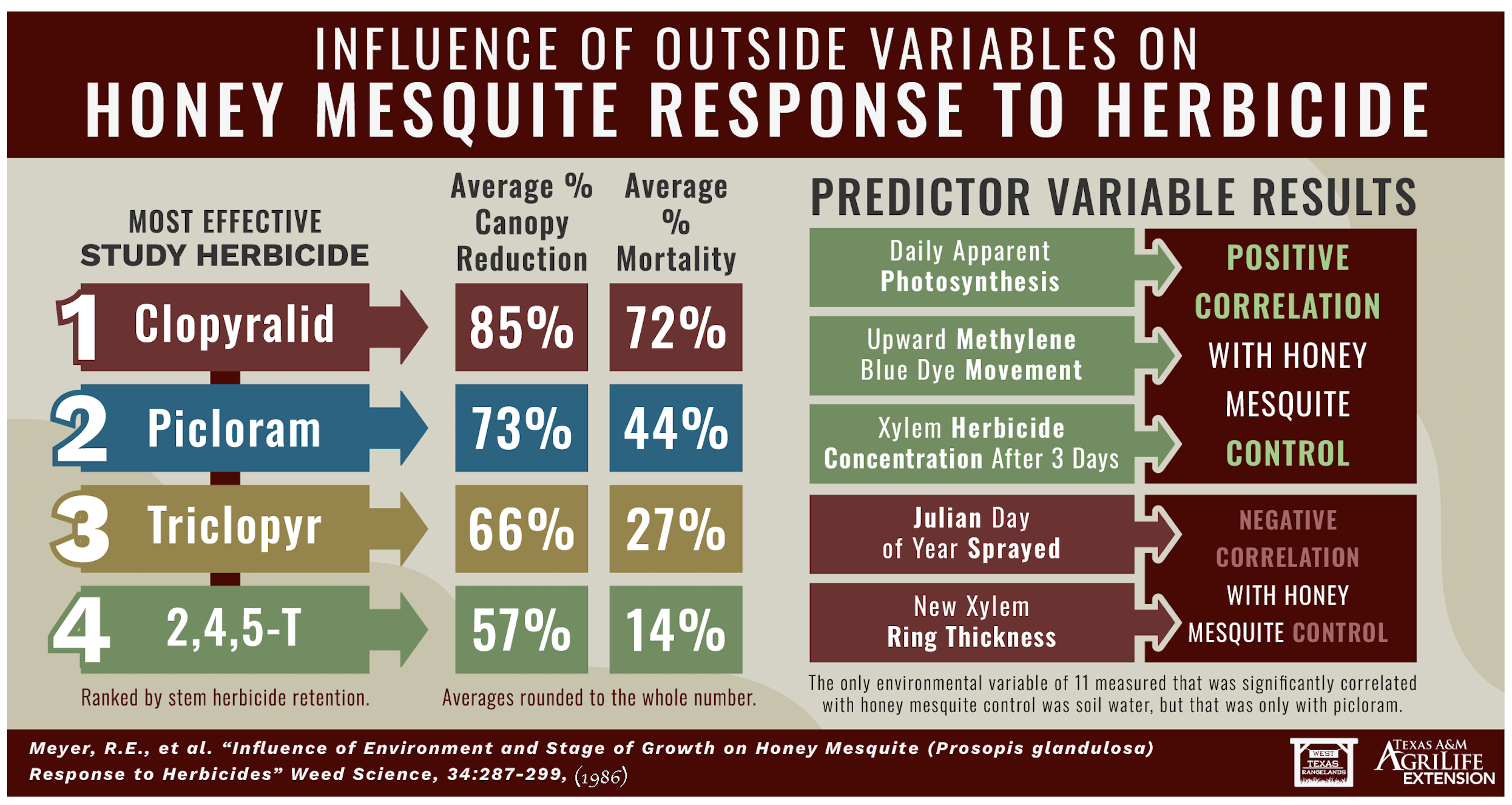 Honey mesquite varies widely in its response to herbicides. Previous research demonstrates most effective treatments have occurred about 50 to 90 days after the first leaves appear in the spring when they are fully formed and dark green (Bovey and Mayeux, Jr. 1981; Jacoby and Meyers 1983; Meyer et al., 1986). More recently, triclopyr has been found to be effective for control of honey mesquite (Bovey and Mayeux, Jr. 1981; Jacoby et al., 1981; Jacoby and Meadors 1983). Also, clopyralid has been found to be highly effective for controlling honey mesquite (Bovey and Mayeux, Jr. 1981; Jacoby et al., 1981).
CO2 Flux over Burned Honey Mesquite Savanna Rangeland
 Prescribed fire is a management practice used to reduce woody plant encroachment on rangeland and maintain native perennial grass diversity and productivity. Prescribed fire effects on CO2 fluxes and their contribution to atmospheric CO2 is not well known. The study below discusses the effect of fire on net ecosystem CO2 flux above Prosopis glandulosa Torr. (honey mesquite) using the Bowen ratio/energy balance method (BREB), and to compare these fluxes to fluxes determined by an empirical model.
[Read more…] about CO2 Flux over Burned Honey Mesquite Savanna Rangeland
Extreme Prescribed Fire during Drought Reduces Survival and Density of Woody Resprouters
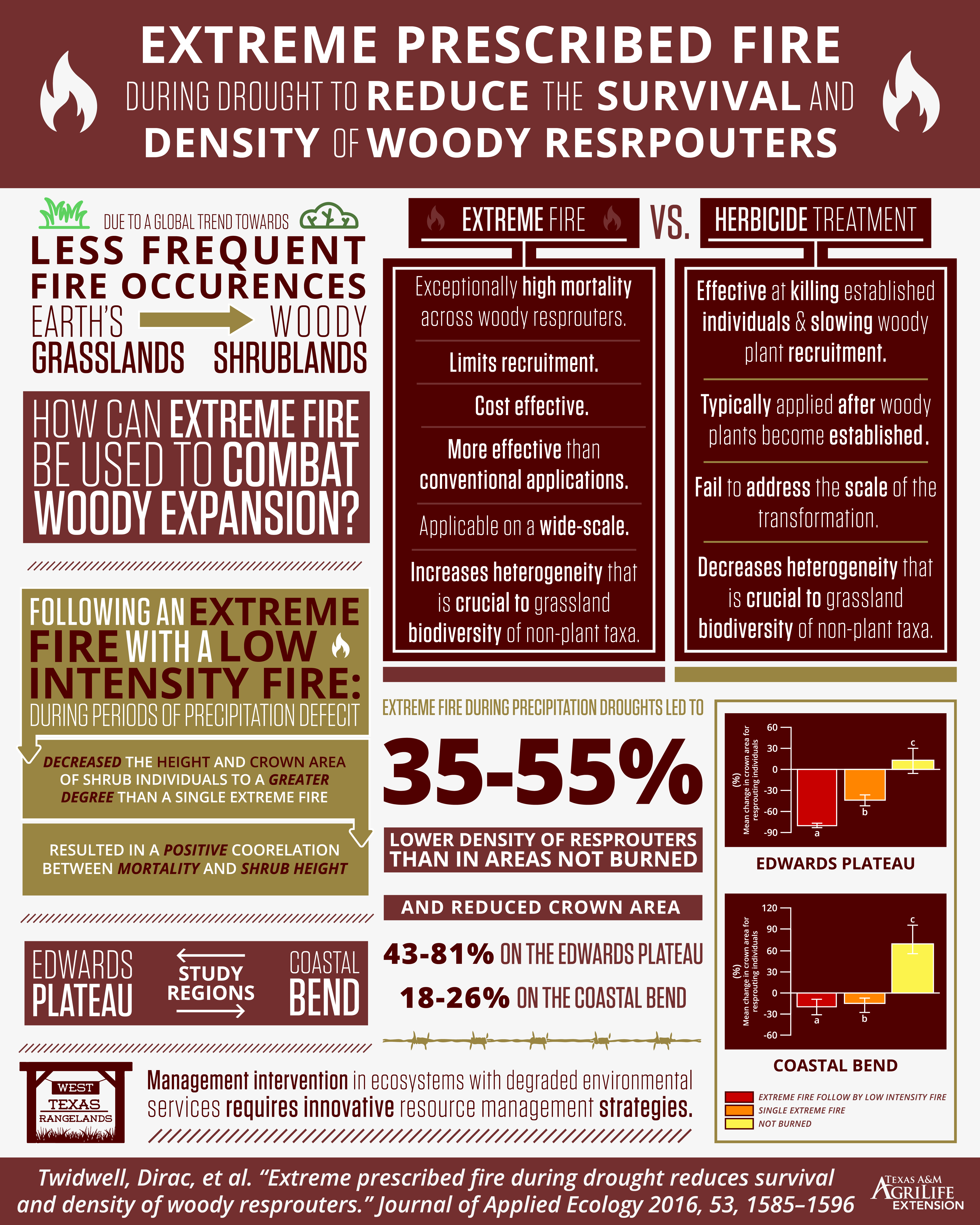 Researchers looked at extreme fire conditions during drought in humid subtropical and semi-arid ecoregions that require innovative management strategies that go beyond the traditional restoration and conservation practices. These practices have either been historically ineffective or economically cost-prohibitive at restoring grass-dominated ecosystems following conversion to resprouting shrublands.
An Economic Comparison of Prescribed Extreme Fire and Alternative Methods for Managing Invasive Brush Species in Texas: a Modeling Approach
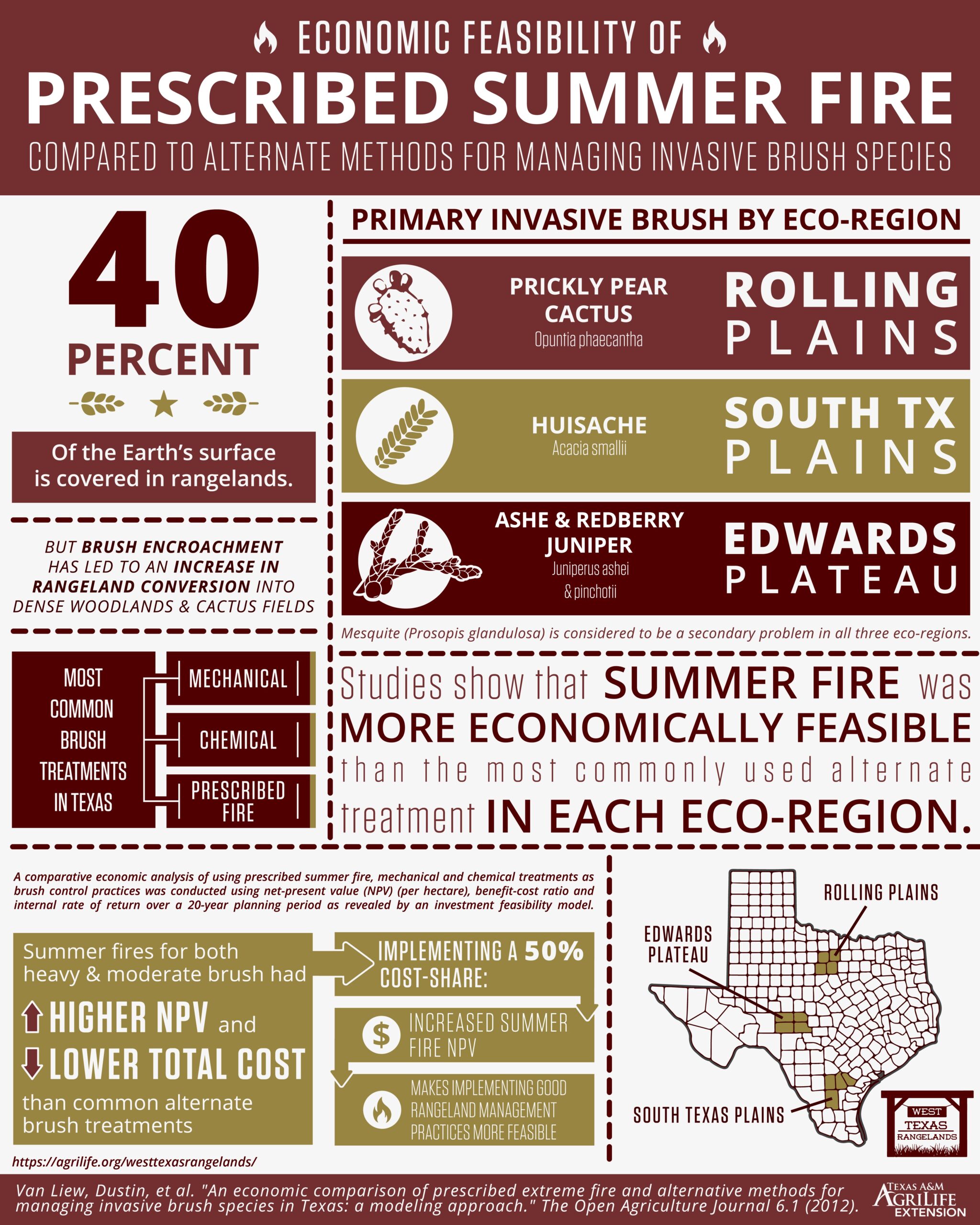 Did you know that 40% of the Earth’s surface is covered in Rangelands? However with the increase of brush encroachment, there has been an increase in conversion from rangeland into undesirable and unproductive species. In the Rolling Plains the primary invasive species focused on is prickly pear cactus, in South Texas Plains huisache is the primary focused species, and in the Edwards Plateau, Ashe & Redberry Juniper are of concerns. One fun fact, Mesquite is considered to be a secondary problem in all three of these ecoregions.
Analysis of the Cost and Cost Components of Conducting Prescribed Fires in the Great Plains
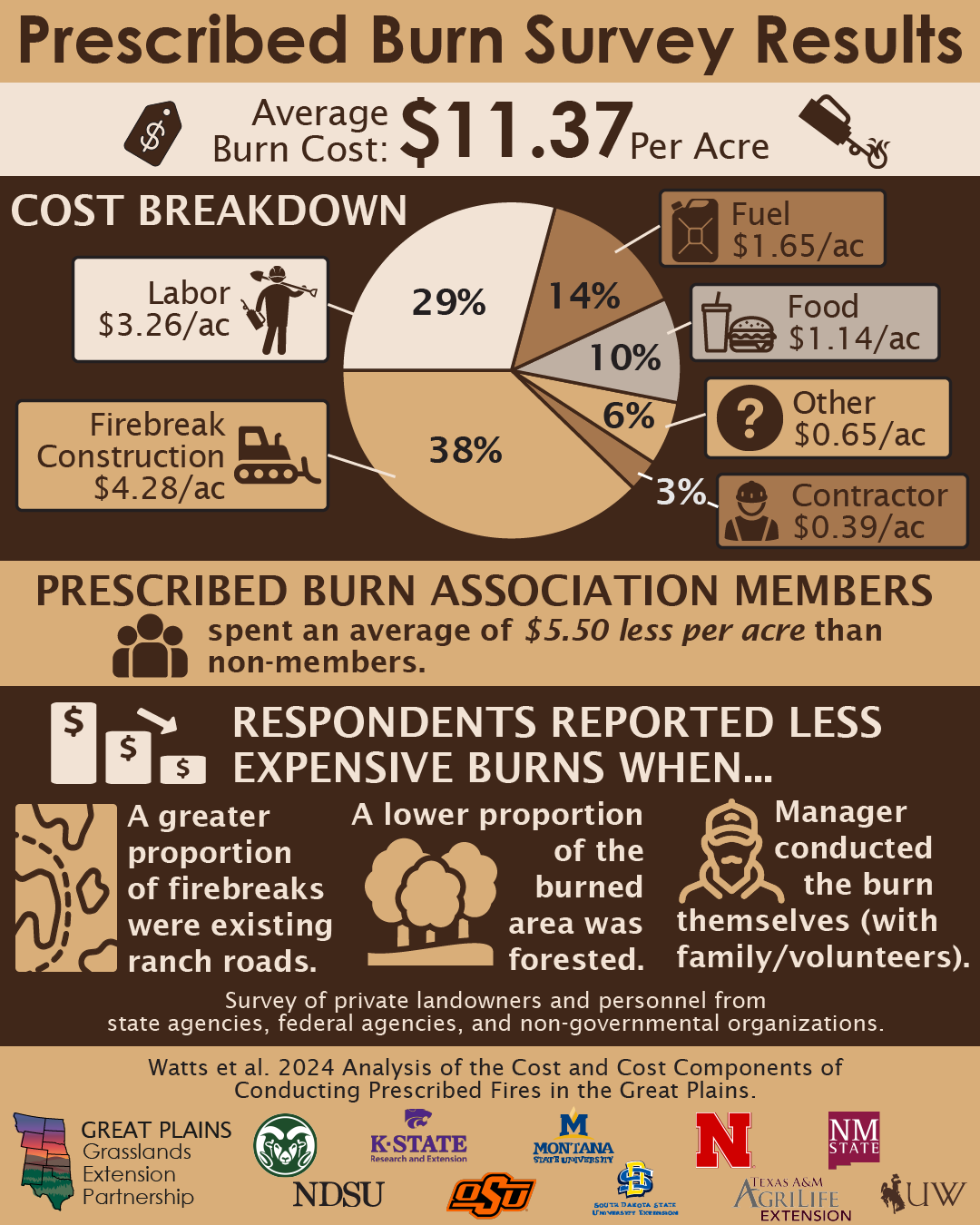 Fire is a naturally occurring process that was first applied by the Native Americans and continues today in the Great Plains by a diverse group of landowners. Fire is an incredible tool that is used to help restore fire regimes in the region. Not only is it used to restore fire regimes, it is also used to maintain and grow benefits for Agricultural outputs, risk reduction, and ecosystem maintenance.
USDA Expands Conservation Practices Qualifying for Climate-Smart Funding
 At the end of October, USDA released an updated NRCS expanded list of practices and activities that are eligible for Climate-Smart funding through the Inflation Reduction Act. In addition, they added additional funding for the practices for the fiscal year 2024.
[Read more…] about USDA Expands Conservation Practices Qualifying for Climate-Smart Funding
What Goats Really Eat, With Grazing Menu Tips to Benefit Your Ranch
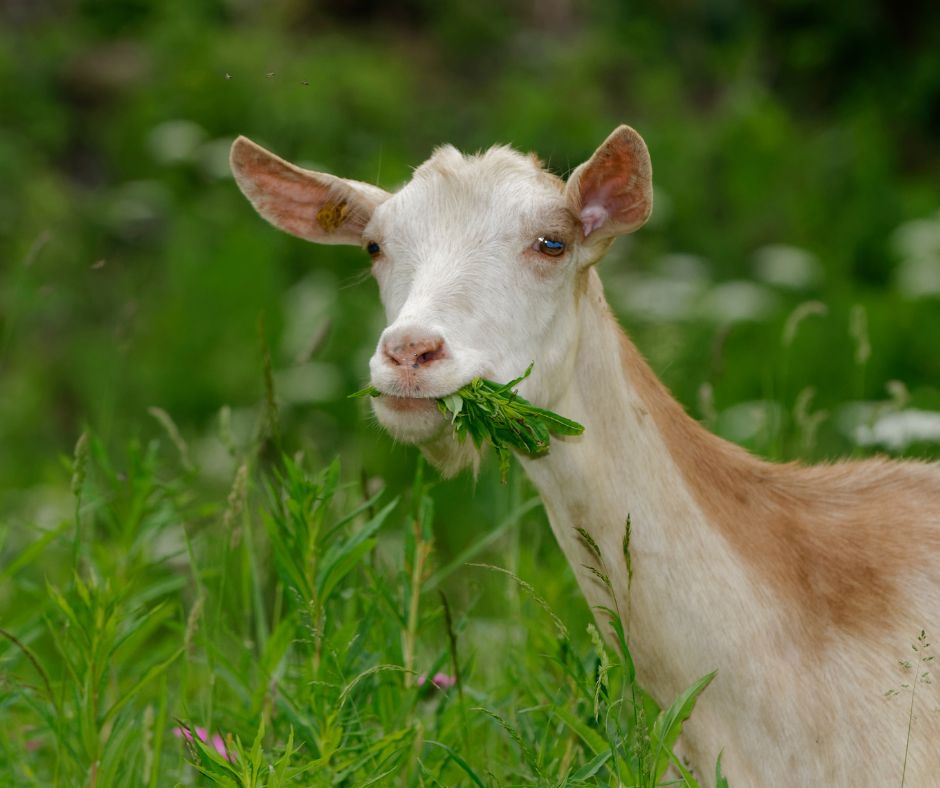 Did you know that goats are meticulous eaters? They move across the landscape selectively browsing, picking out desirable pieces of forage, and combing hard to access pastures and areas for their favorite plant parts and species.
[Read more…] about What Goats Really Eat, With Grazing Menu Tips to Benefit Your Ranch
Deer and Trees
 Have you heard the myth that to have good deer hunting, you need lots of trees? In the Great Plains, healthy deer populations are supported without trees. The misconception lies in the fact that most of the time people are looking for deer around trees and not out away from trees.