• Skip to primary navigation
  • Skip to main content
  • Skip to primary sidebar
  • Texas A&M Forest Service
  • Texas A&M Veterinary Medical Diagnostics Laboratory
  • Texas A&M AgriLife Extension Service
  • Texas A&M AgriLife Research
  • Texas A&M College of Agrculture and Life Sciences
West Texas Rangelands
West Texas RangelandsWe hope to provide a variety of science-based rangeland information and current research on prescribed fire, wildfires, brush management, and grazing management!
  • Menu
  • Home
  • About & Contact
  • Publications
    • Extension Publications
    • Refereed Journal Articles
    • Program Summaries
  • Events
  • Lunch N’ Learn
  • Infographics
    • Drought
    • Grazing
    • Herbicide
    • Prescribed Fire
    • Rangeland Plants
    • Wildfire
  • Range Resources
    • Published to Pasture
    • Range Concepts
  • Fire Resources
  • Sponsors
  • AgriLife Learn Online Courses

Fire Up Plant Diversity!

December 3, 2025 by morgan.treadwell

A recent study from Texas A&M researchers, published in Landscape Ecology, dives into how prescribed fires impact plant diversity in mesquite-oak savannas like those on the Edwards Plateau. By analyzing data from over 288 plots before and after a prescribed fire, the team found that these fires boost local plant diversity, encouraging more species richness and evenness in burned areas. This is especially true in soils with better water-holding capacity, where post-fire regrowth thrives amid the mosaic of burned and unburned patches. But there’s a flip side: fires can reduce beta-diversity, meaning less variation in plant communities across your land, as similar species start dominating post-burn.

The study highlights how soil types and rainfall play starring roles in these outcomes. In areas with deeper, moisture-retaining soils like Kavett silty clay, fires sparked significant gains in forb and grass diversity, helping control woody encroachment from mesquite and juniper while creating prime grazing spots. However, in shallower, drier soils like Tarrant, the effects were muted, underscoring the need to time burns with wetter periods to avoid stressing your vegetation. Precipitation patterns around the 2019 burns, drier than average, further mediated results, showing that fire heterogeneity (those patchy burns) shapes spatial diversity patterns, ultimately supporting a more resilient ecosystem for livestock and wildlife alike.

For ranchers looking to implement pyric-herbivory, combining fire with grazing, this research is a game-changer!! It suggests strategic burns can sustain biodiversity, improve forage quality, and maintain ecosystem services without homogenizing your landscape. Start by mapping your soil types and monitoring rainfall forecasts to maximize benefits. While the study focused on semi-arid savannas, its insights encourage adaptive management: test small-scale burns, observe plant responses, and adjust for your ranch’s unique conditions. In the end, embracing fire thoughtfully could ignite long-term health for your rangeland, turning potential threats into thriving, diverse, opportunities!

For more information on the study led by Jaime Xavier as part of The Prairie Project, please click here!

Filed Under: Prescribed Burn Associations, Prescribed Burning, Woody Encroachment Tagged With: plant diversity, prescribed fire, rangelands

Revegetation vs. Encroachment: Why There’s No “Silver Bullet” for Woody Plant Management

October 29, 2025 by jaime.sanford

Across the Great Plains and Texas rangelands, woody plant encroachment continues to challenge grassland health and productivity. A brand new study from Trejo-Perez et al. (2025) offers important insight into why some rangeland reseeding efforts fall short and what it really takes to keep trees and shrubs from taking over.

[Read more…] about Revegetation vs. Encroachment: Why There’s No “Silver Bullet” for Woody Plant Management

Filed Under: Woody Encroachment

Ten Years of Mesquite Application Timing…Spray a Healthy Tree or Wait Until 75F Soil Temperature?

October 15, 2025 by jaime.sanford

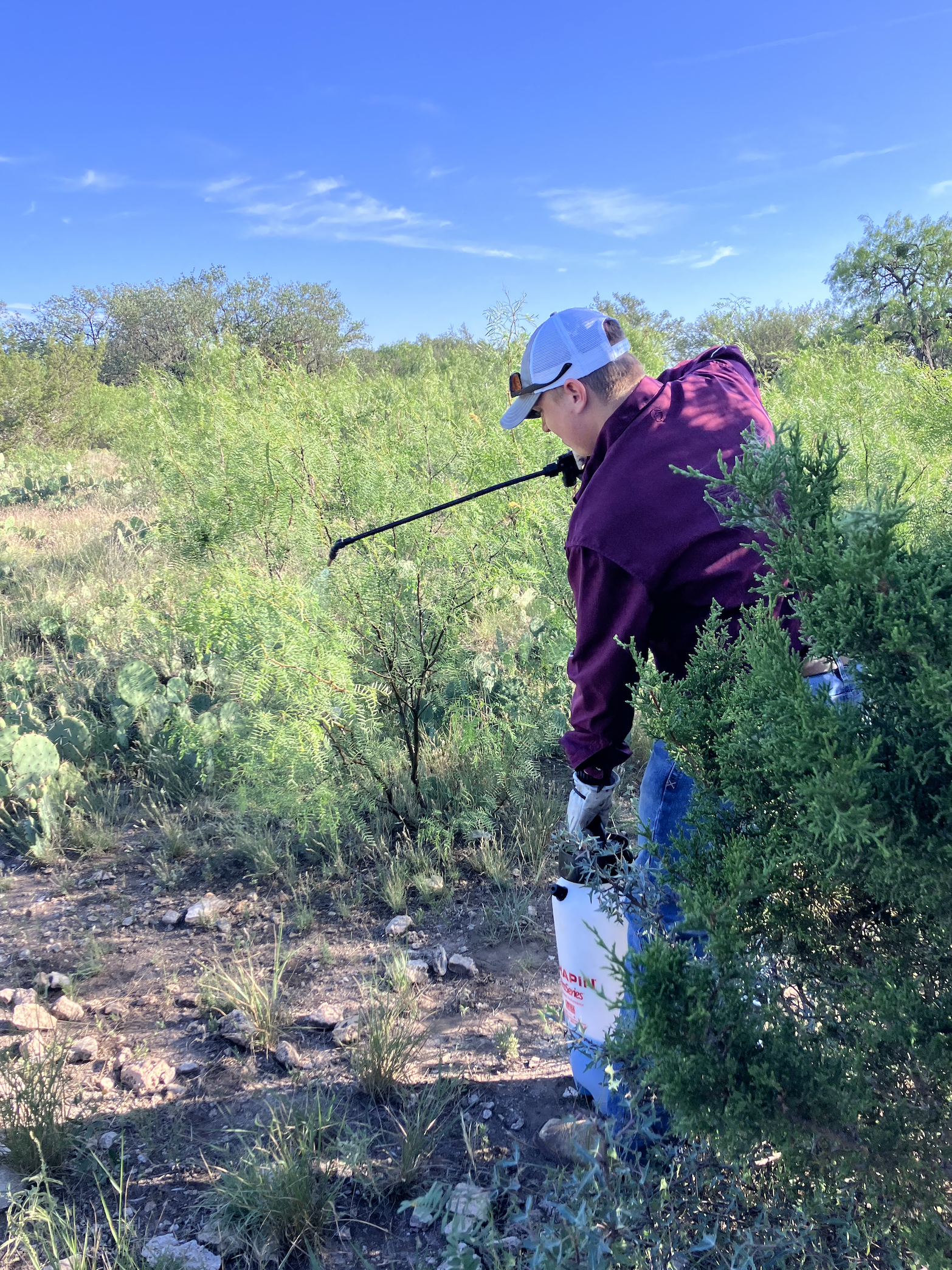
Mesquite (Prosopis spp.) is a tough, invasive shrub that plagues rangelands across Texas and beyond, outcompeting native grasses, reducing forage for livestock, and altering wildlife habitats. For ranchers aiming to boost grazing productivity, conservationists focused on restoring biodiversity, and wildlife managers enhancing quail or deer cover, effective mesquite management is key. But timing your herbicide applications, especially foliar sprays, can make all the difference. Drawing from a ten-year dataset spanning counties like Hamilton, Jack, Hood, Eastland, Comanche, Tom Green, and Schleicher, let’s explore how environmental factors like soil temperature influence mesquite mortality rates one and two years after treatment (YAT).


Insights from the Field Trials

This dataset compiled over 500 observations across 10 years from individual plant treatment (IPT), from 5 Texas counties, tracking percent mortality alongside variables such as soil temperature (12-inch depth), air temperature, and relative humidity. While individual results varied by site and conditions, clear patterns emerge when we aggregate the data.

  • Peak Performance in Late Spring/Early Summer: Applications in May and June yielded the highest average mortality—around 88% at 1 YAT and 92% at 2 YAT in May, dropping slightly to 85% and 86% in June. These months coincide with rising soil temperatures (averaging 70°F in May and 79°F in June), when mesquite is actively growing and translocating herbicides to roots more effectively.
  • Decline in Late Summer and Fall: By July and August, averages dip to 75% (1 YAT) and 66% (2 YAT) in July, further to 56% and 68% in August, despite warmer soils (82°F average). September through November show even lower efficacy, with November applications averaging just 3% at 1 YAT and 9% at 2 YAT—likely due to cooler soils (68°F) and plants entering dormancy.
  • Soil Temperature’s Role: While warmer soils are indicative of growing conditions, it is not the primary driver of plant mortality – IT’S THE TREE!!! There is no statistical significant difference between spraying below 75F and above 75F (P = 0.300) soil temperature at 12” depth.  These results emphasize that if the target tree is healthy, full leaf, and mature in phenology stage, it is ready to be sprayed!

Practical Tips for Your Operation

  • Target May-June Window: For most Texas regions, this period offers the sweet spot of active growth without excessive heat stress, grasshoppers or other insect damage, and hopefully before cotton is in the ground. Adjust for your county’s microclimate, e.g., earlier in southern areas like Tom Green.


By syncing sprays with healthy trees and peak growth, you can achieve higher kill rates, saving time and resources while promoting healthier rangelands. Whether you’re running cattle, promoting biodiversity, or managing for open-spaces, data-driven timing turns mesquite from foe to forgotten!!  Happy spraying and spray for the tree!  

*These data are currently being drafted for submission to Rangeland Ecology and Management.

Filed Under: Woody Encroachment

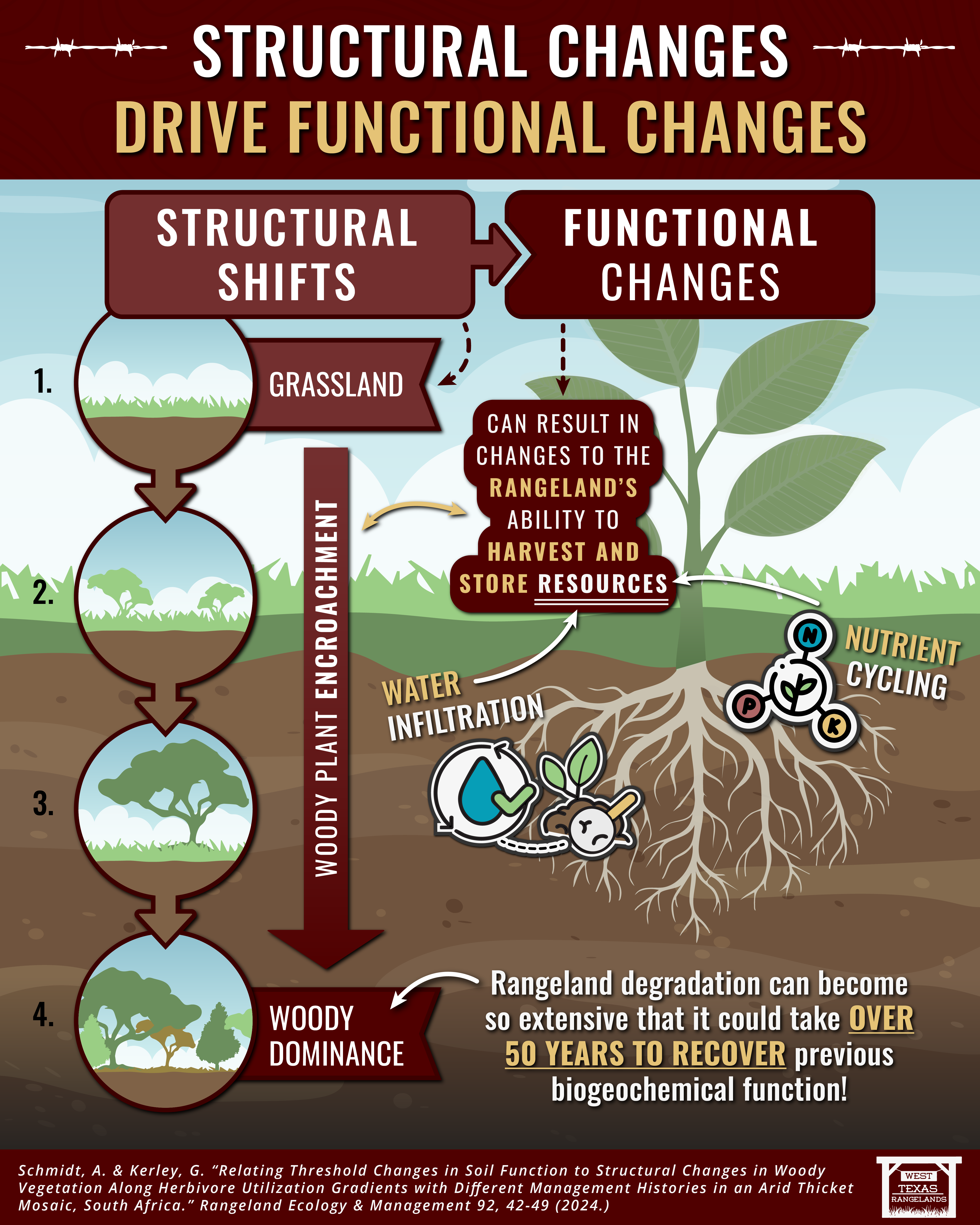
Structural Changes Drive Functional Changes

February 26, 2025 by jaime.sanford

Woody Encroachment soil graphic changeRangelands, vast and vital, are more than just scenic landscapes. They’re complex ecosystems providing essential services, from clean air and water to livestock grazing and wildlife habitat. But these valuable areas face a growing threat: woody plant encroachment. This occurs when shrubs and trees increase in density and coverage, often at the expense of grasslands. While it might seem like a simple change in vegetation, the consequences are far-reaching, impacting everything from soil health to water availability.

[Read more…] about Structural Changes Drive Functional Changes

Filed Under: Soil, Woody Encroachment

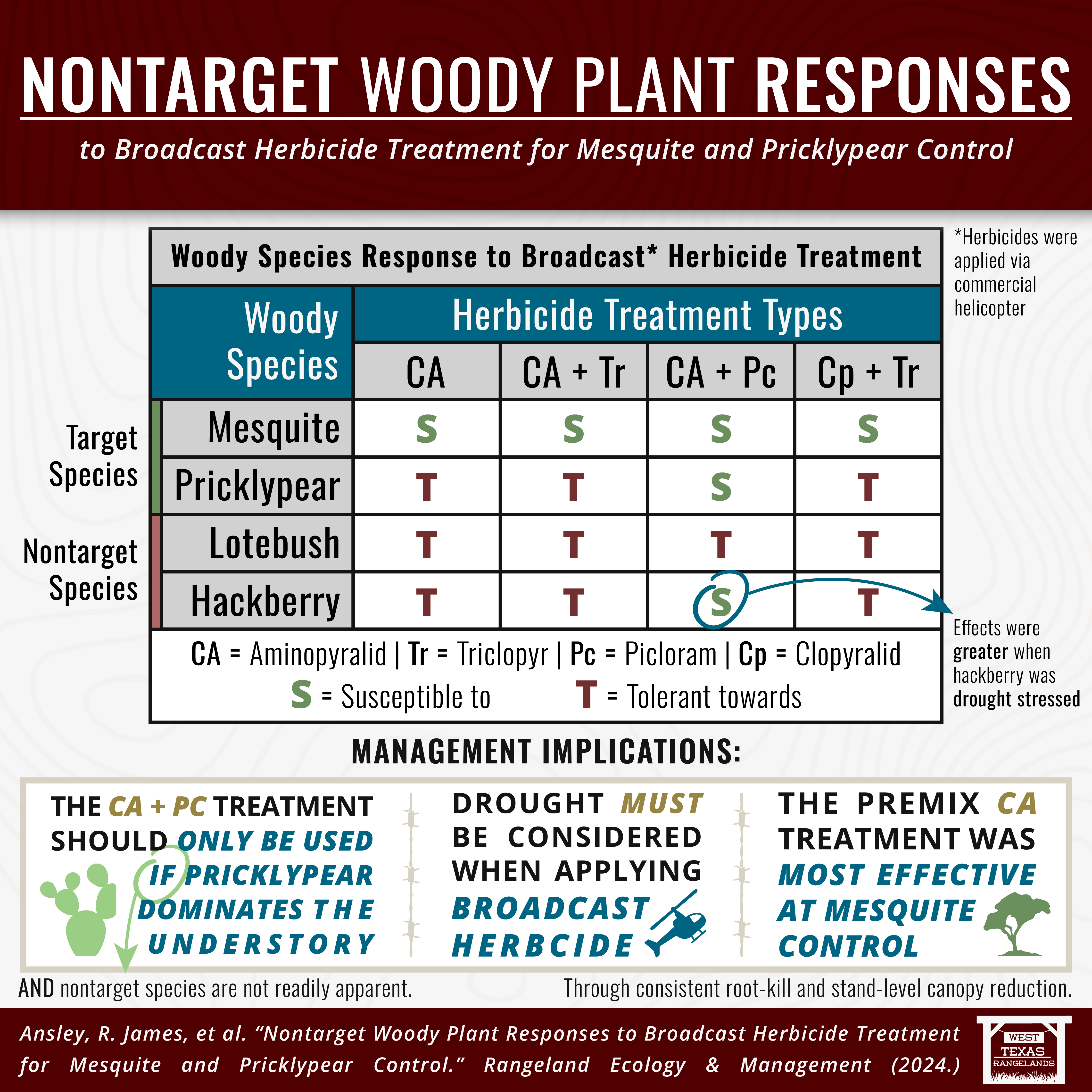
Non-Target Woody Plant Response to Herbicides

January 29, 2025 by jaime.sanford

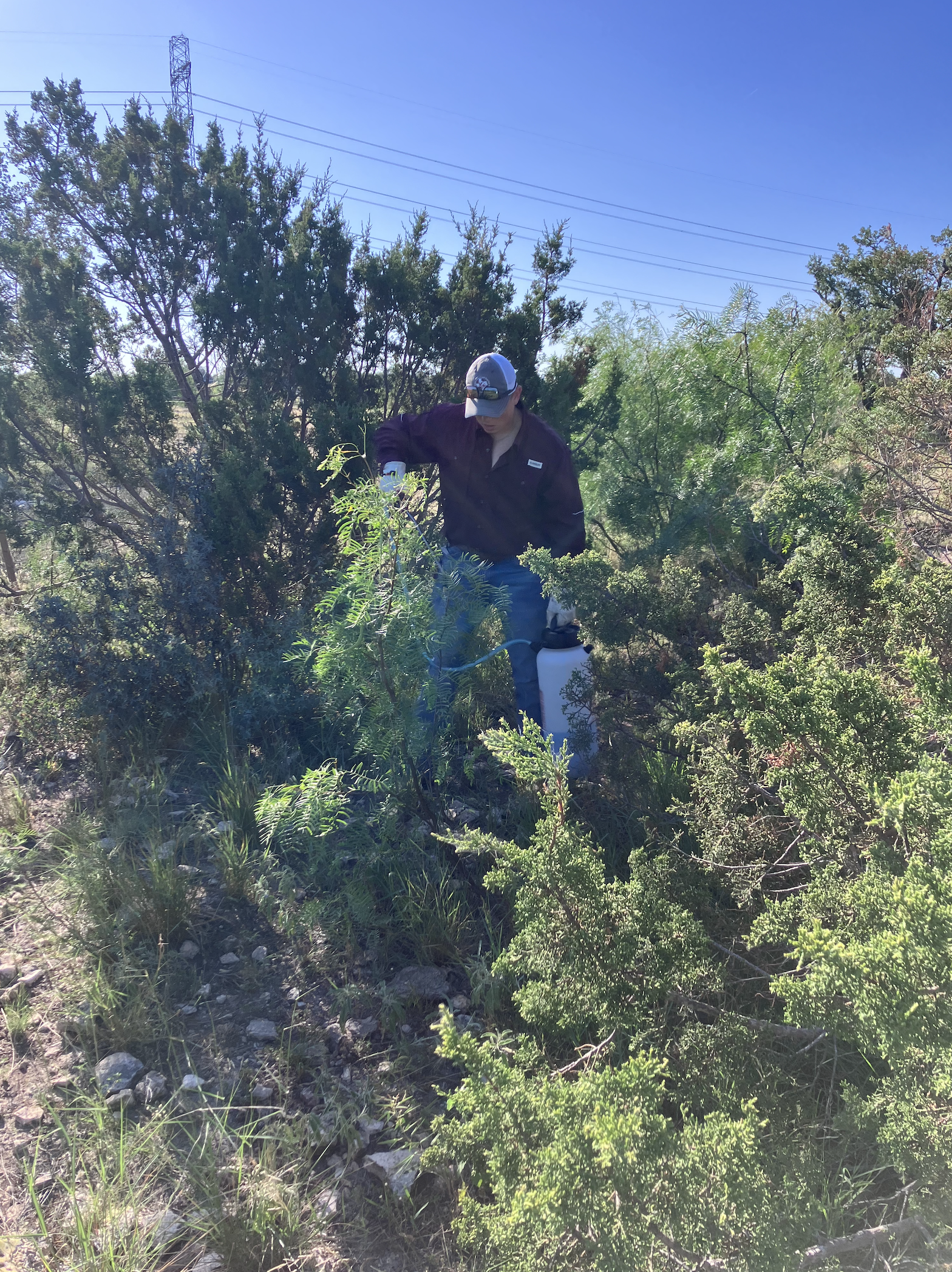
Ranchers in West Texas frequently encounter a double-decker challenge with intense canopy coverage from honey mesquite and dense pricklypear in the understory. Synergistic broadcast herbicide applications are commonly employed to tackle these layered problematic, opportunistic, and abundant species. However, it is crucial to recognize the potential for unintended consequences on nontarget woody plant species. A recent study delved into the effects of various herbicide treatments on both target and nontarget woody plant species.

[Read more…] about Non-Target Woody Plant Response to Herbicides

Filed Under: Brush Management, Woody Encroachment

Portugal Wildfires and What Does That Have to do With Texas?

November 6, 2024 by jaime.sanford

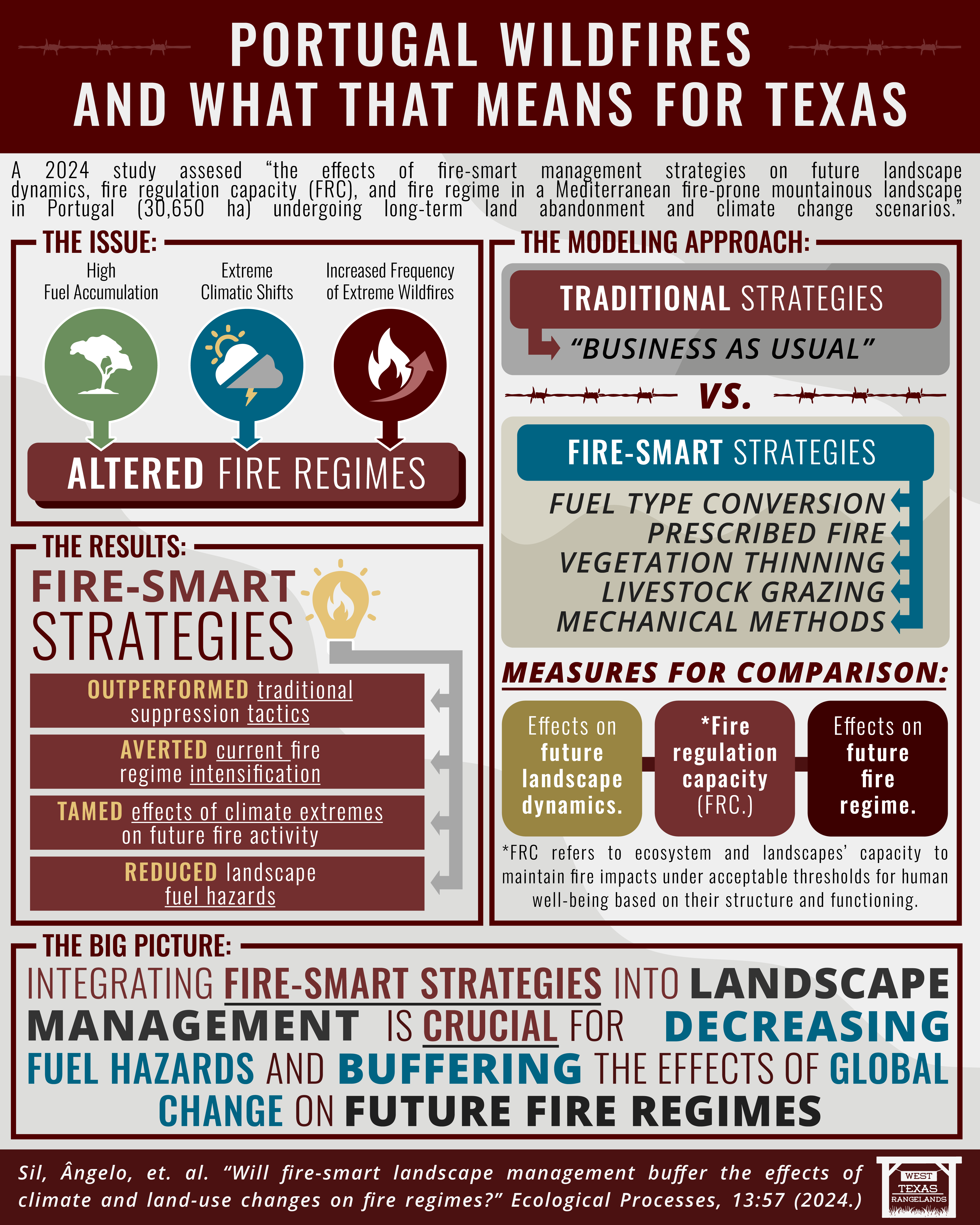
The Euro-Mediterranean region is a high fire prone area with 48,000 fires reported annually. The fires are the result of landscape fuel build up which has been driven by absentee land ownership, wildfire suppression policies, extreme temperatures, and extended droughts that simultaneously occur. This study used the LANDIS-II forest landscape model which is considered a fire-smart management tool. Fire-smart management is based on controlling fire regimes through landscape interventions to reduce hazardous fuels and foster fire-resistant/resilient landscapes. The study included assessing how alternative fire management strategies affect future landscape dynamics, the fire regulation capacity, and fire regimes under long-term absentee land ownership and extreme climate scenarios.

[Read more…] about Portugal Wildfires and What Does That Have to do With Texas?

Filed Under: Prescribed Burning, Woody Encroachment

Woody Plant Encroachment – What other states are doing and saying

September 25, 2024 by jaime.sanford

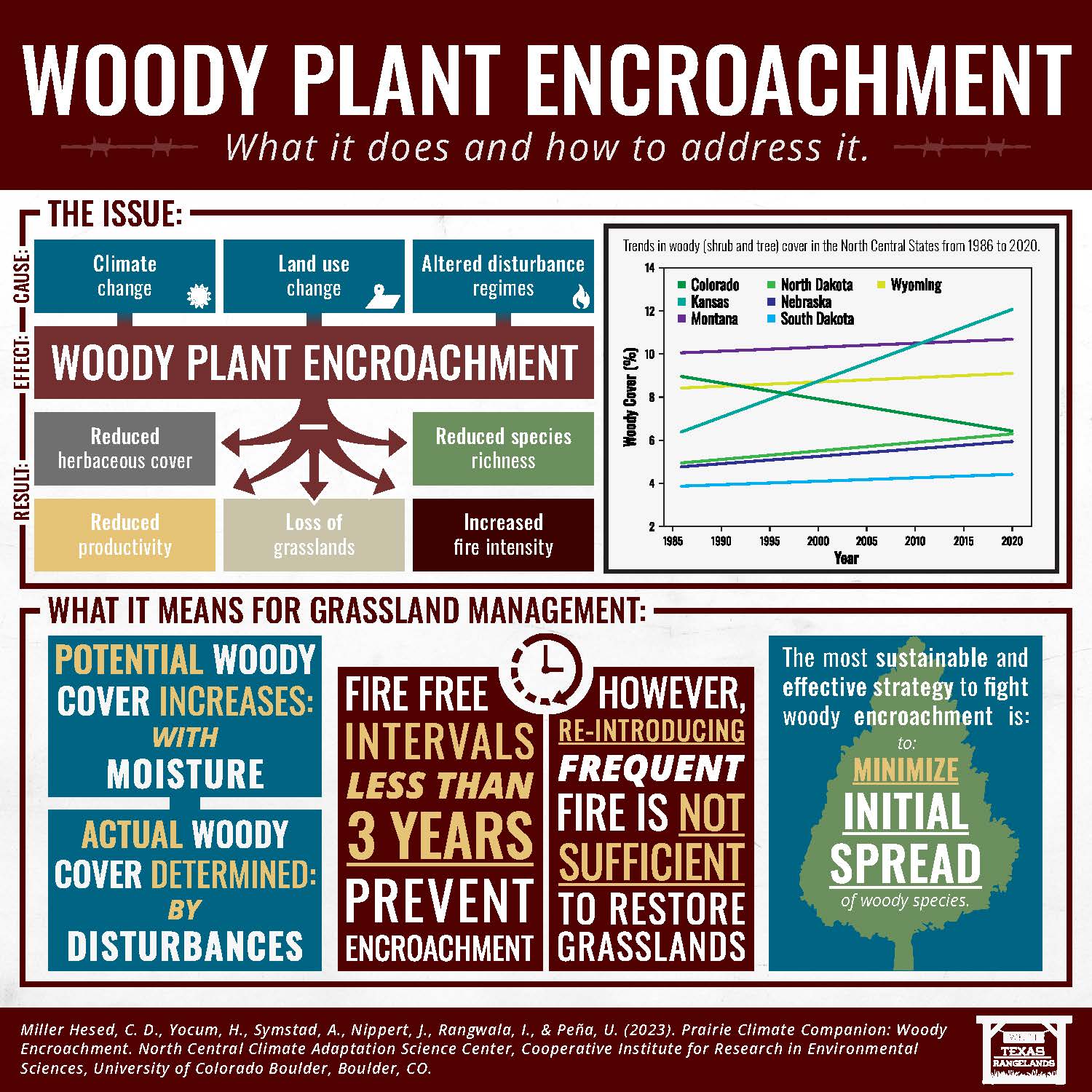
Extreme climate swings, lengthened fire seasons, drought, floods, overgrazing, fragmentation,  land-use change, urbanization, and altered disturbance regimes has created an increase in woody plants, commonly referred to as woody plant encroachment or (WPE). Woody encroachment has become a global phenomenon in nearly all grassland ecosystems. We have seen the devastating results of WPE in Texas grasslands and savannas and as we learn from our North Central partners (CO, KS, MT, ND, NE, SD, and WY) many of these states are on a similar trajectory of plant community transition.  Through the work of the North Central Climate Adaptation Science Center and the Rangeland Analysis Platform, other states can learn from our Texas lessons of WPE and aim for fire return intervals that minimize initial spread of woody species in grasslands.  

[Read more…] about Woody Plant Encroachment – What other states are doing and saying

Filed Under: Prescribed Burning, Woody Encroachment

Stability of C3 and C4 Grass Patches in Woody Encroached Rangeland after Fire and Simulated Grazing

August 28, 2024 by jaime.sanford

In the western portion of the southern Great Plains, grasslands are defined as “southern mixed”, with warm season or C4 mid-grasses being dominant and cool season or C3 short-grasses in less frequent densities. As woody plant encroachment increasingly dominates, the productive warm season C4 grasses begin to decline with less abundance on the landscape and even less productivity. Woody plant dominance also reduces plant diversity eroding heterogeneity in the mixed-grass prairie. Recently, researchers measured the effects of various combinations of spring clipping (mimicked cattle grazing) and prescribed fire treatments over an 8 year period on Texas wintergrass and buffalograss with the overall objective of reducing Texas wintergrass abundance and increasing warm season C4 mid-grass species and diversity.

[Read more…] about Stability of C3 and C4 Grass Patches in Woody Encroached Rangeland after Fire and Simulated Grazing

Filed Under: Brush Management, Conservation, Conservation Practices, Grazing Management, Prescribed Burning, Woody Encroachment

Impact of Goats on Cattle Diet Composition

August 14, 2024 by jaime.sanford

Did you know that having goats in your pasture could potentially complement the existing cattle operation while boosting livestock productivity and plant community diversity? Goats normally prefer and preferentially consume various types of woody and forb species more so than cattle do, and that their presence in a pasture does not alter what the cattle preferentially select to eat.

[Read more…] about Impact of Goats on Cattle Diet Composition

Filed Under: Beef Cattle, Brush Management, Goats, Grazing Management, Targeted Grazing, Woody Encroachment

Influence of Environment and Stage of Growth on Honey Mesquite Response to Herbicides

August 7, 2024 by jaime.sanford

Honey mesquite varies widely in its response to herbicides. Previous research demonstrates most effective treatments have occurred about 50 to 90 days after the first leaves appear in the spring when they are fully formed and dark green (Bovey and Mayeux, Jr. 1981; Jacoby and Meyers 1983; Meyer et al., 1986). More recently, triclopyr has been found to be effective for control of honey mesquite (Bovey and Mayeux, Jr. 1981; Jacoby et al., 1981; Jacoby and Meadors 1983). Also, clopyralid has been found to be highly effective for controlling honey mesquite (Bovey and Mayeux, Jr. 1981; Jacoby et al., 1981).

[Read more…] about Influence of Environment and Stage of Growth on Honey Mesquite Response to Herbicides

Filed Under: Conservation, Grazing Management, Woody Encroachment

  • Page 1
  • Page 2
  • Page 3
  • Go to Next Page »

Recent Posts

  • Fire Up Plant Diversity!
  • New Publication! Photosensitization
  • Dry, Warm, Windy, and Fuel.
  • Lessons Learned – Pyro-Vortex Tornado on the Deer Creek Fire
  • Mapping Fire Before It Starts: How the Fireshed Project Strengthens Readiness in West Texas

Categories

  • 4-H Range Contests
  • Beef Cattle
  • Brush Management
  • Carbon Credits
  • Carbon Markets
  • Conservation
  • Conservation Practices
  • Drought Management
  • El Niño
  • Events
  • Goats
  • Grazing Management
  • La Niña
  • Land
  • Lessons Learned
  • Meet A County Extension Agent
  • Plant ID
  • Podcast
  • Prescribed Burn Associations
  • Prescribed Burning
  • Publications
  • Range Concepts
  • RAP
  • Sheep
  • Society for Range Management
  • Soil
  • Staff
  • Targeted Grazing
  • Uncategorized
  • Water
  • Weather
  • Why I Ranch
  • Wild Pigs
  • Wildfire
  • Wildfires
  • Wind
  • Woody Encroachment
  • Youth Range Workshop

Archives

Texas A&M AgriLife Extension Service
Texas A&M University System Member
  • Compact with Texans
  • Privacy and Security
  • Accessibility Policy
  • State Link Policy
  • Statewide Search
  • Veterans Benefits
  • Military Families
  • Risk, Fraud & Misconduct Hotline
  • Texas Homeland Security
  • Texas Veteran's Portal
  • Equal Opportunity
  • Open Records/Public Information