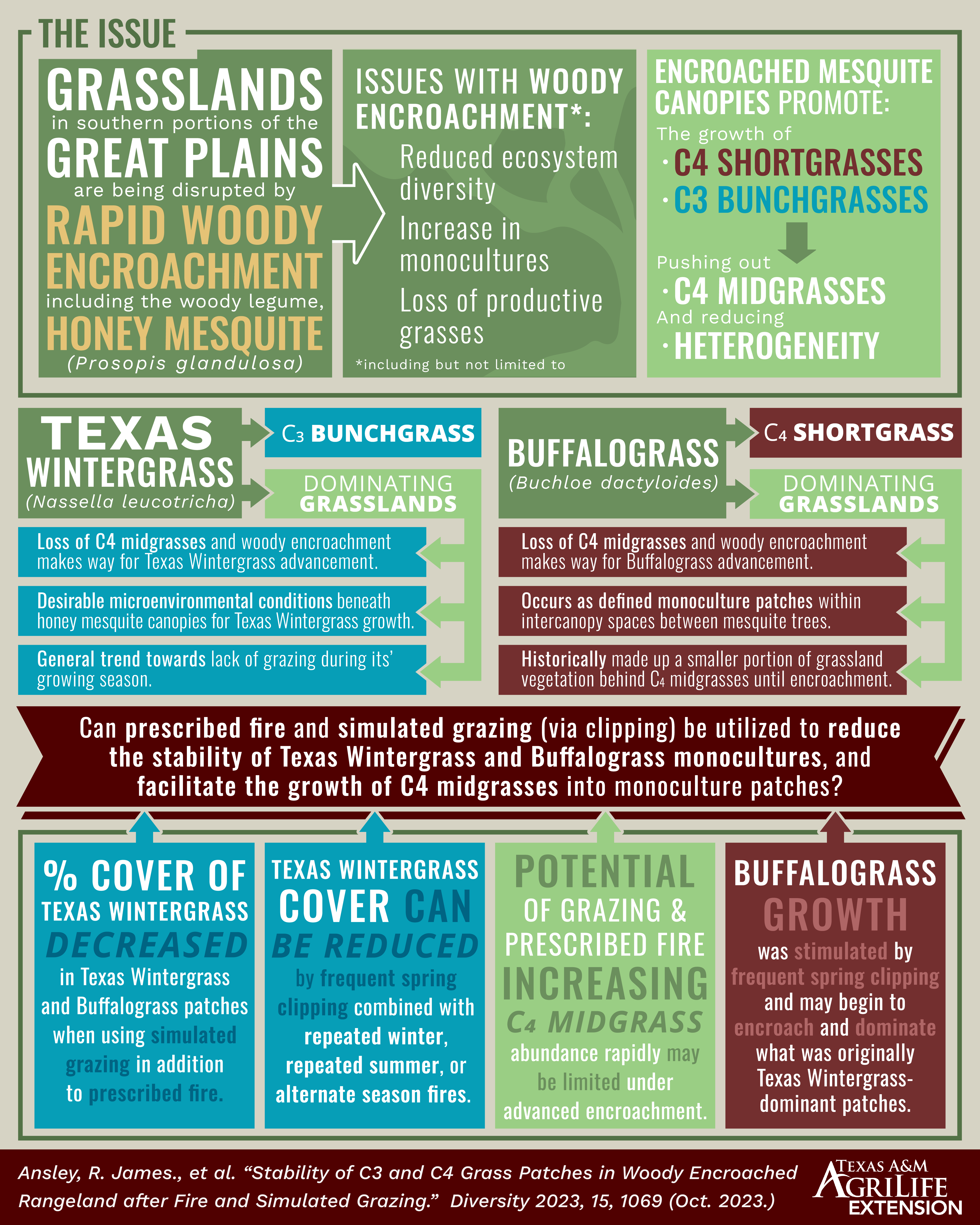
In the western portion of the southern Great Plains, grasslands are defined as “southern mixed”, with warm season or C4 mid-grasses being dominant and cool season or C3 short-grasses in less frequent densities. As woody plant encroachment increasingly dominates, the productive warm season C4 grasses begin to decline with less abundance on the landscape and even less productivity. Woody plant dominance also reduces plant diversity eroding heterogeneity in the mixed-grass prairie. Recently, researchers measured the effects of various combinations of spring clipping (mimicked cattle grazing) and prescribed fire treatments over an 8 year period on Texas wintergrass and buffalograss with the overall objective of reducing Texas wintergrass abundance and increasing warm season C4 mid-grass species and diversity.
Impact of Goats on Cattle Diet Composition
Did you know that having goats in your pasture could potentially complement the existing cattle operation while boosting livestock productivity and plant community diversity? Goats normally prefer and preferentially consume various types of woody and forb species more so than cattle do, and that their presence in a pasture does not alter what the cattle preferentially select to eat.
[Read more…] about Impact of Goats on Cattle Diet Composition
Influence of Environment and Stage of Growth on Honey Mesquite Response to Herbicides
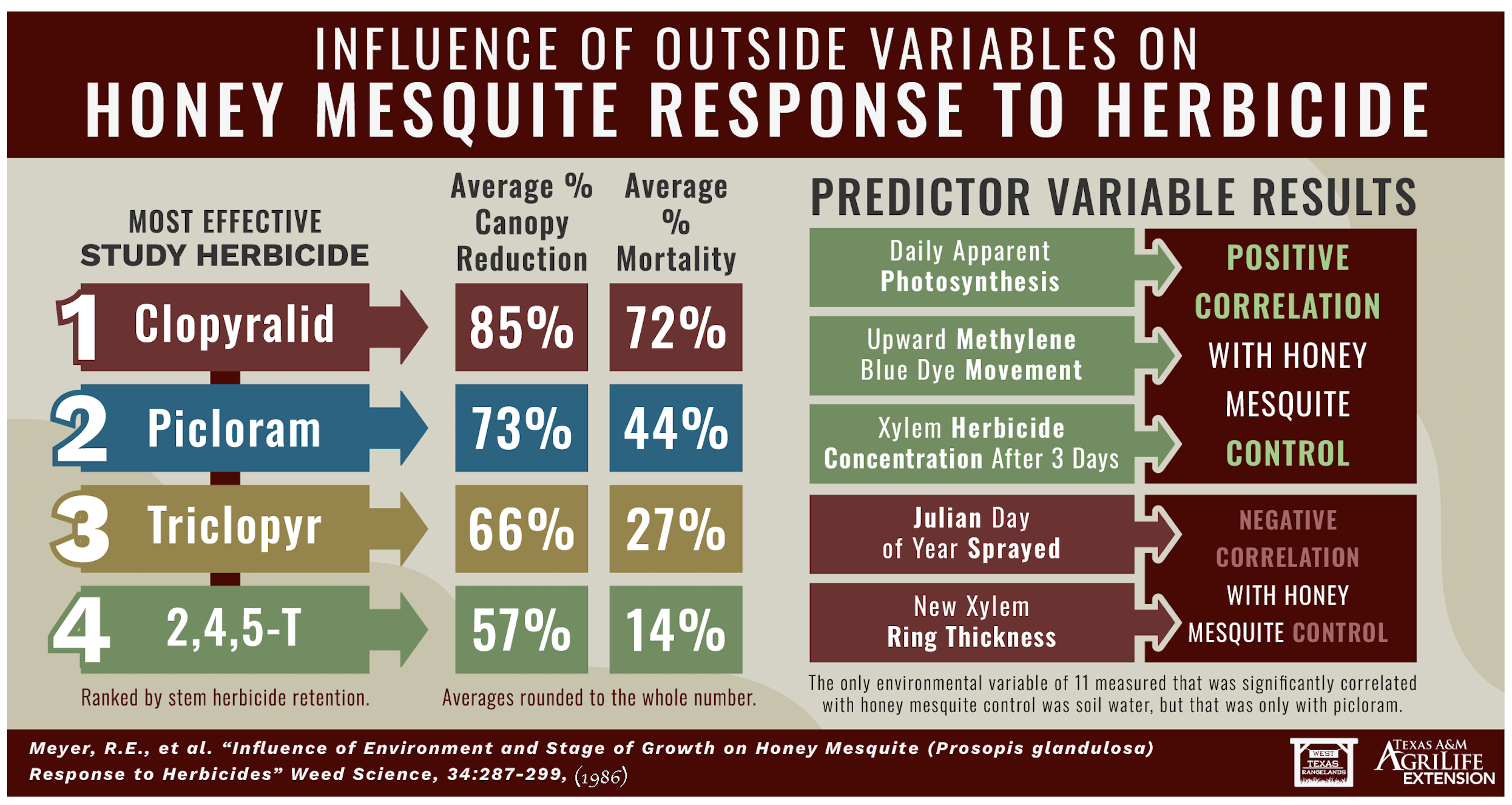
Honey mesquite varies widely in its response to herbicides. Previous research demonstrates most effective treatments have occurred about 50 to 90 days after the first leaves appear in the spring when they are fully formed and dark green (Bovey and Mayeux, Jr. 1981; Jacoby and Meyers 1983; Meyer et al., 1986). More recently, triclopyr has been found to be effective for control of honey mesquite (Bovey and Mayeux, Jr. 1981; Jacoby et al., 1981; Jacoby and Meadors 1983). Also, clopyralid has been found to be highly effective for controlling honey mesquite (Bovey and Mayeux, Jr. 1981; Jacoby et al., 1981).
Herbicide Efficacy Following Defoliation on Honey Mesquite
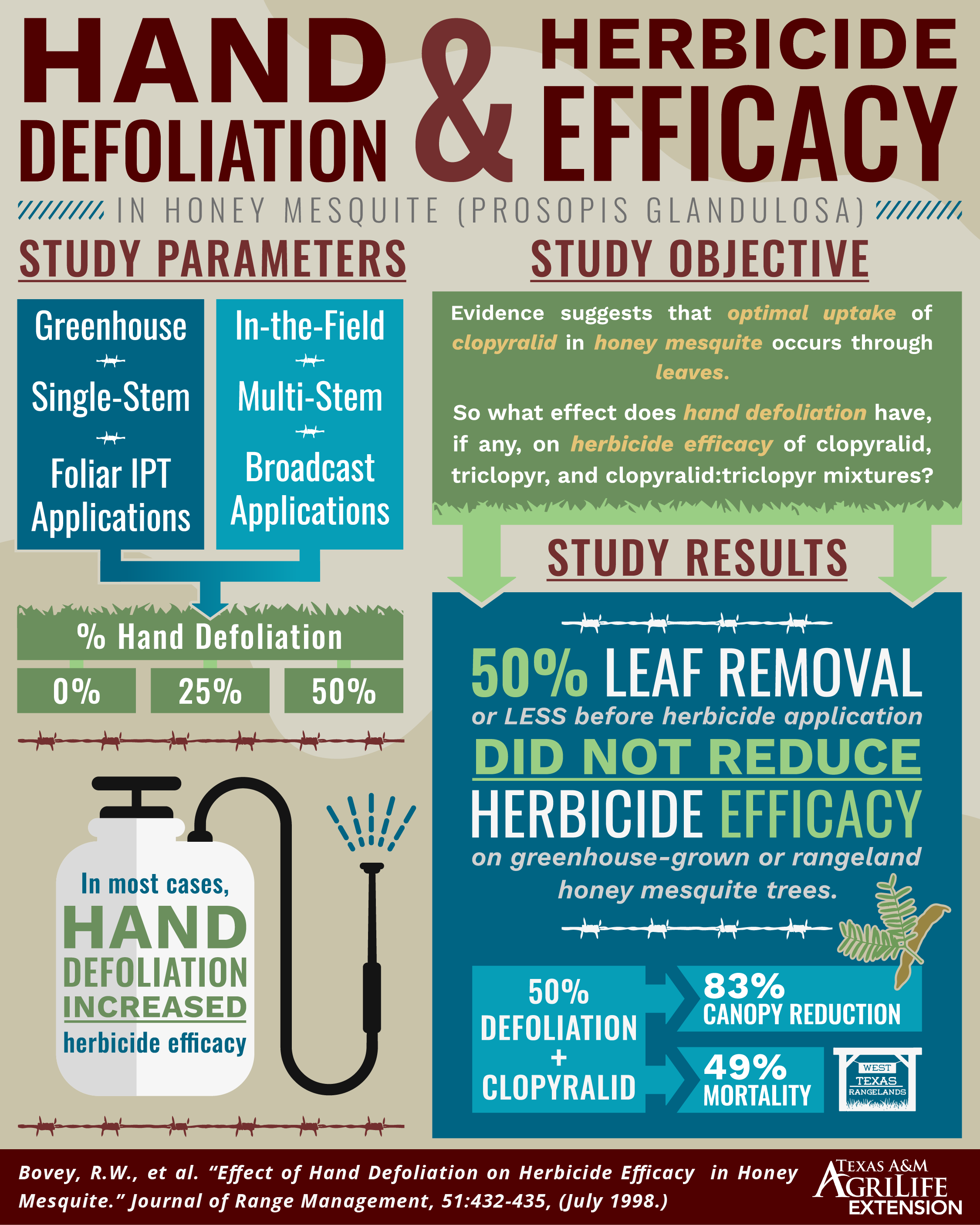
Grasshoppers are in full force this year! Has that delayed your foliar herbicide applications on mesquite? If herbicide application success is dependent on optimal uptake through healthy, mature leaves, then what effect can varying defoliation rates have on herbicide efficacy of clopyralid, triclopyr, and clopyralid+triclopyr applications?
[Read more…] about Herbicide Efficacy Following Defoliation on Honey Mesquite
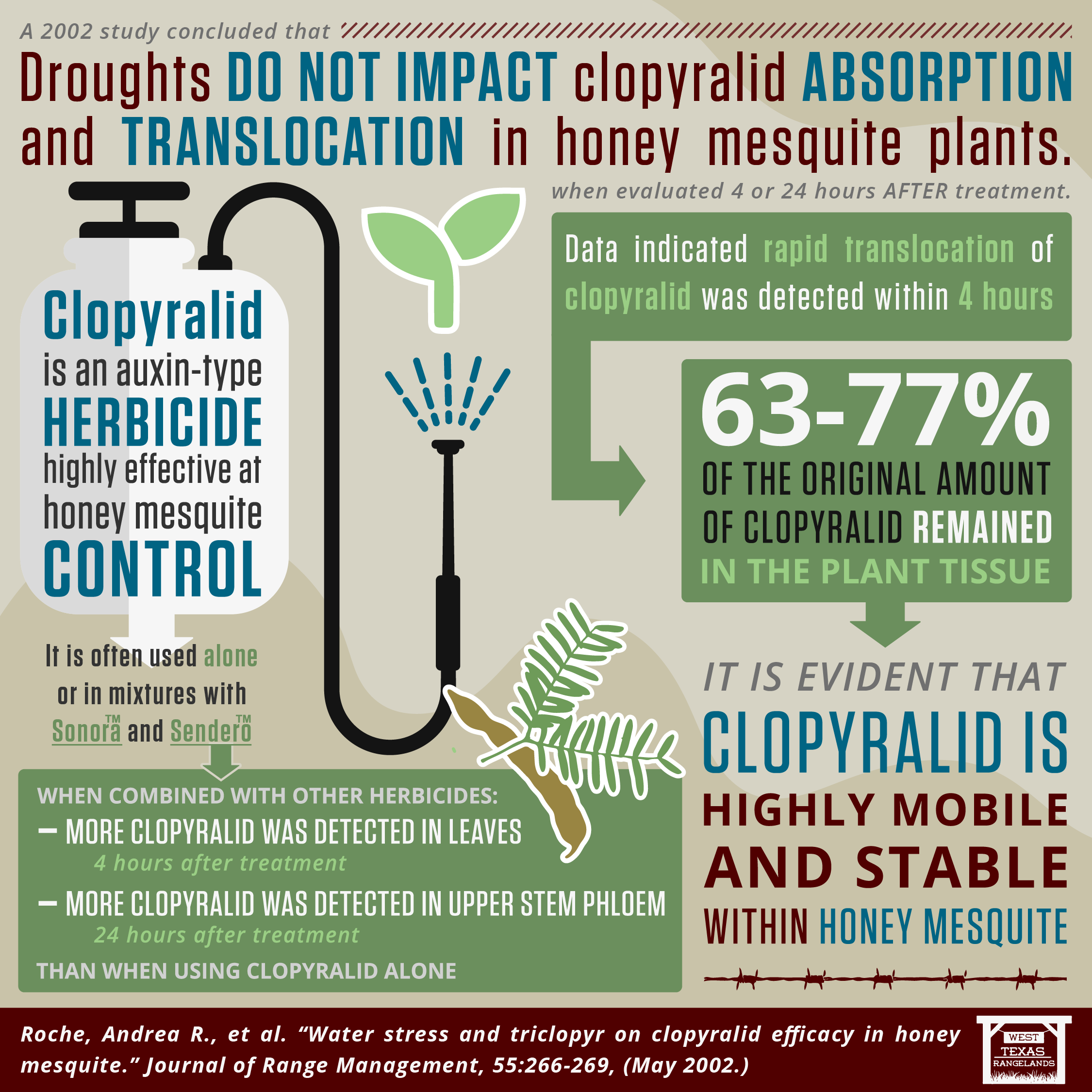
Drought and Triclopyr on Clopyralid Efficacy in Honey Mesquite
Ever wonder the effectiveness of herbicides on honey mesquite during drought? Well, researchers from our department were wondering the same thing and studied how drought effects herbicide efficacy in herbaceous and woody plants. There were chamber studies conducted to evaluate the influence of water stress and triclopyr on the absorption and translocation of clopyralid in greenhouse-grown honey mesquite. Clopyralid is an auxin-type herbicide highly effective at honey mesquite control. It is often used alone or in combinations with other active ingredients to form common honey mesquite foliar-applied herbicides like Sonora™ and Sendero™.
[Read more…] about Drought and Triclopyr on Clopyralid Efficacy in Honey Mesquite
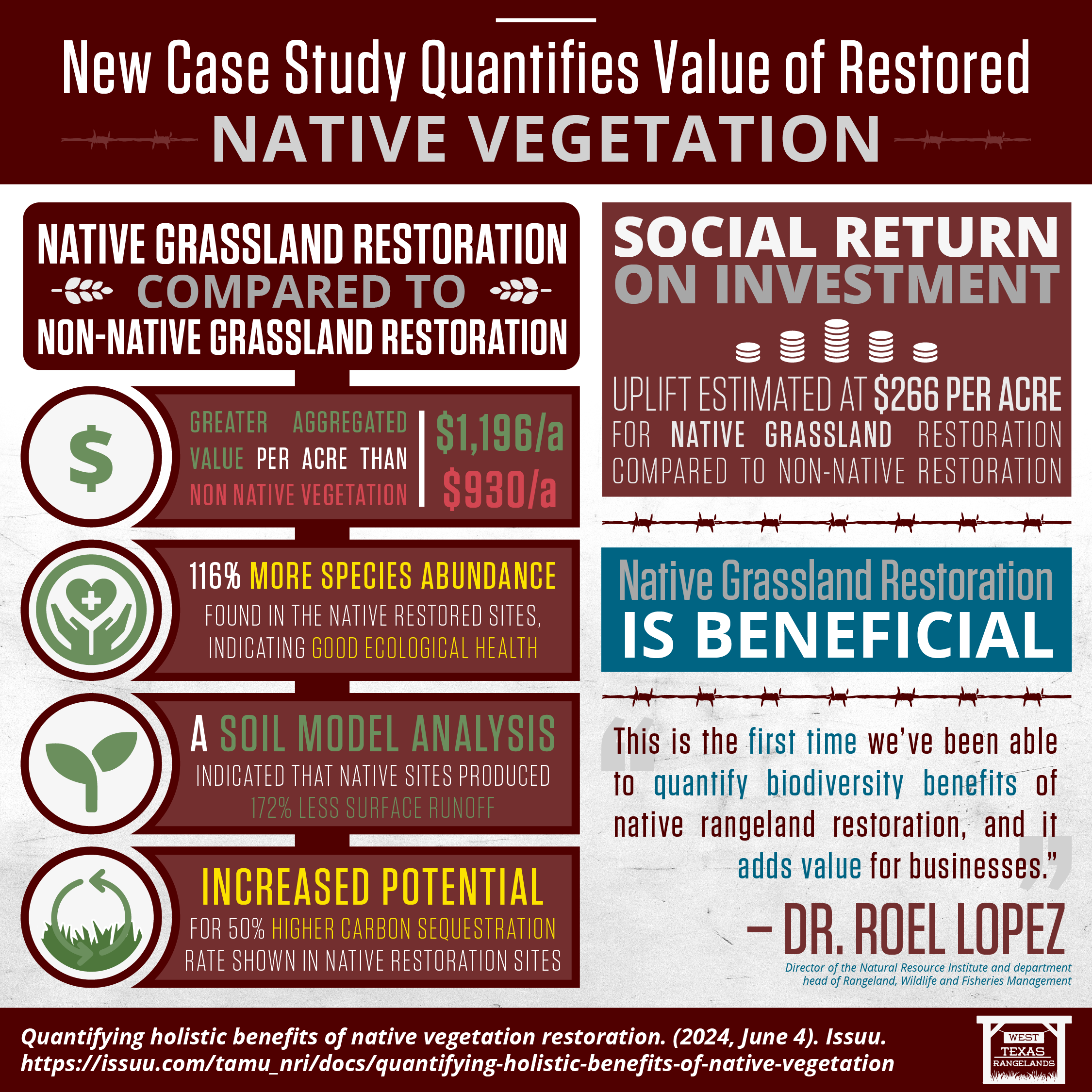
What is the Value of Native Vegetation Restoration on Oil & Gas Rights-of-Way?
Did you know that there are more than 500,000 miles of oil and gas rights-of-ways in Texas alone? There has been limited information available to evaluate the difference in restoring disturbed lands to native states versus the more traditional use of non-native seeds. Being able to understand the difference along with the ecosystem impacts and the social benefits could create a positive case for vegetation restoration by the oil and gas industry.
[Read more…] about What is the Value of Native Vegetation Restoration on Oil & Gas Rights-of-Way?
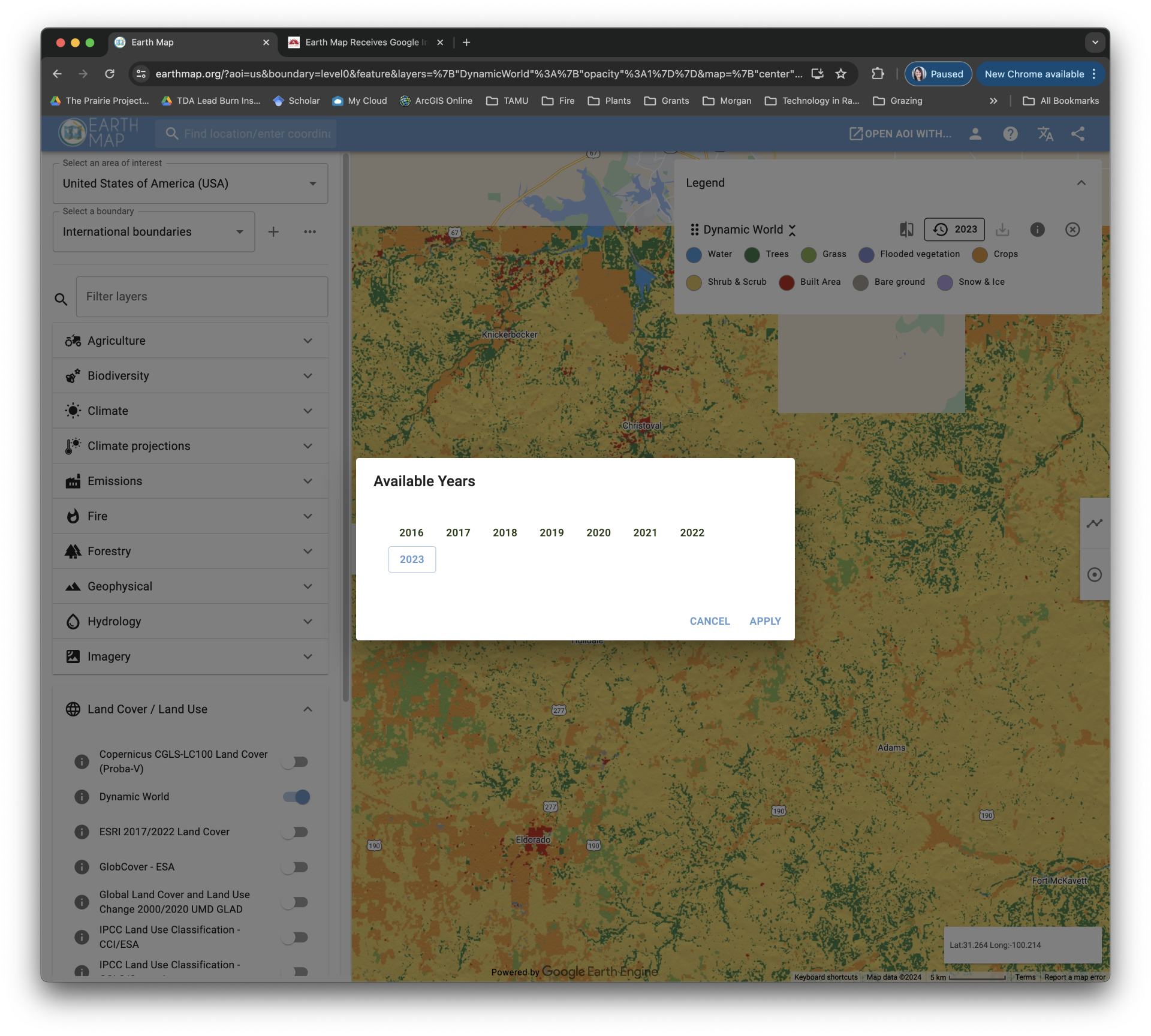
Earth Map
An Economic Comparison of Prescribed Extreme Fire and Alternative Methods for Managing Invasive Brush Species in Texas: a Modeling Approach
Did you know that 40% of the Earth’s surface is covered in Rangelands? However with the increase of brush encroachment, there has been an increase in conversion from rangeland into undesirable and unproductive species. In the Rolling Plains the primary invasive species focused on is prickly pear cactus, in South Texas Plains huisache is the primary focused species, and in the Edwards Plateau, Ashe & Redberry Juniper are of concerns. One fun fact, Mesquite is considered to be a secondary problem in all three of these ecoregions.
Texas Pasture Land Values Summary
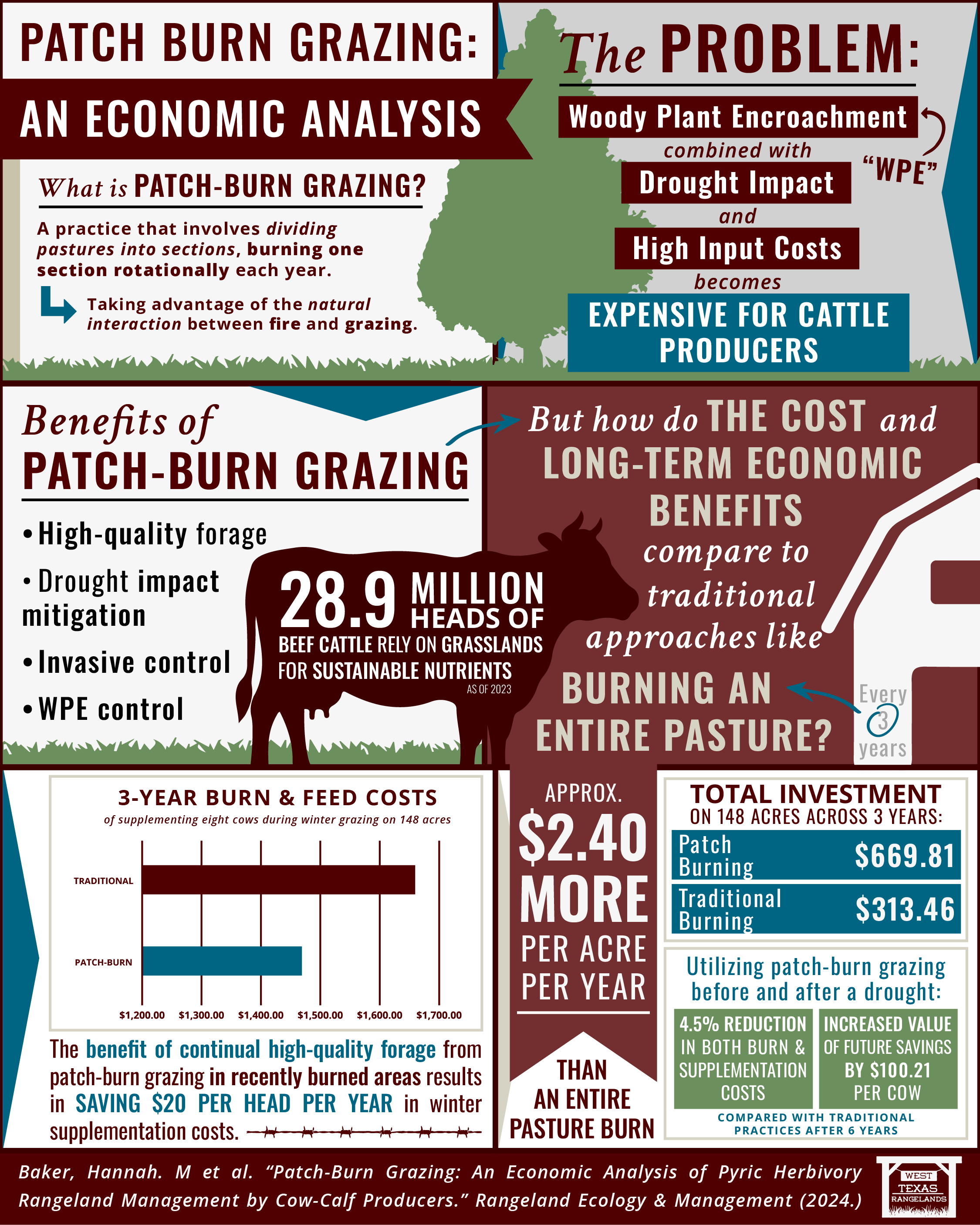
Patch Burning Improves Nutritional Quality of Two Gulf Coast Grasses
Gulf cordgrass and seacoast bluestem are native warm season grasses that are found in the Texas Coastal Prairies and Marshes ecoregions. Mature Gulf cordgrass has a nutritional value that is considered poor for grazing animals while the seacoast bluestems nutritional value is considered fair to good in spring and early summer.
Haynes, V.L.; Avila-Sanchez, J.S.; Toomey, A.E.; Ortega-S., J.A.; Campbell, T.A.; Ortega-S., A., Jr.; Rideout-Hanzak, S.; Wester, D.B. Patch Burning Improves Nutritional Quality of Two Gulf Coast Grasses—And Winter Burning Is Better than Summer Burning. Fire 2023, 6, 105. https://doi.org/ 10.3390/fire6030105
[Read more…] about Patch Burning Improves Nutritional Quality of Two Gulf Coast Grasses