Question: I must have received this question ten times in the last month via phone calls and emails from all across the state. Can a Texas city enforce a ban or a limit on the number of chickens residents are allowed to have at their residence?
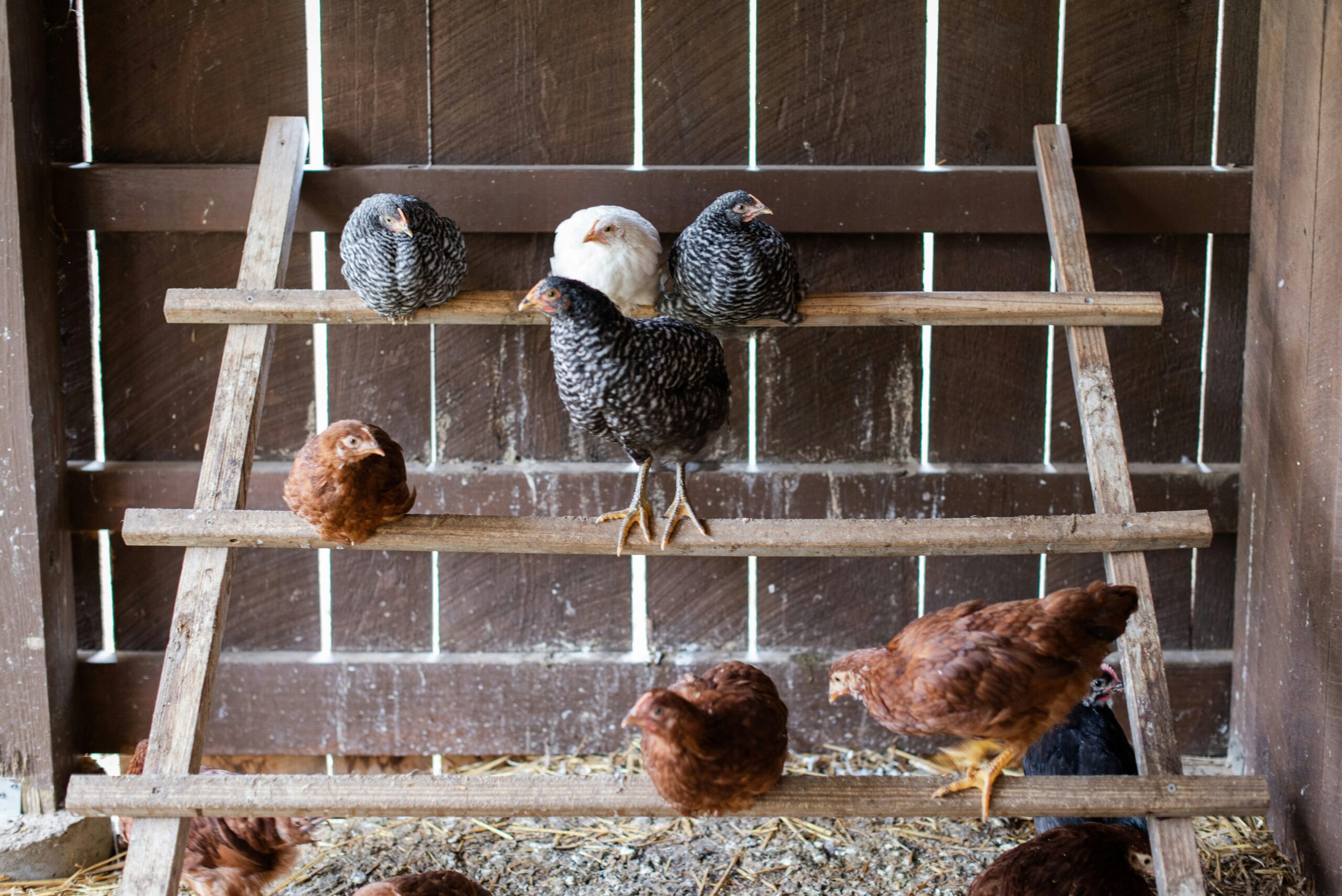
Photo by Zoe Richardson / Several chickens perch on wooden roosts inside a coop with a brown wooden wall in the background.
Answer: We do not know.
There has not been a court that has answered this question yet. The answer will depend on how a court interprets the Right to Farm Statute definitions and the particular factual situation at issue. Let’s walk through the analysis.
Texas Right to Farm Statute
Read complete statute here.
The Texas Right to Farm statute limits the right of a city to impose “governmental requirements” on an “agricultural operation.” Specifically, before a city can impose a governmental requirement on an agricultural operation, a number of requirements must be met. This includes there being clear and convincing evidence that there are no less restrictive means to accomplish the purpose of the requirement and it is necessary to protect people in the immediate vicinity from imminent danger of specific listed perils. Further, the governing body of the city must make certain findings based upon a report conducted by city health officer or consultant. Without these steps being taken and findings being made, a city may not impose a governmental requirement on an agricultural operation within its bounds.
Definitions
The term “requirement” is defined as “any rule, regulation, ordinance, zoning, license or permit requirement, or other requirement or restriction enacted or promulgated by a county, city, or other municipal corporation that has the power to enact or promulgate the requirement or restriction.”
The term “agricultural operation” is defined as including the following activities: cultivating the soil; producing crops or growing vegetation for human food, animal feed, livestock forage, forage for wildlife management, planting seed, or fiber; floriculture; viticulture; horticulture; silviculture; wildlife management; raising or keeping livestock or poultry, including veterinary services; planting cover crops or leaving land idle for the purpose of participating in any governmental program or normal crop or livestock rotation procedure; the commercial sale of animals; and aquiculture.
Application to chickens
Because there has been no reported appellate court case dealing with the application of this portion of the Texas Right to Farm statute, it is impossible to know with certainty how a court might apply the statute to any specific set of facts.
Seemingly, the main question in the analysis is whether backyard chickens constitute an “agricultural operation.” Chicken owners would likely argue that they are simply raising or keeping chickens in their yards, and the statute expressly says that “raising or keeping livestock or poultry” qualifies as an “agricultural operation.” They would point to the fact that there is no statutory exception for chickens kept in town or any requirement related to the size or income to qualify as an agricultural operation under this statute. Cities seeking to enforce chicken-related ordinances may argue that backyard chickens should not be considered as an agricultural operation because they do not generate revenues or they are not on a large enough amount of land. These chickens would likely not meet the USDA definition of “farm,” which requires the production of more than $1,000 of agricultural products a year. Which argument would win in court? We just do not know. Until a court give us an answer, the debate over whether cities can legally enforce these types of ordinances will continue.
Do note, importantly, the Right to Farm Statute now provides a right of action that allows a person aggrieved by a violation to bring action against a city to obtain declaratory or injunctive relief preventing the city from enforcing the requirement. As part of that provision, a person who prevails under this type of action is entitled to recover court costs and reasonable attorney’s fees.
Texas Constitutional Amendment
In addition to the Right to Farm statute discussed above, there is also a Right to Farm constitutional amendment in Texas. Section 36, Article I of the Texas Constitution provides that people have the right to engage in generally accepted farm, ranch, timber production, horticulture, or wildlife management practices on the real property they own or lease. The Constitutional Amendment does not include any definitions, and there have been no reported appellate court cases interpreting the language. Would raising chickens within the city limits fall under the protections of the Constitution? It is impossible to know until we see a case and some direction from Texas courts.