A federal court in Iowa recently upheld the constitutionality of a statute imposing criminal penalties for defendants who use recording devices while criminally trespassing in People for the Ethical Treatment of Animals v. Reynolds. [Read Opinion here.] The statute, while not expressly focused solely on agricultural operations, is an important protection for ag operations in Iowa concerned about activist groups trespassing and conducting secret videotaping or recording. After a number of attempts to pass “ag gag” laws constitutionally protecting agricultural operations from this type of activity failed in several other states, this is an example of an approach that, at least thus far, has withstood constitutional scrutiny.
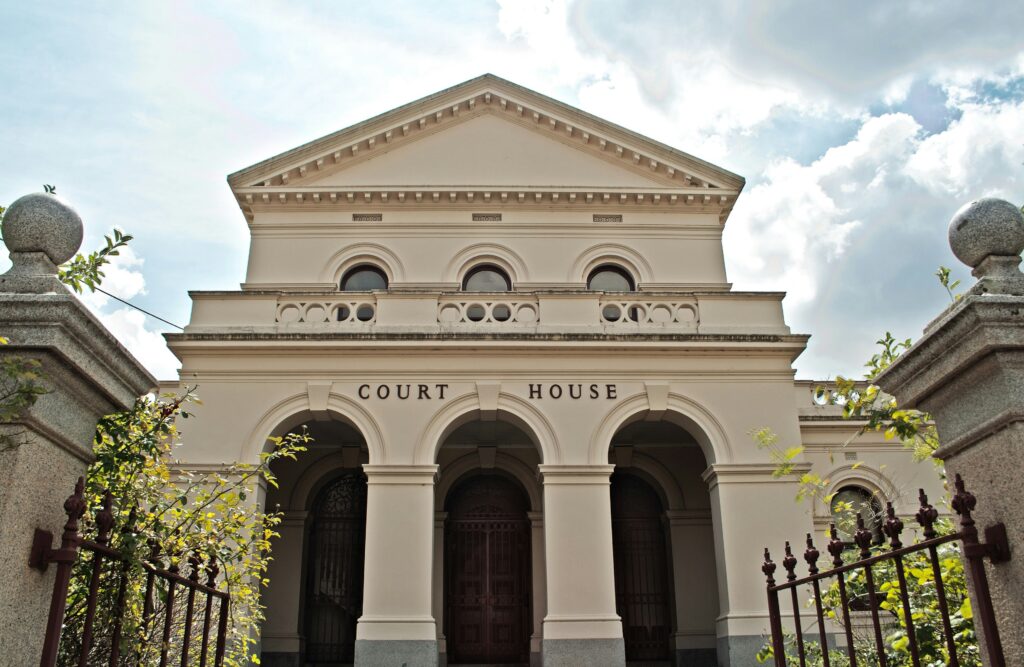
Photo by Melody Ayres-Griffiths
Background
In 2021, the Iowa Legislature passed Iowa Code 727.8A (the Act) imposing additional criminal penalties for defendants who used recording devices while criminally trespassing. The law states that a person committing a trespass who knowingly places or uses a camera or electronic surveillance device to transmit or record images on the trespassed property commits a crime.
Constitutional Law Language
A bit of constitutional law language and background may be helpful in understanding this case. A facial challenge is essentially a challenge to the law as it is written, not as applied to specific facts. In other words, to succeed on a facial challenge, a plaintiff must show there is no set of facts under which a statute can be constitutional. An as-applied challenge, on the other hand, looks only at the constitutionality of a statute as applied to the facts in the specific case.
Litigation
This is not the first case involving this statute. Previously, the United States Court of Appeals for the Eighth Circuit ruled in favor of Iowa upholding the statute against a facial challenge. The court, however, remanded the case back to the trial court to proceed on the plaintiffs’ as-applied constitutional challenge claim.
Therefore, the current case involves an as-applied constitutional challenge to the portion of the statute criminalizing using a camera or electronic surveillance device to transmit or record images on trespassed property. Following the remand, two plaintiffs, People for the Ethical Treatment of Animals (PETA) and the Iowa Citizens for Community Improvements (ICCI) continued to pursue the constitutional challenge on an as-applied basis. Specifically, they claim the Act violates the First Amendment when applied to the Plaintiffs’ activities.
PETA alleges it has conducted undercover investigations nationwide, including in Iowa. These investigations often involve PETA members obtaining employment at a targeted facility and using a hidden camera to document events at the targeted operation. It then sends these recordings to law enforcement and media outlets. PETA claims it is deterred from conducting similar investigations in Iowa now due to the Act.
ICCI claims that its members and staff intentionally engage in civil disobedience involving trespass. Members have previously been arrested for trespass during protests at various locations. During these protests, the members record their own activities and surroundings, something they claim is integral to their advocacy work. ICCI claims members are deterred from engaging in these types of activities due to the penalties imposed by the Act.
Defendants seek to dismiss the Plaintiffs’ claims. Plaintiffs challenge the Motion to Dismiss and seek a summary judgment motion in their favor.
Court’s Opinion
The court upheld the constitutionality of the Act as applied in this case.
Jurisdictional Issues
The court began its analysis by looking at a number of jurisdictional issues including standing and ripeness.
To have standing to challenge the Act, Plaintiffs must show injury, causation, and redressability. For ripeness, they must show their claims are fit for jurisdictional decision rather than contingent on future events. Importantly, in the First Amendment context, courts have been clear that an actual arrest, prosecution, or other enforcement action is not prerequisite to challenging a law.
Defendants claimed Plaintiffs lacked standing because they failed to identify a specific, constitutionally-protected activity that would violate the Act. Plaintiffs argued that both the trial court and Eighth Circuit found they had standing in the facial challenge case, and they argued the as-applied context does not change that finding.
The court agreed with the Plaintiffs’ argument that they showed “concrete evidence of their intent to engage in conduct prohibited under the Act.” Both alleged a history of doing so. The court also found the redressability requirement satisfied because if Plaintiffs succeeded in eliminating the Act’s enhanced criminal penalties, that would alleviate the chill on expressive activities. This is true, the court held, even though the ordinary trespass liability would remain because a favorable ruling will relieve a discrete injury, even if it does not relieve them of every injury.
First Amendment Analysis
Judge Rose then set forth a three-step analysis used to analyze First Amendment claims.
- Protected expression: Recording while trespassing is a First Amendment activity. The first question the court answered was whether recording while trespassing constitutes protected expression. The Eighth Circuit assumed without deciding it did. Case law makes clear that, in general, recording is a protected First Amendment activity. The court viewed the Plaintiffs’ recording activities as “an important step in the speech process.” Additionally, the court held that the Plaintiffs’ recordings address matters of public controversy, “the very speech the First Amendment most rigorously protects.” The decision that recording while trespassing constitutes speech, the court noted, is consistent with a number of other cases involving agricultural trespassing recording laws.
- Standard of review: This is a content-neutral law subject to intermediate scrutiny. The court found the Act to be a content neutral provision. That means it applies with equal force regardless of the message or viewpoint the recording might convey–the prohibition turns not on the content, but only on the conduct of recording while trespassing. These types of restrictions trigger “intermediate scrutiny” under the law. This means that to be upheld, a law must be (1) narrowly tailored to serve a significant governmental interest; and (2) leave ample alternative channels of communication.” In other words, the law must “advance the government’s interest more effectively than would be possible without it, while not burdening substantially more speech than necessary.”
- When intermediate scrutiny is applied, the law survived. The court walked through the analysis applying intermediate scrutiny.(a) Governmental interest in property rights and privacy: The Act serves two governmental interests: Protecting property rights and privacy. These are two of the “most fundamental interests protected under American law.” When the recording element is added to the trespassing, the court held this “represents a qualitatively different and more serious infringement than a mere physical presence alone.” This, the court reasoned, provides a substantial basis to conclude there is a significant governmental interest in the case.(b) Narrowly tailored analysis: The court held that the Act was narrowly tailored to serve the State’s interest in protecting property rights and privacy. “The Constitution permits greater regulation of expression when it intersects with unlawful conduct…” The recording prohibited by the Act “exacerbates privacy and property intrusions by creating a permanent record that transforms a temporary physical invasion into an enduring breach that transcends both time and space.” The fact that the recordings are made in locations where the Plaintiffs are not lawfully allowed to be strengthens the government’s interest in preventing recording. This right to exclude exists not only in areas off-limits to the public, but also in those conditionally accessible spaces once permission has been revoked. “The Supreme Court has never recognized a First Amendment right to record on private property when the property owner objects. This remains true regardless of how accessible the property might be to the public. “The court noted an interesting technicality–the concept of “reasonable expectation of privacy,” which the Plaintiffs argued, is relevant in the search and seizure analysis of the Fourth Amendment, but not to the questions here involving the First Amendment. Additionally, the court distinguished this case where the activity occurred on private property from those cases involving public spaces.The court explained, “without doubt, trespassing is a legally cognizable injury because it harms the privacy and property interests of property owners and other lawfully-present persons. Trespassers exacerbate that harm when they use a camera while committing their crime.” Thus, the evidentiary burden is different when a statute restricts expression only during unlawful conduct. The prohibited conduct is limited to only that at the intersection of trespassing and recording.
(c) Alternative channels of communication: The court held that the Act leaves open alternative channels for Plaintiffs to convey their messages and reach their expressive goals. Here, Plaintiffs are not prohibited from expressing themselves in traditional public forums. The Act limits expression only after the individual has crossed the threshold into unlawful conduct on private property. This distinction, the court wrote, is dispositive. “The First Amendment has never guaranteed trespassers the right to record while unlawfully present on another’s property.” Both Plaintiffs have alternative channels to communicate their message including activities on public spaces, written accounts and interviews, and public records requests.
Conclusion
The Defendants’ Motion to Dismiss was granted, and the Plaintiffs’ Motion for Summary Judgment was denied. The Act was deemed constitutional in this as-applied challenge.