• Skip to primary navigation
  • Skip to main content
  • Skip to primary sidebar
  • Texas A&M Forest Service
  • Texas A&M Veterinary Medical Diagnostics Laboratory
  • Texas A&M AgriLife Extension Service
  • Texas A&M AgriLife Research
  • Texas A&M College of Agrculture and Life Sciences
West Texas Rangelands
West Texas RangelandsWe hope to provide a variety of science-based rangeland information and current research on prescribed fire, wildfires, brush management, and grazing management!
  • Menu
  • Home
  • About & Contact
  • Publications
    • Extension Publications
    • Refereed Journal Articles
    • Program Summaries
  • Events
  • Lunch N’ Learn
  • Infographics
    • Drought
    • Grazing
    • Herbicide
    • Prescribed Fire
    • Rangeland Plants
    • Wildfire
  • Range Resources
    • Published to Pasture
    • Range Concepts
  • Fire Resources
  • Sponsors
  • AgriLife Learn Online Courses

Drought and Triclopyr on Clopyralid Efficacy in Honey Mesquite

July 17, 2024 by jaime.sanford

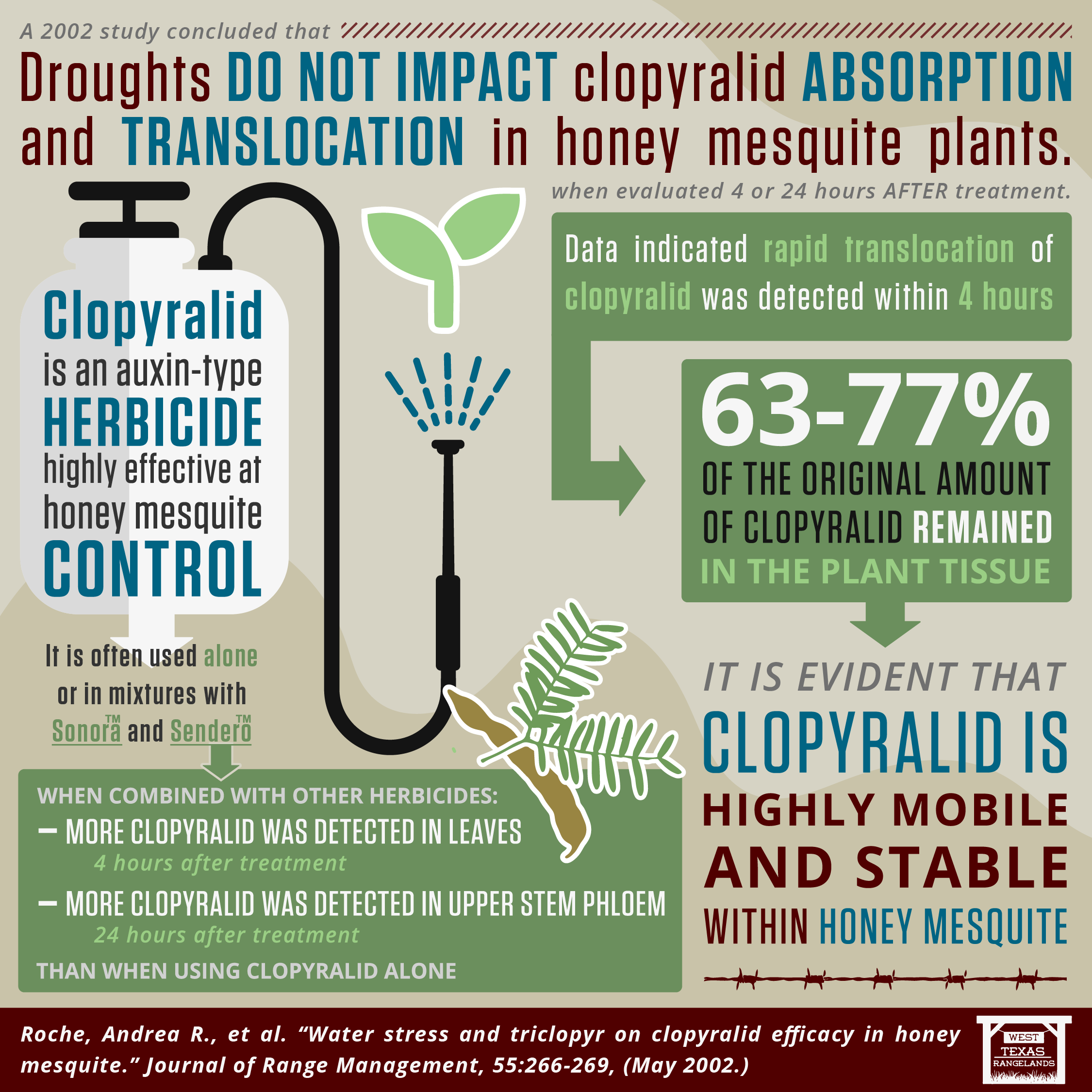
Ever wonder the effectiveness of herbicides on honey mesquite during drought? Well, researchers from our department were wondering the same thing and studied how drought effects herbicide efficacy in herbaceous and woody plants. There were chamber studies conducted to evaluate the influence of water stress and triclopyr on the absorption and translocation of clopyralid in greenhouse-grown honey mesquite. Clopyralid is an auxin-type herbicide highly effective at honey mesquite control. It is often used alone or in combinations with other active ingredients to form common honey mesquite foliar-applied herbicides like Sonora™ and Sendero™.

[Read more…] about Drought and Triclopyr on Clopyralid Efficacy in Honey Mesquite
Filed Under: Drought Management, Grazing Management

Future Wildfire Seasons: Hotter, Dryer, and Longer

July 10, 2024 by jaime.sanford

A Fire danger index (FDI) is a measure that is used to assess the risk and severity of a fire. It relies on the combination of weather and fuel conditions. These FDI’s have been used to help predict and manage the risk of wildfires. Even with these tools, there is still uncertainty in predicting the likelihood of fire ignition or the potential size the fire can get. 

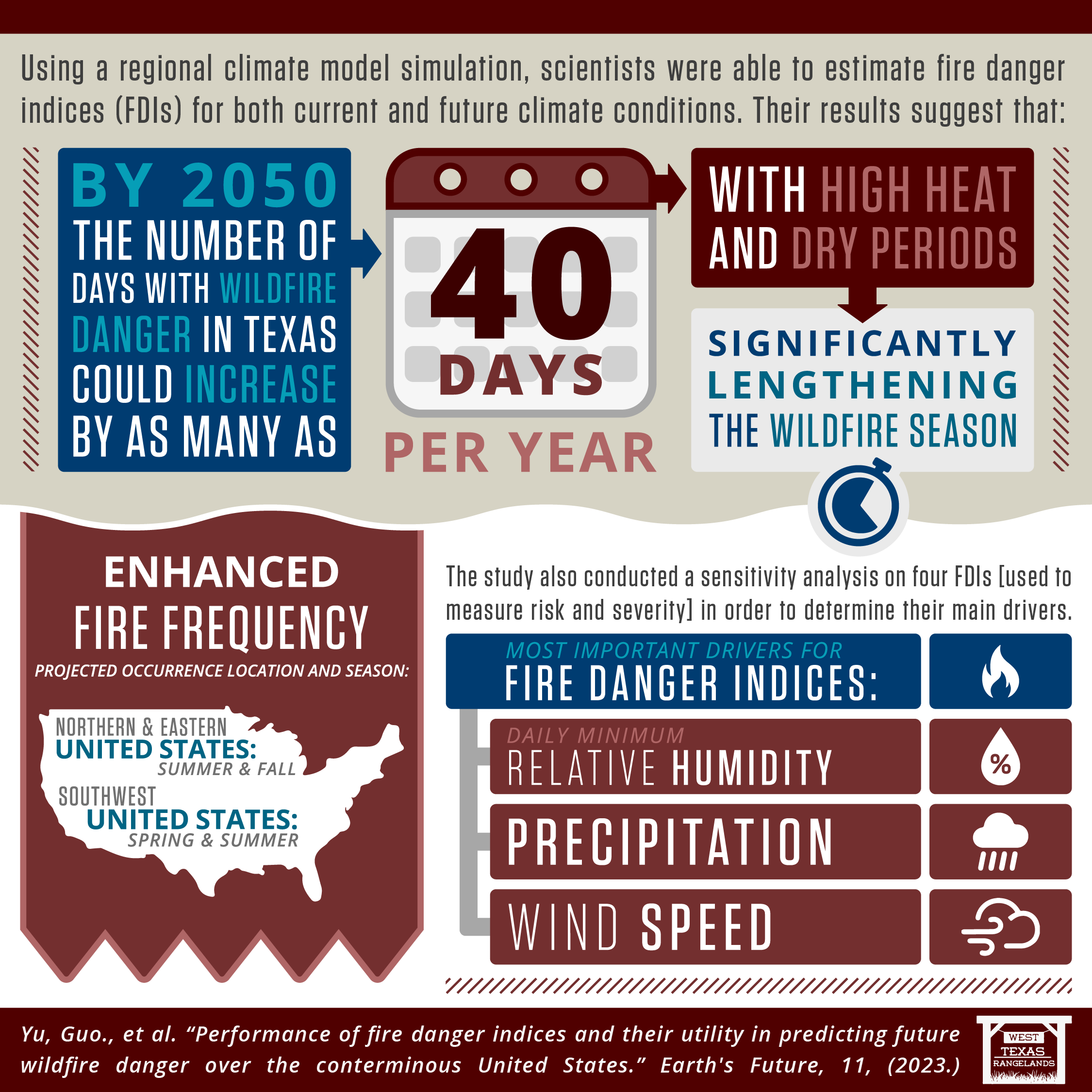
In the study below, four of the FDI’s were analyzed and had a sensitivity analysis performed on them to determine the most important drivers. The sensitivity analysis determined that daily minimum relative humidity, precipitation, and wind speed were the most important driving factors in future wildfire dangers, including length of a wildfire season. 

The study also included a regional climate model simulation to derive FDI’s for current and future climate conditions. The results from this simulation suggested that an overall increase in fire potential and a prolonged wildfire season is expected in our future Texas climate. Enhanced fire frequency and fire season length is expected to occur in Spring and Summer throughout the Southern Great Plains. 

By 2050, the number of days with wildfire danger in Texas could increase by as many as 40 days per year with high heat and dry periods significantly lengthening the wildfire season. 

For more information and to read the study below, click here –  Earth s Future – 2023 – Yu – Performance of Fire Danger Indices and Their Utility in Predicting Future Wildfire Danger Over!


Yu, G., Feng, Y., Wang, J., & Wright, D. B. (2023). Performance of fire danger indices and their utility in predicting future wildfire danger over the conterminous United States. Earth’s Future, 11(11). https://doi.org/10.1029/2023ef003823

Filed Under: Wildfire, Wildfires

The Wildfire Impacts of the 2017-2018 Precipitation Whiplash Event across the Southern Great Plains

July 3, 2024 by jaime.sanford

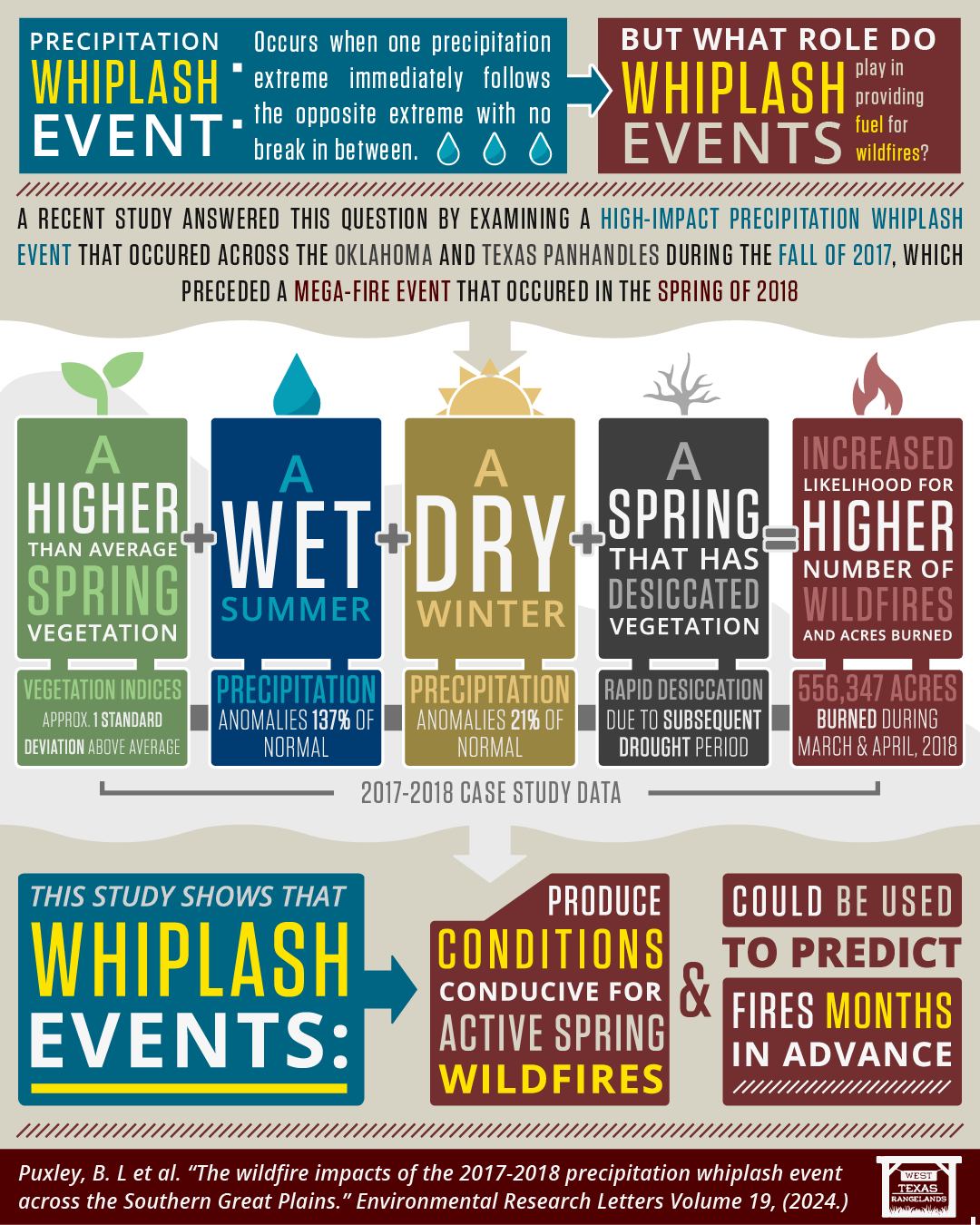
Above average precipitation during the growing season, spurring on massive amounts of grass growth, followed by significant drought, resulting in an intense wildfire season.  All within a single year. It’s absolute whiplash!  Sound familiar? Researchers recently examined the role of whiplash events where preceding precipitation produce massive fuel for wildfires in a short period of time using 2017-2018 in Texas and Oklahoma as a case study. While studies like these have been done in California, there have been limited studies like this across the Southern Great Plains. This study was the first time that the relationship among precipitation, vegetation, and wildfires have been looked at collectively across the Southern Great Plains! 

[Read more…] about The Wildfire Impacts of the 2017-2018 Precipitation Whiplash Event across the Southern Great Plains

Filed Under: Wildfire, Wildfires

Texas + Water – June Update

June 26, 2024 by jaime.sanford

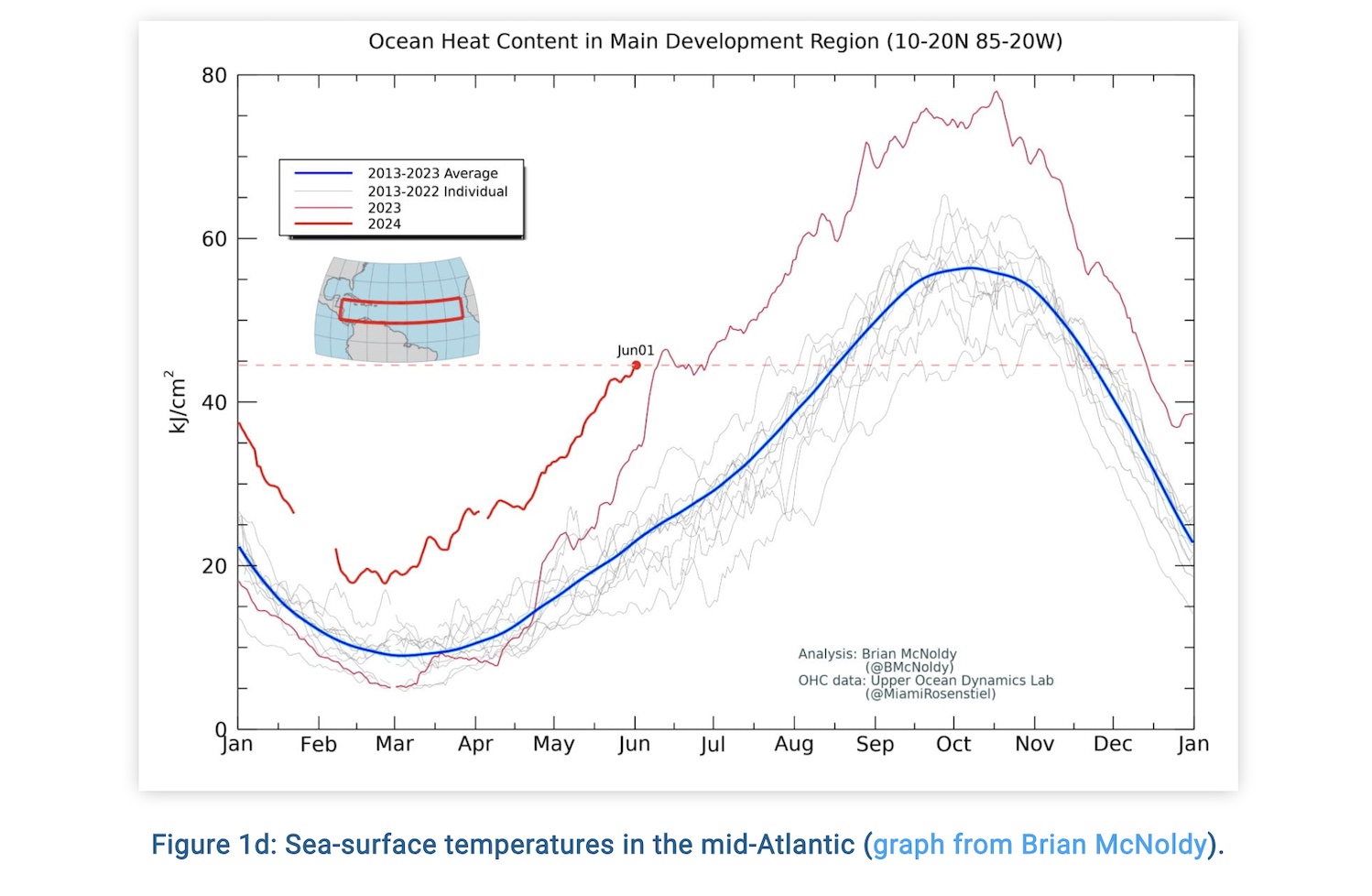
Hurricane season is coming fast and furious! NOAA is predicting an above-normal hurricane season, forecasting 17 – 25 named storms (winds higher than 39 mph), 8-13 hurricanes (winds of 74 mph or higher) and 4-7 major hurricanes (Cats 3, 4, or 5 with winds of 111 mph or higher). The sea-surface temperatures are already exceeding last year’s temperatures. The figure above shows the differences in temperatures from this year and previous years.  With all this in mind, NOAA is predicting an 85% above-normal season. The season stretches from June 1st – November 30th. 

[Read more…] about Texas + Water – June Update

Filed Under: Drought Management, El Niño, La Niña, Weather

What is the Value of Native Vegetation Restoration on Oil & Gas Rights-of-Way?

June 19, 2024 by jaime.sanford

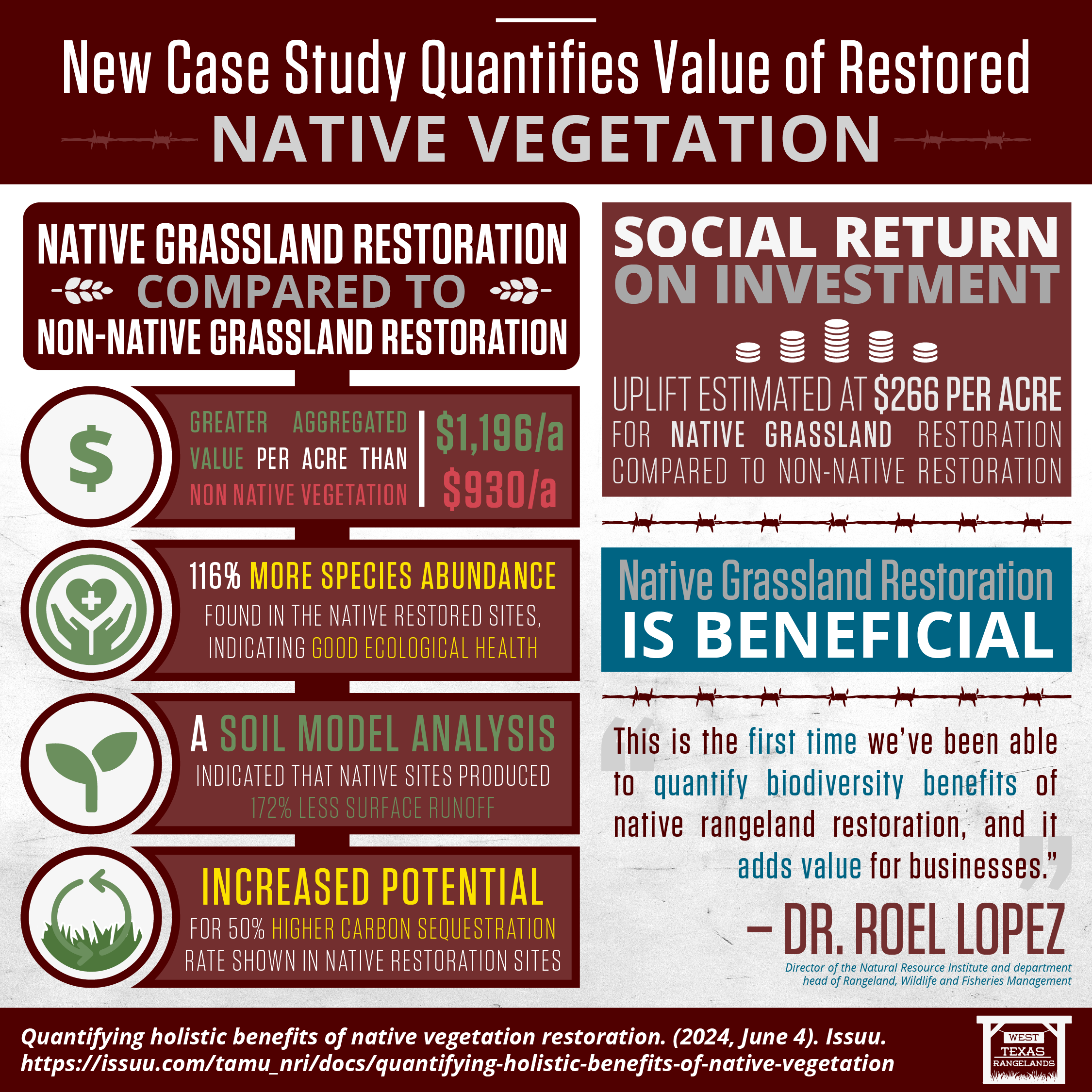
Did you know that there are more than 500,000 miles of oil and gas rights-of-ways in Texas alone? There has been limited information available to evaluate the difference in restoring disturbed lands to native states versus the more traditional use of non-native seeds. Being able to understand the difference along with the ecosystem impacts and the social benefits could create a positive case for vegetation restoration by the oil and gas industry. 

[Read more…] about What is the Value of Native Vegetation Restoration on Oil & Gas Rights-of-Way?

Filed Under: Conservation, Conservation Practices, Grazing Management

Extreme Drought Impacts have been Underestimated in Grasslands and Shrublands Globally

June 12, 2024 by jaime.sanford

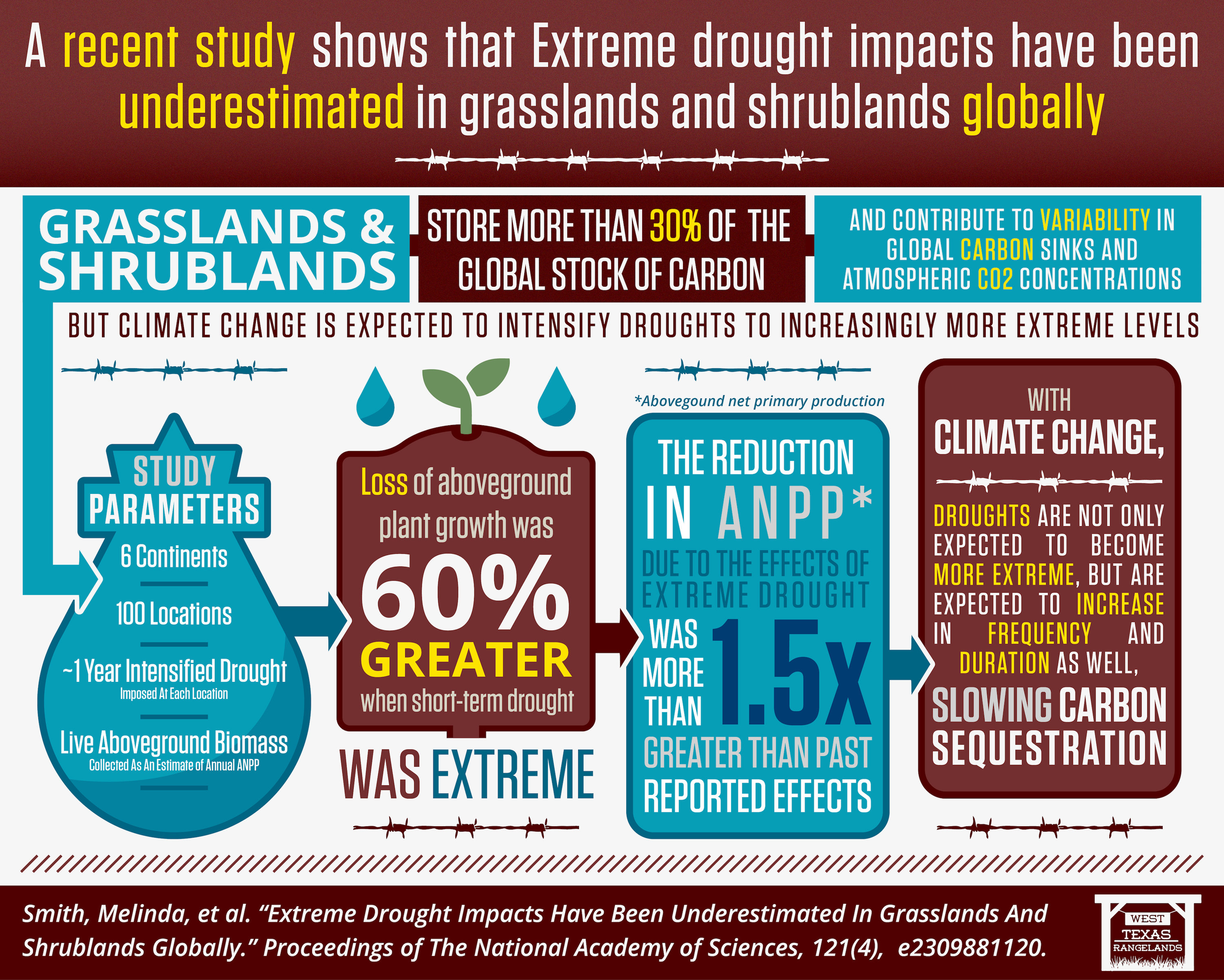
As the climate is changing so is the frequency and severity of short-term drought events. A new study by Dr. Bill Rogers and others (the study has over 169 authors from around the world!) showed that while drought has intensified, the effects on the functioning ecosystem remain largely unresolved and unrecovered. This is due to the differences in variations of drought and differences in ecosystems that potentially mediate drought impacts. This fascinating new research from Dr. Rogers and team used a coordinated distributed experiment to quantify the impact of short-term drought on grassland and shrubland ecosystems from across the world. [Read more…] about Extreme Drought Impacts have been Underestimated in Grasslands and Shrublands Globally

Filed Under: Drought Management

2023 Rural Land Value Trends Report

June 5, 2024 by jaime.sanford

Check out the 2023 Rural Land Value Trends Report from Texas Agriculture Law Blog by Tiffany Lashmet! https://agrilife.org/texasaglaw/2024/05/06/2023-rural-land-value-trends-report-is-here/

West Texas:

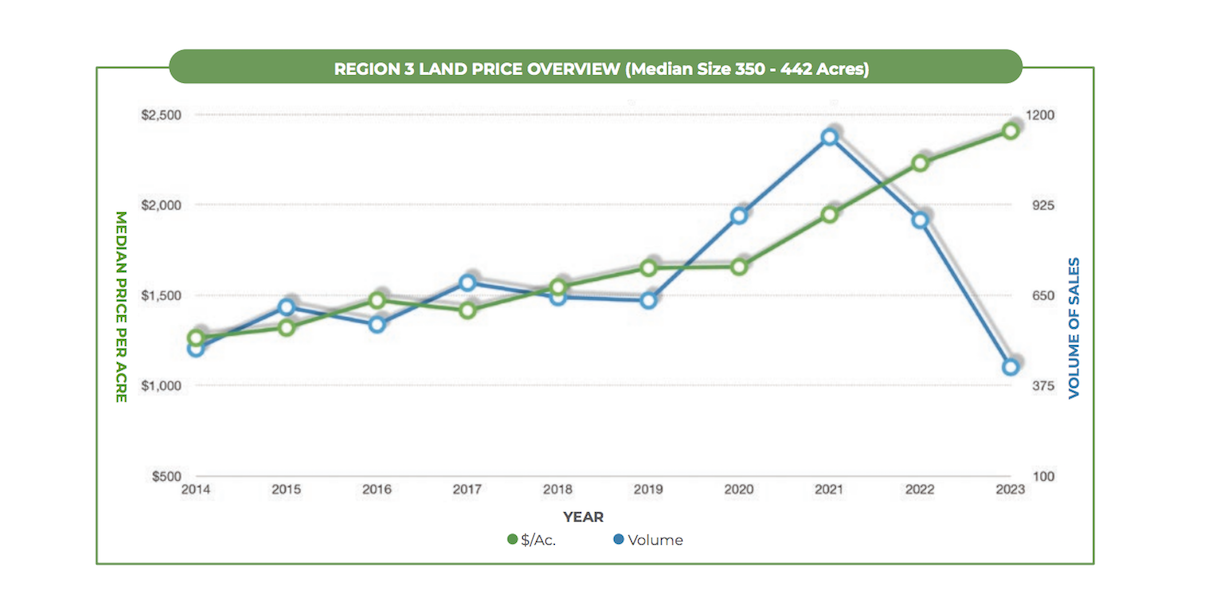
Strong demand for quality tracts continues to hold up prices in the region. At $2,410 per acre, prices rose 8.02 percent YOY. Tract size has also decreased from highs in 2021 and 2022, coming in at 385 acres this quarter, 10.65 percent below one year ago. Annualized sales volume declined 50.97 percent to 431 sales. Total dollar volume at $155.54 million decreased by 72.39 percent. At 64,540 acres, though a slight increase from last quarter, total acreage declined 74.44 percent YOY. Fourth quarter only sales volume fell 26.09 percent below that of fourth quarter 2022, a much less drastic drop compared to YOY.

Region 3 Take Homes:

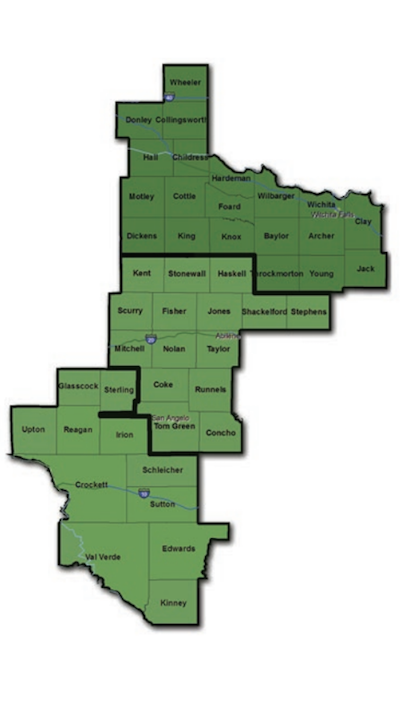
Counties included: Archer, Baylor, Childress, Clay, Coke, Collingsworth, Concho, Cottle, Crockett, Dickens, Donley, Edwards, Fisher, Foard, Glasscock, Hall, Hardeman, Haskell, Irion, Jack, Jones, Kent, King, Kinney, Knox, Mitchell, Motley, Nolan, Reagan, Runnels, Schleicher, Scurry, Shackelford, Stephens, Sterling, Stonewall, Sutton, Taylor, Throckmorton, Tom Green, Upton, Val Verde, Wheeler, Wichita, Wilbarger, and Young.

  • In discussions with an attorney in San Angelo, he stated that he had worked on 10 to 15 wind and solar leases in 2023, with 8 to 10 of those signed. Several of the companies decided they were no longer interested before the lease was signed.
  • According to the attorney, this was due to a number of factors including poor due diligence on the part of the company or ERCOT West not having enough transmission lines. These wind leases come in blocks where the attorney may represent one to a dozen landowners at a time.
  • As mentioned in the 2022 discussion, a solar farm in San Angelo area was expanding. This expansion has been completed from one to two sections.  There has not been any construction in the immediate San Angelo area since 2022 of any new solar farms.  This could be a result of the increased cost due to higher interest rates, cost of materials and construction costs.
  • Purchases by developers dropped significantly in 2023. This is due primarily to the increased interest rates and the fact the end users for these properties are no longer in the market due to the higher interest rates.
  • There continues to be an increase in residential development in the immediate area of the larger trade areas, specifically Wichita Falls, Abilene and San Angelo. It appears that residential buyers continue to move to areas with smaller schools, which are considered to be above average for educational opportunities.


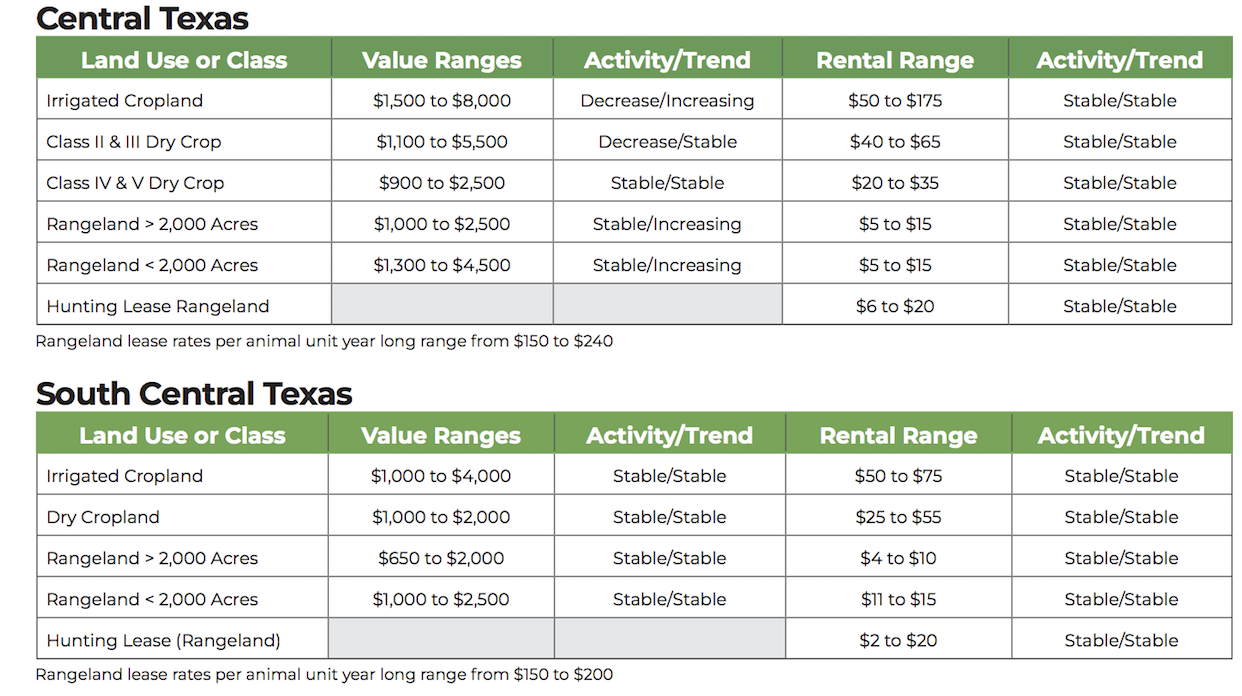
For the 2023 and previous years report, be sure to download it here – https://www.txasfmra.com/rural-land-trends

Rural Land Trends – Texas Chapter ASFMRA. (2024, March 29). Texas Chapter ASFMRA. https://www.txasfmra.com/rural-land-trends

Filed Under: Beef Cattle, Carbon Credits, Carbon Markets, Conservation, Land

Prescribed Fire Lessons

May 29, 2024 by jaime.sanford

The Nebraska Prescribed Fire Council has published its second issue of Prescribed Fire Lessons Learned! The Nebraska Prescribed Fire Council takes submissions from practitioners on lessons learned from prescribed fires to assist producers, landowners, PBAs, and other prescribed fire professionals to keep improving season after season.  This forum has been invaluable in learning from one another in hopes that mistakes or judgment calls turn into valuable lessons for all of us building and contributing to prescribed fire culture. Below are some highlights from this issue. 

[Read more…] about Prescribed Fire Lessons

Filed Under: Brush Management, Lessons Learned, Prescribed Burn Associations, Prescribed Burning, Wildfire

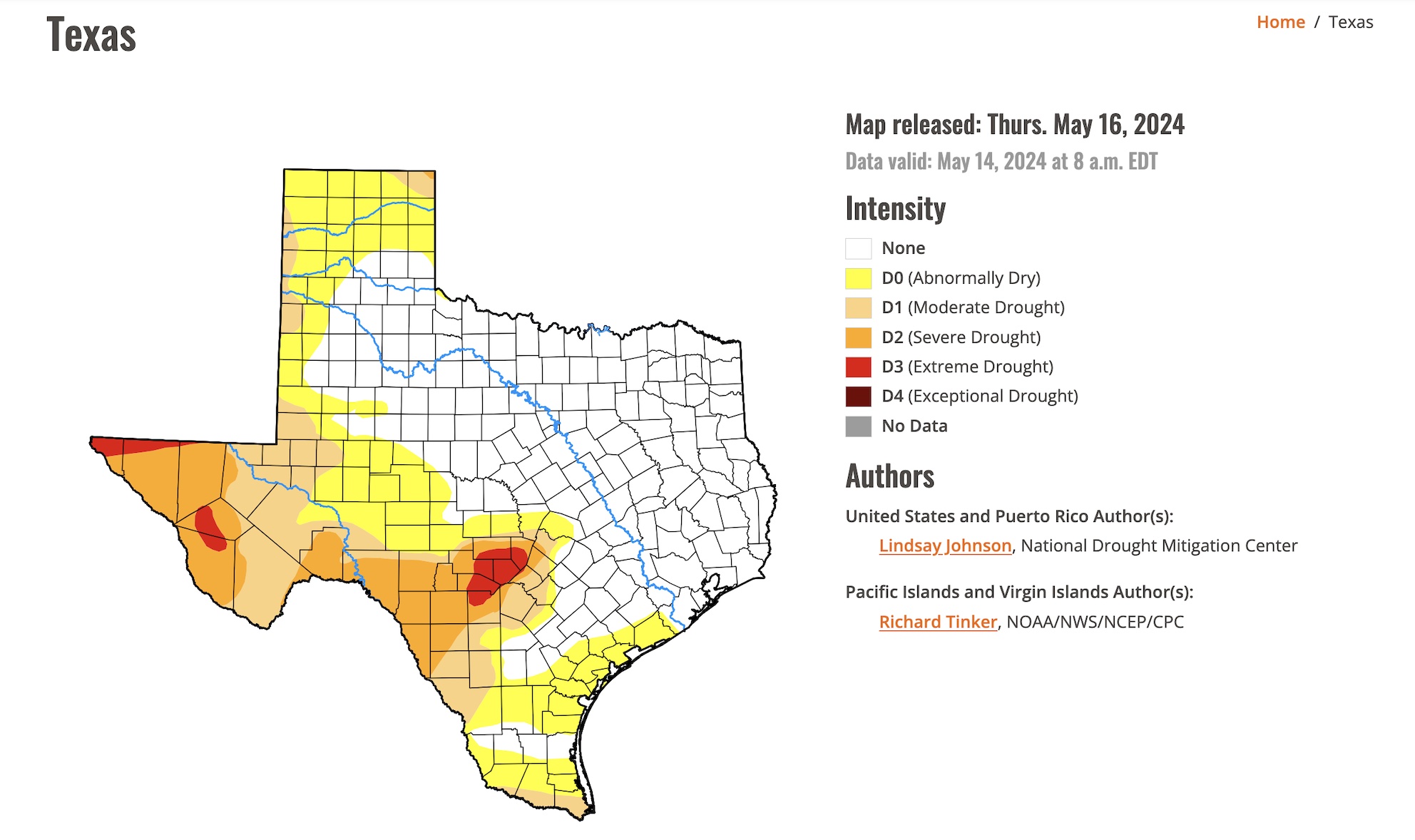
Five Facts About the United States Drought Monitor

May 22, 2024 by jaime.sanford

This is likely no surprise to you, but drought persists across the western U.S. and is intensifying in some areas. No geographic area is immune to the potential of drought at any given time. The U.S. Drought Monitor provides a weekly drought assessment, and it plays an important role in USDA programs that help farmers and ranchers recover from drought.

[Read more…] about Five Facts About the United States Drought Monitor

Filed Under: Drought Management

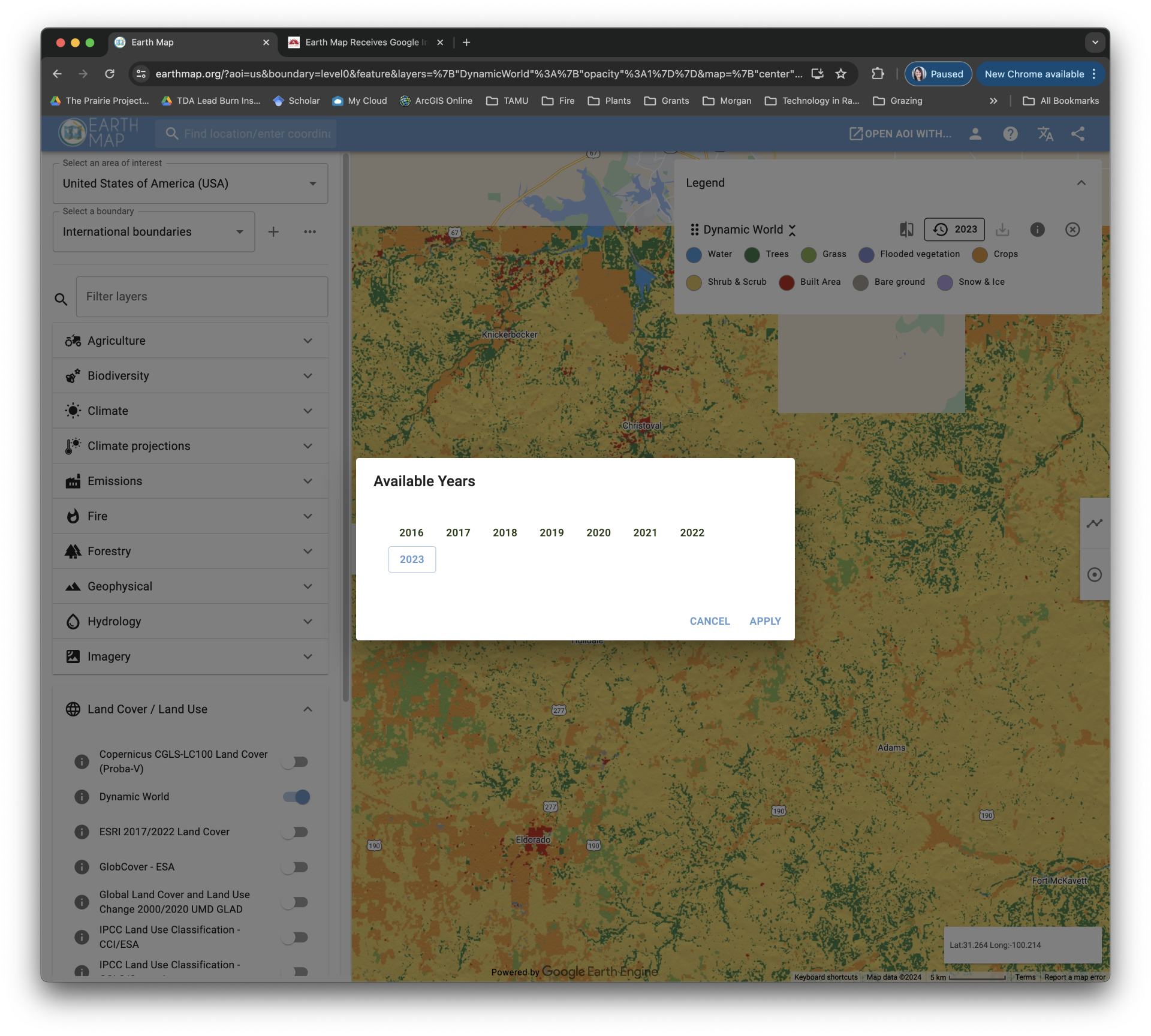
Earth Map

May 15, 2024 by jaime.sanford

Have you heard of Earth Map or seen the capabilities it holds?

[Read more…] about Earth Map

Filed Under: Conservation Practices, Grazing Management, Range Concepts

  • « Go to Previous Page
  • Page 1
  • Interim pages omitted …
  • Page 7
  • Page 8
  • Page 9
  • Page 10
  • Page 11
  • Interim pages omitted …
  • Page 22
  • Go to Next Page »

Recent Posts

  • Grazing Isn’t the Problem. Unmanaged Pressure Is.
  • What Your Rangeland Is Telling You: If You Know How to Look
  • When Does Grazing Become Overgrazing?
  • Prepared Today, Resilient Tomorrow: Making Wildfire Preparedness Part of Rangeland Stewardship
  • Fuel, Weather, and Risk: Monitoring Wildfire Conditions on Your Land

Categories

  • 4-H Range Contests
  • Beef Cattle
  • Brush Management
  • Carbon Credits
  • Carbon Markets
  • Conservation
  • Conservation Practices
  • Drought Management
  • El Niño
  • Events
  • Goats
  • Grazing Management
  • La Niña
  • Land
  • Lessons Learned
  • Meet A County Extension Agent
  • Plant ID
  • Podcast
  • Prescribed Burn Associations
  • Prescribed Burning
  • Publications
  • Range Concepts
  • RAP
  • Sheep
  • Society for Range Management
  • Soil
  • Staff
  • Targeted Grazing
  • Uncategorized
  • Water
  • Weather
  • Why I Ranch
  • Wild Pigs
  • Wildfire
  • Wildfires
  • Wind
  • Woody Encroachment
  • Youth Range Workshop

Archives

Texas A&M AgriLife Extension Service
Texas A&M University System Member
  • Compact with Texans
  • Privacy and Security
  • Accessibility Policy
  • State Link Policy
  • Statewide Search
  • Veterans Benefits
  • Military Families
  • Risk, Fraud & Misconduct Hotline
  • Texas Homeland Security
  • Texas Veteran's Portal
  • Equal Opportunity
  • Open Records/Public Information