• Skip to primary navigation
  • Skip to main content
  • Skip to primary sidebar
  • Texas A&M Forest Service
  • Texas A&M Veterinary Medical Diagnostics Laboratory
  • Texas A&M AgriLife Extension Service
  • Texas A&M AgriLife Research
  • Texas A&M College of Agrculture and Life Sciences
West Texas Rangelands
West Texas RangelandsWe hope to provide a variety of science-based rangeland information and current research on prescribed fire, wildfires, brush management, and grazing management!
  • Menu
  • Home
  • About & Contact
  • Publications
    • Extension Publications
    • Refereed Journal Articles
    • Program Summaries
  • Events
  • Lunch N’ Learn
  • Infographics
    • Drought
    • Grazing
    • Herbicide
    • Prescribed Fire
    • Rangeland Plants
    • Wildfire
  • Range Resources
    • Published to Pasture
    • Range Concepts
  • Fire Resources
  • Sponsors
  • AgriLife Learn Online Courses

Dry, Warm, Windy, and Fuel.

November 19, 2025 by morgan.treadwell

  • Drought conditions (D1–D4) increased to 33% of the state, up from 24% four weeks ago; statewide reservoir storage decreased to 73.9% full, down from 75.6% four weeks ago, about 6 percentage points below normal for this time of year.
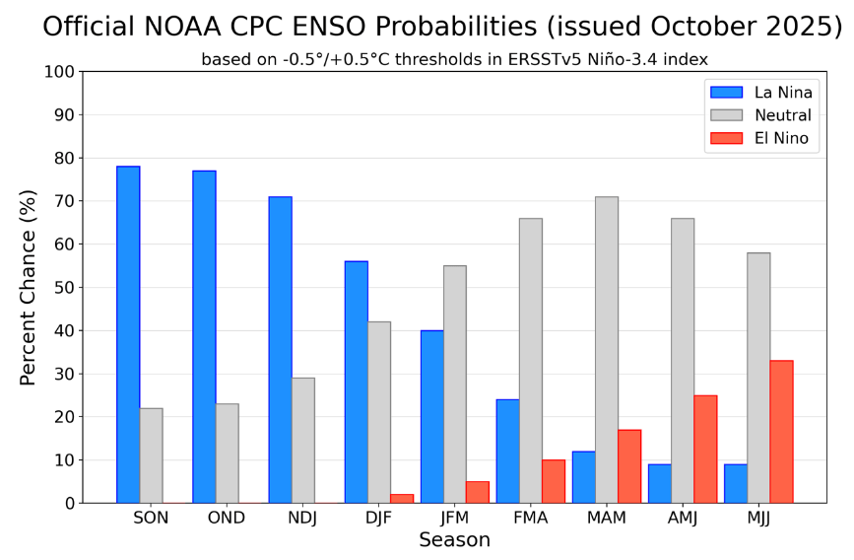
  • We are now a La Niña Advisory with a 55% chance of La Niña conditions continuing into the January-March season.
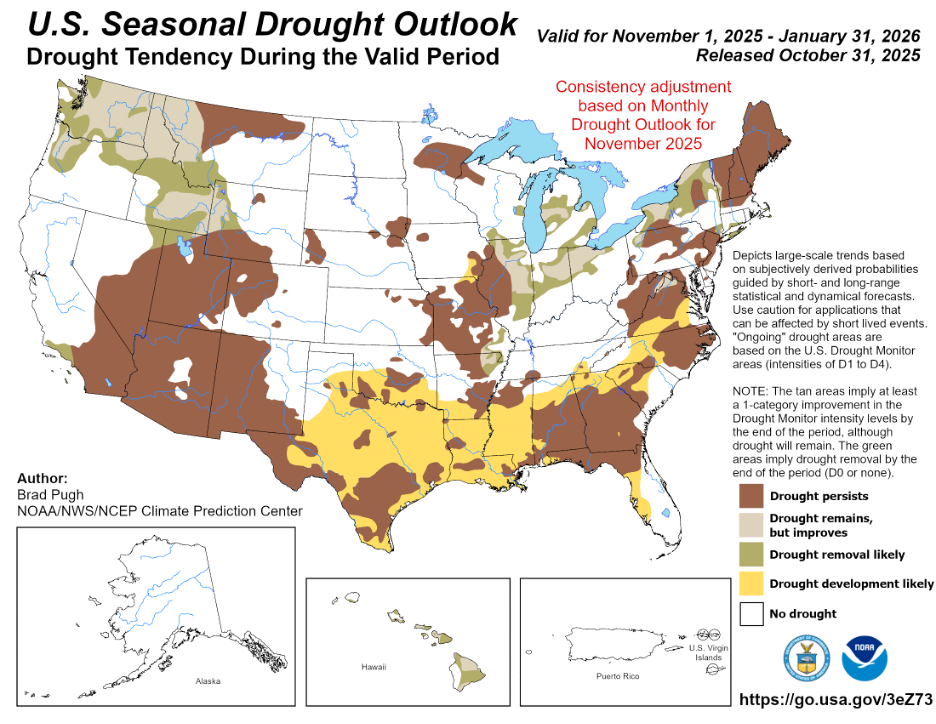
  • Most of the state is projected to be in drought over the next three months.

Isn’t it ironic that this last summer presented us with more than above average rainfall, yet not only is 33% of Texas in D1-D4 status, but our statewide reservoir storage is currently at 73.9%.  This becomes increasingly concerning as we watch La Niña take a firm hold with a 55% chance of La Niña conditions continuing into the January-March season.  Not only does this present challenging dormant season grazing management conditions, but wildfire will be at the top of rangeland manager’s concerns.

Bottom line, this winter will suck.  Get your game face on, dust off your drought plan, budget your numbers to see how late into winter/early spring your forage base can survive.  We will always remain optimistic, but we will also plan and prepare.  And with any rangeland management, we will remain adaptive holding strong to the grazing management and soil health principles guiding our practices and decisions.  For a comprehensive Wildfire Ready checklist, please click here and for our Preparing the Ranch publication click here.

Much appreciation to Robert Mace for his insight and wisdom in his outlook + water November 3, 2025 article found at: https://texaspluswater.wp.txstate.edu/.
 

Filed Under: Grazing Management, La Niña, Wildfire Tagged With: drought, Rangeland, wildfire

Recent Posts

  • Fuel on the Ground: Managing Vegetation to Reduce Wildfire Risk 
  • Managing Old World Bluestems…A Review
  • Fire and Follow-Through!
  • High-Energy Fire Significantly Improves Honey Mesquite Control: Key Findings from a 2022 Texas Study
  • Fire Up Plant Diversity!

Categories

  • 4-H Range Contests
  • Beef Cattle
  • Brush Management
  • Carbon Credits
  • Carbon Markets
  • Conservation
  • Conservation Practices
  • Drought Management
  • El Niño
  • Events
  • Goats
  • Grazing Management
  • La Niña
  • Land
  • Lessons Learned
  • Meet A County Extension Agent
  • Plant ID
  • Podcast
  • Prescribed Burn Associations
  • Prescribed Burning
  • Publications
  • Range Concepts
  • RAP
  • Sheep
  • Society for Range Management
  • Soil
  • Staff
  • Targeted Grazing
  • Uncategorized
  • Water
  • Weather
  • Why I Ranch
  • Wild Pigs
  • Wildfire
  • Wildfires
  • Wind
  • Woody Encroachment
  • Youth Range Workshop

Archives

Texas A&M AgriLife Extension Service
Texas A&M University System Member
  • Compact with Texans
  • Privacy and Security
  • Accessibility Policy
  • State Link Policy
  • Statewide Search
  • Veterans Benefits
  • Military Families
  • Risk, Fraud & Misconduct Hotline
  • Texas Homeland Security
  • Texas Veteran's Portal
  • Equal Opportunity
  • Open Records/Public Information