 Check out the 2023 Rural Land Value Trends Report from Texas Agriculture Law Blog by Tiffany Lashmet! https://agrilife.org/texasaglaw/2024/05/06/2023-rural-land-value-trends-report-is-here/
West Texas:
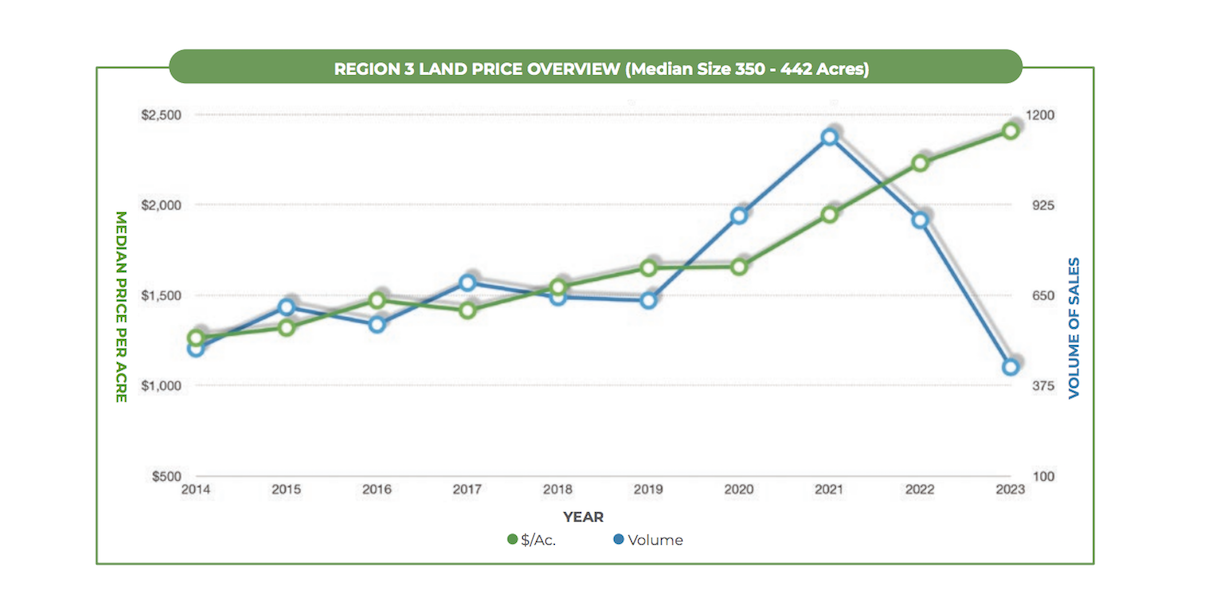
Strong demand for quality tracts continues to hold up prices in the region. At $2,410 per acre, prices rose 8.02 percent YOY. Tract size has also decreased from highs in 2021 and 2022, coming in at 385 acres this quarter, 10.65 percent below one year ago. Annualized sales volume declined 50.97 percent to 431 sales. Total dollar volume at $155.54 million decreased by 72.39 percent. At 64,540 acres, though a slight increase from last quarter, total acreage declined 74.44 percent YOY. Fourth quarter only sales volume fell 26.09 percent below that of fourth quarter 2022, a much less drastic drop compared to YOY.
Region 3 Take Homes:
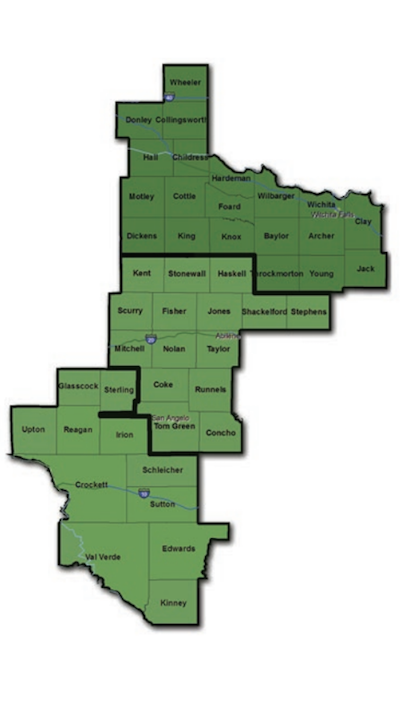
Counties included: Archer, Baylor, Childress, Clay, Coke, Collingsworth, Concho, Cottle, Crockett, Dickens, Donley, Edwards, Fisher, Foard, Glasscock, Hall, Hardeman, Haskell, Irion, Jack, Jones, Kent, King, Kinney, Knox, Mitchell, Motley, Nolan, Reagan, Runnels, Schleicher, Scurry, Shackelford, Stephens, Sterling, Stonewall, Sutton, Taylor, Throckmorton, Tom Green, Upton, Val Verde, Wheeler, Wichita, Wilbarger, and Young.
- In discussions with an attorney in San Angelo, he stated that he had worked on 10 to 15 wind and solar leases in 2023, with 8 to 10 of those signed. Several of the companies decided they were no longer interested before the lease was signed.
- According to the attorney, this was due to a number of factors including poor due diligence on the part of the company or ERCOT West not having enough transmission lines. These wind leases come in blocks where the attorney may represent one to a dozen landowners at a time.
- As mentioned in the 2022 discussion, a solar farm in San Angelo area was expanding. This expansion has been completed from one to two sections. There has not been any construction in the immediate San Angelo area since 2022 of any new solar farms. This could be a result of the increased cost due to higher interest rates, cost of materials and construction costs.
- Purchases by developers dropped significantly in 2023. This is due primarily to the increased interest rates and the fact the end users for these properties are no longer in the market due to the higher interest rates.
- There continues to be an increase in residential development in the immediate area of the larger trade areas, specifically Wichita Falls, Abilene and San Angelo. It appears that residential buyers continue to move to areas with smaller schools, which are considered to be above average for educational opportunities.
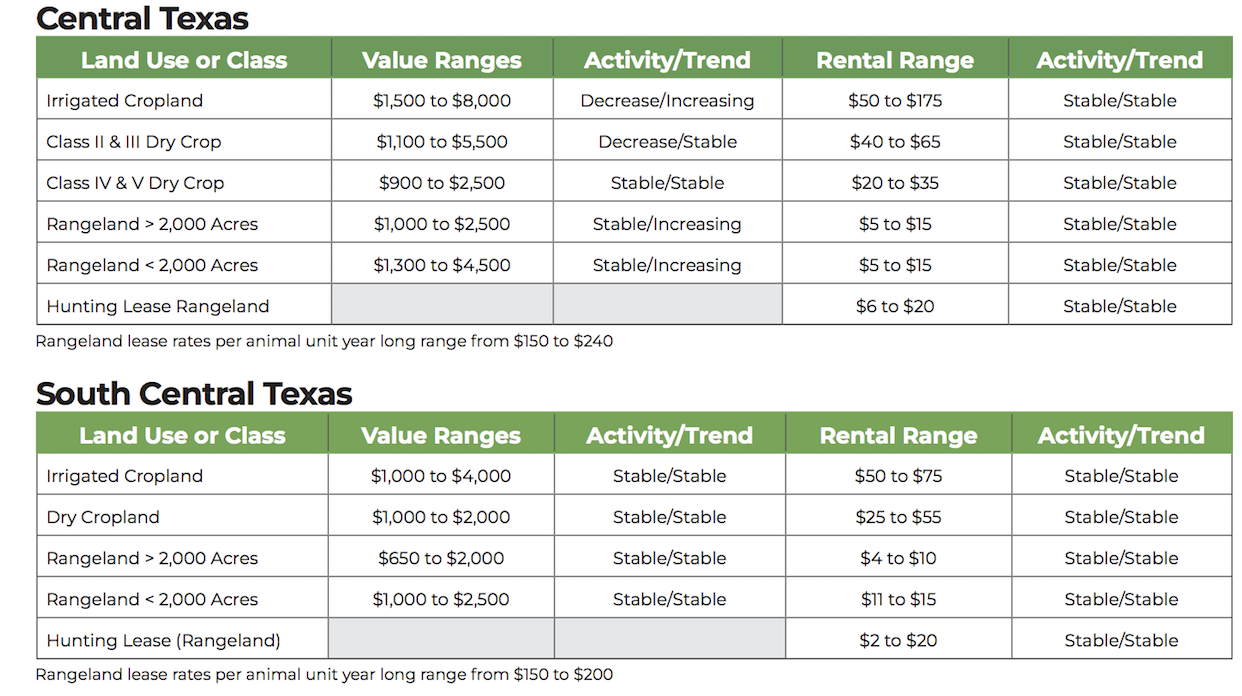
For the 2023 and previous years report, be sure to download it here – https://www.txasfmra.com/rural-land-trends
Rural Land Trends – Texas Chapter ASFMRA. (2024, March 29). Texas Chapter ASFMRA. https://www.txasfmra.com/rural-land-trends