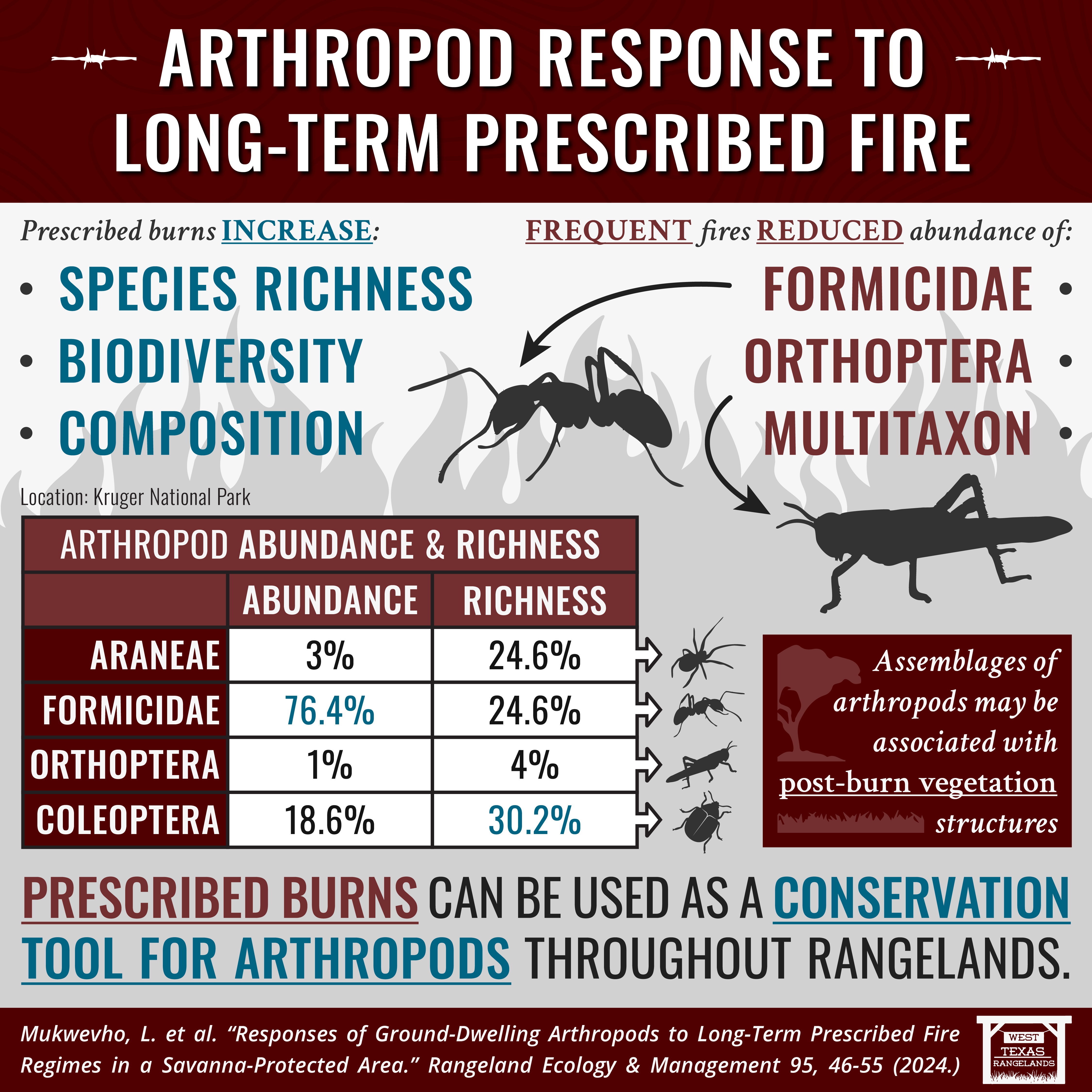
 Prescribed fire is a powerful tool for rangeland management, often used to control invasive species, promote native plant growth, and reduce wildfire risk. But what about the impact on the smaller inhabitants of our rangeland systems? A 2024 study sheds light on how prescribed fire, particularly long-term fire regimes and legacy fire effects, affect arthropod communities.
In addition to this 2024 featured publication, there is exciting data and new research from Dr. Camille Carey (TAMU RWFM recent graduate) showing prescribed fire can actually increase species richness, biodiversity, and composition within arthropod populations similar to this study from Kruger National Park. Together, researchers are piecing an interesting piece of the belowground puzzle where greater varieties of insects, spiders, and other invertebrates thrive in areas managed with fire.
The 2024 study conducted in Kruger National Park, South Africa, provides specific data on the abundance and richness of different arthropod groups:
- Formicidae (Ants): While frequent fires reduced ant abundance, prescribed fire overall led to a significant increase in their richness (variety of species).
- Orthoptera (Grasshoppers & Crickets): Similar to ants, frequent fires reduced abundance, but prescribed fire supported a diverse Orthoptera population.
- Coleoptera (Beetles): Both abundance and richness of beetles saw an increase, highlighting their resilience and adaptability to fire-managed landscapes.
- Araneae (Spiders): While abundance was low, spider richness saw a substantial increase, suggesting that prescribed fire can create favorable habitats for diverse spider species.
Prescribed fire can be a valuable conservation tool for arthropods throughout rangelands. By mimicking natural fire regimes, managers can create habitats that support a wide array of invertebrate life, contributing to overall ecosystem health and resilience, that inevitably feeds into successful grazing and drought responses.
For more information, you can read the full study – Responses of ground dwelling arthropods to long term prescribed fire
Stay tuned for Camille Carey’s (TAMU RWFM PhD) arthropod research including prescribed fire treatments at the Sonora Experiment Station and at the San Angelo Research Center!
Reference:
Mukwevho, L. et al. “Responses of Ground-Dwelling Arthropods to Long-Term Prescribed Fire Regimes in a Savanna-Protected Area.” Rangeland Ecology & Management 95, 46-55 (2024.)