Wildland fire is one of the most complex and consequential natural forces shaping landscapes across the United States. At the center of national efforts to better understand and manage fire is the Missoula Fire Sciences Laboratory, commonly known as the Fire Lab, part of the USDA Forest Service’s Research and Development program.
A Legacy of Fire Research
Dedicated in 1960, the Fire Lab has a long-standing history of supporting scientific research focused on wildland fire. Over the decades, it has grown into a state-of-the-art research facility, reflecting the Forest Service’s ongoing commitment to improving how fire is understood, predicted, and managed across diverse ecosystems.
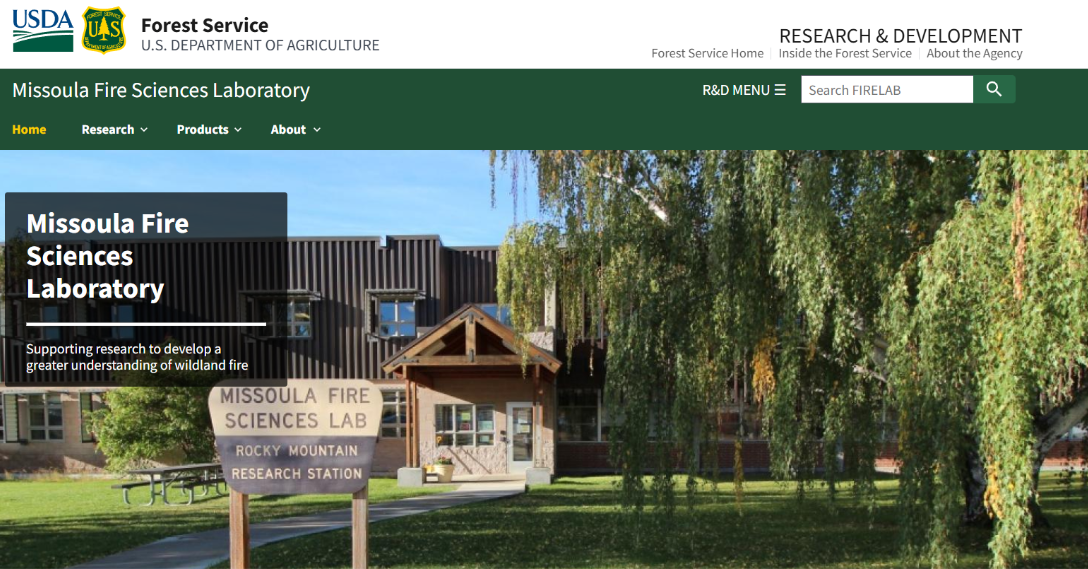
What Is the Fire Lab?
The Fire Lab’s mission centers on developing a greater understanding of wildland fire through rigorous science. Researchers study fire from multiple angles, recognizing that effective fire management requires insight into fuels, fire behavior, smoke, and decision-making systems. This broad scope allows the Fire Lab to address both the ecological role of fire and the practical challenges faced by land managers.
Research That Informs Real-World Decisions
Research conducted at the Fire Lab spans all aspects of wildland fire, from the characteristics of fuels to fire management systems. This work helps inform how fires behave, how they can be managed more safely, and how landscapes respond before, during, and after fire events. By grounding management strategies in science, the Fire Lab helps bridge the gap between research and on-the-ground application.
Tools, Products, and Practical Support
Beyond research, the Fire Lab develops datasets, tools, and products designed to directly support wildland fire management. These resources are intended for use across the full fire timeline from planning and mitigation before a fire, to decision support during incidents, and evaluation and recovery afterward. The emphasis is on making science accessible and usable for practitioners working in complex and high-stakes environments.
Resources for Land Managers
To further extend its impact, Fire Lab research is synthesized into research summaries and fact sheets that focus on topics especially relevant to land managers. These resources help translate scientific findings into clear, actionable information, supporting informed decision-making across agencies and disciplines.
Why the Fire Lab Matters
As wildland fire continues to shape forests, rangelands, and communities, the work of the Fire Lab remains critically important. By combining long-term research, modern facilities, and practical tools, the Missoula Fire Sciences Laboratory plays a key role in advancing fire science and supporting those tasked with managing fire in an ever-changing landscape.