The United States Supreme Court has agreed to hear Durnell v. Monsanto, a case raising the question of whether state law failure-to-warn claims are preempted by federal pesticide law.
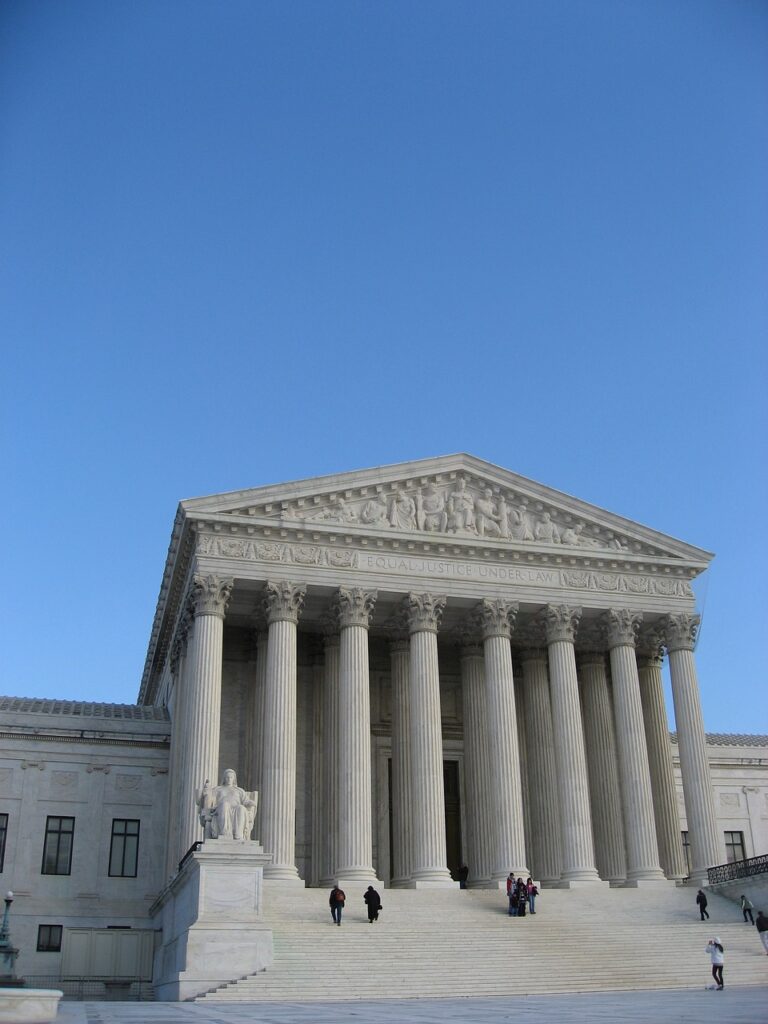
Image by Zach Dulli from Pixabay
Background
Monsanto is an agrochemical company that has manufactured and sold the herbicide marketed under the tradename Roundup since 1970s. Note that Bayer purchased Monsanto in 2018, so there may be references to both companies as we discuss the case. Roundup is one of the most popular and most utilized herbicides in the United States and is used in both agricultural production and non-agricultural settings such as landscaping. The active ingredient in Roundup is glyphosate.
Over the past decade, there have been tens thousands of lawsuits filed across the United States claiming that the glyphosate in Roundup caused the plaintiffs to develop cancer. Mr. Durnell is one such plaintiff who suffers from non-Hodgkin’s lymphoma. His Petition for Certiorari describes him as “one of more than 100,000 plaintiffs” seeking to hold Monsanto liable for failure to warn users that glyphosate causes cancer.
Mr. Durnell filed a lawsuit against Monsanto in state court in his home state of Missouri. He made a number of state law claims, including negligence, strict liability, defective product, and relevant to the Supreme Court appeal, a claim that Monsanto failed to warn of the health dangers of using Roundup. Specifically, he points to both the label on Roundup, and the advertising materials promoting the product, as failing to warn about the cancer risks associated with use.
Litigation
At trial, the jury found in favor of Mr. Durnell on his failure-to-warn claim, finding that Monsanto failed to warn about the possible health implications of using Roundup. They returned a $1.25 million award for the Plaintiff. The jury found in favor of Bayer on the negligence and defective product claims. Bayer appealed the verdict on the failure-to-warn claim to the Missouri Court of Appeals. The appellate court affirmed, holding that the failure-to-warn claim was not preempted by federal law. Bayer sought review by the Missouri Supreme Court, but its Petition for Review was denied.
Bayer then sought review from the United States Supreme Court. (Petition for Writ of Certiorari here.) Specifically, Bayer asked the Court to review the question of whether the Federal Insecticide, Fungicide, and Rodenticide Act (FIFRA) preempts a failure-to-warn claim based on state law. The United States Supreme Court granted the Petition and agreed to hear the case in January 2026.
Failure-to-Warn Claims
Typically, a failure-to-warn claim is made under state law essentially claiming that a product manufacturer failed to provide adequate warnings about the safety of using a product. To prove a failure-to-warn claim, a plaintiff must usually show that (1) the manufacturer knew or should have known the risk; (2) the warning provided by the manufacturer was inadequate; and (3) the inadequate warning caused damages to the plaintiff.
FIFRA
FIFRA is the federal law that regulates pesticides in the United States. No pesticide can be sold or distributed in the United States until the EPA has approved the product for use. As part of this approval process, the EPA must approve the specific labeling language to be included with the registered pesticide.
Additionally, FIFRA provides that states are allowed to regulate the sale of a federally registered product, but may not “impose or continue in effect any requirements for labeling or packaging in addition to or different from” those required by federal law.
Also relevant to this case, FIFRA provides that a product is “misbranded” if it does not include a “warning statement which may be necessary to protect health and the environment.”
Preemption of Failure-to-Warn Claims by FIFRA
This question of whether FIFRA preempts state law failure-to-warn claims has been raised before at the federal level. There have been three federal appellate level cases all involving plaintiffs claiming Monsanto failed to warn about the cancer risk of Roundup. Interestingly, appellate level courts that have reached this question have come to different conclusions, creating what is known as a “circuit split.”
The United States Court of Appeals for the Third Circuit has held that such claims are preempted by FIFRA in Schaffner v. Monsanto Corp. in 2024. There, the Third Circuit held that requiring a cancer warning on the label would impose requirements “different from” the EPA-approved labeling, which was not permitted under FIFRA.
On the other hand, the United Stated Courts of Appeals for both the Ninth and Eleventh Circuits found the opposite, holding that state law based failure-to-warn claims should proceed and were not preempted by FIFRA. The Ninth Circuit reached this decision in 2021 in Hardeman v. Monsanto and the Eleventh Circuit followed suit in Carson v. Monsanto in 2024.
Bayer’s Arguments
Bayer argues the failure-to-warn claim is preempted by federal law. They point to the language in FIFRA that expressly provides that a state may not require a label to include language in addition to or different from the federal labeling requirements. Bayer says that the Plaintiff’s desired cancer warning label would require Bayer to amend the Roundup label to include a cancer warning not required on the federally approved label. This, they argue, is “in addition to or different from” the federal label and, thus, preempted by FIFRA. Bayer claims it could not have added the label required by the jury verdict in this case without obtaining federal approval to do so. “Monsanto is not free to change its labels without first seeking and obtaining EPA approval,” Bayer wrote it its Brief.
Bayer also relies on a prior United States Supreme Court decision in Bates v. Dow Agrosciences LLC, decided in 2005. There, the court held that a state law requiring a label to bear the word “Danger” was preempted by FIFRA when the federal label required the word “Caution.”
You can view Bayer’s brief on the merits here.
Plaintiff’s Arguments
The Plaintiff has not yet filed his brief on the merits, but once he has done so, we will provide a link to it here. He did make certain arguments in his Response to the Petition for Certiorari that give insight into his arguments.
Plaintiff, of course, argues his claims are not preempted by FIFRA. He relies on FIFRA’s misbranding provisions, claiming that FIFRA deems a product misbranded if it does not include a warning statement necessary to protect health. This, Plaintiff argues, is the exact claim he is making, that Monsanto failed to include a cancer warning which was necessary to protect his health.
Additionally, Plaintiff also relies on the United States Supreme Court decision in Bates v. Dow Agrosciences LLC. He argues that while Bates held that it was “perfectly clear” that FIFRA did not preempt claims that would not require manufacturers to label or package their products in any particular way. He argues that nothing in FIFRA prevented Monsanto from including warnings in advertisements that Roundup may be carcinogenic or that people should wear protective gear when spraying it.
What Happens Next?
Oral argument has been set for April 27, 2026. The Court will hear the oral arguments and then proceed to consider the case. A written decision from the Court would be expected by the end of the term in June.
Meanwhile, a number of amicus curiae briefs have been filed in the litigation. You can see the list of filers and briefs here. Interestingly, the Court invited the Solicitor General of the United States to weigh in on the position of the United States in this case. The United States filed its amicus brief agreeing with Bayer’s argument that the claims should be preempted by federal law, specifically discussing the burden that a piecemeal labeling system would cause were every state able to require different pesticide labeling rules.
Why Do We Care?
As Bayer’s brief explains, “The question presented is critically important, and the stakes are high.” This is true for a couple of reasons. First, there is the existing circuit split and the law when it comes to preemption under FIFRA for state law failure-to-warn claims is not settled. Second, there are hundreds of thousands of plaintiffs in lawsuits similar to Mr. Darnell’s who will be impacted by the answer to the question presented here. Third, shortly after the Supreme Court agreed to hear the case, Bayer announced it had reached a proposed class action settlement of $7.25 billion to resolve current and pending disputes alleging non-Hodgkin lymphoma injuries from Roundup. It seems likely that the Supreme Court agreeing to take the case likely aided in a settlement being reached. On March 4, 2026, the settlement was preliminary approved by the court. Fourth, as Bayer argues and several amicus briefs highlight, this may impact the agriculture industry with regard to the availability of and price for pesticides.