 What is Risk? Risk is the probability and consequences of uncertain future events. It is the framework for understanding the implications of decisions because the decisions we make all come with a tradeoff. Wildfire Risk is the likelihood of a wildfire occurring and the potential effects it would have on things we care about. Being able to estimate the likelihood and consequences of wildfires, we are better able to consider and plan for possible outcomes.
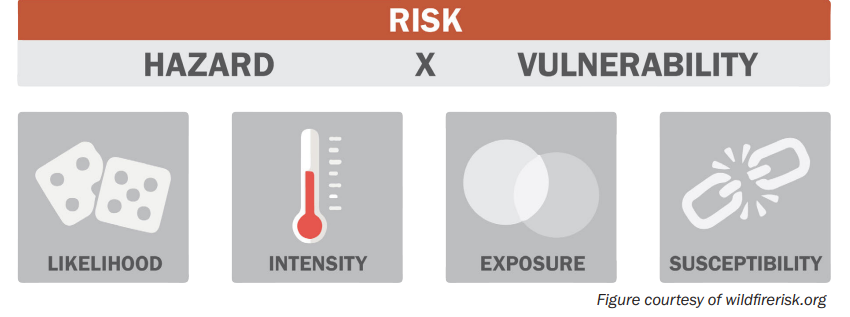
Wildfire risk is a simple equation of “hazard x vulnerability”. Hazard takes into account the likelihood and the intensity of a wildfire. Vulnerability takes into account the amount of exposure and susceptibility. With these four components added together, we can find wildfire risk.
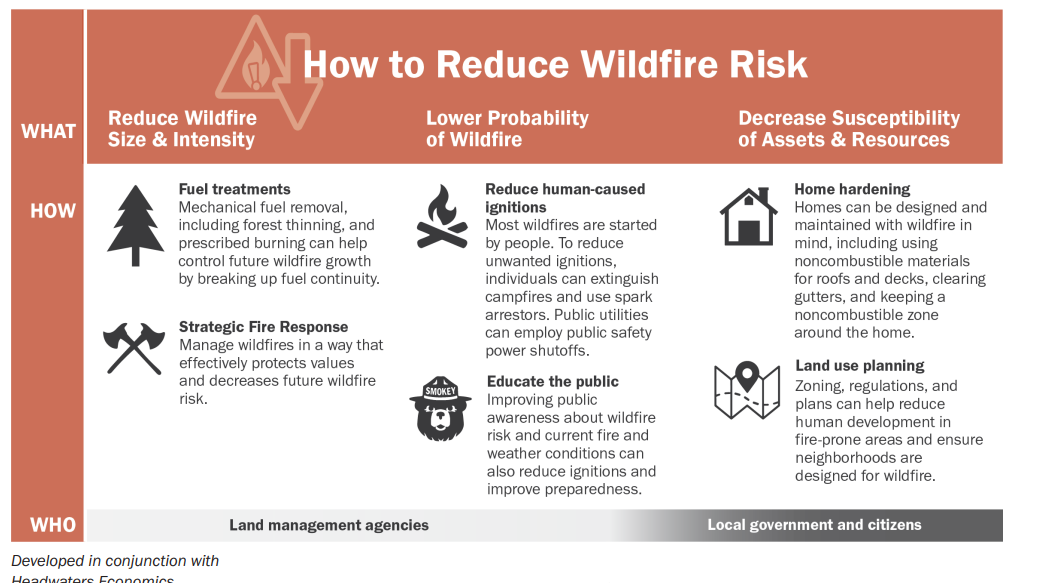
Wildfire risk can be changed through three types of actions: 1) actions that reduce the intensity of wildfire; 2) actions that decrease the probability of wildfire; and 3) actions that decrease the susceptibility of assets or resources to wildfire effects. Some examples of these actions include; reducing the amount of live and dead vegetation available to burn, wildfire prevention education, and implementing fire-safe practices.
Are you wondering how to find the wildfire risk in your community and what you can do to help reduce the risk? Look no further! The Wildfire Risk to Communities website lets you search by County, State, or Community to identify the current risk to your community and supplies you with resources to help reduce wildfire risk.
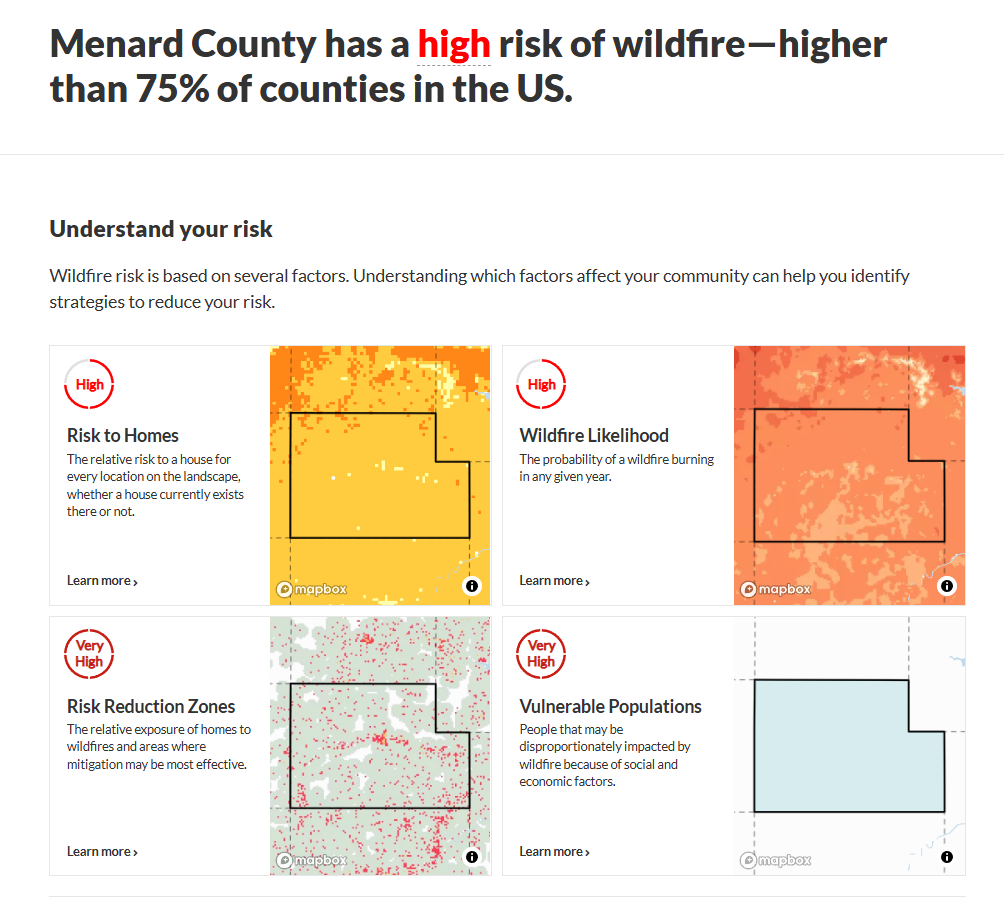
In the example below you can see that Menard County, Texas has a high risk of wildfire, higher than 75% of the counties in the United States. In the example, you can see and understand which factors affect your community and what you can do to help reduce wildfire risk.
The website also offers the option to choose a role, which will highlight certain tools, tips, and programs that can help based on the role you choose. Different roles include; elected officials, planners & developers, emergency services, homeowners, land managers, fire collaboratives, and health and social services. Everyone has a part to play in reducing wildfire risk.
To learn more about wildfire risk be sure to check out the website and the following Wildfire Risk factsheet.