• Skip to primary navigation
  • Skip to main content
  • Skip to primary sidebar
  • Texas A&M Forest Service
  • Texas A&M Veterinary Medical Diagnostics Laboratory
  • Texas A&M AgriLife Extension Service
  • Texas A&M AgriLife Research
  • Texas A&M College of Agrculture and Life Sciences
West Texas Rangelands
West Texas RangelandsWe hope to provide a variety of science-based rangeland information and current research on prescribed fire, wildfires, brush management, and grazing management!
  • Menu
  • Home
  • About & Contact
  • Publications
    • Extension Publications
    • Refereed Journal Articles
    • Program Summaries
  • Events
  • Lunch N’ Learn
  • Infographics
    • Drought
    • Grazing
    • Herbicide
    • Prescribed Fire
    • Rangeland Plants
    • Wildfire
  • Range Resources
    • Published to Pasture
    • Range Concepts
  • Fire Resources
  • Sponsors
  • AgriLife Learn Online Courses

What Is In My Soil?!

April 19, 2023 by jaime.sanford

Did you know that your soil is a living, breathing ecosystem and is easily one of the most complex ecosystems on earth?! There are billions (perhaps trillions) of organisms in a small handful of healthy soil, with millions of different species.


Typically, a healthy soil consists of:

-5% organic matter

-25% pore space holding air

-25% pore space holding water 

-45% mineral material 
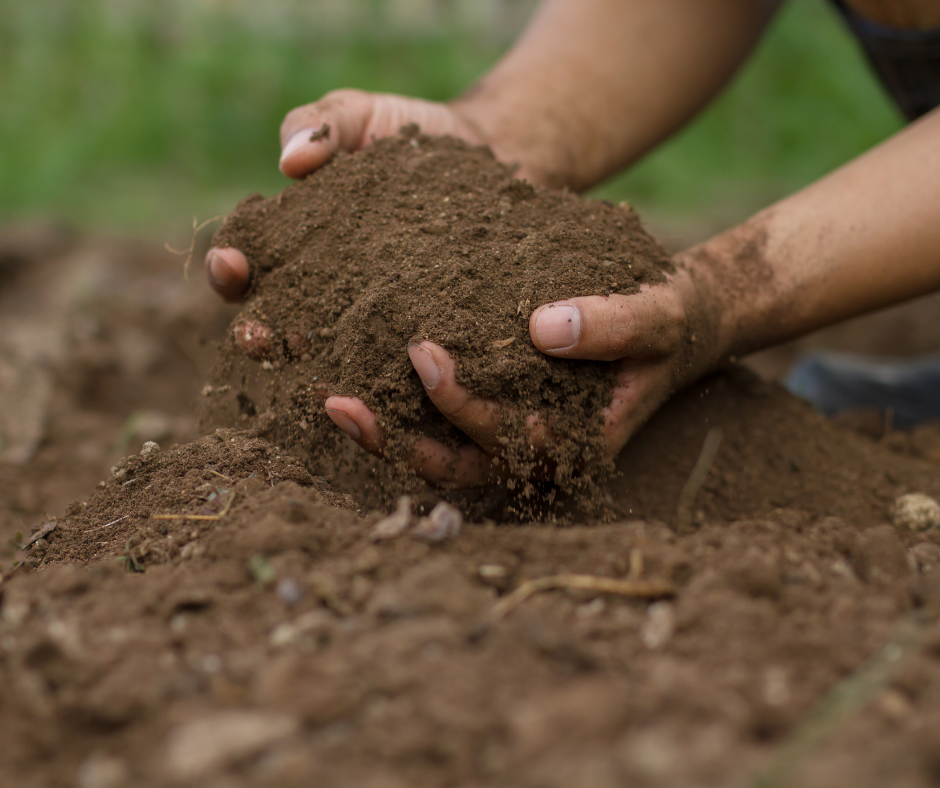


Organic matter is anything that is or once was alive and is now in the soil. It is important in soils as it retains nutrients and water, increases water infiltration, and helps soil resist compaction. 


Mineral material makes up almost 50% of the soil and consists of sand, silt, and clay. These categories differentiate from each other based on particle size. The weight of each of these elements will determine what texture class any particular soil falls into. 


When deciding what type of species of grass or forbs you are considering, it is imperative to know what type of soil dominates the potential reseeding project site. While this is not the only consideration when selecting species, it is a significant one. 


Bamert Seed Company has a tool to help for this! For an in-depth look at what will be successful given soil type be sure to check out this link. 


Need more information on soil types and what species would work best for your soil, be sure to also check the free Web Soil Survey.  


Still have questions about your soil, feel free to reach out to our TAMU AgriLife Extension Rangeland Specialists or Soil Crop Specialists!

Filed Under: Conservation, Range Concepts, Soil Tagged With: Conservation, range management, soil

Recent Posts

  • Managing Old World Bluestems…A Review
  • Fire and Follow-Through!
  • High-Energy Fire Significantly Improves Honey Mesquite Control: Key Findings from a 2022 Texas Study
  • Fire Up Plant Diversity!
  • New Publication! Photosensitization

Categories

  • 4-H Range Contests
  • Beef Cattle
  • Brush Management
  • Carbon Credits
  • Carbon Markets
  • Conservation
  • Conservation Practices
  • Drought Management
  • El Niño
  • Events
  • Goats
  • Grazing Management
  • La Niña
  • Land
  • Lessons Learned
  • Meet A County Extension Agent
  • Plant ID
  • Podcast
  • Prescribed Burn Associations
  • Prescribed Burning
  • Publications
  • Range Concepts
  • RAP
  • Sheep
  • Society for Range Management
  • Soil
  • Staff
  • Targeted Grazing
  • Uncategorized
  • Water
  • Weather
  • Why I Ranch
  • Wild Pigs
  • Wildfire
  • Wildfires
  • Wind
  • Woody Encroachment
  • Youth Range Workshop

Archives

Texas A&M AgriLife Extension Service
Texas A&M University System Member
  • Compact with Texans
  • Privacy and Security
  • Accessibility Policy
  • State Link Policy
  • Statewide Search
  • Veterans Benefits
  • Military Families
  • Risk, Fraud & Misconduct Hotline
  • Texas Homeland Security
  • Texas Veteran's Portal
  • Equal Opportunity
  • Open Records/Public Information