• Skip to primary navigation
  • Skip to main content
  • Skip to primary sidebar
  • Texas A&M Forest Service
  • Texas A&M Veterinary Medical Diagnostics Laboratory
  • Texas A&M AgriLife Extension Service
  • Texas A&M AgriLife Research
  • Texas A&M College of Agrculture and Life Sciences
West Texas Rangelands
West Texas RangelandsWe hope to provide a variety of science-based rangeland information and current research on prescribed fire, wildfires, brush management, and grazing management!
  • Menu
  • Home
  • About & Contact
  • Publications
    • Extension Publications
    • Refereed Journal Articles
    • Program Summaries
  • Events
  • Lunch N’ Learn
  • Infographics
    • Drought
    • Grazing
    • Herbicide
    • Prescribed Fire
    • Rangeland Plants
    • Wildfire
  • Range Resources
    • Published to Pasture
    • Range Concepts
  • Fire Resources
  • Sponsors
  • AgriLife Learn Online Courses

Outside the Fire…Dr. Bill Rogers

December 29, 2018 by morgan.treadwell

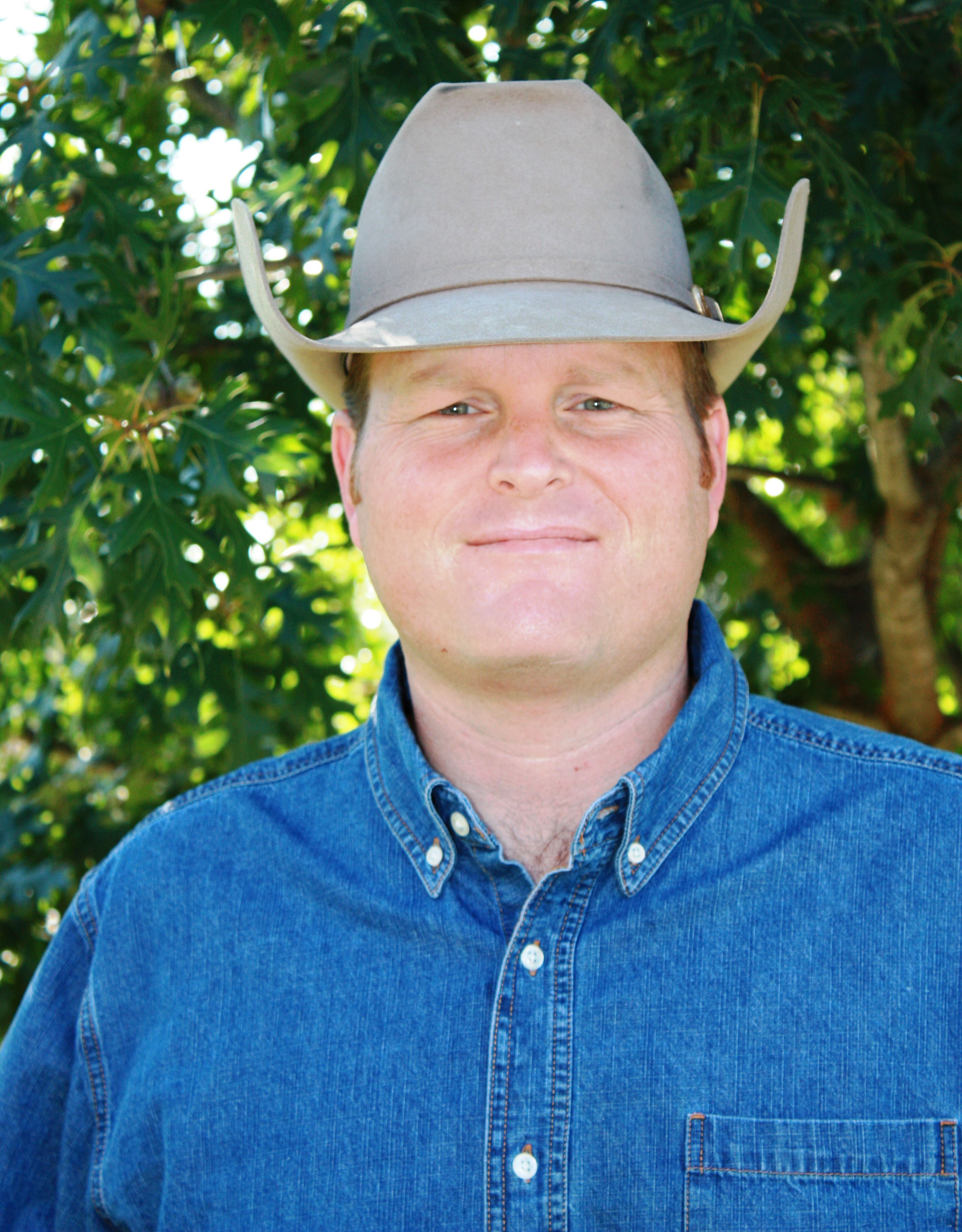
Do you remember a certain professor/teacher/mentor that just naturally pushed you to think differently or harder? Someone that encouraged you to see beyond the data and critically look at theories, ideas, and concepts, and not that you had to or were forced to, but because you were actually excited to? Meet Dr. Bill Rogers, a Professor in the Department of Ecosystem Science and Management at Texas A&M University. Dr. Rogers’ and his research team recently received funding from the Joint Fire Sciences Program to analyze resprouting characteristics of mesquite and native grasses under varying intensities of fire. Bill is cool. He is easy to talk to, he loves research, and it’s an honor to hear his story of fire.

How did you get introduced to fire? I was born and raised in Minnesota and my family even owns some land on the prairie-forest ecotone where fire would have been a historically frequent natural phenomenon, but the state has some of the strictest liability legislation in the nation regarding the use of prescribed burning. Consequently, except during an occasional state park visit where some burning had been done, I was not very familiar with the use of fire as a management tool in my youth. It wasn’t until I visited Yellowstone National Park in Wyoming and Montana in early 1990s, shortly after the “Let-Burn” policy for the wildfires on federal lands was enacted, that I was exposed to large-scale ecological burning as a natural process and management activity. In the mid-90s, I enrolled at Kansas State University and began working on my doctoral research studies at the Konza Prairie Research Natural Area (a Long-term Ecological Research site located in the Flint Hills tallgrass prairie) where I examined the interactive effects of fire and animal-generated soil disturbances on plant community dynamics. At this stage, I became much more fully immersed in various aspects of fire science and prescribed burning management.

How early do you start planning for a prescribed burn? Because most of the burning I am involved with has a strong ecological research component, the planning and conceptualizing of what type of burning (location, size area, desired fuel loads, environmental conditions, etc.) activities we are going to conduct is typically done over a year in advance. As the time for implementing the prescribed burns approaches, we are usually monitoring weather conditions and finalizing assessments for our equipment and personnel a couple weeks ahead of the time we intend to put fire on the ground.

What’s most unique about a post-fire environment? I find myself frequently frustrated when various news-media outlets describe a fire as having “destroyed” a natural area. It is undeniably tragic when an unintentional fire negatively affects human lives and personal property. However, fire is a natural process in so many ecosystems and many of these landscapes are incredibly resilient, not only quickly recovering post-fire, but thriving afterward. Another aspect of prescribed fire that has not been adequately communicated to the broader public is the tremendous insulating capacity of soil. Aside from the most severe and extreme fires with exceptionally heavy fuel loads, the heat from a prescribed fire is typically completely dissipated after only a couple centimeters below the ground surface. This leaves the majority of plant roots, belowground buds, seeds and other plant parts undamaged despite what may be total fuel consumption aboveground. The post-fire interactions between abiotic conditions (dynamics of essential nutrients like nitrogen, phosphorus, and carbon) and biotic processes (vegetation, bacteria, and fungi) and ways in which these belowground processes influence aboveground vegetation recovery is something I also find extremely fascinating.

In your opinion, what makes a successful fire? First and foremost, a successful prescribed fire is one that is conducted safely. Risk is an inherent component of any management activity, but risks associated with fire are often magnified and taking precautions and following safety protocols should be paramount. Next, it is important to conduct prescribed fires with an a priori desired outcome. Setting goals and identifying objectives for a prescribed burn will allow an individual to assess the success of a prescribed fire activity. Of course, these objectives can vary widely and will depend on a variety of ecological, environmental, and socio-economic factors. A wise person stated “Every management action is an opportunity for an experiment.” I fully agree that setting goals and objectives, then assessing whether you have met those milestones is essential for advancing our knowledge and achieving even better successes in the future.

Who or what would you never burn without? I would never burn without a sufficient quantity and quality of both experienced personnel and safety equipment. Again, the risks of prescribed burning are considerable, but working with knowledgeable and well-prepared individuals can sufficiently mitigate many of these concerns.

Filed Under: Brush Management, Grazing Management, Prescribed Burn Associations, Prescribed Burning Tagged With: brush, Fire Ecology, mesquite, nat

Outside the Fire…Marcy Epperson

September 28, 2018 by morgan.treadwell

I am a huge fan of ranching women, because I know that a woman who ranches also raises a family, keeps the books, cooks, cleans, and is just as busy in her community as she is checking livestock and tending to horses.  George Strait said it best, “how bout them cowgirls”!  This month, I want to introduce you to an exceptional lady – Marcy Epperson.  Marcy and her family ranch outside of Rocksprings and she recently successfully completed her Texas Department of Agriculture Certified and Insured Prescribed Burn Manager’s license after years of hard work and dedication to learning.  Marcy is a mom to two boys, a wife, a rancher, and now a prescribed burn manager!  I am proud to call her my friend and colleague!

How did you get introduced to fire? I was introduced to fire through family—as a child I loved helping burn brush piles. There was a hill on the family ranch named Ole Baldy, because my grandfather had burned it. Adult family members always laughed it off as an “accident”, then they’d get serious and say they thought he’d burned it on purpose, like Native Americans had done. I tend to believe the latter, but it probably scared him half to death, and well should have!

How early do you start planning for a prescribed burn? Generally, at least a year; every preparation seems to take longer than the budgeted time, from blading fireguards to having enough accumulated grass (fine fuels) after deferment of grazing. 

What’s most unique about a post-fire environment? I would say the most interesting thing is how wildlife throngs into the black immediately after a prescribed fire. From Rio Grande turkeys looking for scorched grasshoppers to quail with chicks and jackrabbits, they all immediately appear and move right into still smoking areas. Any apprehension about wildlife and prescribed fire is always quieted; this isn’t necessarily the case with the wildfire.

In your opinion, what makes a successful fire? I know we all look for success with specific goals and objectives, but ultimately, a safe fire is, in my opinion, a successful fire. Every single fire will be good in some way for our fire adapted ecosystem, and safety is key.

Who or what would you never burn without? I would never burn without a comprehensive burn plan, an experienced crew with good equipment and radios, and most importantly– an up-to-date weather forecast. 

Filed Under: Brush Management, Grazing Management, Prescribed Burn Associations, Prescribed Burning Tagged With: brush, edwards plateau, prescribed burn association, RX Fire

Outside the Fire…Chuck Stanley

November 14, 2017 by morgan.treadwell

Do you have any idea how blessed we are to have such incredible mentors of prescribed burning?  I believe what makes a good burner is one that never stops learning and always learns from every fire, every experience, every time.  I decided to showcase prescribed burn practitioners who are just AWESOME at what they do.  I have found that the best guys to burn with are the ones who do not care about the glory or the attention.  “Why I Burn” will showcase a prescribed burn practitioner who gets the job, doesn’t care about the credit, and has a true love and passion for prescribed burning.  These are their stories of fire.

Hello Chuck Stanley.  A friend. A colleague.  And a guy that has a wealth of knowledge underneath a dang good looking hat.  I first met Chuck through my dad.  Chuck and my dad were at a Society for Range Management meeting in Albuquerque and they were the only two men in the Advisory Council meeting that were #1) wearing black Stetsons and #2) talking common sense.  They would later bond over fire stories.  Fast-forward 8 years later and I am still hitting Chuck up for that common sense, boots-on-the-ground, hard-working, well-deserved, sweat-equity common sense.

Chuck has been putting fire on the landscape for 30 years, since his beginning range days at Texas Tech.  Chuck is a Range Management Specialist for the Natural Resource Conservation Service (NRCS) in Fort Worth.  He is, basically, the go-to-guy for all things RX Fire in Texas and, especially, with the NRCS.  In other words, he knows his stuff.  This is Chuck’s story of fire.

How did you get introduced to fire? Well that is interesting, To me anyway. When I first started Texas Tech, like many other freshmen, I had no idea what I wanted to do. I bounced from major to major and not really finding my niche. I believe at the time I was taking engineering classes and took an introductory course into range and wildlife habitat. That was when I decided to change majors once again and moved over to the Range and Wildlife department at TTU, thinking what a fortunate decision this would be as I could hunt and fish and get paid for it. So I had to go and visit with my new advisor to get my classes set up and little did I know I was sitting in front of the man who wrote the book on prescribed fire, Dr. Henry Wright. During my “interview” on classwork, Dr. Wright asked me if I had ever burned any rangeland. I thought it might be a trick question to see if I was or had been convicted of arson at some point. I have not been but I have “accidentally” burned a few acres in my younger days. Dr. Wright smiled and said “ well tomorrow we are going to go burn 5000 acres”, I said “on purpose?” From that point on, I was hooked and have been involved with prescribed fire for 30 years. Funny thing, I am getting paid for it.

Do you make special plans for fire in your management plans well in advance, or take advantage of good fuel and weather conditions as they come? It all depends on what type of burn we are needing to meet objectives, and where the burn is to take place (smoke management issues etc.) However, there are times that I have known a place that needed burning, and when a perfect day comes along, we get it done.

What’s the hook for you on fire? I would say the main hook for me is the rejuvenation of the vegetation following the burn. And the landowners satisfaction of the results. I really like to teach the art of prescribed fire and try to get others interested.

In your opinion, what makes a successful fire? Generally speaking, I would say one that stays within the perimeter of the burn site, and all personnel are safe. Beyond that, one where the objectives were met.

Who in your burn circle/crew would you never burn without? My matches and driptorch…. Over the years there have been a bunch of folks that I truly have absolute trust in while burning. Generally they have been doing this a good while, and know what to look for, and understand fire behavior very well. I would not hesitate calling anyone of them if they were in the vicinity. Because of my position now, I just don’t get to go and burn like I used to.

Filed Under: Brush Management, Prescribed Burn Associations, Prescribed Burning, Uncategorized Tagged With: brush, fire, grass, RX Fire

Outside the Fire with Jeff Goodwin

October 25, 2016 by morgan.treadwell

This October we are featuring Mr. Jeff Goodwin, Range and Pasture Consultant Agricultural Division with the Samuel Roberts Noble Foundation in Ardmore, OK.  Jeff is a Texas man, but more importantly he is a fire man who promotes the responsible and practical use of fire on rangelands.

How did you get introduced to fire?  I got introduced to fire as an undergraduate at Tarleton State goodwin-picUniversity’s Range and Ranch Management program. After graduate school, I had the opportunity to work with Dr. Bill Pinchak and Dr. Jim Ansley at the Texas A&M Research Center in Vernon, Texas conducting research projects utilizing fire to manage landscapes in the Rolling Plains of Texas.  The majority of my experience with fire however, has come through the 15 years I spent as a rangeland management specialist with USDA-NRCS. They provided the training, experience, and opportunity to work with landowners to address rangeland resource concerns and meet their management objectives. Very often in a fire starved landscape, those rangeland management objectives were achieved and/or aided with the proper application of prescribed fire

Do you make special plans for fire in your management plans well in advance, or take advantage of good fuel and weather conditions as they come?  I have been trained my entire career to be a planner, to think about how our management will meet a specific goal and how that action will affect other resources.  However, to answer the question Yes I make plans well in advance, but I also take advantage of favorable conditions as they arise. To me that’s the beauty of a well written and designed prescribed fire plan. Many times we have a specific goal or objective we want to accomplish within a particular burn unit. The challenge and objective should be to write your burn plan specific enough to meet the objective yet the prescription parameters should be open enough so that you have the flexibility to take advantage of those favorable conditions as they arise. The worst thing you can do is to make the prescription parameters so tight that you that you 1) will never meet them and thus never get the burn implemented or 2) push yourself to the limits of your plan parameters and possibly open yourself to liability issues should trouble arise. 

What’s the hook for you on fire? The hook for me with fire is that I am a student of Ecology. For too many years we have looked at fire as a “tool” to manage rangelands. Fire is not a tool, it is an ecological process. A “tool” can be put back in the toolbox and/or replaced. We are currently seeing across the region what happens when we try to replace or use fire sparingly as a tool. I currently live in the middle of the Southern Great Plains, an area encompassing the majority of Kansas, Oklahoma, and Texas. Every square inch of rangeland in this region evolved under a fire regime with a fire return frequency, it was part of the fire dependent ecology of this region. As “we” began to manage those rangelands, 150 years ago we suppressed that ecological process. Many of the battles that we fight today in the field of rangeland management are directly related to that suppression, (i.e. woody brush encroachment, reduced rangeland productivity, etc.). So my hook is returning the ecological functionality of our rangeland resources while meeting management objectives of the land stewards that care for them.

In your opinion, what makes a successful fire? A successful fire in my opinion is one that meets the goal and objective of the burn unit. I am not a fan of burning just to burn. Many times we miss opportunities or do not meet the specific objectives of a fire just because we want to get it “done”. For instance, if my goal is to control or suppress Prickly Pear cactus, I will need a couple of things to ensure that outcome. I will need to choose a year or time when we have grown enough fine fuel to carry the fire to adequately meet that objective. I should choose prescription parameters that will effectively allow for a fire hot enough to meet those objectives. If we burn on a day that does not meet those parameters then we will likely not meet the original objective and we will have utilized our fine fuel. Now, I agree there are multiple benefits to getting fire back on the landscape. However, I am in the business of meeting landowner objectives and managing rangeland, to do that we need to be successful with our management applications and fire is no exception. Earlier I stated that Fire was an ecological process that needed to return to Texas rangelands, that is true. With that said, we need to be the ones that decide, when, where, how much and how long. This is where we take the science of rangeland management and turn it into and art.

Who in your burn circle/crew would you never burn without?  I do not have a specific person that I would not burn without, however I will not burn without speaking to my Lord and Savior. I pray before each burn that the lord provides his hand in safety over the crew, the clarity to make the right decision at the right time, and the gratitude for the responsibility to care for the rangeland resources he has provided us dominion over. Fire is a necessary process but can be very unforgiving if the proper amount of respect is not given. Safety is and will always be our number one priority on a burn.

Thank you Jeff!

Filed Under: Brush Management, Prescribed Burn Associations, Prescribed Burning Tagged With: brush, fire, prescribed burning, rangelands, RX Fire

Recent Posts

  • Fire Up Plant Diversity!
  • New Publication! Photosensitization
  • Dry, Warm, Windy, and Fuel.
  • Lessons Learned – Pyro-Vortex Tornado on the Deer Creek Fire
  • Mapping Fire Before It Starts: How the Fireshed Project Strengthens Readiness in West Texas

Categories

  • 4-H Range Contests
  • Beef Cattle
  • Brush Management
  • Carbon Credits
  • Carbon Markets
  • Conservation
  • Conservation Practices
  • Drought Management
  • El Niño
  • Events
  • Goats
  • Grazing Management
  • La Niña
  • Land
  • Lessons Learned
  • Meet A County Extension Agent
  • Plant ID
  • Podcast
  • Prescribed Burn Associations
  • Prescribed Burning
  • Publications
  • Range Concepts
  • RAP
  • Sheep
  • Society for Range Management
  • Soil
  • Staff
  • Targeted Grazing
  • Uncategorized
  • Water
  • Weather
  • Why I Ranch
  • Wild Pigs
  • Wildfire
  • Wildfires
  • Wind
  • Woody Encroachment
  • Youth Range Workshop

Archives

Texas A&M AgriLife Extension Service
Texas A&M University System Member
  • Compact with Texans
  • Privacy and Security
  • Accessibility Policy
  • State Link Policy
  • Statewide Search
  • Veterans Benefits
  • Military Families
  • Risk, Fraud & Misconduct Hotline
  • Texas Homeland Security
  • Texas Veteran's Portal
  • Equal Opportunity
  • Open Records/Public Information