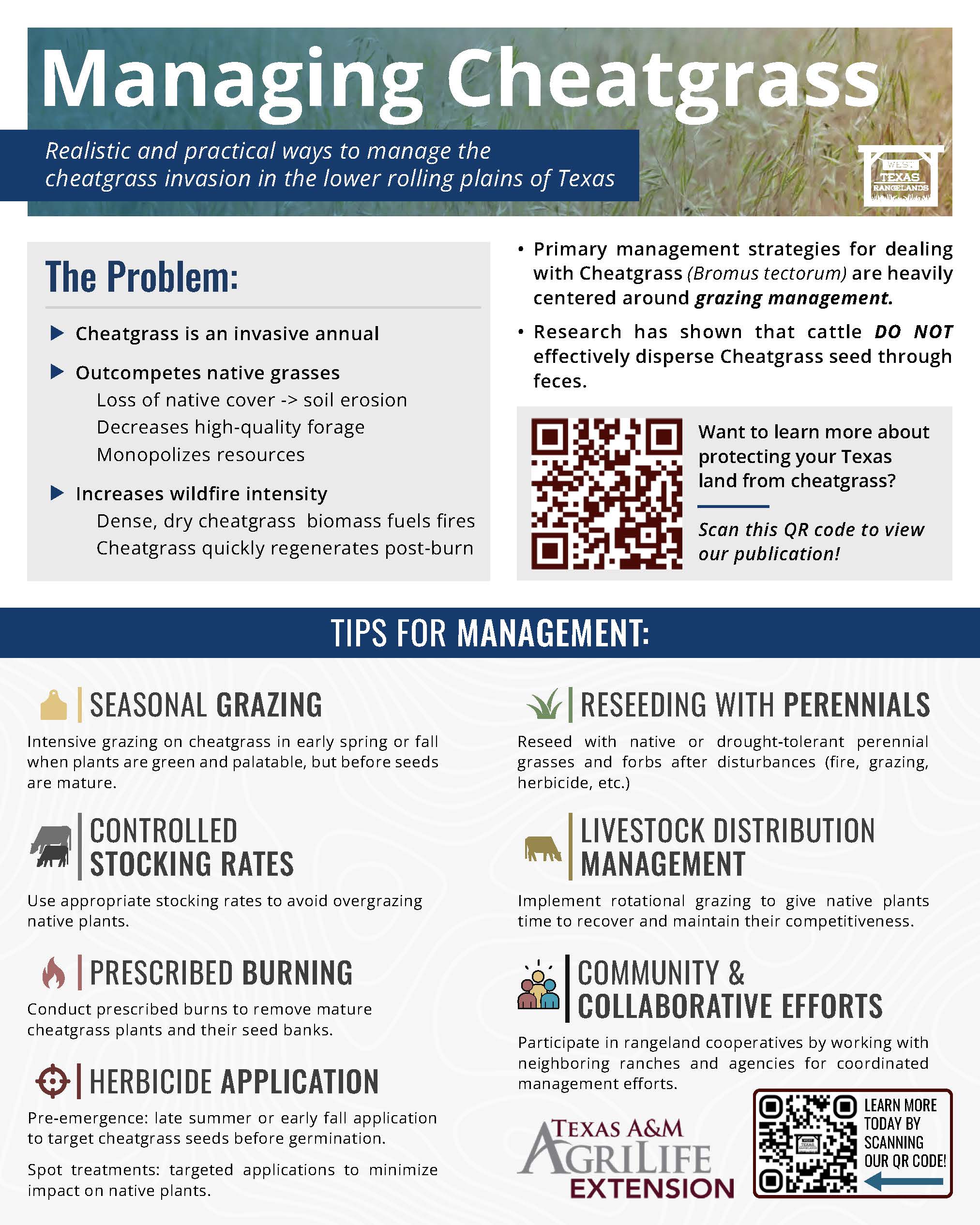
 Cheatgrass (Bromus tectorum) concerns in Texas may sound impossible, unfortunately, it is growing into a real concern in the Upper and Lower Rolling Plains. As an invasive annual grass, cheatgrass poses a serious threat to native ecosystems, forage quality, and wildfire risk— dominating landscapes into potential future monocultures.
Why Cheatgrass Is a Problem
This aggressive invader outcompetes native grasses for light, nutrients, and water. The result? A rapid loss of native plant cover, which can lead to soil erosion, reduced forage quality, and decreased rangeland productivity. Even more concerning, dense stands of dry cheatgrass significantly increase wildfire intensity. And because it regenerates quickly after fire, it creates a dangerous cycle that’s hard to break, as we all too well in the Great Basin of the Intermountain West.
But all hope is not lost. There are realistic and practical ways to manage this threat—and many of them start with intentional land stewardship. Check out our new AgriLife Extension publication to learn more!
Potential Management Strategies (download our new publication to learn more!)
- Rotational Grazing
Implementing rotational grazing can prevent overuse of certain areas, giving native plants time to recover and maintain their competitiveness. - Seasonal Grazing
Target cheatgrass during its most vulnerable periods—early spring or fall—when it’s still green and palatable. Intensive grazing during these windows can reduce seed production and slow its spread. - Conservative Stocking Rates
Avoid overgrazing by adjusting stocking rates to reflect rangeland conditions and native plant health. This protects the long-term productivity of rangeland.
Did You Know?
Despite some myths, research has shown that cattle do not effectively disperse cheatgrass seeds through their feces. This makes active management even more important.
Managing cheatgrass requires a proactive and informed approach. By combining grazing strategies, reseeding efforts, herbicide use, and prescribed burning, landowners can buffer their rangelands from this persistent invader.
To see the full list of management strategies for cheatgrass, be sure to read the full Extension publication here.