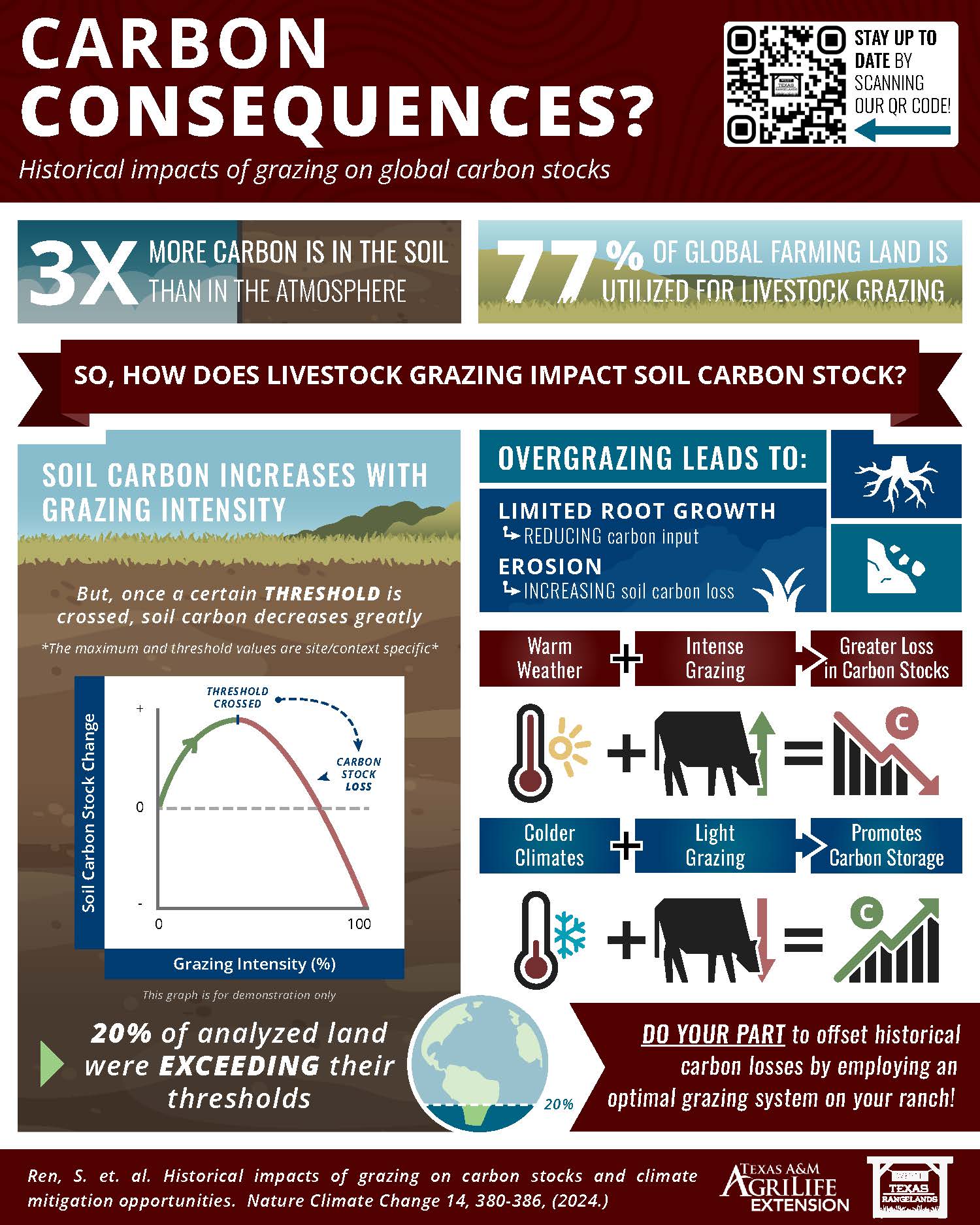
 When we think of livestock grazing, we often focus on the immediate impact on rangelands. But grazing can directly influence (good or bad) long-term organic material and carbon stored in soil. 2024 research published in Nature Climate Change highlights the critical role that grazing plays by analyzing global carbon stocks dynamics from 1,473 samples from across the world.
Soil is a natural carbon sink, holding more carbon than the atmosphere. Well-managed grazing can promote carbon storage, especially in cooler climates where conservative grazing encourages strong root systems and healthy soil biology. These roots capture and store atmospheric carbon, contributing to soil health and increased soil organic material.
There’s a fine line between beneficial grazing and overgrazing, especially in drought-prone rangelands. This meta-analysis of 1,473 soil carbon observations from grazing studies specifically tied to grazing practices found:
- 20% of the studied grazing lands have surpassed sustainable grazing thresholds where soil carbon losses accelerate.
- Overgrazing leads to soil erosion and limited root growth, reducing a soil’s ability to build organic material and store carbon.
- Overgrazing in warmer climates with high chances of frequent drought has the greatest risk for soil carbon loss leading to desertification.
Livestock producers have a unique opportunity to maintain and build stronger soils with high amounts of organic materials. Implementing adaptive and rotational grazing systems that consistently adjust stocking rates:
- Prevent erosion and soil degradation
- Encourage stronger and deeper root growth of perennial grasses
- Maximize carbon sequestration potential
By finding the right grazing balance for rangeland, producers ensure soil health, support long-term forage productivity, and contribute to resilient rangelands that support grazing.
For more information and to read the full study click here – Historical Impacts of Grazing on Carbon Stocks