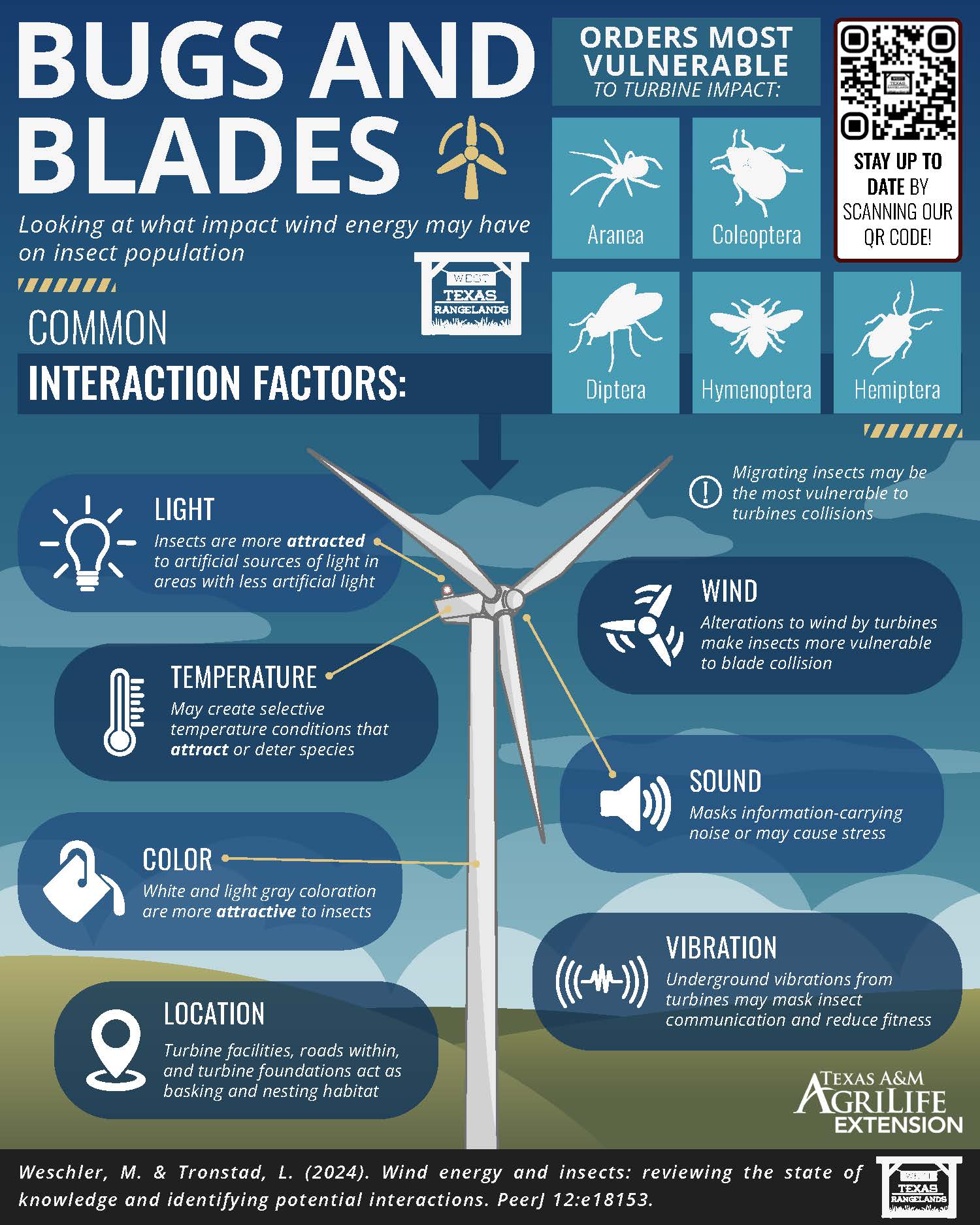
 When contemplating alternative energy, how often do rangeland managers and landowners think about bugs? Believe it or not when thinking about systems and ecosystem services, it is important to pause and consider the unintended consequence of rangeland choices, especially for some of our most vital, yet vulnerable, creatures: insects.
A growing body of research, including recent findings by Weschler and Tronstad (2024), suggests that wind turbines may be altering insect populations in subtle but significant ways. Here’s how:
Wind and Vulnerability
Turbine blades don’t just catch the wind—they change it. These changes can make insects more vulnerable to direct collisions with spinning blades, particularly those on long migratory flights. Orders like Hymenoptera, Diptera, and Hemiptera are especially at risk. These include: ants, wasps, bees, flies, aphids, cicadas, leafhoppers, and many others.
Sound and Stress
The noise generated by turbines may interfere with insect communication or cause stress, particularly in species that rely on sound to find mates or detect predators.
Color Attraction
White and light gray—common turbine colors—happen to be particularly attractive to insects. This unintentional allure could increase insect-turbine interactions, basically increased fatal effects.
Light Pollution
Artificial light is another draw. In darker rural environments where turbines are typically placed, the contrast of blinking lights can become irresistible to nocturnal insects, disrupting natural behaviors like navigation and reproduction.
Temperature
Turbines can create selective temperature zones around their bases. These changes may attract some insect species while repelling others, potentially altering the ecological balance.
Habitat Creation—and Disruption
The infrastructure around wind farms, like turbine foundations and service roads, unintentionally provides basking and nesting spots for some species. However, these new “habitats” may not be beneficial long-term and can disturb native ecosystems.
The Role of Vibration
Underground vibrations may mask essential insect communication cues, particularly in soil-dwelling or ground-nesting species, potentially reducing reproductive success.
Why It Matters
Insects play vital roles in pollination, soil health, and food webs. As rangeland managers strive for resiliency, sustainability, and profitability, let’s not forget the small but mighty creatures that are essential to ecosystem function.
Be sure to check out the full publication here!