This October we are featuring Mr. Jeff Goodwin, Range and Pasture Consultant Agricultural Division with the Samuel Roberts Noble Foundation in Ardmore, OK. Jeff is a Texas man, but more importantly he is a fire man who promotes the responsible and practical use of fire on rangelands.
How did you get introduced to fire? I got introduced to fire as an undergraduate at Tarleton State 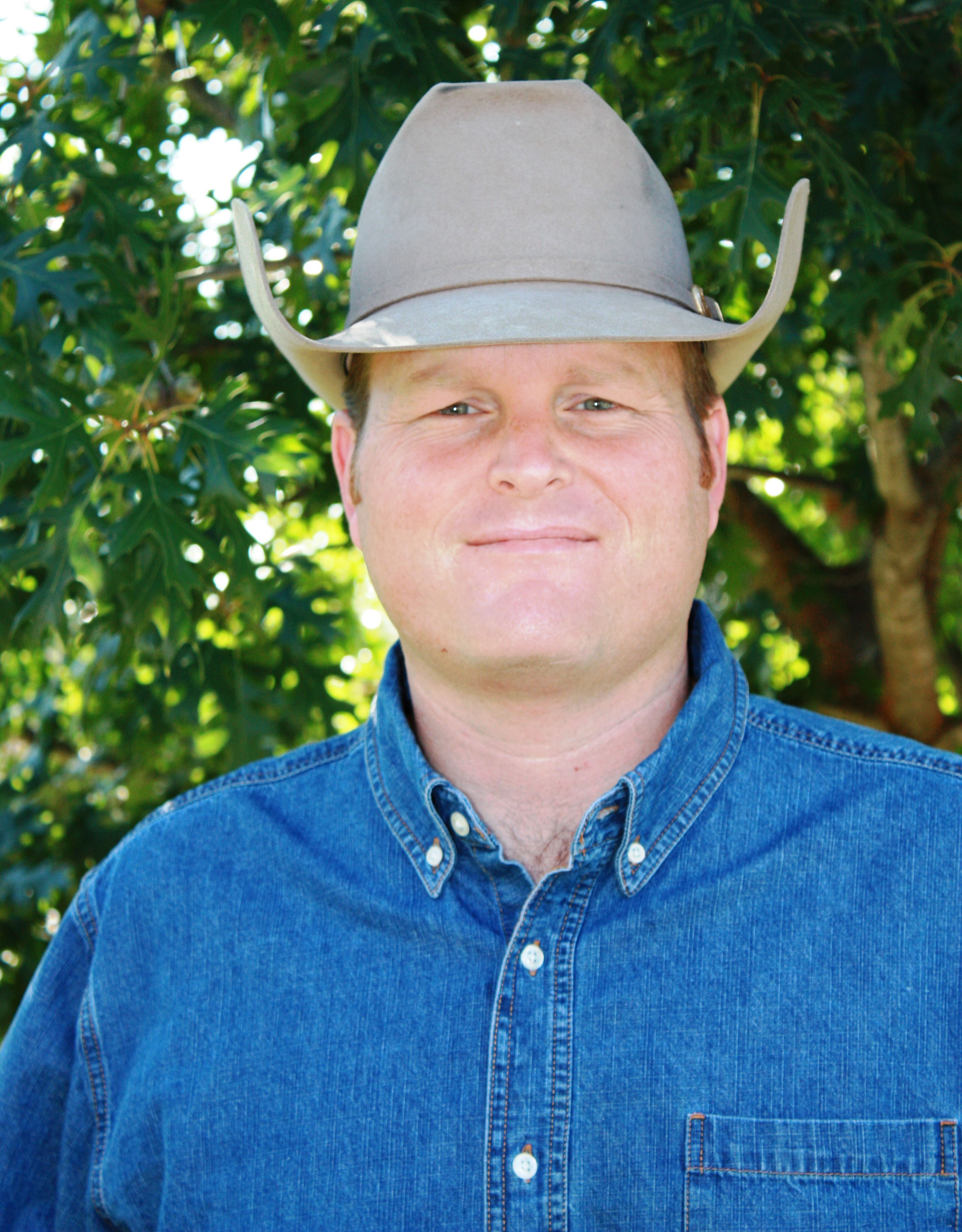 University’s Range and Ranch Management program. After graduate school, I had the opportunity to work with Dr. Bill Pinchak and Dr. Jim Ansley at the Texas A&M Research Center in Vernon, Texas conducting research projects utilizing fire to manage landscapes in the Rolling Plains of Texas. The majority of my experience with fire however, has come through the 15 years I spent as a rangeland management specialist with USDA-NRCS. They provided the training, experience, and opportunity to work with landowners to address rangeland resource concerns and meet their management objectives. Very often in a fire starved landscape, those rangeland management objectives were achieved and/or aided with the proper application of prescribed fire
Do you make special plans for fire in your management plans well in advance, or take advantage of good fuel and weather conditions as they come? I have been trained my entire career to be a planner, to think about how our management will meet a specific goal and how that action will affect other resources. However, to answer the question Yes I make plans well in advance, but I also take advantage of favorable conditions as they arise. To me that’s the beauty of a well written and designed prescribed fire plan. Many times we have a specific goal or objective we want to accomplish within a particular burn unit. The challenge and objective should be to write your burn plan specific enough to meet the objective yet the prescription parameters should be open enough so that you have the flexibility to take advantage of those favorable conditions as they arise. The worst thing you can do is to make the prescription parameters so tight that you that you 1) will never meet them and thus never get the burn implemented or 2) push yourself to the limits of your plan parameters and possibly open yourself to liability issues should trouble arise.
What’s the hook for you on fire? The hook for me with fire is that I am a student of Ecology. For too many years we have looked at fire as a “tool” to manage rangelands. Fire is not a tool, it is an ecological process. A “tool” can be put back in the toolbox and/or replaced. We are currently seeing across the region what happens when we try to replace or use fire sparingly as a tool. I currently live in the middle of the Southern Great Plains, an area encompassing the majority of Kansas, Oklahoma, and Texas. Every square inch of rangeland in this region evolved under a fire regime with a fire return frequency, it was part of the fire dependent ecology of this region. As “we” began to manage those rangelands, 150 years ago we suppressed that ecological process. Many of the battles that we fight today in the field of rangeland management are directly related to that suppression, (i.e. woody brush encroachment, reduced rangeland productivity, etc.). So my hook is returning the ecological functionality of our rangeland resources while meeting management objectives of the land stewards that care for them.
In your opinion, what makes a successful fire? A successful fire in my opinion is one that meets the goal and objective of the burn unit. I am not a fan of burning just to burn. Many times we miss opportunities or do not meet the specific objectives of a fire just because we want to get it “done”. For instance, if my goal is to control or suppress Prickly Pear cactus, I will need a couple of things to ensure that outcome. I will need to choose a year or time when we have grown enough fine fuel to carry the fire to adequately meet that objective. I should choose prescription parameters that will effectively allow for a fire hot enough to meet those objectives. If we burn on a day that does not meet those parameters then we will likely not meet the original objective and we will have utilized our fine fuel. Now, I agree there are multiple benefits to getting fire back on the landscape. However, I am in the business of meeting landowner objectives and managing rangeland, to do that we need to be successful with our management applications and fire is no exception. Earlier I stated that Fire was an ecological process that needed to return to Texas rangelands, that is true. With that said, we need to be the ones that decide, when, where, how much and how long. This is where we take the science of rangeland management and turn it into and art.
Who in your burn circle/crew would you never burn without? I do not have a specific person that I would not burn without, however I will not burn without speaking to my Lord and Savior. I pray before each burn that the lord provides his hand in safety over the crew, the clarity to make the right decision at the right time, and the gratitude for the responsibility to care for the rangeland resources he has provided us dominion over. Fire is a necessary process but can be very unforgiving if the proper amount of respect is not given. Safety is and will always be our number one priority on a burn.