The United States Court of Appeals for the First Circuit recently upheld a legal challenge to Massachusetts Question 3, an animal confinement statute similar to California’s Prop 12. [Read Opinion here.]
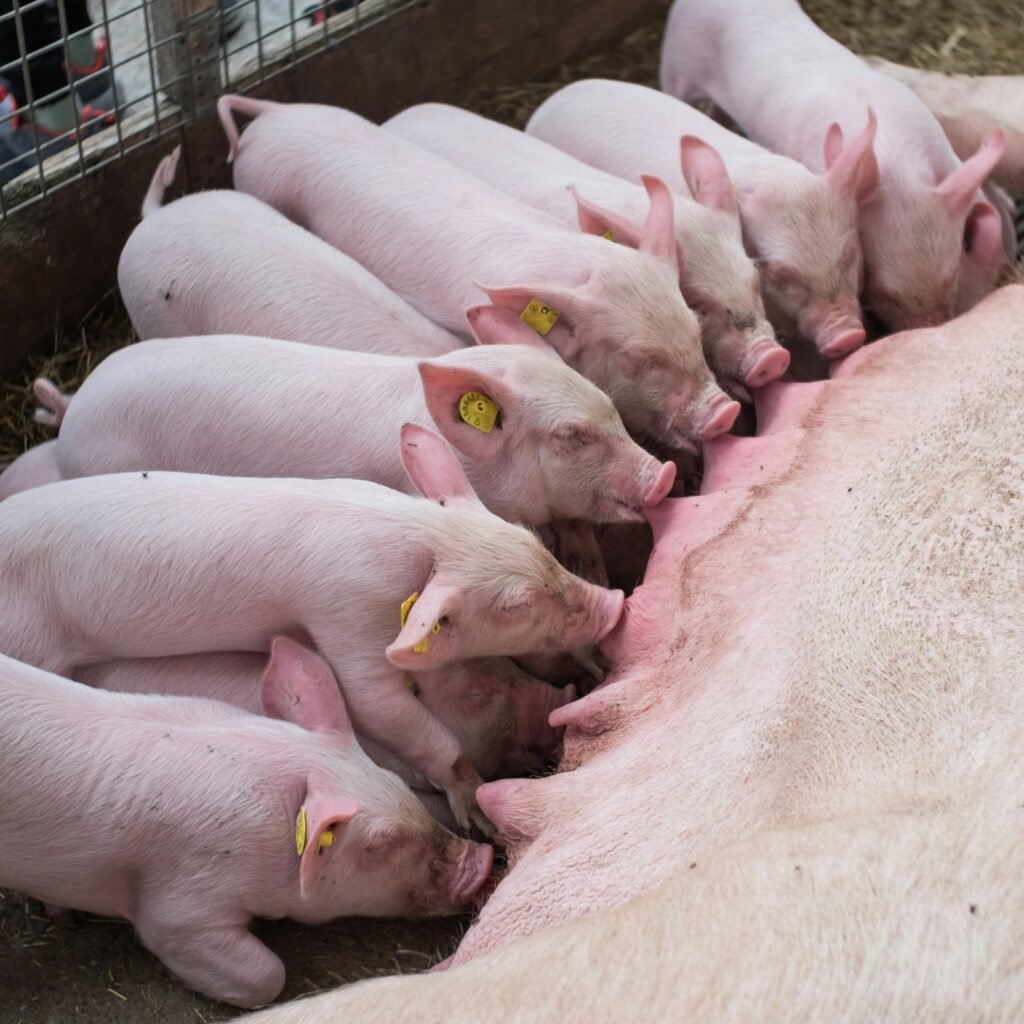
Photo by Veronica White on Unsplash
Background
In 2016, Massachusetts voters passed Question 3, the Act to Prevent Cruelty to Farm Animals (“the Act”). The Act applied to veal, poultry, and pork, but this case involved only the provisions related to pork production. The Act prohibited the use of gestation crates on pig farms in Massachusetts. Additionally, the law prohibited the sale of most pork products in Massachusetts that are derived from pigs kept in gestation crates regardless of where the production occurred. Though passed in 2016, the law did not go into effect until 2023. The stated purpose of the law was to “prevent animal cruelty by phasing out extreme methods of farm animal confinement, which also threaten the health and safety of Massachusetts consumers, increase the risk of foodborne illness, and have negative fiscal impacts on the Commonwealth of Massachusetts.”
A group of out-of-state pig farmers and a slaughterhouse that sells pork across the country, including in Massachusetts, filed suit claiming the Act was illegal. They brought ten causes of action: (1) dormant Commerce Clause violation; (2) Privileges and Immunities Clause violation; (3) express preemption under the Federal Meat Inspection Act; (4) conflict preemption under the Federal Meat Inspection Act; (5) preemption under the Packers and Stockyards Act; (6) Full faith and Credit Clause violation; (7) Due Process Clause violation; (8) Import-Export Clause violations; (9) declaratory relief on unconstitutionality; and (10) judicial review of the Massachusetts Regulations under the Act.
The trial court dismissed all but one claim related to federally inspected facilities that were exempt from the Act. It found this “slaughterhouse exemption” violated the dormant Commerce Clause as it discriminated against out-of-state farmers. Thus, the court severed that portion of the statute and found it unconstitutional. Note a similar challenge was recently filed challenging the same provision in California’s Proposition 12. The severance and ruling the slaughterhouse exemption violates the Constitution was not challenged by either party on appeal.
Plaintiffs appealed the dismissal of their claims.
First Circuit Opinion
The United States Court of Appeals for the First Circuit affirmed. [Read Opinion here.]
Procedural Errors
First, the court addressed alleged procedural errors. The court found there was no requirement the trial court state their findings or conclusions when ruling on a motion to dismiss. Second, the court rejected Plaintiffs’ argument that the trial court erred in granting summary judgment sua sponte.
Privileges and Immunities Clause
Next, the court addressed Plaintiffs’ privilege and immunities clause claim, quickly dismissing this claim because the Privileges and Immunities Clause does not apply to corporations, and the Plaintiffs are companies, LLCs, LLPs, a corporation, and a cooperative.
Dormant Commerce Clause
The Plaintiffs raised two claims under the Dormant Commerce Clause.
Intentional discrimination
Because the Constitution gives Congress the right to regulate commerce between states, it is read as prohibiting state and local governments from impeding the flow of goods from one state to another. The appellate court held he trial judge did not err in finding insufficient evidence of discriminatory effect and purpose.
With regard to purpose the court found certain statements made in legislative hearings that gestation crates are not used in Massachusetts and the Act would protect animals from outside of Massachusetts were insufficient to show a discriminatory purpose for the law. The law’s stated purpose–to prevent animal cruelty and protect health and safety–are not discriminatory. Further, the fact that the Act was passed by voters, not the Legislature, makes the Legislative hearing testimony “not an ideal source of context.”
With regard to effect, the court found because the law was neutral–applying to both in-state and out-of-state producers alike, it did not have a discriminatory effect. The fact it impacts more (or only) out-of-state procurers is not sufficient to show discrimination. In short, the court said the Act “does not establish different ‘playing fields’ for in and out-of-state interests.”
Discriminatory effect
Next, the Court looked at the Pike balancing test, which arises when a law is not facially discriminatory, but its practical impacts may also disclose the presence of a discriminatory purpose. Under this test, where a law regulates even-handedly to effectuate a legitimate public interest, it will be upheld unless the burden imposed on commerce is clearly excessive in relation to the claimed local benefits. To prove a Pike claim, the first step for Plaintiffs is to show the challenged law constitutes a substantial or significant burden on interstate commerce.
The court relied on the United States Supreme Court’s decision in National Pork Producers v. Ross, which upheld California’s similar law, Proposition 12. Plaintiffs argued was improper because only three justices agreed with the portion of the opinion holding that the Plaintiffs in National Pork Producers failed to prove a substantial burden. The court pointed out that five justices agreed that the National Pork petitioners’ Pike balancing test claim failed, although they could not agree on a single rationale for that holding. Essentially, the court held the Plaintiffs miscounted the Justices who agreed that a substantial burden was alleged in National Pork Producers. In conclusion, the court wrote, the majority of the United States Supreme Court held dismissal was proper, the First Circuit could rely on that decision to resolve the case before it.
Preemption
Plaintiffs argued both the Federal Meat Inspection Act (“FMIA”) and the Packers and Stockyards Act (“PSA”) preempted the Act.
FMIA
The FMIA is a federal statute that addresses the inspection, handling, and slaughter of livestock for human consumption. It applies to processing facilities such as slaughterhouses. The court held the Act does not address how slaughterhouses operate. Plaintiffs relied on a case involving a law that did directly address actions at slaughterhouses, which was distinguishable from the Act. The Act applies to production practices (like gestation crates) that all occur beyond the slaughterhouse gate. That is beyond the bounds of the FMIA, meaning there is no preemption.
PSA
The PSA makes it unlawful for a packer or swine contractor to make or give any undue or unreasonable preference or advantage, or impose any disadvantage, to a particular person or locality. The court cited back to its decision that the Act does not discriminate to hold there is no preemption here. There is no unreasonable preference, advantage, or disadvantage because, under the Act, all producers are treated the same.
Full Faith and Credit Clause
Plaintiffs claim the Act is in direct conflict with the Right to Farm statutes in place in the state where they operate, including Missouri, Wyoming, and Indiana. This, they argue, is a violation of the Full Faith and Credit Clause of the United States Constitution. The court disagreed, holding the Act did not ban the farming practices that the Plaintiffs claim their states’ Right to Farm Acts protect. The out-of-state farmers are free to continue with any farming practice they chose, and the court relied upon that to reject the Full Faith and Credit claim.
Due Process Clause
The court rejected Plaintiffs claims the phrases “engage in the sale” and “turn around freely” were unconstitutionally vague. Relying on the statutory and regulatory definitions surrounding these provisions, the Court held they were sufficiently descriptive.
Import-Export Clause
Lastly, Plaintiffs argued the Act essentially imposes a tax on out-of-state goods by imposing a particular method of raising pigs. The court rejected this, agreeing with Massachusetts’ argument the Import-Export clause only applies to products imported from foreign countries, not other states.
Key Takeaways
This case addresses a number of the legal arguments that were not raised before the United States Supreme Court in National Pork Producers Council v. Ross. Seeing how a federal appellate court responds to these types of arguments is important to anyone following this type of animal confinement litigation. This now means federal courts have upheld both Prop 12 and Question 3 against constitutional challenges.
For more background on the Supreme Court decision on Prop 12, and the potential Congressional steps to prohibit these types of laws, check out this blog post with my written Congressional testimony on this issue.