Last week, I had the honor of being a witness at a hearing of the House Committee on Agriculture in Washington, DC looking at the implications of Proposition 12.
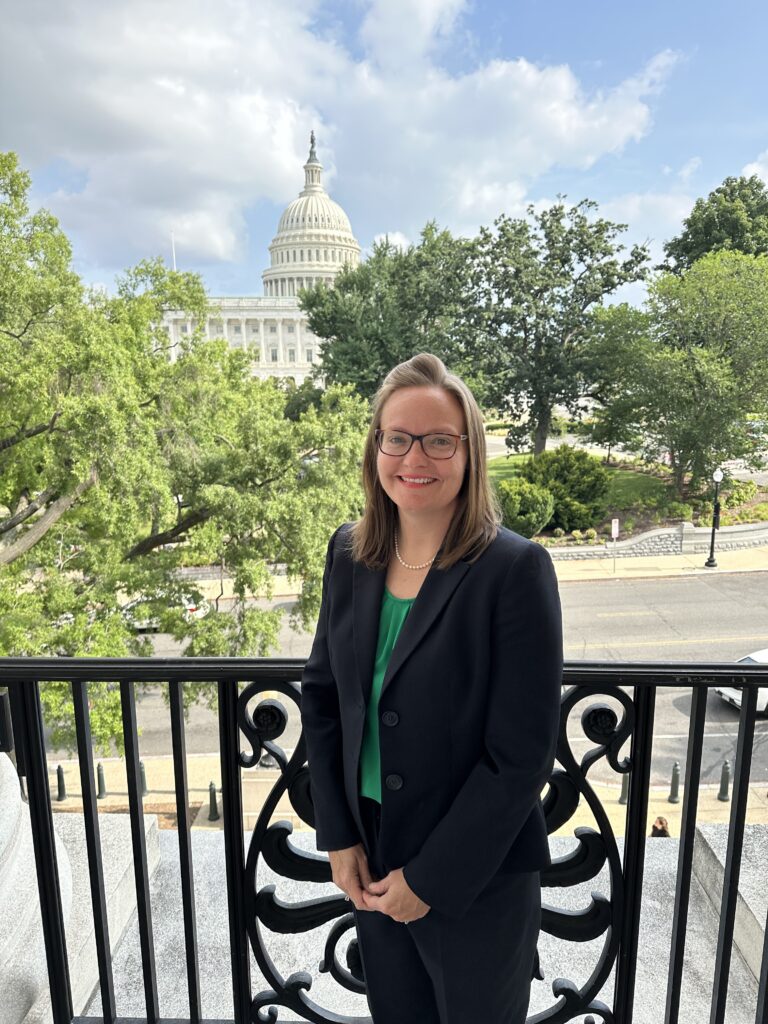
It was a really great experience, and I am so grateful to Ranking Member, Angie Craig, for the invitation to participate in the hearing. I also want to thank the many friends and colleagues who helped me prepare for my testimony. As I noted in my testimony, this is an important issue for producers and agribusinesses across the country. In light of this, I wanted to share my testimony and a link to watch the hearing should you be interested in doing so.
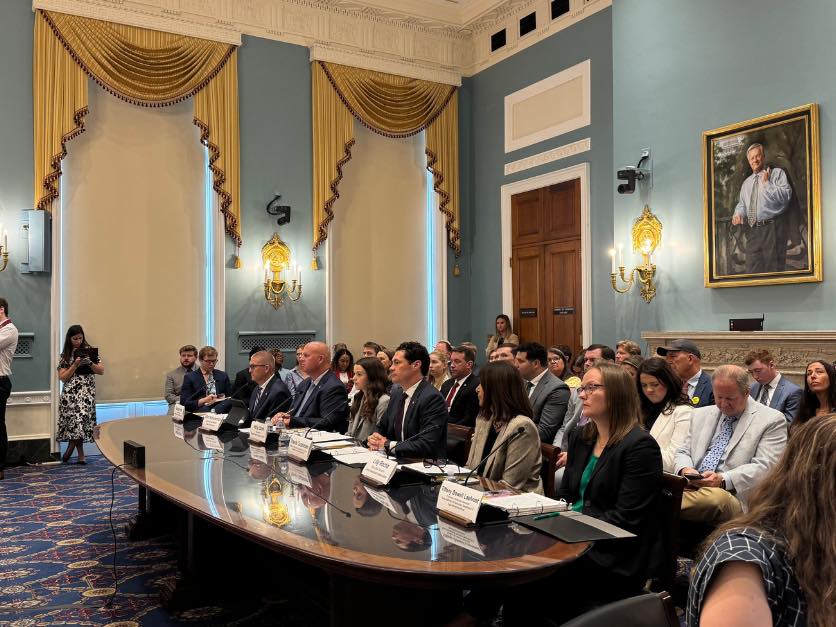
The hearing begins with opening statements from the Chair and Ranking Member, and then each witness makes a 5 minute opening statement. The remainder of the hearing involves each Committee Member having 5 minutes to make comments and/or ask questions of the witnesses. You can watch the hearing here.
Each witness also submits written testimony in advance of the hearing. You can download a PDF of my testimony here.
Testimony of Tiffany Dowell Lashmet
An Examination of the Implications of Proposition 12
House Committee on Agriculture
July 23, 2025
I. Introduction
Chairman Thompson, Ranking Member Craig, and Committee, it is an honor to testify before you today on this important topic. I am Tiffany Dowell Lashmet, Professor and Extension Specialist in Agricultural Law with Texas A&M AgriLife Extension. I focus my work on legal issues impacting rural landowners and agricultural producers across the State of Texas and the country.
The testimony below summarizes the legal framework surrounding California’s Proposition 12 (“Prop 12”). As is true in my role at Texas A&M AgriLife Extension, I am here to offer an objective, unbiased view of the law as it surrounds this issue. I am not here to offer my opinion as to the wisdom of Prop 12, the Supreme Court opinion in National Pork Producers v. Ross, or any proposed legislative enactments related to Prop 12. I believe it important to understand there are, as is true with many issues, agricultural interests on all sides of the Prop 12 debate. Certainly, there are agricultural producers, groups, and businesses in favor of Congressional action to overturn Prop 12. Similarly, there are agricultural producers, groups, and businesses strongly against Congress taking such action, many of whom already went to the expense to comply after Prop 12 was passed and upheld by the Court. I have spent my career explaining complex, and often contentious, legal issues to farmers and ranchers across Texas in an unbiased, neutral manner, and trust that experience will aid me in helping to do the same in this setting.
II. Background
The United States Constitution, Article I, Section 8 grants Congress the right to regulate commerce between states. There is little doubt that, should Congress want to do so, it could pass a nationwide law related to the sale of products raised under specific living conditions so long as the law fell within the broad parameters of the Commerce Clause. The United States Supreme Court repeatedly noted as much in its recent consideration of Prop 12.[1]
States have traditionally handled animal welfare issues tracing back to the 1800s.[2] However, laws requiring specific amounts of living space were not seen until 2002 when Florida enacted a Constitutional Amendment prohibiting confining or tethering a pig so it could not turn around freely.[3] Shortly thereafter, numerous other states passed similar legislation with rules related to sows and/or veal calves. The first such statute in California, Proposition 2 (“Prop 2”), was passed in 2008. It was the first in the nation to impose spacing requirements on laying hens and also included requirements for sows and veal calves.
In 2010, the California Legislature passed AB 1437 relating to laying hens. This law went a step further than Prop 2, requiring eggs sold in California to be raised in accordance with the Prop 2 animal housing requirements, regardless of the state in which the hens were housed.
Ten years later, California voters passed Prop 12, a ballot initiative taking this same approach with regard to veal calves and sows. Prop 12 included increased spacing requirements for in-state production of laying hens, sows, and veal calves, but also added a sales prohibition requiring whole pork and whole veal products sold within California to be traceable to animals raised in compliance with the Prop 12 standards, regardless of the state where the animals were raised.
Currently, a number of states have animal confinement statutes on the books that apply to animals produced within the state itself. Far fewer have a sales prohibition imposing the animal confinement rules on products raised in other states but sold in their jurisdiction. Only Massachusetts has a similar law related to eggs, pork, and veal. Several states, including Washington, Oregon, Nevada, Arizona, Colorado, and Michigan have similar laws or regulations applicable only to laying hens.[4]
III. Prop 12 Litigation
Not surprisingly, opponents turned to the courts, filing lawsuits against the sales provision of Prop 12, including National Pork Producers Council v. Ross. Plaintiffs, National Pork Producers Council and American Farm Bureau Federation, filed suit in the United States District Court for the Southern District of California claiming the sales ban provision of Prop 12 violated the dormant Commerce Clause.
The dormant Commerce Clause theory posits the Commerce Clause not only vests Congress with the power to regulate trade and commerce between states but also contains a negative command prohibiting the enforcement of certain state laws even when Congress has failed to legislate in an area. Specifically, the Supreme Court has held states may not pass discriminatory laws treating out-of-state businesses differently than in-state businesses and may not pass laws that are facially neutral if they impose a “substantial burden” on interstate commerce where the benefit of the law is outweighed by the burden on interstate commerce.
The Plaintiffs and other parties who object to Prop 12 argued the sales ban provision of the California law ran afoul of the dormant Commerce Clause.[5] Specifically, they claimed Prop 12 had significant extraterritorial impacts and imposed a substantial burden on interstate commerce. In explaining the burden imposed on interstate commerce, Plaintiffs noted the effects of this law would be felt primarily outside of California given that California makes up less than 1% of pork production but consumes 13% of pork in the United States.[6] They cited concern that Prop 12 could be the first step in a patchwork of different animal confinement laws. They pointed to the increased cost required for producers to change production practices in order to be Prop 12 compliant and the anticipated increase in pork prices to consumers as a result.
California and other proponents of Prop 12 argued that decisions related to health, safety, and welfare of animals and citizens should be left to the states. They pointed out Prop 12 does not expressly require any out-of-state producer to comply with Prop 12 standards; instead, out-of-state producers are free to choose to continue their current production practices and elect not to sell products in California. They also pointed to producers who have successfully converted their operations to be Prop 12 compliant as proof these adjustments can successfully be made.
The trial court dismissed the suit on California’s 12(b)(6) motion, and the United States Court of Appeals for the Ninth Circuit affirmed.[7] The United States Supreme Court granted certiorari.
IV. The United States Supreme Court Opinion
The Court issued its Opinion in National Pork Producers Council v. Ross in May 2023.[8] Justice Gorsuch wrote the opinion for the Court. While certain portions of the Court’s analysis were unanimous, others were fractured and complicated to parse. To the extent there is a good illustration of the complex nature of this issue, this Opinion serves as Exhibit A. When struggling to explain this complex ruling to producers, I have frequently reminded myself not even the nine Supreme Court Justices could all get on the same page about how to legally analyze Prop 12.
First, the Court unanimously agreed that the Plaintiffs did not claim Prop 12 was facially discriminatory. The Plaintiffs conceded that Prop 12 imposes the same burdens on in-state pork producers as it does out-of-state and even international producers, requiring all to comply with the same animal confinement requirements to sell covered products in California.
Second, the Court unanimously rejected NPPC’s argument that Prop 12 should be stricken because it has extraterritorial effects. The Court agreed it had never read the Commerce Clause so broadly and noted that in today’s marketplace most state laws would have some sort of extraterritorial impact. This, the Court held, was not the proper inquiry under the dormant Commerce Clause jurisprudence.
Third, the Court turned to the Pike balancing test. This line of cases developed in situations where a law’s practical effects may also show the presence of a discriminatory purpose, despite the law seeming facially non-discriminatory. When this occurs, the Court utilizes Pike balancing to weigh the impact on interstate commerce against the local interest in the law. This is where the unanimous view of the Court ceased, and a flow chart became necessary to determine which portions of the various Opinions with which each Justice agreed.
Three justices (Gorsuch, Thomas, Barrett) concluded, at least under the facts of this case, the Pike balancing test is one that no court is equipped to undertake. They described the interests being weighed and balanced as being “incommensurable.” They likened the task of weighing and balancing the economic interests of the Plaintiffs with the moral and health interests of California to determining whether a particular line is longer or rock is heavier. Instead, they wrote, “in a functioning democracy, policy choices like these usually belong to the people and their elected representatives” who are better able to weigh political and economic costs and benefits.
Four justices (Gorsuch, Thomas, Sotomayor, Kagan) found the Plaintiffs failed to allege a “substantial burden” on interstate commerce. This is a key decision for these Justices, because in order to get to the balancing test, a Plaintiff must first allege a substantial burden on interstate commerce. These Justices believed the pleadings failed to allege sufficient facts to prove this substantial burden. Importantly, these justices noted “further experience may yield further facts” as Prop 12 went into effect, leaving it open to future challenge should further facts develop to show a substantial burden.
On the other hand, the remaining five justices (Roberts, Alito, Kavanaugh, Jackson, Barrett) believed the Plaintiffs did successfully allege a substantial burden. Four of these justices would have remanded the case to the trial court to conduct the Pike balancing test. Justice Barrett, however, did not agree with remanding the case because of her conclusion courts should not be conducting this type of balancing test at all.
It is hard to overstate the importance of Justice Barrett’s concurring opinion and her position that the Court is not suited to apply a balancing test. Given that she agreed a substantial burden was satisfactorily alleged, had she believed conducting Pike balancing was within the province of the judiciary, the majority opinion well may have become the dissenting opinion, resulting in the case being remanded for the lower court to develop the record necessary to conduct the Pike balancing analysis.
One final interesting note is Justice Kavanaugh wrote a concurring opinion for the purpose of pointing out laws like Prop 12 “may raise questions not only under the Commerce Clause, but also under the Import-Export Clause, the Privileges and Immunities Clause, and the Full Faith and Credit Clause.” Additionally, he noted that this issue may have implications far beyond the farm gate. “Notably, future state laws of this kind might not be confined to the pork industry…If upheld against all constitutional challenges, California’s novel and far-reaching regulation could provide a blueprint for other states.” He offered examples of hypothetical laws patterned after Prop 12 related to immigration, minimum wage, and even reproductive rights.
The bottom-line result of the various opinions and differences therein was the Court found in favor of California, and Prop 12 was allowed to stand. Because of the fractured nature of the Opinion, however, the broader takeaway and application to future cases is more difficult to analyze and predict.
IV. Subsequent Litigation
There have been other lawsuits after the NPPC decision that are relevant to the legal landscape surrounding Prop 12.
A. Iowa Pork Producers v. Bonta
In June 2024, the United States Court of Appeals for the Ninth Circuit issued its opinion in Iowa Pork Producers v. Bonta,[9] a challenge to Prop 12 on a number of legal grounds.
First, the case challenged Prop 12 on dormant Commerce Clause grounds. The court found Prop 12 was not discriminatory on its face and did not impose an excessive burden on interstate commerce, noting that increased costs of compliance, alone, do not establish a substantial burden on interstate commerce.
Second, the court rejected Plaintiff’s claims that Prop 12 was unconstitutionally vague with regards to the language “engage in” and “knowingly” as these words are widely used and readily understood.
Third, the court rejected Plaintiff’s claim under the Privileges and Immunities Clause as they did not allege treatment of nonresidents differently than California residents.
Fourth, the Plaintiffs claimed Prop 12 is impliedly preempted by the Packers and Stockyards Act. The court did not agree as Prop 12 requires all parties, regardless of location, to sell compliant products.
The plaintiffs filed a Petition of Certiorari before the United States Supreme Court, which was denied on June 30, 2025. It is interesting, in light of his Ross concurring opinion, to note that the Court’s denial order stated that Justice Kavanaugh would have granted the petition.
B. Triumph Foods v. Campbell
In 2024, the United States District Court for the District of Massachusetts decided Triumph Foods v. Campbell, a challenge to Massachusetts’ Prevention of Farm Animal Cruelty Act, more commonly known as Question 3 (“Q3”), a law quite similar (but not identical) to Prop 12.[10] Massachusetts voters passed Q3 in 2016, prohibiting producers from confining breeding pigs, veal calves, and egg-laying hens in a manner that prevents them from lying down, standing up, fully extending their limbs, or turning around freely. Like Prop 12, the law applies to animals raised in Massachusetts and to any products sold in Massachusetts, regardless of their original location.
The Plaintiffs raised a host of claims including the dormant Commerce Clause, Privileges and Immunities Clause, the Full Faith and Credit Clause, the Due Process Clause, the Import-Export Clause, and preemption under the Federal Meat Inspection Act (“FMIA”)[11] and the Packers and Stockyards Act. Many of the claims were dismissed, but the court did consider the dormant commerce clause and preemption claims.
First, the court considered but rejected the dormant Commerce Clause claim based on the statute as a whole, relying on the Supreme Court decision National Pork Producers Council v. Ross. The Court agreed it was not in a position to measure incommensurable competing goods and that such choice belongs to the legislative branch. Because of this, the court refused to apply the Pike balancing test and dismissed the claim.[12]
Next, the court considered one specific provision, the “slaughterhouse exception,” which allowed non-compliant products to be sold at an establishment in Massachusetts inspected under the FMIA. Plaintiffs alleged that, as out of state processors, they could not take advantage of this exception despite being governed by the same FMIA inspection. Conversely, any in-state pork producer would be able to do so. The court agreed the slaughterhouse exception had a discriminatory effect as, in application, it treated in-state and out-of-state processors differently. Under the law, a discriminatory provision is almost per se invalid and can only survive if it advances a legitimate local purpose that cannot be served with reasonable, non-discriminatory alternatives. The court found that while taking no position on the legitimacy of the purpose of Q3 as a whole, the state did not prove a legitimate purpose for the slaughterhouse exemption specifically. Thus, it was deemed unconstitutional and severed from the language of the Act.[13]
In a separate Order, the Court considered the preemption argument under the FMIA. FMIA regulates meat products in interstate commerce requiring federal inspection of pigs prior to entering and while in a slaughterhouse, and after slaughter. FMIA’s regulations apply to slaughterhouses, not to pig farmers. FMIA contains an express preemption prohibiting state laws in addition to or different from FMIA related to the premises, facilities, and operations of a FMIA-inspected establishment.
The trial court found Q3 (once the slaughterhouse exemption was severed) was not expressly preempted by FMIA, holding Q3 has no provision requiring action by a slaughterhouse. Q3 only bans the sale of non-compliant pork, doing nothing to regulate slaughterhouse operations.
Similarly, the court held the law did not fall under conflict preemption, which occurs when a state law stands as an obstacle to the accomplishment of the purpose and objective of Congress or it is impossible for a party to comply with both state and federal requirements. Here, slaughterhouses could comply with both the federal and Q3 requirements, and the two laws have different purposes, with Q3 preventing the sale of pork raised in certain conditions and FMIA seeking to protect the health of a consumer through meat inspection programs.
Thus, the court upheld Q3 without the slaughterhouse exemption language. Importantly, this case has been appealed to the United States Court of Appeals for the First Circuit, which has not yet issued an opinion. To the extent there are questions regarding preemption between any existing or proposed law and Prop 12, this case may be helpful to illustrate how courts would analyze that issue.
C. United States of America v. California
Earlier this month, the Department of Justice filed suit in the United States District Court for the Central District of California claiming the portions of Prop 12 and AB 1437 that apply to laying hens is preempted by the federal Egg Products Inspection Act. The Egg Products Inspection Act includes a preemption provision preventing states from imposing additional or conflicting requirements related to the processing and labeling of eggs that are already covered by federal standards. Specifically, the DOJ claimed Prop 12 and AB 1437 impose requirements related to “quality and condition” of eggs and labeling, which are preempted by the EPIA. No court decisions or supplementary filings have been made to date.
VI. Recently Proposed Congressional Action
In recent years, there have been several legislative proposals to address Prop 12 and other similar laws.
A. Ending Agricultural Trade Suppression Act (118th Congress, S.2019, H.R.4417) and the Food Security and Farm Protection Act (119th Congress, S.1326)
While the Ending Agricultural Trade Suppression Act (“EATS Act”) and the Food Security and Farm Protection Act may have different names, their content is the same.[14] Both are broad attempts to address laws like Prop 12 by prohibiting a State or local government from imposing a standard or condition of preharvest production on agricultural products sold in interstate commerce if production occurs in another state and the standard is in addition to federal law or laws of the State in which production occurs.
Given the definition of certain terms and provisions in these proposed bills, they would have quite broad application. For example, these laws would apply to “agricultural products” which are defined as “agricultural, horticultural, viticultural, and dairy products, livestock and poultry, bees, forest products, fish and shellfish, and any products thereof, including processed and manufactured products, and any and all products raised or produced on farms and any processed or manufactured product thereof.”
B. Protecting Interstate Commerce for Livestock Producers Act (118th Congress, S.3382)
Senator Hawley introduced the Protecting Interstate Commerce for Livestock Producers Act which would expressly preempt states from enforcing livestock laws in conflict with livestock laws in other states such as Prop 12. Specifically, the law provided that no state or local government shall enforce any law “that regulates the raising, production, use, transportation, importation, sale, or distribution of any livestock goods deriving from livestock” if the livestock or goods are (1) used, sold, or transported in interstate commerce, (2) raised in another state, and (3) the law is in conflict with the laws of the state or origin. There were exceptions including laws related to animals suffering from recognized animal diseases.
C. Ensuring the Free Movement of Livestock-Derived Products in Interstate Commerce (Food, Farm and National Security Act of 2024, Section 12007)
In its Food, Farm, and National Security Act of 2024, the House of Representatives included Section 12007, “Ensuring the Free Movement of Livestock-Derived Products in Interstate Commerce” (“12007”). This bill would have prevented states from enforcing conditions or standards on the production of covered livestock, except for those physically raised in such state. This language was significantly narrower than that proposed by prior bills in a couple of significant ways.
First, 12007 only applied to “covered livestock,” defined as any domestic animal raised for the purpose of slaughter for human consumption, or producing products manufactured for human consumption which are derived from the processing of milk, including fluid milk products. The proposed language expressly excluded animals raised for the primary purpose of egg production. This is narrower than both the EATS and Hawley bills.
Second, the bill only addressed laws imposing conditions or standards on the production of covered livestock physically raised in the jurisdiction. The “production” of livestock was limited to the raising, including breeding, of covered livestock and excluded the movement, harvesting, or further processing of covered livestock. Again, this is significantly narrower than the language of prior bills.
VII. Conclusion
There is no doubt this issue is important to agricultural producers across the country, and livestock producers find themselves on both sides of the debate. Congress has the authority pursuant to the Commerce Clause to act in this area. Whether to do so or how to undertake such an effort, is a matter of considerable complexity. In the absence of Congressional action, state laws such as Prop 12 and Q3 will continue to remain in effect given the lack of success challenging these laws in the judiciary. Additionally, states will remain free to pass similar, more restrictive, or more lax requirements as they wish. I appreciate the opportunity to testify and look forward to answering any questions you may have.
[1] National Pork Producers v. Ross, 598 U.S. 356 (2023).
[2] Elizabeth R. Rumley & Rusty W. Rumley, Enforcing Animal Welfare Statutes: In Many States, It’s Still the Wild West, 21 San Joaquin Agric. L. Rev. 21 (2012).
[3] Fla. Const. art. 10, § 21.
[4] Elizabeth Rumley, States’ Farm Animal Confinement Statutes, National Agricultural Law Center, https://nationalaglawcenter.org/state-compilations/farm-animal-welfare/.
[5] A similar lawsuit, State of Missouri v. Harris, No. 14-17111 (9th Cir. Nov. 11, 2016) challenged AB 1437’s sale ban provision for eggs on dormant commerce clause grounds but was dismissed on procedural grounds.
[6] National Pork Producers v. Ross, 598 U.S. 356 (2023) (Kavanaugh, J. concurring); California Pork Producers Association, Commodity Fact Sheet: Pork (2020), https://cdn.agclassroom.org/ca/resources/fact/pork.pdf.
[7] National Pork Producers Council v. Ross, 6 F.4th 1021 (9th Cir. 2021).
[8] 598 U.S. 356 (2023).
[9] Iowa Pork Producers v. Banta, No. 22-55336 (9th Cir. June 25, 2024).
[10] Triumph Foods v. Campbell, 1:23-cv-11671 (D. Mass. July 22, 2024) (appeal pending before United States Court of Appeals for the First Circuit, No. 24-1759).
[11] 21 U.S.C. Section 601.
[12] Triumph Foods v. Campbell, 715 F.Supp.3d 143 (D. Mass. 2024).
[13] Id.
[14] Note these bills are very similar to the Protect Interstate Commerce Act of 2018, commonly known as the “King Amendment,” with a key difference being the King Amendment prohibited laws related to the production or manufacture of any agricultural product, while the EATS and FSFPA removed the “manufacture” language.