Happy Independence Day to all! We hope you all have an enjoyable holiday.
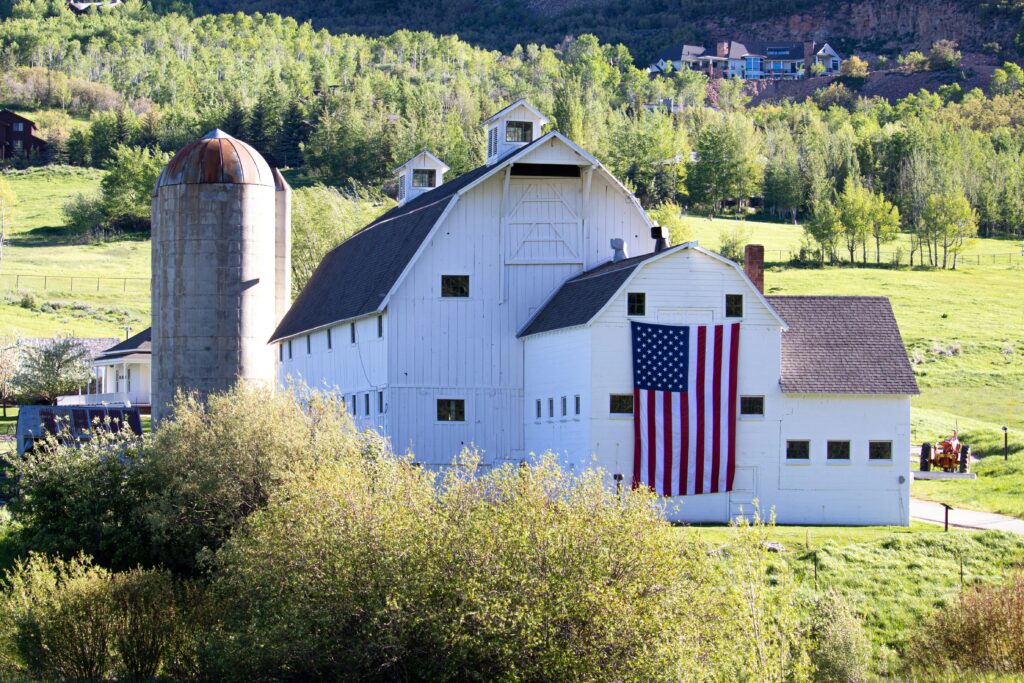
Photo by Anthony Mucci
We’re here to recap some of the biggest ag law stories in the news over the past few weeks. Let’s get started!
* Texas Supreme Court decides Cactus Water Services v. COG Operating. The biggest news in Texas has to be the Court’s decision regarding produced water. This case asked the question of whether produced water–water that is extracted with oil and gas production–belongs to the surface owner or the mineral lessee. The Court held that when an oil and gas lease is executed, the produced water conveys with the mineral rights. To read more on this decision, click here. Additionally, to read more about the unanswered question of what this means for lithium extraction, here is a really interesting article.
*United States Supreme Court limits use of nationwide injunctions. The United States Supreme Court issued a decision in Trump v. CASA. The Opinion was authored by Justice Amy Coney Barrett with the Justices split 6-3 along ideological lines. Though this case is about the legality of the Trump administration ending birthright citizenship by Executive Order, the Supreme Court did not address the merits. Instead, the Court focused only on the issue of whether the lower courts were proper in issuing nationwide injunctions against the Executive Order. Justice Barrett’s majority opinion focused on the use of nationwide injunctions historically, and pointed out that they are a relatively recent tool. Because of this, the Court found, federal courts do not have the authority to issue nationwide injunctions in most circumstances. Exceptions to this may exist for certain situations such as class actions, for example. The case was remanded for the lower courts to determine whether the injunctions should be narrowed in light of the Court’s ruling. There were also a litany of concurring opinions as well as dissenting opinions from Justices Sotomayor and Jackson. [Read Opinions here.]
*US Supreme Court will not hear next Proposition 12 case. The United States Supreme Court has denied certiorari in Iowa Pork Producers Association v. Bonta. The appeal was from a decision of the United States Court of Appeals for the Ninth Circuit challenging the constitutionality of Proposition 12. You might recall in 2023, the US Supreme Court upheld Proposition 12. [Read more about that here.] In that decision, 5 justices held that while the plaintiffs there failed to prove a substantial burden on interstate commerce, there was the possibility of facts being alleged in another case that might successfully prove such a burden. It was that burden the Iowa Pork Producers Association (along with numerous other state plaintiffs) sought to prove in this case. The Court will not, however, be taking the case for review. [Read article here.]
*Court finds Swampbuster constitutional. About a month ago, the United States District Court for the Northern District of Iowa ruled the wetlands conservation program (known as “Swampbuster”) to be constitutional in CTM Holdings v. USDA. A landowner challenged the program as violating the commerce clause and constituting a taking of private property. The court disagreed, upholding the program. Read the Opinion here and a great summary by Brigit Rollins here.
*Right to Repair antitrust lawsuit against John Deere to proceed. A judge in the US District Court for the Northern District of Illinois ruled that a lawsuit filed by the FTC alleging antitrust violations by John Deere related to right to repair will go forward. A number of other states joined the FTC as plaintiffs in the case. It will now proceed to discovery. [Read article here.]
*Further delay of the Horse Protection Act amendments. Someone asked me a question on this last week. You might recall back in May 2024, USDA APHIS passed a final rule amending horse protection act regulations. Specifically, the regulations addressed the “soring” of horses. Initially, the amendments were set to go into effect on February 1, 2025. They were then delayed until April 2, 2025, and have now been further delayed until February 1, 2026. [Read rule here.]
*AI generated legal documents reviewed. I’ve seen (and co-authored) a couple of articles looking at AI generated legal documents. Jesse Richardson and I wrote an article for Southern Ag Today looking at the use of AI in drafting a will. [Read article here.] Our conclusion? While AI may be useful in gathering information and conducting research, we recommend using an actual attorney to draft legal documents. Another article looked at using AI to generate a farm lease agreement. Todd gave the AI contract a B, noting it was likely better than no written lease at all, but not as desirable as a lease drafted by a human attorney. [Read article here.]
Upcoming Programs
Next week, I will have a full docket with speaking engagements on Wednesday, July 9 in Ft. Worth at the Texas Alliance of Land Brokers luncheon and in Canton that evening for a county Extension meeting. The following day, on July 10, I will be joining my good friend and carbon market expert, Dr. Jordan Shockley, for a free hour-long webinar about the future of carbon markets and what you need to know. If you’d like to join us, register here. The following week, I’ll be in Corpus Christi for the Texas Extension Specialists Association Conference and then off to Rockport for our Ag Economics Extension Unit meetings.