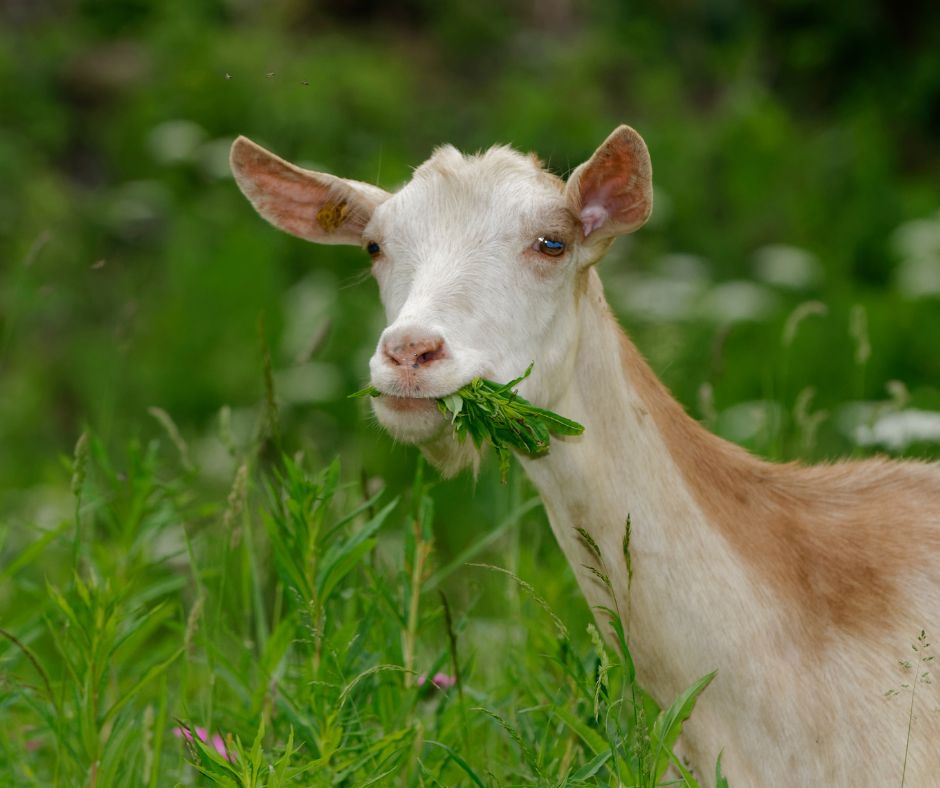
 Did you know that goats are meticulous eaters? They move across the landscape selectively browsing, picking out desirable pieces of forage, and combing hard to access pastures and areas for their favorite plant parts and species.
With two years of goat grazing behavior in an intensive rotational grazing system, Noble Research Institute general ranch manager Joe Pokay, has observed that goats prefer some of the aggressive brush species, including greenbrier, sumac, honey locust, persimmon and elms. During these observations, they were also able to notice seasonally preferences of specific plants. Sumac, for example, has leaves that are green and waxy in the beginning of the grazing season, so the goats prefer to consume these later on in the year when the leaves are dried out and have less of a thick, waxy shell.
Pokay uses goats as a grazing tool that can utilize existing brush as a resource and also improve grazing for other livestock. Running cattle and goats together can be synergistic, especially when labor resources are limited. For example, producers only need to supply water in the pasture where cattle and goats are occupied and when the combined herd moves on to the next pasture, complete rest from grazing/browsing is achieved through a rest-rotation system.
Another benefit of grazing both species together is that the goats will prioritize trees, shrubs, and brush as forage which can open up understory areas for cattle to gain access to grass that is intermixed with woody species and typically un-utilized. Using goats to clear out the understory brush also opens up more access to shade for cattle, increased hoof action for soil dynamics, and additional resources for growing more grass such as sunlight and even rainfall.
While there are many benefits to running goats, challenges to consider include fencing costs, hauling water, predators, and parasite management.
For more information on Noble Research Institute and their grazing system, be sure to read the full article here. In addition, for more information on targeted grazing, grazing with multi-species and woody encroachment, be sure to read our factsheet Targeted Grazing with Goats and Sheep.